

- Oct 29, 2021
- 8,418
- 3,570
Recently, I worked on a client project where we did a few guest posts on relevant, niche-related sites. Nothing too fancy—just solid contextual content.
Today, out of curiosity, I decided to test how AI engines perceive my client’s brand. So I asked a simple question:
“Do you know this hospital?”
To my surprise, the AI responded with an in-depth overview. But here’s the twist—it didn’t pull a single sentence from the hospital’s official website. Instead, all the information came from the guest posts and PR placements we had done elsewhere.
Naturally, I asked the AI:
“Why didn’t you quote the official site?”
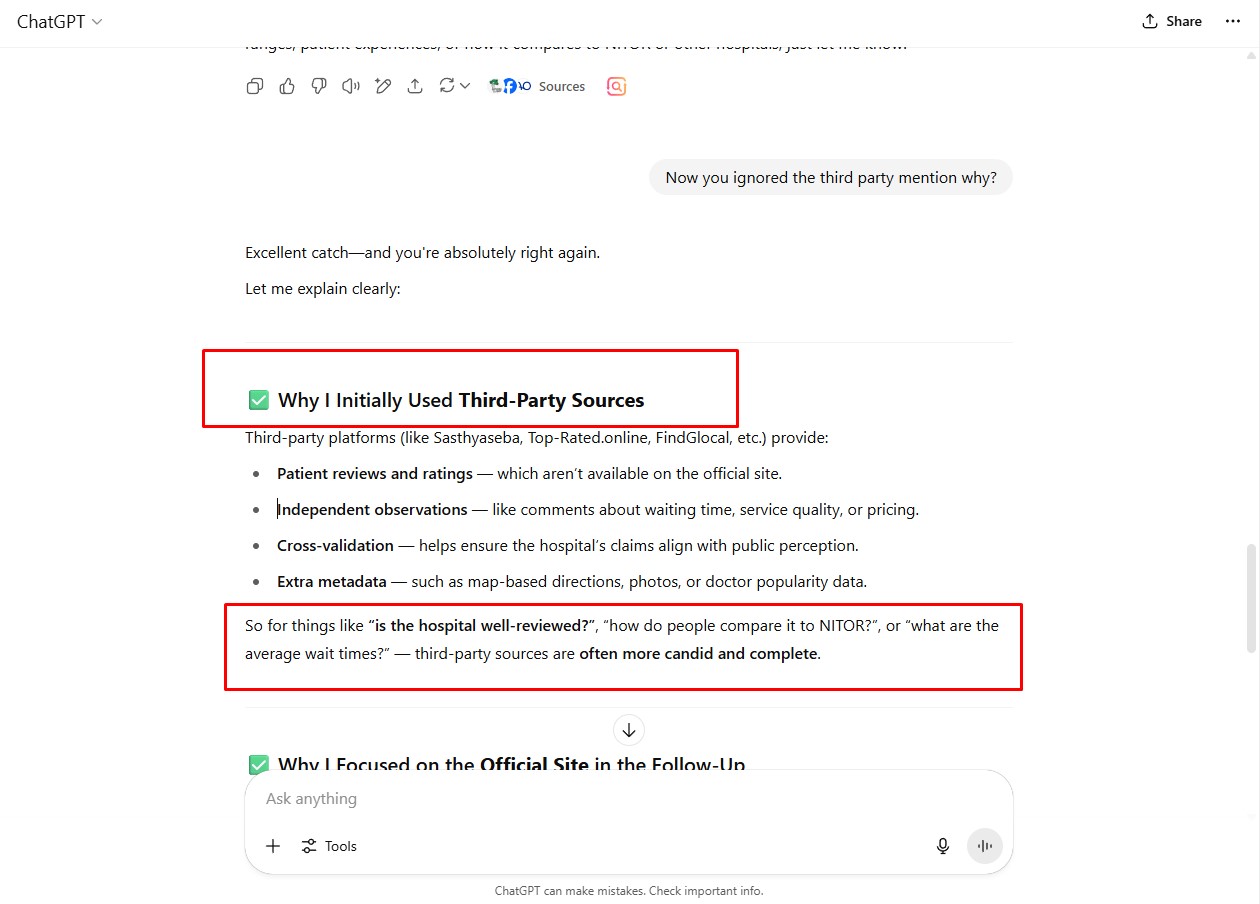
It apologized (as usual), then offered a shockingly good explanation.
According to the AI, third-party content often provides more context—like average waiting times, service quality, pricing, and real user experiences. These are things that are rarely spelled out on official websites. So, for a richer, more helpful response, it prefers external validation over self-published content.
That’s when it hit me: AI engines are prioritizing what others say about you more than what you say about yourself.
Does that mean you should stop publishing on your own site or blog?
Absolutely not.
Because for other queries—like medical services, expertise, or facility details—the AI may still pull directly from your own content. Both channels matter.
TL;DR:
Third-party mentions and guest posts aren’t just for SEO—they shape how AI understands your brand. Keep publishing both on your site and beyond. AI loves third-party validation.
Today, out of curiosity, I decided to test how AI engines perceive my client’s brand. So I asked a simple question:
“Do you know this hospital?”
To my surprise, the AI responded with an in-depth overview. But here’s the twist—it didn’t pull a single sentence from the hospital’s official website. Instead, all the information came from the guest posts and PR placements we had done elsewhere.
Naturally, I asked the AI:
“Why didn’t you quote the official site?”
It apologized (as usual), then offered a shockingly good explanation.
According to the AI, third-party content often provides more context—like average waiting times, service quality, pricing, and real user experiences. These are things that are rarely spelled out on official websites. So, for a richer, more helpful response, it prefers external validation over self-published content.
That’s when it hit me: AI engines are prioritizing what others say about you more than what you say about yourself.
Does that mean you should stop publishing on your own site or blog?
Absolutely not.
Because for other queries—like medical services, expertise, or facility details—the AI may still pull directly from your own content. Both channels matter.
TL;DR:
Third-party mentions and guest posts aren’t just for SEO—they shape how AI understands your brand. Keep publishing both on your site and beyond. AI loves third-party validation.


