

- Nov 29, 2022
- 2,472
- 284

Once an ad campaign is uploaded to Facebook Ads for the web, marketers enter a waiting phase — hoping their assets pass moderation. Quite often, the initial ad sets don’t make it through, and advertisers must adjust account settings or creatives to meet platform requirements.
Today, we’ll explore the nuances of Facebook Ads moderation and take a closer look at a placement-based strategy that has recently gained traction among affiliate marketers. We'll also share practical guidance on how to implement this method within Facebook's ad system.
Understanding the Moderation Challenge
Within the affiliate marketing community, Facebook remains one of the more challenging traffic sources. Issues such as ad rejections, account freezes, payment risks, and payout holds are common occurrences when launching campaigns.Despite these obstacles, Facebook continues to deliver significant ROI across multiple verticals in 2025, which is why experienced affiliate marketers still consider it a highly profitable and scalable platform — if handled correctly.
Over the years, many techniques have emerged to bypass moderation systems. Some of these methods have become obsolete, while others still prove effective. However, the nature of this ecosystem is fast-moving, and tactics must constantly evolve to remain effective.
Common moderation workarounds have included:
- composite (collage-style) visuals
- hidden or embedded text
- dynamic creatives
- product catalog formats
- visual masking within video sequences
- fast-flashing imagery
The Role of Placements in Bypassing Moderation
Recently, many affiliate marketers have turned to a lesser-used technique — leveraging Facebook’s ad placements to improve approval rates. This method has shown high effectiveness, particularly for creatives related to restricted verticals like adult, crypto, and gambling.Placements refer to where your ads appear across Facebook's ad network. While most campaigns target mainstream placements like the Facebook and Instagram feeds, the platform offers additional options that are often overlooked.
This technique involves placing “sensitive” creatives in main placements, while simultaneously uploading compliant or neutral creatives to rarely used ones — such as Messenger, Facebook Search Results, Instagram Search, or interstitial formats. These auxiliary creatives can include innocuous images like forests or landscapes, which reduce the likelihood of drawing moderation attention.
Step-by-Step Placement Strategy
- Launch a campaign using a conversion-based objective
- Upload your primary creatives into standard placements
- Add neutral, compliant creatives into lesser-used placements (Messenger, search results, interstitial, etc.)
- Submit the campaign for review and await approval
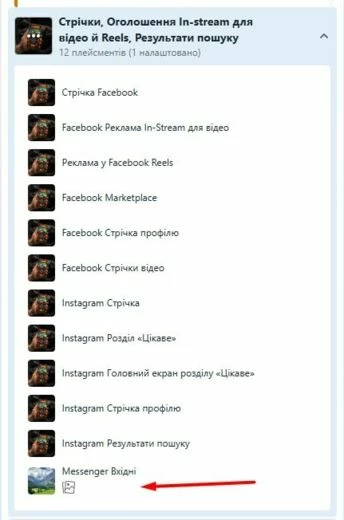
In most cases, this layered structure helps push campaigns through the moderation process. The auxiliary creatives spend minimal budget, while your target placements deliver the core messaging. According to recent tests, using just 2–3 alternative placements — rather than a full set — can be sufficient for increasing approval rates.
Cautions and Considerations
Facebook’s moderation system is unpredictable. Even if the initial review passes, there is always a chance the campaign will be re-evaluated later. Occasionally, disapprovals citing “prohibited business models” may appear. In such cases, refreshing the campaign setup and resubmitting can help — but excessive use of this method should be avoided.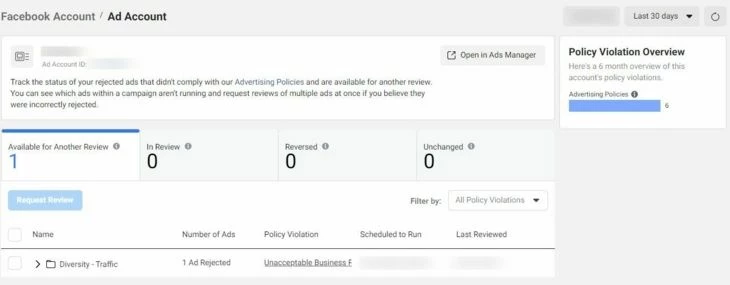
Although this strategy remains effective at the time of writing, the affiliate marketing landscape evolves rapidly. Methods that work today may not work tomorrow. However, for now, using strategic placements can help marketers navigate Facebook Ads moderation with lower risk and greater efficiency.
