

- Nov 29, 2022
- 2,483
- 284

In the competitive landscape of affiliate marketing—particularly in high-risk verticals—success depends not only on launching campaigns but also on the ability to forecast outcomes and manage budgets effectively. One of the most critical tools in this process is the accurate forecasting and optimization of ROI.
Return on Investment (ROI) measures the efficiency of advertising spend. A strong ROI indicates that a campaign is generating more revenue than it consumes in expenses.
Why ROI forecasting and optimization are essential:
Budget Allocation: Estimating ROI helps affiliates assess the potential profitability of a campaign in advance and strategically allocate spending across campaigns, ads, and keyword sets.Timely Adjustments: By monitoring ROI over time, underperforming assets can be identified early, allowing for rapid optimizations that enhance profitability.
Scaling Opportunities: High-ROI campaigns can be confidently scaled by increasing investment and expanding reach, maximizing returns.
Forecasting ROI in Google Ads: From Intuition to Data-Driven Strategy
ROI forecasting is a data-centric process that relies on interpreting past performance and modeling expected outcomes. Affiliates with access to detailed campaign analytics are better positioned to build precise and actionable forecasts.Common ROI forecasting methods include:
Historical Data Review: Analyzing results from previous campaigns reveals performance patterns and informs strategic decisions for future launches.
A/B Testing: Controlled testing of different creatives, targeting parameters, and landing pages helps identify the most effective combinations and project their likely outcomes.
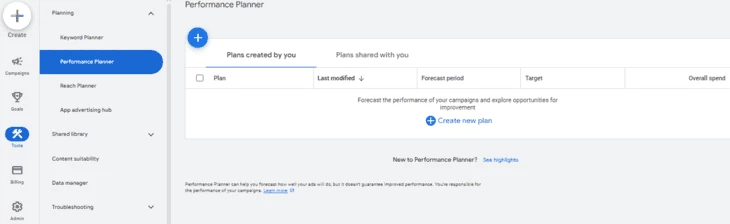
Google Ads Forecasting Tools: Google’s built-in solutions like Performance Planner provide projected performance metrics based on historical trends, market competition, and campaign inputs.
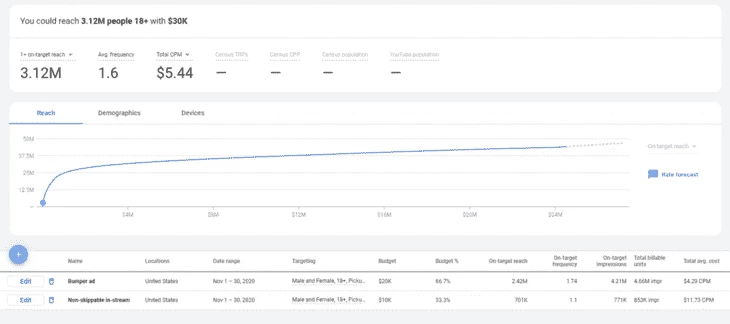
For video campaigns, Reach Planner offers similar insights.
Mathematical Modeling: This method identifies and weighs key variables that impact ROI, including historical clickthrough rates, cost-per-click, conversion rates, offer seasonality, competition levels, and landing page performance. Using this data, affiliates can build predictive models through spreadsheets, statistical tools like R or SPSS, or dedicated analytics platforms.
It’s important to note that even the most accurate ROI models are approximations. Affiliates must remain responsive to real-time performance and be prepared to recalibrate campaigns as needed.
Optimizing ROI in Google Ads: Extracting the Full Value of Every Dollar
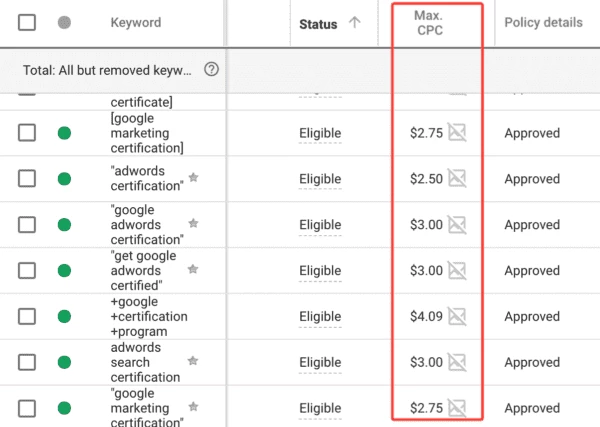
ROI optimization is an ongoing process that involves data-driven adjustments and continual testing. Several focus areas consistently yield meaningful improvements.Keyword Strategy: Evaluating keyword performance helps identify those that deliver quality traffic at a sustainable cost. Affiliates should aim for a balance between broad keywords for reach and long-tail terms for precision targeting.
Ad Creative Testing: Iterating on ad copy—including headlines, descriptions, and CTAs—can significantly impact both clickthrough and conversion rates. Especially in challenging verticals, creativity and compliance must be carefully balanced to pass moderation while maintaining engagement.
Landing Page Conversion: The effectiveness of a landing page directly influences ROI. Testing different layouts, messaging, and design elements is critical for discovering the version that converts at the highest rate.
Bid Optimization: Efficient bidding ensures a balance between traffic volume and cost control. Affiliates should continuously experiment with manual and automated bidding strategies to maintain competitiveness without overspending.
Crucially, ROI optimization is not solely about generating more traffic—it’s about maximizing the value of each conversion. A high volume of clicks does not necessarily translate to profitability if those users do not complete meaningful actions.
Final Thoughts
Forecasting and optimizing ROI within Google Ads is essential for building sustainable and profitable affiliate marketing campaigns. By leveraging analytical tools, embracing experimentation, and maintaining strategic flexibility, affiliates can increase campaign resilience and financial return.Success in this domain is not the result of chance but of consistent, data-informed decision-making. Affiliates who treat ROI as a strategic compass rather than a passive metric will be best positioned to thrive in an evolving advertising environment.