Many people believe that 'Keyword Research' is the most vital part of SEO and I couldn’t agree more. If your keyword research is spot on, half the battle is already won. However, when it comes to doing keyword research people tend to analyze competition only by third-party metrics provided by whatever tool they use.
This has a few problems:
- The keyword difficulty scores provided may be misleading as your competitors might be hiding PBN links.
- No tool can do proper backlink profile analysis and actually show how strong the link profile actually is unless they're analyzing authority websites and let us be real here, even the most experienced SEOs don't try to fight authority websites head on unless your website/client's website is also an authority site.
Another problem is that sometimes a keyword might seem easy because your competition might be blocking crawlers and hiding their PBN links from showing in third-party crawlers like Moz, Majestic and Ahrefs.
Therefore, you need to develop your own intuition for analyzing competition by and not relying completely on various keyword difficulty scores.
Your goal as an SEO should be to exploit niches where that are yet to be tapped by other SEOs or are dominated by weak sites. If you have found such a keyword, you've struck gold as you'll be able to rank without spending a lot of moolah which is something you'll be able to do once you're done reading this guide.
Before starting you'll need some basic tools (All can be used for free with minimal restrictions) also, you’ll need Google Chrome for using most of the tools required in this guide. If you don't have Chrome you should install it before proceeding further.
Let's get right into properly analyzing your SEO competition step by step.
This is the list of tools we'll be using in this guide
Moz
The first thing you'll need is a plugin called Mozbar. I'm sure most of you have heard about it but I'll still walk you through this if you're new.
- Go to https://moz.com and create a free account.
- Once you've created an account, visit https://moz.com/products/pro/seo-toolbar and download the plugin for Chrome.
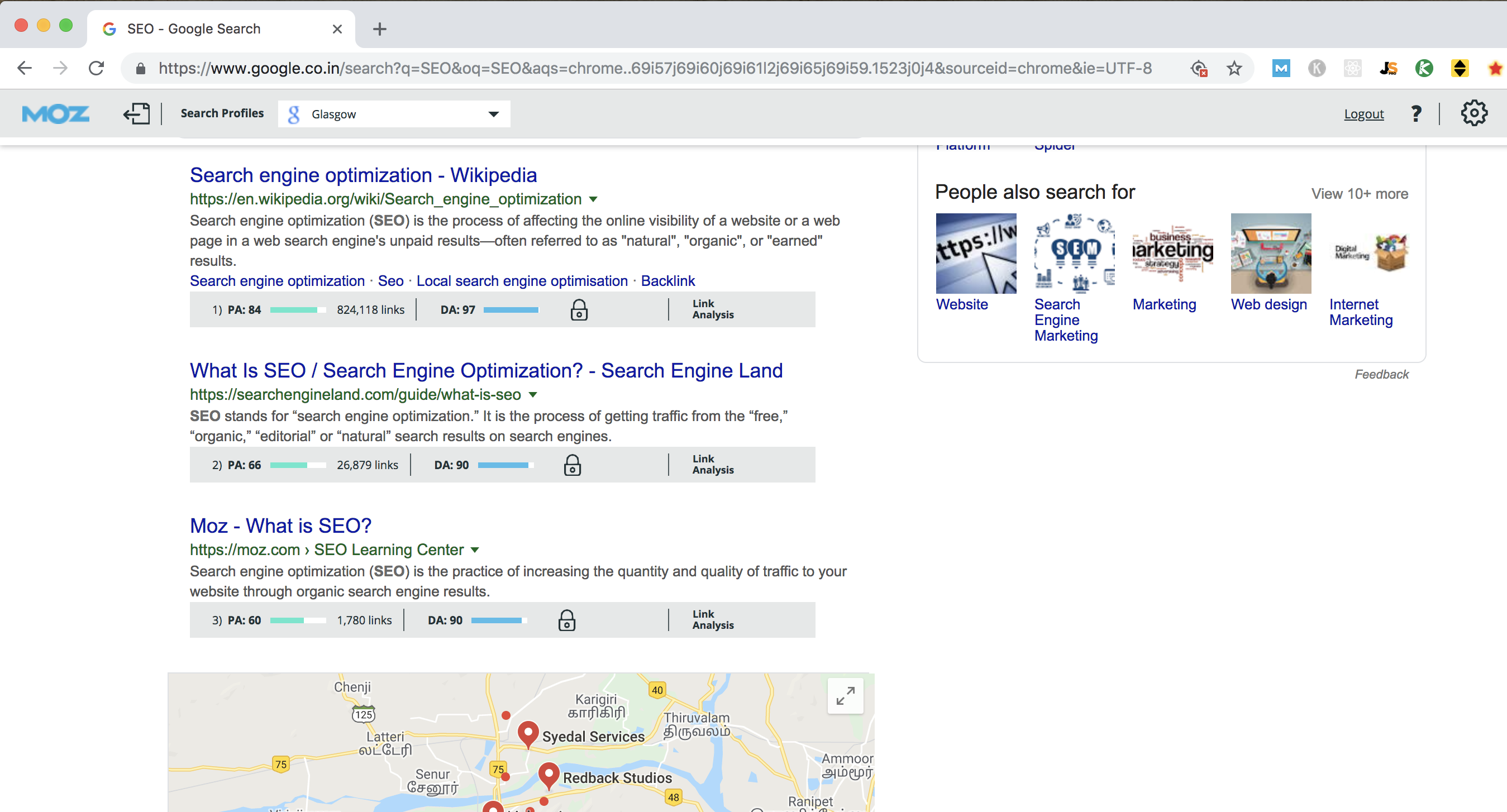
- Visit Google and search for anything.
If you see something like this then you're good to go
Majestic
Second up is a plugin called Majestic Backlink Analyzer, however, we'll use it just for fetching some metrics. (lol)
- Go to https://majestic.com/majestic-widgets/plugins and download the plugin for Chrome.
- Go to any website and click the Majestic logo on the top right corner.
- Authenticate using the free authentication.
If you see something like this then you're good to go
We will now classify the difficulty of a keyword as follows
- Very Easy
- Easy
- Medium
- Hard
- Very Hard
'Very Easy' being a relatively untapped keyword while 'Very Hard' meaning you've to put Larry Page on gunpoint for page 1 rankings.
The main factors we will be considering to analyze our competition are as follows:
- Keyword in URL
- Keyword in Title
- Keyword in Meta Description
- Backlink Profile
- Schema/Rich Cards
Let's get our hands dirty now.
We'll start off with the 'Very Easy' difficulty.
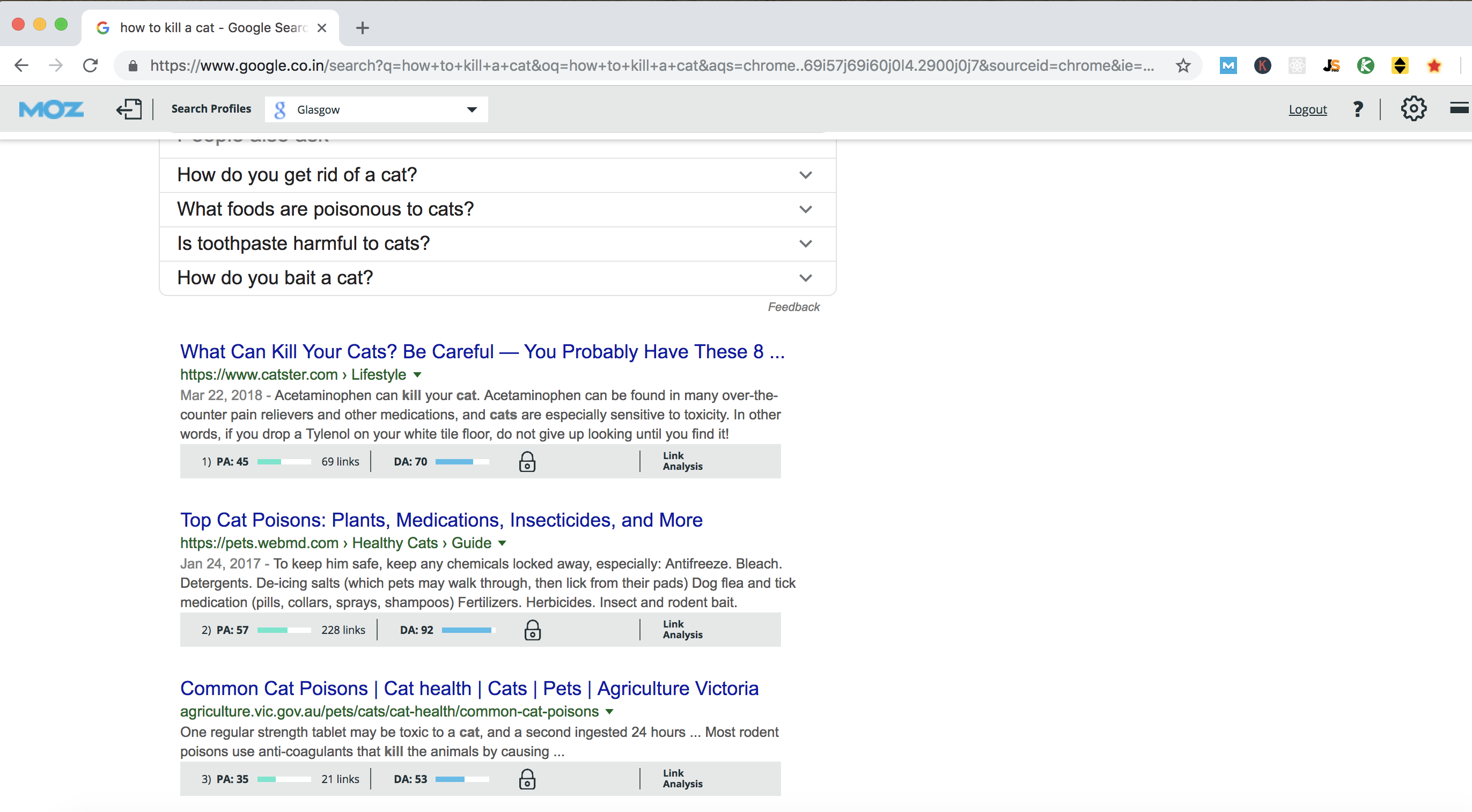
Consider the following keyword "How to kill a cat". (Note that the keyword is just for example purposes and I have nothing against cats. The sole reason I chose this keyword is that no one would optimize their website for this)
If you look closely, the top results are not optimized for our target keyword.
There is no exact match in URL, Title, Meta or H1 tags. If you have a keyword with similar competition but a decent search volume, it is safe to assume it to be classified as Very Easy difficulty keyword. Ideally, you'd want to target keywords like these if you want to snipe some easy rankings.
Another feature of this type of keyword is unoptimized URLs for SEO. For example,
http://www.website.com/blahblah.html?q=asdoa3231
If you encounter a lot of websites with a similar URL structure and low on-page optimization they can be considered as Very Easy.
You should be able to rank for these type of keywords with minimal backlinking and basic on-page optimization.
Moving on to the 'Easy' keywords, this classification of keywords have a little bit of on-page optimization along with a weak backlink profile. This indicates that SEOs haven't really tapped into this yet and the little optimization that is present is due to coincidence or done by bloggers who don't know much about SEO but are using SEO plugins for their websites.
For example, consider the keyword "Dentist in San Marino"
As you can see, the top results have low authority websites with semi-optimized pages. The first result has a partially matched keyword in the URL and LSI in the URL as well as the Meta Description. However, the domains are not that strong. This is a positive indicator for us.
Let's dig a little deeper and analyze the first result
The first thing you should notice is that the website is not using HTTPS, which is, one of the ranking factors Google uses. If you click the Page Analysis button on the top right of the mozbar you'll be able to see the on-page elements of the webpage you're on.
As far as on-page is concerned, this website has
- LSI keyword match in URL
- LSI keyword match in Title
- LSI keyword match in Meta Description
- No match in H1 tag
- No match in alt tags
- It is rumored that Google doesn't really use Meta Keywords but other search engines do.
Therefore, this website has okayish on-page optimization.
The next thing that we'll check for is markup.
As you can see, this website doesn't have any markup which is a positive indicator for us as we can outrank this website by implementing a simple schema.
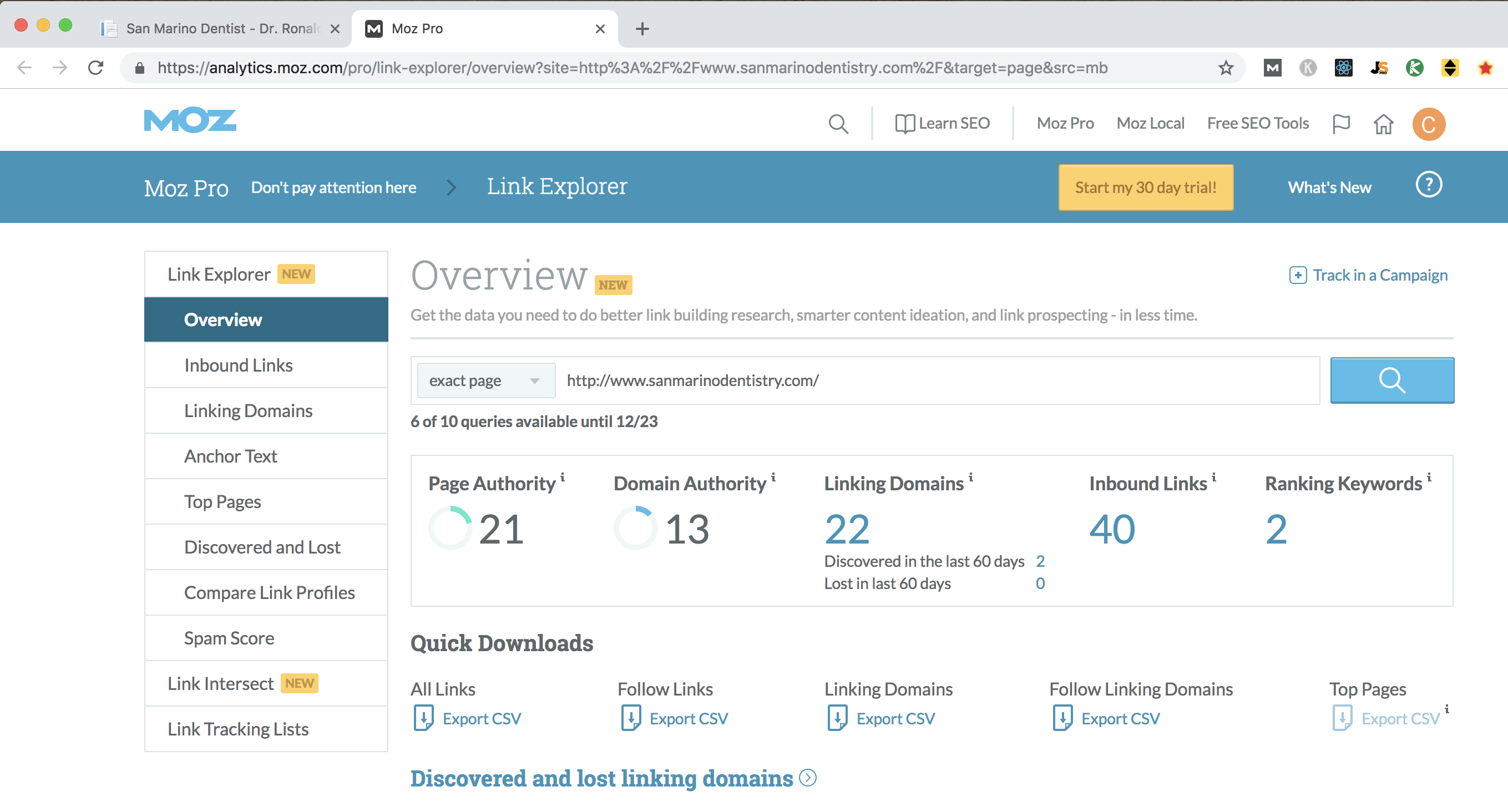
Moving on, we'll analyze the backlink profile of this website next. Head over to
https://analytics.moz.com/pro/link-explorer and enter the target URL
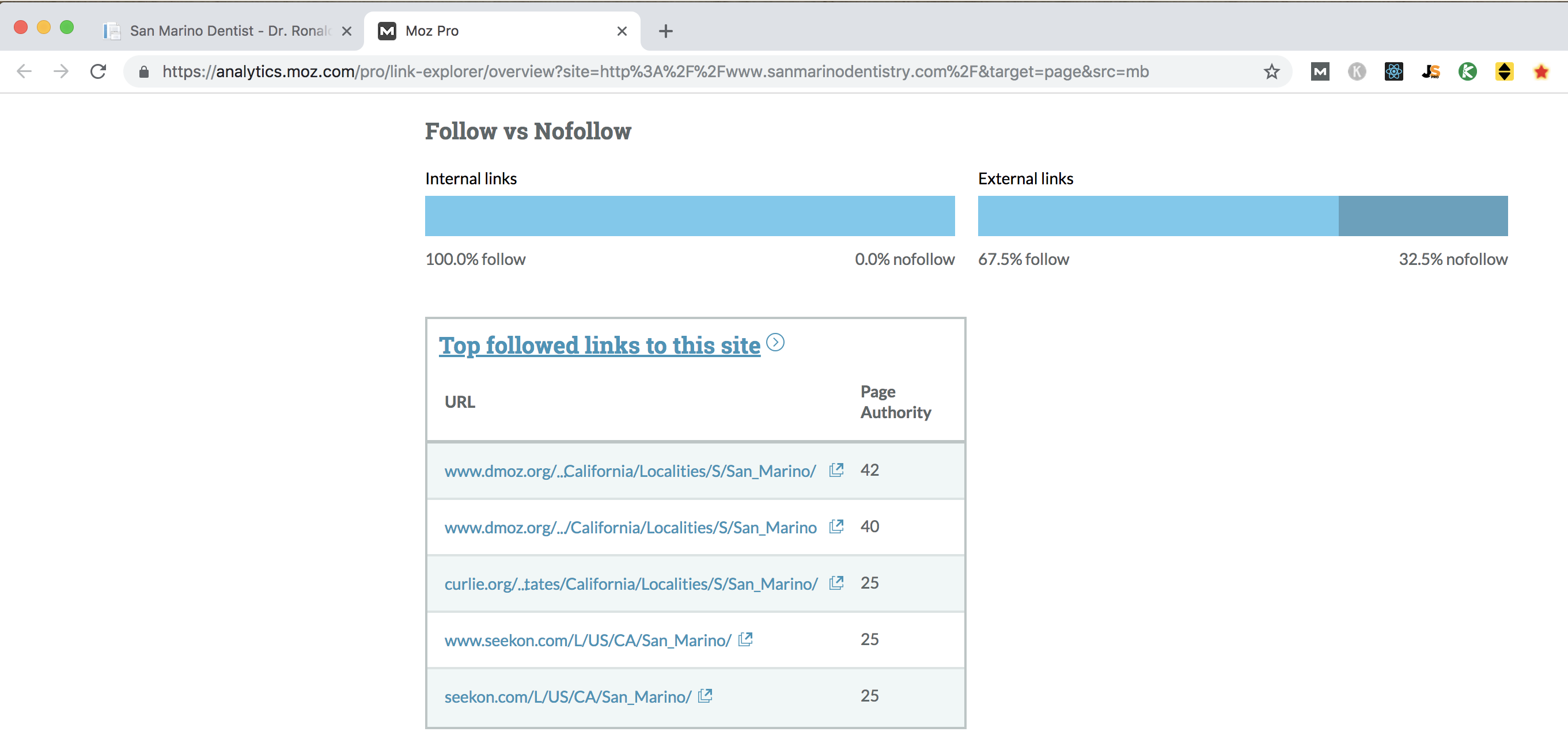
Scroll down and click on "Top followed links to this site"
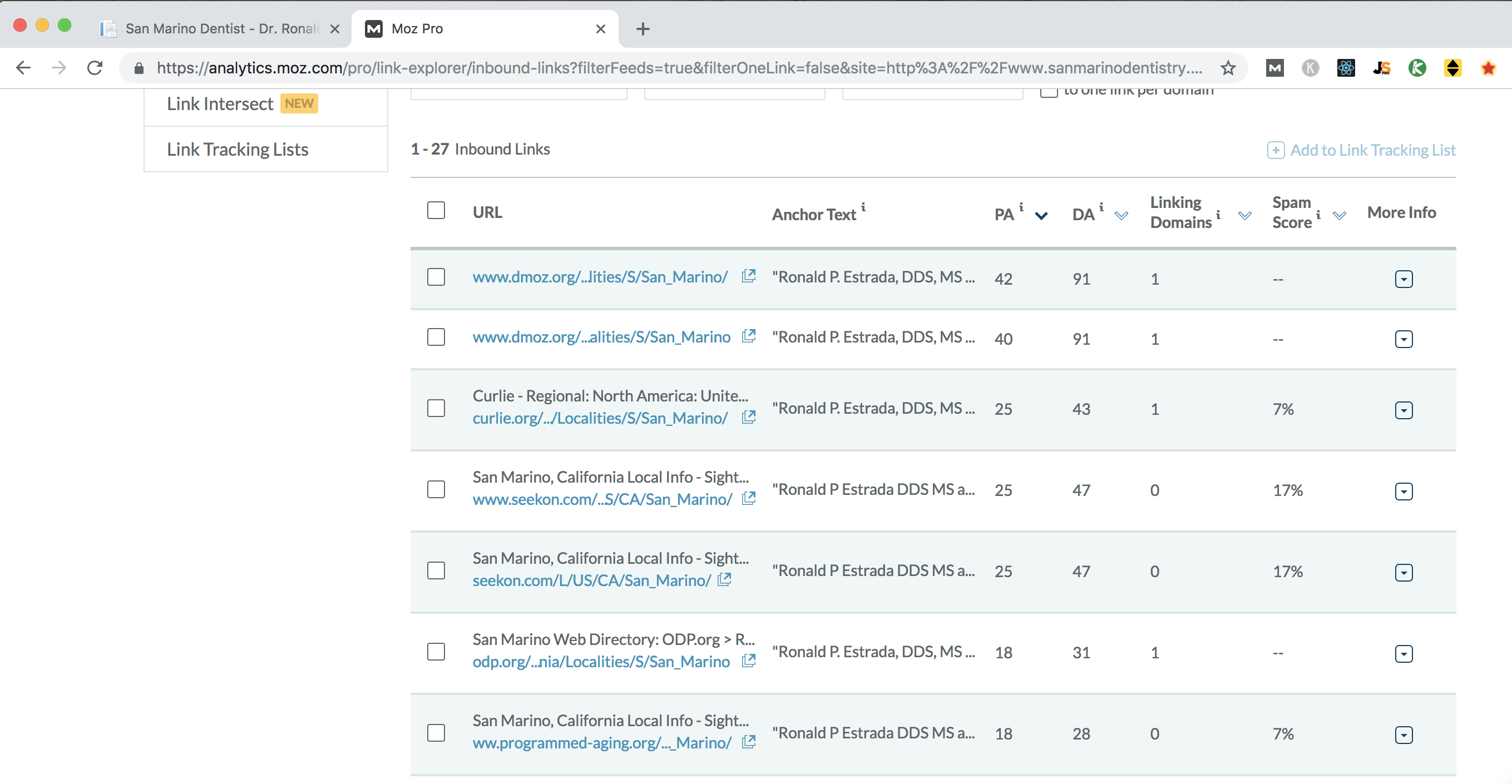
As you can see, this site mainly has directory backlinks which can be easily copied, so you can easily match your competition head on
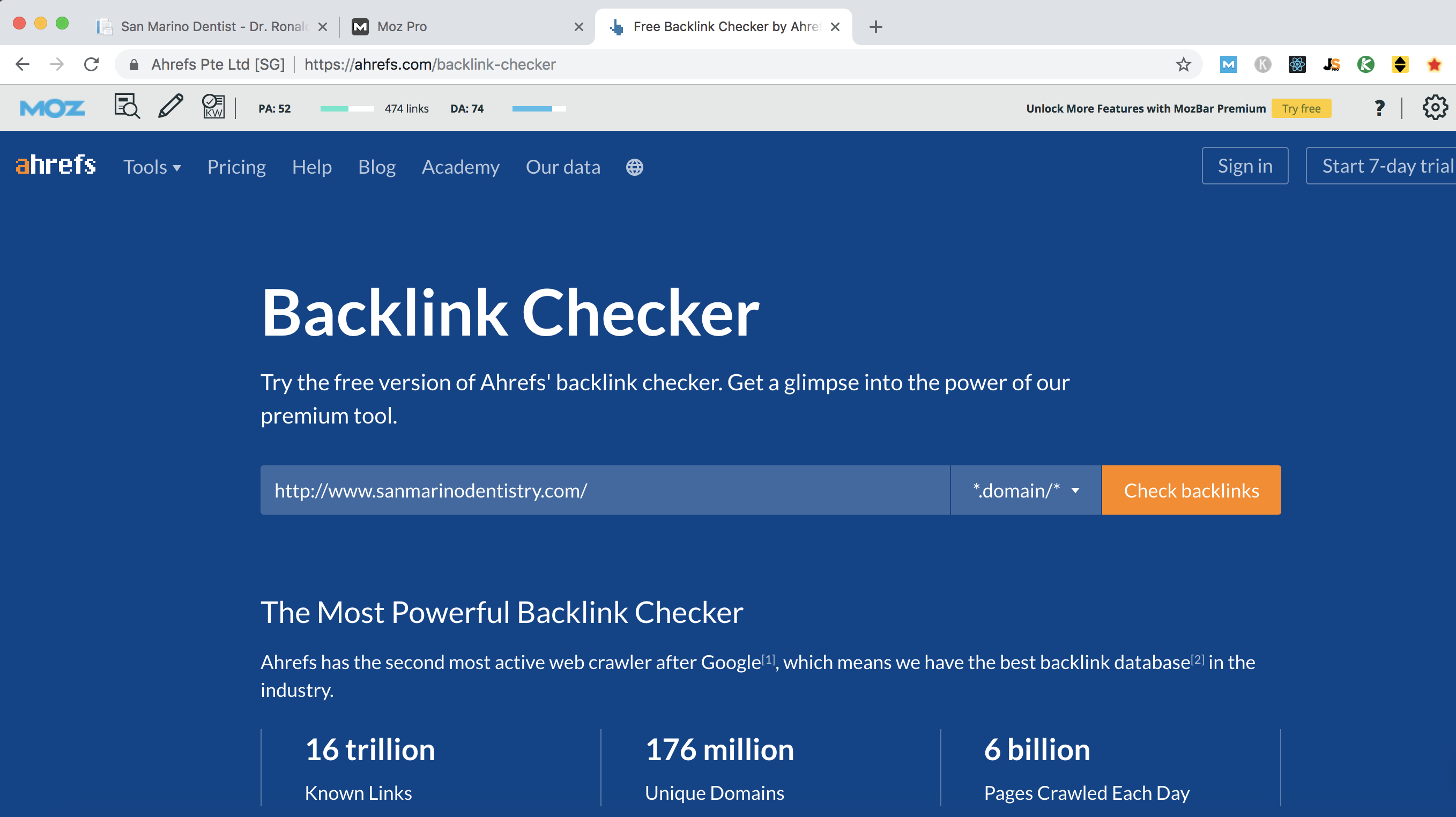
Keep in mind that no third party crawler, doesn't matter if it is paid or free, can ever show you all the backlinks to a website. Therefore, it is best to try and use multiple tools for the analysis. We will use Ahrefs Free Backlink Checker to discover additional backlinks.
Head over to
https://ahrefs.com/backlink-checker and enter the target URL
Repeat the same process for checking the backlink strength.
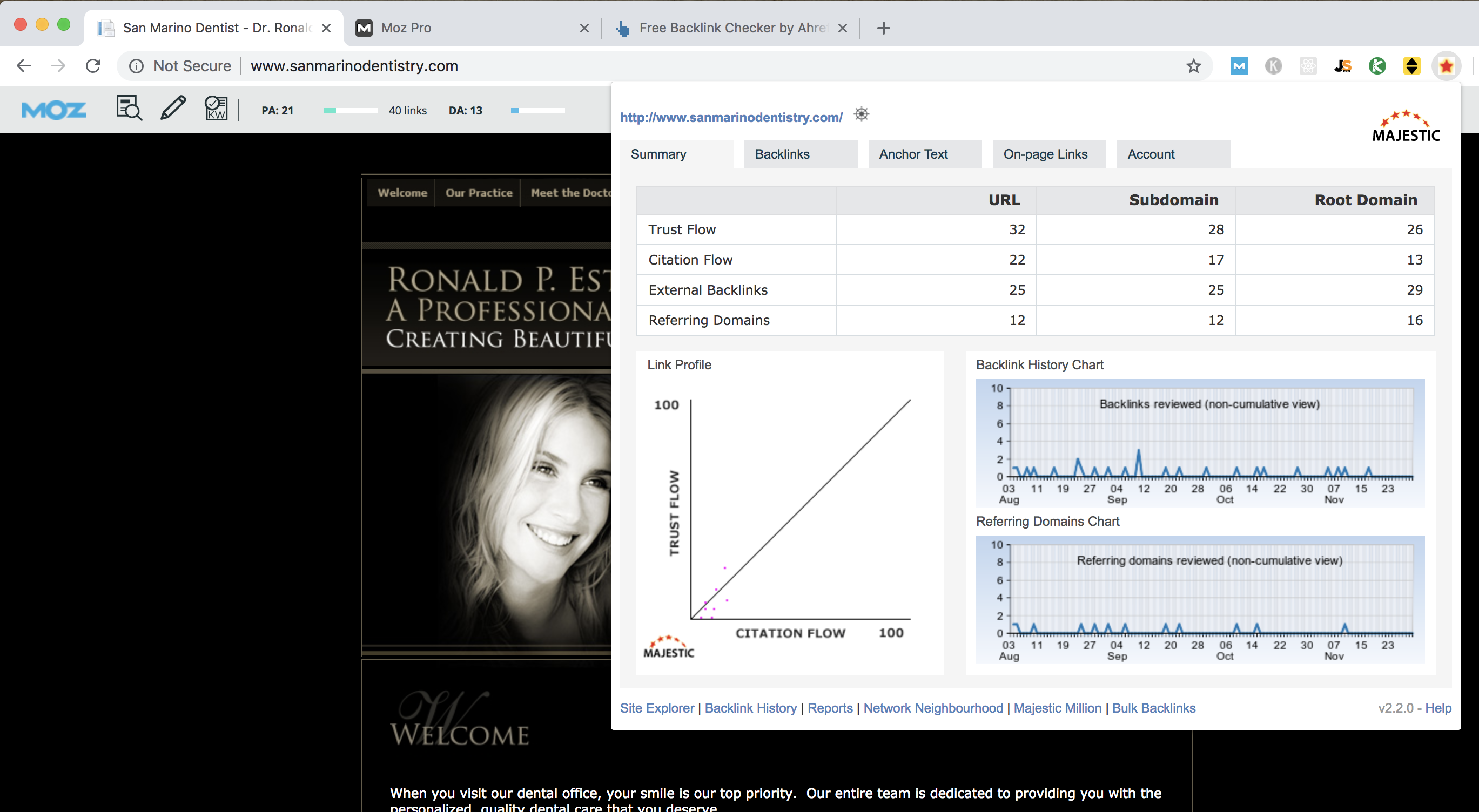
The next step is checking the Flow metrics of the site, head over to the target URL and press the Majestic button on the top right. Ideally, you want a 1:1 ratio for Trust Flow (TF) and Citation Flow (CF).
Most of you would get alarmed seeing the metrics of this site but don't worry we'll reverse engineer that in a while. First, let's learn some basics.
The Majestic plugin shows TF and CF for any URL that you visit. It has 3 columns, namely:
- URL
- Subdomain
- Root Domain
A URL is something which looks like this
http://mywebsite.com/
Subdomain is generally
www.example.com or kn1ves.example.com
Root Domain is example.com
As I said, a good backlink profile generally has TF:CF ratio close to 1:1. However, this can sometimes be manipulated.
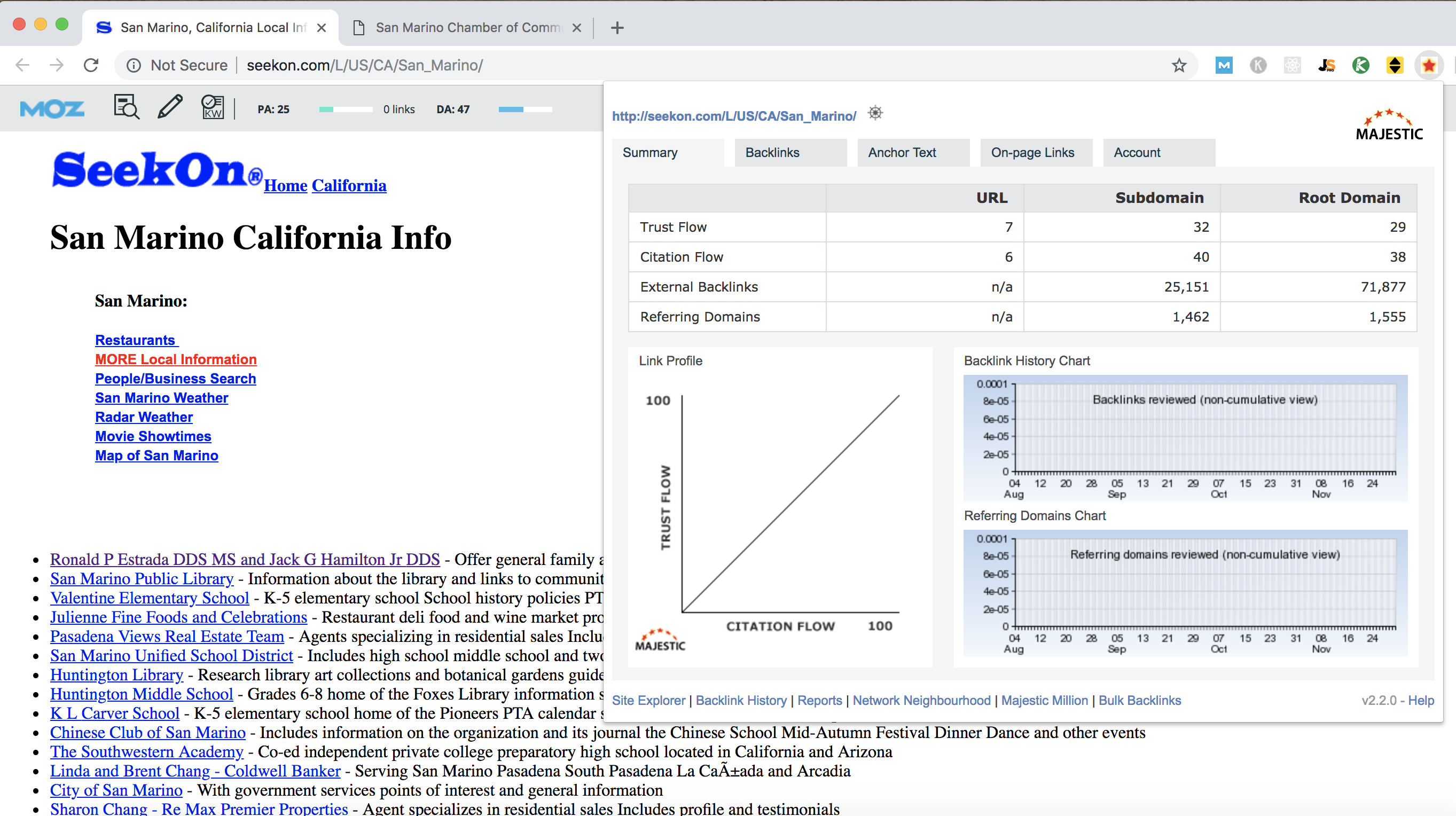
Let's reverse engineer their flow metrics now. Open up each backlink individually and click on the Majestic plugin to check their flow metrics. Trust Flow is only passed to websites that have a backlink from a page that has trust. I'll explain this through an example
Since this is a URL, the URL's Trust Flow (4) will be passed on to pages that have a backlink on this particular URL. If it was the root domain then a Trust Flow of 15 would be passed. This is partly the reason why homepage links are stronger (such as in PBNs).
You can easily get a backlink from this webpage and copy your competitor's Trust Flow. Do this for all the backlinks and soon you'll have decent, filtered backlinks to copy. However, if you use the paid version of Majestic you can do this a lot quicker but hey, if you're not spending money, you'll be spending your energy.
These two sites further show how TF can be manipulated and you should only use it superficially and not focus all your SEO efforts based on metrics. Use your intuition.
These links aren't that great, you can scare off noobs if you have high metrics but that's about it. Third party metrics don't have any direct correlation to PageRank.
Let's move on to the big leagues now, the 'Medium' difficulty keyword.
The websites that appear in the top 10 for these kinds of keywords usually have
some of the following properties:
- They are authority sites (DA 75+)
- They have strong on-page optimization along with markup
- They have a decent backlink profile
- They are parasites
You can't really do anything about an authority site, unless, your money site is also an authority site which is not very common. These sites have a high amount of quality backlinks which turns them into an SEO snowball, they can get away by merely doing on-page and still rank on the first page of Google SERPs for easy-medium difficulty keywords.
As far as Parasite pages are concerned, check out
this guide by
@710fla
Now, let's see an example of a 'Medium' difficulty keyword
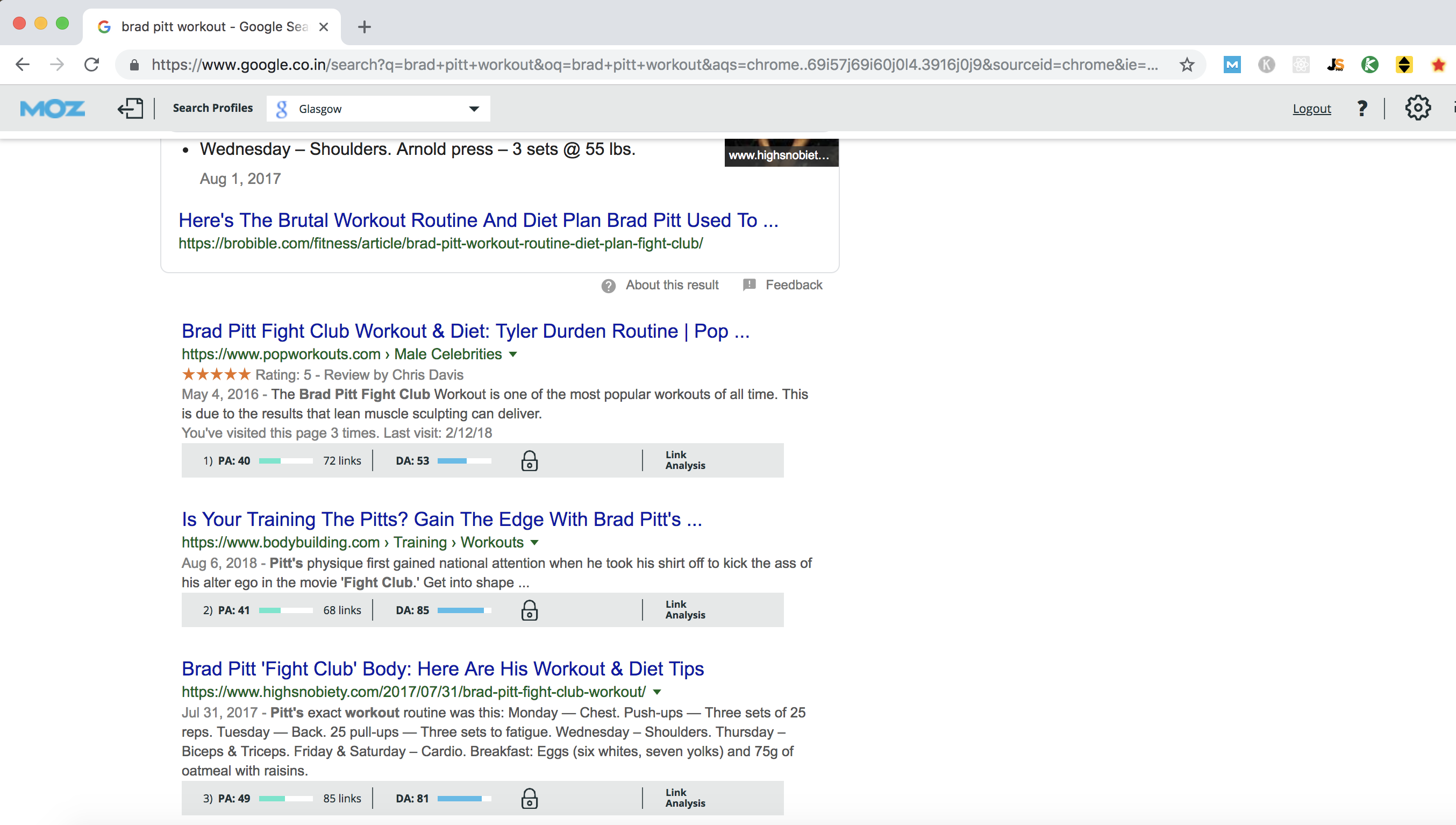
The keyword here is "Brad pitt workout". As you can see, the top ten results all have either good on-page or are from semi-authoritative sites. You'll need to invest some money if you want to have a chance of outranking these type of websites. I personally wouldn't recommend such types of keywords if you're just starting out or are relatively inexperienced.
On a quick glance of the backlink profile of the first ranked site, I found a guest post. These kinds of backlinks are powerful as they are not that easily obtained. For this particular guest post, it receives a little bit of traffic also, which makes things worse for us. However, you can always build better links and push the result in your favor, but you'll need to factor in your ROI.
You can repeat all the steps for the SERPs to gauge the keyword difficulty and act accordingly.
It's time to move on to the 'Hard' difficulty keywords. These types of keywords are dominated either fully or partially by authority websites and a few sites with really influential backlink profiles and on-page.
For example
These kinds of keywords are not easy to rank for. You'll need a lot of powerful links to even stand a chance at outranking them.
Let's see the first result
This site has some of the most powerful links you can ever acquire for your website. They are contextual, have lots of traffic, and come from authoritative websites. Competing with these kinds of backlinks is next to impossible unless you decide to use a ton of PBNs but, then again, you have to see your ROI.
Finally, moving on to the god-tier of keyword difficulty, the 'Very Hard' keywords.
Let's dive head first and see an example
The first result is probably there because according to Google's algorithm, their indices are programmed to show a wide variety of results. So, if you search for Apple, it will show both the technical giant and the fruit.
Please note that your search results may vary based on your location, also, you should ideally search using incognito mode so that your search results are not skewed.
It's not feasible to try and outrank these type of sites as your pockets will be empty before you reach page 2.
I hope this guide helped you in some way or other, always remember to use your own intuition and don't blindly copy your competitor's backlinks. You're welcome to use this guide as a reference and I'm sure you'll be able to tell, just by looking at the SERPs, the difficulty of the keyword you're targeting and plan your SEO campaign accordingly. If you have any questions please don't PM me, you're welcome to ask in this thread, I'll try and answer any doubts that you might have.