

- Nov 29, 2022
- 2,474
- 284

Affiliate marketers barely had time to adapt to Andromeda when Facebook introduced another new player to the arena: GEM. In the media space, many are already claiming that this technology will completely reshape media buying. But it is important to look at the real picture.
In this article, we examine the key features of the large-scale Facebook Ads update and analyze how it may affect the affiliate marketing industry.
What Is Facebook GEM
GEM (Generative Ads Model) is a generative creative ranking model that engineers describe as the central brain of the ad recommendation system. Its goal is to understand the meaning of advertising, not just match ads with user interests.Previously, the logic looked like this:
- A user is interested in product-related content.
- The algorithm selects ads from the relevant product category.
- The ad with the best historical metrics wins.
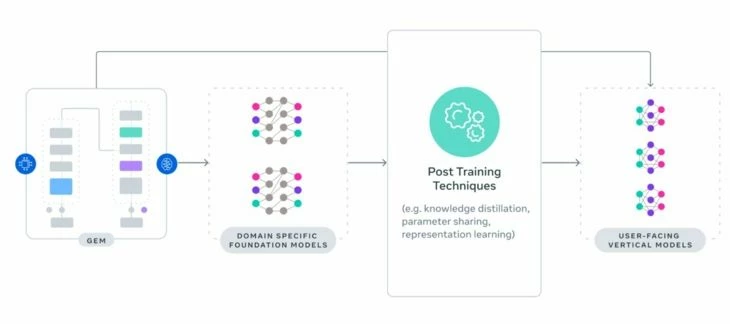
In simple terms, Andromeda decides which pool of ads should be shown to a user based on their behavior and interests. This is the strategy layer: the right group of creatives for the right audience.
GEM works deeper at the content level. It analyzes the creative itself and determines what message it carries. If the system understands that a user is interested in product-related content, GEM can recognize whether a specific video focuses on discounts, product features, or tutorials and deliver it when that angle becomes most relevant to the user’s intent.
One of the core components of the system is the InterFormer architecture. It is a sequence model capable of building a behavioral timeline dynamically.
InterFormer processes thousands of timestamped events. It considers which formats the user viewed several weeks ago, what content they returned to repeatedly, and which actions they performed consistently. The model tracks interests that are gradually losing relevance and those that are gaining strength.
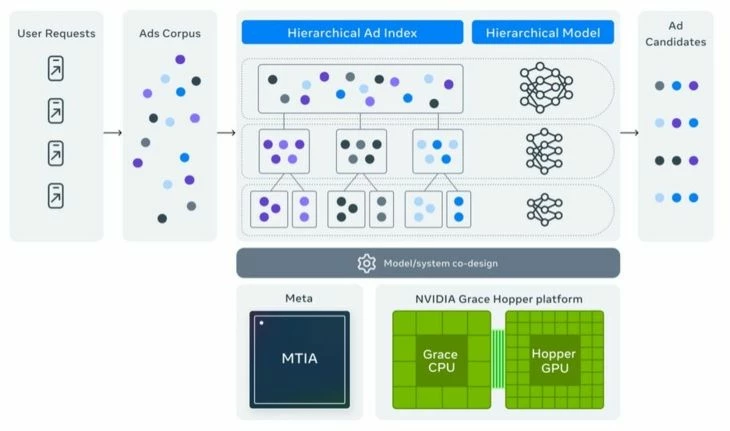
This creates a deep memory effect. The advertising system does not rely only on behavior from the past 24 hours. Instead, it places ads into a long behavioral chain where each action is interpreted in the context of previous ones.
At the same time, GEM shows a significant increase in signal processing performance compared to previous creative ranking mechanisms, roughly four times higher. As a result, broad audiences begin to perform more effectively than narrowly defined manual interests.
What Will Change for Affiliate Marketers?
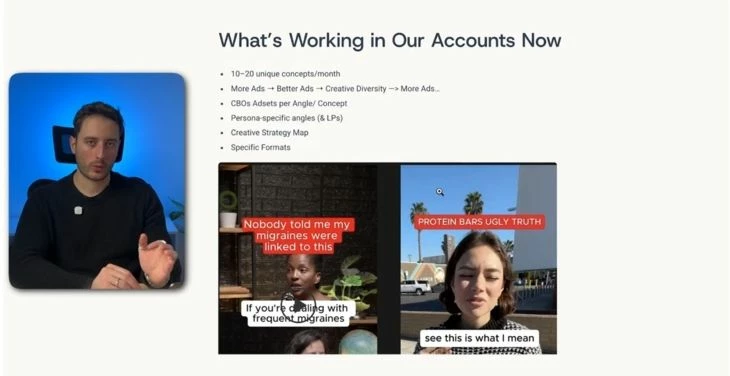
It is difficult to make precise predictions, but one thing is likely to change. The illusion of different creatives may stop working. In the past it was possible to scale using many nearly identical videos with small variations. Now that approach may not be enough.GEM breaks down meaning into components: the offer, the trigger, the emotional message, and the engagement mechanic. If the core idea is the same, the algorithm will treat the group as a single creative. That means it becomes more effective to build campaigns around different angles, pain points, and interaction scenarios related to the offer.
The second important point is the growing role of broad audiences. The model can identify relevant microsegments within a wider traffic stream. Manually narrowing interests may start to limit the system’s potential. The 1-1-10 approach with very different creatives for a broad audience becomes the core structure when working with the GEM architecture.
Instability during the learning phase will almost certainly increase. The system tests many submodels and scenarios, and budget distribution may shift more aggressively than before. This will require greater discipline in testing: fewer chaotic restarts and more systematic work with the data sample.
Meta plans to expand the capabilities of GEM:
- The model will continue learning from interaction data across different content formats such as text, images, audio, and video.
- The platform aims to build a unified foundation for ranking not only ads but also organic content.
- GEM will continue improving through training on large datasets.
GEM does not destroy Facebook setups. It simply shifts the focus slightly. The advantage will go to affiliate marketers who understand their audience more deeply and can build different communication scenarios around the product.