
You are using an out of date browser. It may not display this or other websites correctly.
You should upgrade or use an alternative browser.
You should upgrade or use an alternative browser.
[Guide] Rank your content using Entities in SEO
- Thread starter Starblazer
- Start date

jamesedisonca
Newbie
- Jul 20, 2021
- 4
- 1
Can someone recommend some seo entities? Thanks all

Dribber
Junior Member
- Mar 6, 2018
- 115
- 71
I want to give an example and I hope OP will clarify this.Can someone recommend some seo entities?
Let's say we want to rank "best razor for shaving head".
The entities of that keyword are 'razor' and 'head'.
And based on this statement...
we can create an article that contains 'razor' and 'head'.Relatedness: Relatedness is determined based on the co-occurrence entities. If 2 entities occur repeatedly together, then Google establishes a relationship between them. For example, if "Weight Loss" and "Keto Diet" occur in several articles together, then they are related.
Make sure you don't do 'keyword stuffing'.
To make your article more thorough, you can also use entities you find in 'People Also Ask'.

- Feb 28, 2019
- 7,440
- 7,893
Yes, that's how entities work. Google picks several other related entities like handle, blade, refill cartridges, electric razor, disposable razor, hair clipper etc. I'll show you something interesting here:I want to give an example and I hope OP will clarify this.
Let's say we want to rank "best razor for shaving head".
The entities of that keyword are 'razor' and 'head'.
And based on this statement...
we can create an article that contains 'razor' and 'head'.
Make sure you don't do 'keyword stuffing'.
To make your article more thorough, you can also use entities you find in 'People Also Ask'.
If you remember correctly, Google used to highlight words in our query in search results. So, it makes sense if they show Best, Razor, Head Shaving Razor, Head Razor etc. in SERPs. But you can notice "Best Minoxidil" in bold. The website has this product listed:
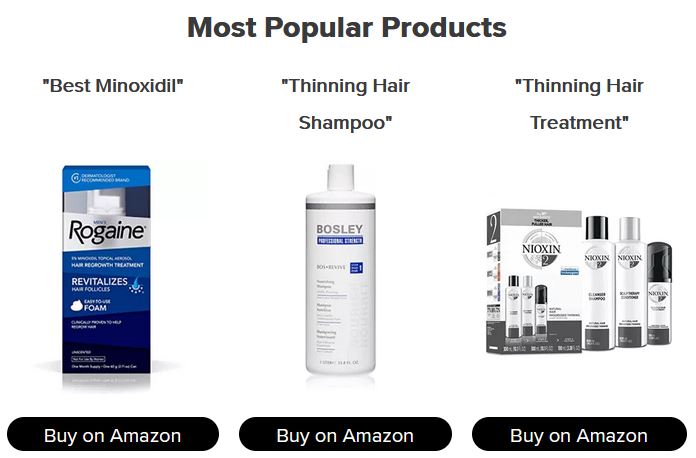
Minoxidil has nothing to do with shaving. It's a foam to wash hair with which helps hair growth. Google automatically established a relationship between them as they found both head shaving razor and minoxidil connected to hair fall. People shave their head if they are bald, and the websites connected to hair care mention minoxidil as a cure to baldness. We can never find Minoxidil in keyword research for this phrase. Only entities help Google identify these related keywords.
- Feb 28, 2019
- 7,440
- 7,893
It has nothing to do with Amazon. Entities are a part of Google's search engine algorithm.Amazon is not available in my country

zwayny
Newbie
- Aug 14, 2020
- 31
- 9
Nice share. I actually used google nlp tool a while back for testing and I think it works but still the old SEO best practice should be applied.
I tried to login to Google NLP but the dmo tool is gone. I put my CC info but still cannot find it Do you know how I can access?
I tried to login to Google NLP but the dmo tool is gone. I put my CC info but still cannot find it
Do you know how I can access?Ze_peqenho
Newbie
- Sep 2, 2019
- 5
- 0
Thanks for your thread and your 2000 posts. I usually research the entities in the top 10 results of my kw to add them to my text. I think it is a positive action that adds up to better position the contents.
zwayny
Newbie
- Aug 14, 2020
- 31
- 9
My trial period elapsed. I am ready to pay but I am not able to get to the demo tool. The only option left is build my own demo. I did that but the results were not as the demo tool and it cost me $15 to build and train the model. Am I missing anything? is there a way to access the demo tool built by Google?

- Feb 28, 2019
- 7,440
- 7,893
There are several other tools available, so I wasn't using it since long. You can use other tools like inlinks as an alternative. Their free plan is good enough for beginners. You can create multiple accounts for more credit.My trial period elapsed. I am ready to pay but I am not able to get to the demo tool. The only option left is build my own demo. I did that but the results were not as the demo tool and it cost me $15 to build and train the model. Am I missing anything? is there a way to access the demo tool built by Google?

Hamza SEO Anchor
Junior Member
- Oct 24, 2019
- 189
- 99
Great share and congrats on your 2000 post

- Jun 23, 2021
- 1,510
- 1,553
thanks op for the gold knowledge.
correct me if i'm wrong.
so overall the best strategy is to write as many content as possible, covering all possible topics and sub topics. The more content you write, the more likely your brand will be treated as a brand and entity. The more topics you cover, the more google will relate/connect your brand entity with other entity in the topics, so you have more relationships.
in the end, you will create a mini knowledge hub for your brand with huge content, connecting as many entity as possible. It's no different from what we used to create content based on topics, we still create content silos, covering people also ask, lsi, as usual. but the concepts changes from covering keywords to connecting entities.
and to write seo-optimized content, you can focus on the entity density to create more precise connections. so google will know a is connect to b, not to c in this density range.
correct me if i'm wrong.
so overall the best strategy is to write as many content as possible, covering all possible topics and sub topics. The more content you write, the more likely your brand will be treated as a brand and entity. The more topics you cover, the more google will relate/connect your brand entity with other entity in the topics, so you have more relationships.
in the end, you will create a mini knowledge hub for your brand with huge content, connecting as many entity as possible. It's no different from what we used to create content based on topics, we still create content silos, covering people also ask, lsi, as usual. but the concepts changes from covering keywords to connecting entities.
and to write seo-optimized content, you can focus on the entity density to create more precise connections. so google will know a is connect to b, not to c in this density range.
Double Jeopardy
BANNED
- Nov 1, 2021
- 103
- 36
Seems like a fun concept. Though is it feasible for small up and coming blogs?
- Feb 28, 2019
- 7,440
- 7,893
The entities are similar to keywords. Google recognizes some entities related to the main keyword to identify relevance of the article. If you search for "keyword research," Google knows that it's related to SEO. So, using the word "SEO" within your article will help you gain more trust. If you never use the word, you may not rank at all regardless of amount of backlinks and authority.thanks op for the gold knowledge.
correct me if i'm wrong.
so overall the best strategy is to write as many content as possible, covering all possible topics and sub topics. The more content you write, the more likely your brand will be treated as a brand and entity. The more topics you cover, the more google will relate/connect your brand entity with other entity in the topics, so you have more relationships.
in the end, you will create a mini knowledge hub for your brand with huge content, connecting as many entity as possible. It's no different from what we used to create content based on topics, we still create content silos, covering people also ask, lsi, as usual. but the concepts changes from covering keywords to connecting entities.
and to write seo-optimized content, you can focus on the entity density to create more precise connections. so google will know a is connect to b, not to c in this density range.
In some cases, you need to cover a lot of entities for broad articles. But it's not necessary for all content. Just like keyword density, there is also entity density. So, Google can identify relevance based on the number of times you're using an entity within your content. If you use a lot of entities, you may water down your content as a broad topic which won't work in all cases.
Here is an example of entities for keyword "keyword research." I searched for the keyword and found the following article from Moz ranking at the top:
https://moz.com/beginners-guide-to-seo/keyword-research
The following are the entities for this article (contains only top entities):
You can see that keyword research, keywords, and SEO have high frequency. There are several other entities like information, website, content etc. which indicate the relevance of the article. The following is the salience analysis of the same article (contains only top entities):
The use of relevant entities gives better results than using a lot of entities. However, you need to experiment as there are several other ranking factors. For example, some keywords require fresh concepts to rank better. So, you need to add some new entities to outrank the standard articles.
Yes, it's feasible for everyone. IMO entities is the future as it increased the confidence of Google to identify content quality. Nowadays, it became extremely difficult for me to rank content without using entities. There are some free tools for beginners to experiment.Seems like a fun concept. Though is it feasible for small up and coming blogs?
- Jun 23, 2021
- 1,510
- 1,553
yes not to use broad and a lot of entities to water down the relevance.In some cases, you need to cover a lot of entities for broad articles. But it's not necessary for all content. Just like keyword density, there is also entity density. So, Google can identify relevance based on the number of times you're using an entity within your content. If you use a lot of entities, you may water down your content as a broad topic which won't work in all cases.
Do you know how the density is calculated, is it based on the paragraph level or based on the entire page? I watched a inlinks tutorial video and find that: if you are lack of an entity, you may add it no matter where. It seems like the density is calculated/considered as a page level? So it makes us easier optimizing page, is it correct?
yes relevant entities, it's a must.The use of relevant entities gives better results than using a lot of entities. However, you need to experiment as there are several other ranking factors. For example, some keywords require fresh concepts to rank better. So, you need to add some new entities to outrank the standard articles.
but as your image suggests, it's easier to understand for some keywords that are already a entity, like big keywords/things like seo, keyword research.
in actual seo work, especially for niche sites, 80% of the time, the primary keywords/products are not an entity in my few testings, it's hard to follow the NLP analysis to easily check if the density, relevancy is right or wrong.
i guess i need to read all posts on inlinks and maybe follow seobythesea for some answers of how to entities work, especially the density part.
- Feb 28, 2019
- 7,440
- 7,893
Density is calculated on page level. Earlier stuffing keywords at the end of the page like tags or related keywords used to work fine, but it no longer works. So, I guess they implemented entity distribution factor to avoid keyword stuffing. I recommend using each entity only once or twice per paragraph.Do you know how the density is calculated, is it based on the paragraph level or based on the entire page?
The entity analysis is still a new concept and these tools don't give perfect data. I use a combination of entities and keywords to avoid any issues. At this stage, we can't rely completely on either keyword research or entity analysis. Google is trying to completely shift to entities as we can already see words/synonyms for longtail keywords instead of exact phrases. It's better to keep using keywords even if they are not entities.especially for niche sites, 80% of the time, the primary keywords/products are not an entity
- Jun 23, 2021
- 1,510
- 1,553
word.Density is calculated on page level. Earlier stuffing keywords at the end of the page like tags or related keywords used to work fine, but it no longer works. So, I guess they implemented entity distribution factor to avoid keyword stuffing. I recommend using each entity only once or twice per paragraph.
The entity analysis is still a new concept and these tools don't give perfect data. I use a combination of entities and keywords to avoid any issues. At this stage, we can't rely completely on either keyword research or entity analysis. Google is trying to completely shift to entities as we can already see words/synonyms for longtail keywords instead of exact phrases. It's better to keep using keywords even if they are not entities.
i typed a long reply but i deleted it, i think i will read more first.
but in short i think too much keyword variations might be a bad thing now, it water down the the most important entity relevancy.
before, we try to cover as many LSI, keywords variations that people used to search to cover all keywords possible on page. but with entity coming, i think it does the opposite.
some of my pillar content struggle to rank but small content ranks high. i think i used too many keyword variations that causes the entity too broad that water down the primary keyword/entity relevance, like you mentioned.
still learning, will get back to it after some good read and testing.