

- Nov 29, 2022
- 2,486
- 284
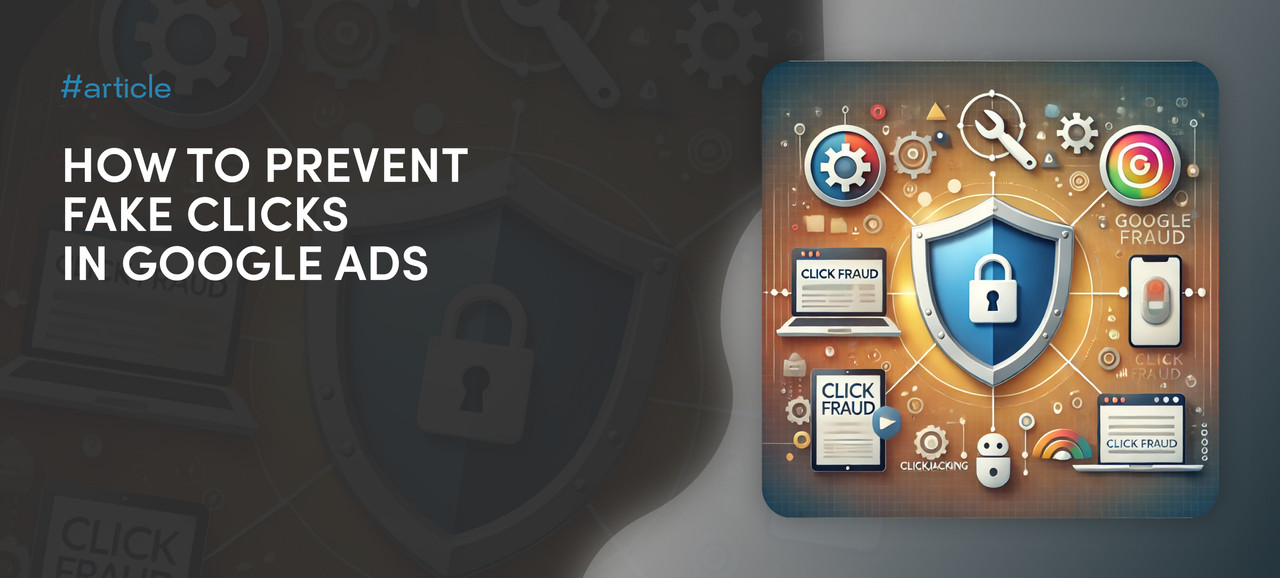
In the highly competitive world of contextual advertising, some unethical participants resort to click fraud to deplete their competitors' budgets and take their place in the ad rankings. Therefore, protection against click fraud is an essential aspect of any Google Ads campaign. In this article, the team from a service that provides trusted agency accounts for working with Google Ads will examine various types of click fraud, the technologies used by fraudsters, and methods to protect against them.
Types of Click Fraud in Google Ads
First, it's important to note that those who engage in click fraud—whether they are unethical webmasters, media buyers, or direct advertisers—don’t rely on just one strategy but often combine several. Below is a list of the most common methods, along with a brief explanation of each:- Professional Clickers: Real people who are paid to deliberately click on competitors' ads.
- Click Fraud Software: Bots created using specialized software that mimic the behavior of real users by clicking on ads.
- Bot Networks: A more harmful type of software, as it is installed on multiple devices without the users’ knowledge.
- Clickjacking: A method that involves placing hidden elements on a website, redirecting users to other resources when they click.
- Cloaking: Link substitution that redirects users to a different site than the one they clicked on. However, this type of cloaking is different from what webmasters who drive traffic to gray niches commonly use to bypass Google Ads restrictions. When using trusted agency accounts, the need for cloaking arises less frequently.
- Crowd Links: The manipulation of traffic through links posted on forums, in comments, or other places to earn commissions.
Who Engages in Click Fraud and Why?
Let’s briefly examine who in the market might be interested in click fraud.- Competitors: They aim to deplete their rivals' ad budgets and take their place in the rankings.
- Fraudsters: They use clickjacking and cloaking to increase traffic to their resources.
- Unethical Partners: They artificially inflate traffic on crowd links to receive commission payments.
How to Protect Your Google Ads Campaigns from Click Fraud
Google Ads employs algorithms and manual reviews to combat click fraud. According to their help documentation, when Google detects invalid traffic, it automatically removes it from reports, and no charges are incurred for such traffic. If the algorithms fail to filter out invalid clicks, Google reimburses the funds spent on them (up to two months in arrears). However, in reality, when using regular accounts, advertisers can only expect a refund of 10-20% of all funds spent on irrelevant clicks. To secure full reimbursement, it’s recommended to use trusted agency Google Ads accounts, which offer higher levels of trust.Google’s automatic filters analyze more than 180 parameters to detect suspicious clicks. The algorithms also monitor traffic, identifying and blocking bots. However, if webmasters are still uncertain about traffic quality after post-validation (analyzing activity and blocking invalid clicks after a targeted action), they can request an additional review of traffic quality by filing a complaint.
You can protect your campaigns using Google Ads tools in two main ways:
- Set up invalid click tracking by adding the "Invalid Clicks" and "Invalid Interactions" columns to your reports.
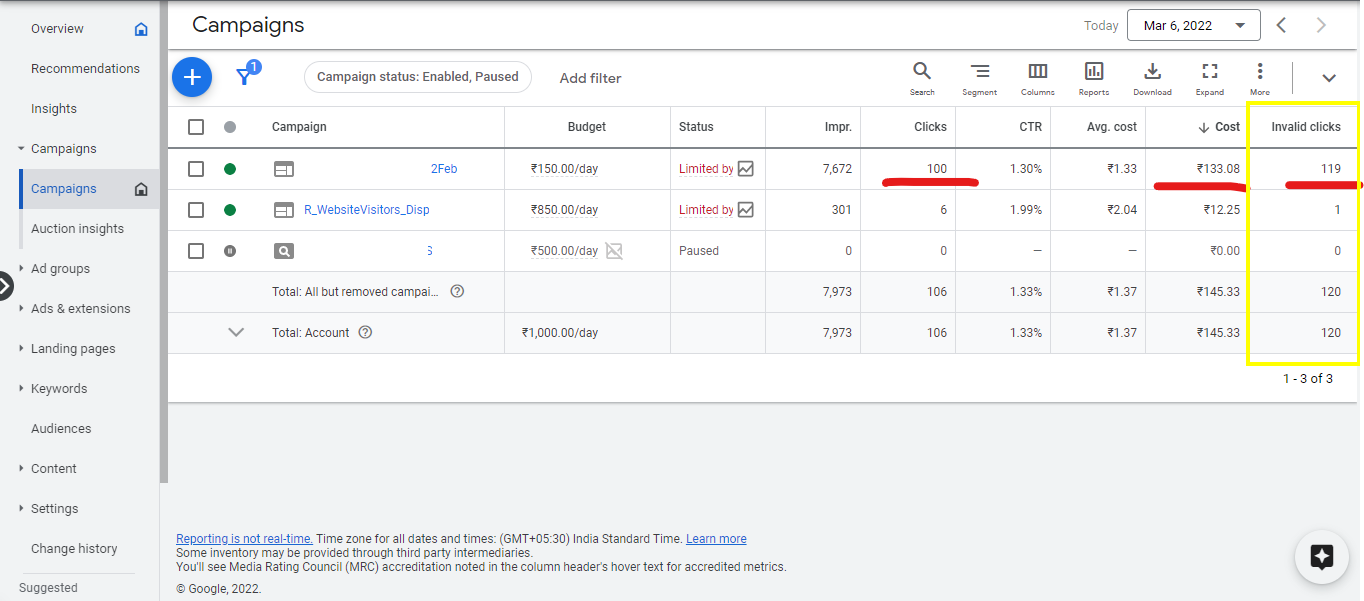
- Contact Google Support if you detect suspicious traffic. This can be done via their support page.
Manual Click Fraud Prevention
Manual click fraud prevention focuses on minimizing ad impressions to non-target clicks (bots) and temporarily halting suspicious ad groups or keywords subject to click fraud.A key step is deep data analysis:
- Age Groups: Studying click distribution by age can reveal anomalies indicative of bots.
- Long-term Interests: Analyzing users' interests helps determine how closely they align with the ad’s topic. Unusual or irrelevant interests may indicate fraud.
- Devices, OS, and Profiles: Examining device types, operating systems, and user profiles can reveal suspicious patterns, such as a large number of clicks from the same device or profile.
- Segment Blocking: Audience segments showing signs of fraud can be completely excluded from targeting.
- Bid Adjustments: For suspicious segments, bids can be reduced to the minimum to minimize the cost of ineffective clicks.
Afterward, they can monitor changes in key metrics, such as conversions, time on site, page depth, bounce rate, etc.
This approach helps optimize ad campaigns, reduce fraud costs, and improve ad efficiency.
Specialized Services for Filtering Click Fraud in Google Ads
While manual adjustments are the most effective method, software solutions can also handle some of the routine work. The most popular services today include:- Lunio
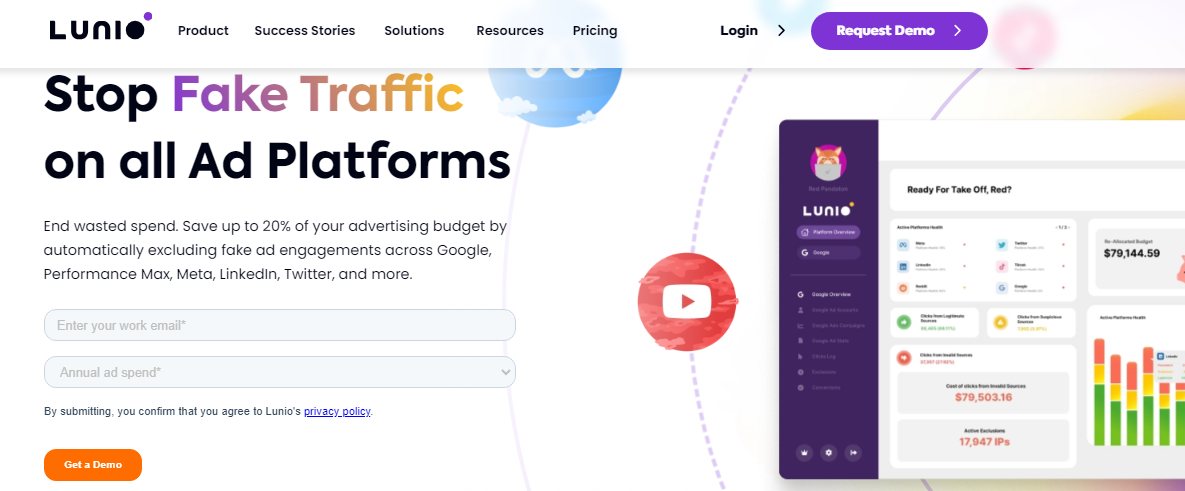
- ClickCease

These tools help track bots in real-time and block suspicious activities.

