

- Nov 29, 2022
- 2,464
- 284

Experienced affiliate marketers agree: more than 50% of a campaign's success depends on the quality of the creative. If the visual doesn’t immediately capture the user’s attention, the rest of the funnel becomes irrelevant—simply because it won't be seen. That’s why cutting corners on creative development is a costly mistake.
However, due to widespread banner blindness, producing effective ad creatives is becoming increasingly challenging. As a result, the cost of professional design services continues to rise. This article explores how Google’s new AI platform can help reduce expenses on promo materials, what features it offers, and what you can expect in terms of pricing.
What Is AI Studio?
AI Studio is a suite of neural networks developed by one of the world’s largest media tech companies. It offers tools to generate text, images, videos, and even voiceovers. While the service is mostly free, it operates on a token-based system. Each prompt consumes a certain number of tokens (units of text), and usage is limited unless you reset the conversation.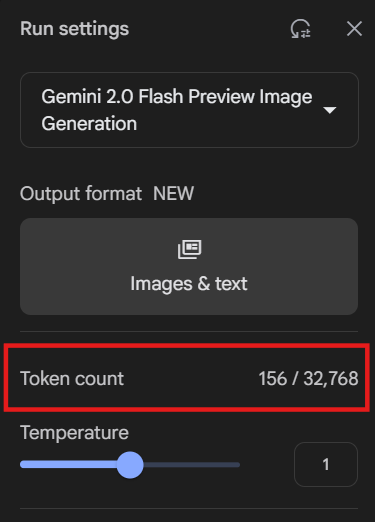
Paid features are primarily relevant for video generation, where only two free renders per day are available—hardly enough for iterative work. However, text and image generation tools remain functional within the free tier. More information on paid plans can be found in the platform’s support section.
It’s recommended to craft prompts in English. You can either use a translator or a specialized AI tool like DeepSeek to help with this. Let’s briefly walk through the core components of the platform.
Gemini and Imagen
Google’s AI Studio offers two powerful tools for image generation—Gemini and Imagen—both capable of producing high-quality visuals. For affiliate marketers focused on performance and speed, Gemini stands out due to its editing capabilities and realism.Getting Started with Gemini
To begin working with Gemini, users need to visit the official platform and select the Gemini 2.0 Flash Preview Image Generation model. This version is specifically optimized for realistic photo-style image outputs.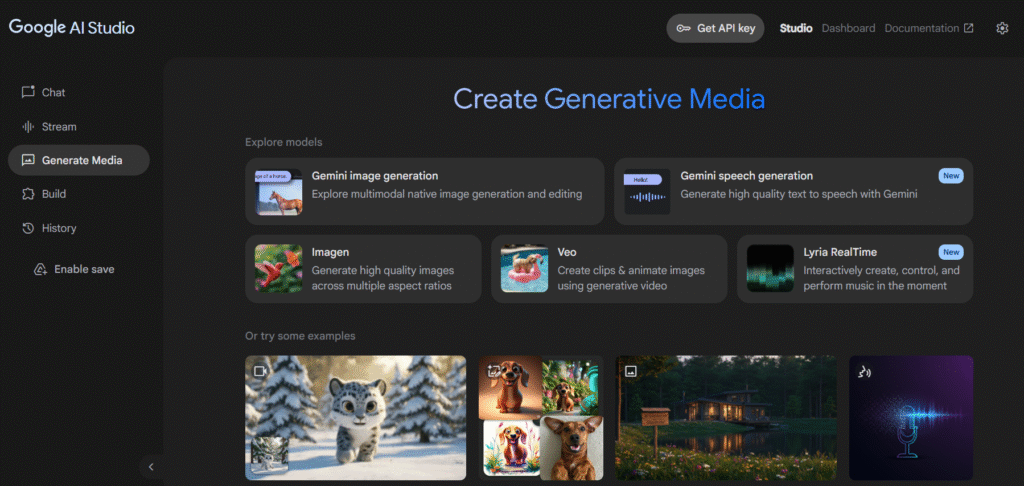
To save time on writing prompts and translating them manually, marketers can use AI tools like DeepSeek to formulate structured, English-language prompts. Google strongly recommends using English for best results.

Once inside the model interface, the user enters a prompt and monitors the token count—a measure of how much information the model processes. The more complex the request, the more tokens are consumed. When the limit is reached, the dialog must be reset, which effectively clears the model’s short-term memory.
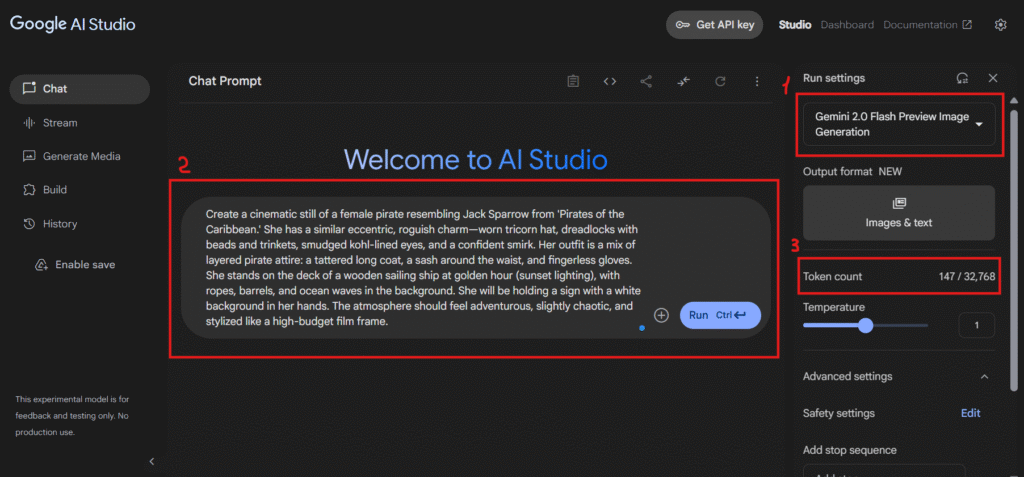
Tokens function as a sort of temporary storage; if they run out, further edits or refinements become impossible without restarting the session. That’s why it's important to structure prompts clearly and concisely.
In the first test, Gemini was asked to generate a realistic image of a woman. A negative prompt—a description of elements to avoid—was also added to improve the model's focus and reduce visual artifacts. While the result was technically competent, it did not convincingly resemble a real woman. This demonstrates that Gemini is still a beta product and may require multiple prompt iterations to achieve ideal results.

Next, the complexity was increased: the model was instructed to generate an Asian male holding a canister of a potency supplement (LongJack). A negative prompt was again included to minimize artifacts, and a sample image of the product was uploaded to guide the model. The result, delivered in just 9 seconds, was a visually appealing and usable promotional image.

The third test pushed the boundaries further. Using the same male character, Gemini was asked to generate a new image in which he is embracing a woman while still holding the same product. The model executed this complex instruction with a high degree of consistency, although, as with all generative tools, some results required fine-tuning.

These tests highlight that, although Gemini is still in development, it can already handle a wide variety of creative requests—including product placement, human interactions, and scene continuity—with minimal manual design effort.
Imagen
Now let’s move on to Imagen. Unlike Gemini, this model does not support editing after generation—everything is created in real time based on the initial prompt.As an experiment, we requested an image of the same Asian male character, without providing any reference images. The result was visually strong and met general quality expectations.

However, since Imagen does not allow for refinements, any shortcomings in the initial output cannot be corrected. If the result isn’t satisfactory, the only option is to create a new image using a revised prompt. Attempts to make adjustments—similar to how it's done in Gemini—led to entirely different visuals, making the editing workflow unpredictable.

Veo: Video Generation in Beta
Veo is Google’s experimental model for video generation. It produces 5–8 second clips at 24 FPS and 720p resolution by default (currently non-configurable). Videos are rendered in about 60–90 seconds.For example, a prompt asked for a 30-year-old Asian male speaking positively about a supplement. Since it's currently impossible to upload reference materials, producing fully brand-aligned promo videos remains difficult.

Veo can also animate static images. In one case, a static output from Imagen was animated using this feature—adding basic movement and life to the still frame.

Free users are limited to two video generations per day, making testing difficult without a subscription.
Gemini Speech Generation
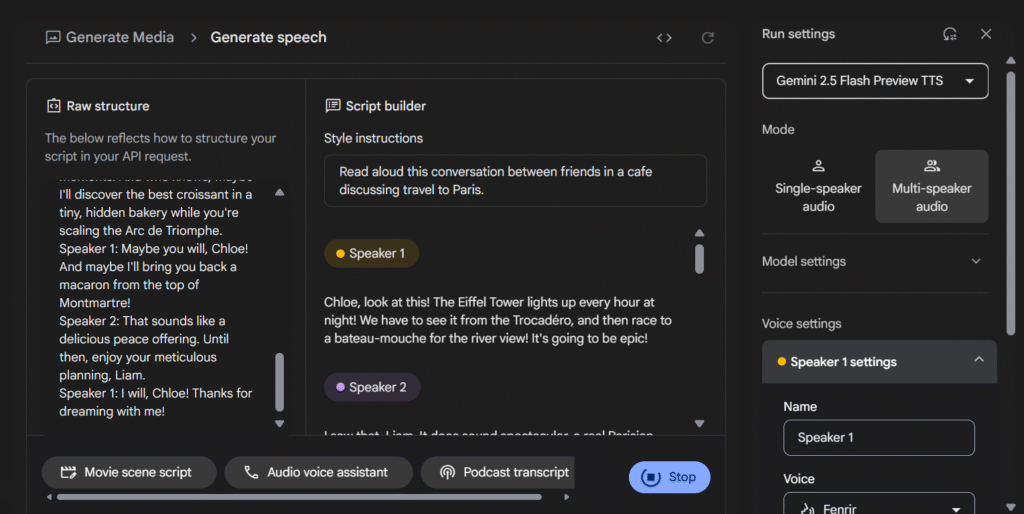
This tool enables voiceover creation. Although it can’t yet be layered directly over video within the platform, the audio files can easily be edited using external software or other neural tools.Users can assign one or two voices, customize tone and script, and generate dialogue for use in marketing videos.
Build: App Constructor
Build is an app development assistant. Simply describe the function you want, and the AI handles the rest—producing code in real time. Several templates are available in the AI Studio catalog for experimentation.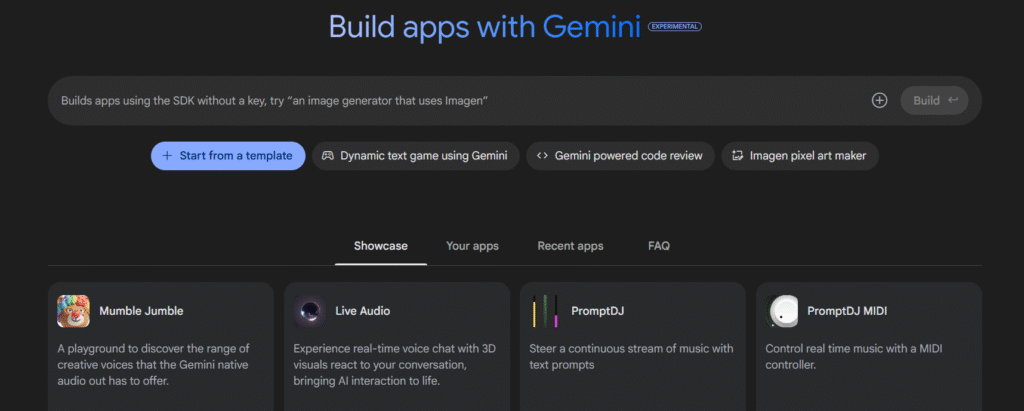
This tool has potential applications in developing lightweight apps for gambling, betting, or other verticals that typically rely on mobile installs. Since code is generated on the fly, the risk of manual interference or tampering is minimized.
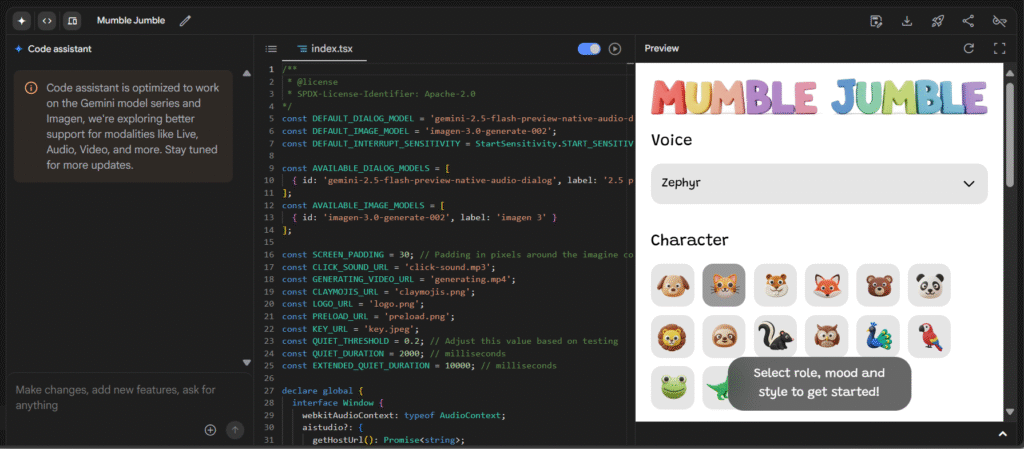
Lyria RealTime: Music Generation
Lyria is Google’s real-time music editor. While not directly tied to creatives, it can be used to produce background audio tracks. Define a genre, and the model continuously generates music until you decide to stop.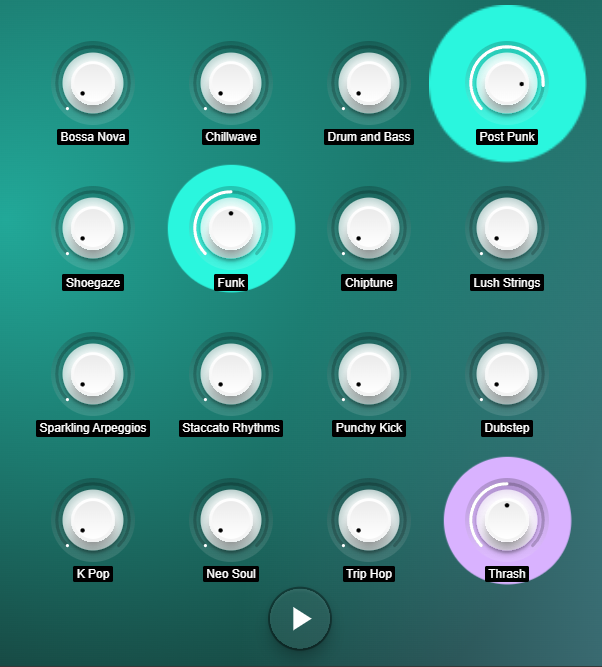
Final Thoughts
Google’s AI Studio—especially the Gemini model—is a practical solution for generating images, video, and voice assets for affiliate marketing campaigns. For static images alone, the free tier is sufficient. Token limits can be reset by restarting the conversation.However, video generation is still in beta and requires a paid subscription to deliver consistent results. The tools are evolving rapidly, but for now, marketers who leverage these features smartly can cut costs and accelerate creative production without sacrificing quality.