

TheDankChocolate
Power Member
- Jul 9, 2020
- 638
- 500
So I found this interesting read on Reddit. Just wanted to share this with the community.
The entire credit goes to the one who published it on Reddit (it is a copypasta of what I found there). In no way I am affiliated with it nor affialiate links (if any) are mine. Happy reading!
In case the mods find it inappropriate, feel free to REMOVE IT.
------------
Hey! I’ve published an in-depth case study on how we were able to grow a client of ours from 0 to 20,000+ organic traffic in only 12 months using on-page, off-page and technical SEO strategies. I’ve documented the entire process on the changes we implemented and the results they got during this time period.
Here is an overview of their traffic:

When the client approached us to work on their website, it had a lot of issues. The traffic was constantly declining. Their main keywords had started to lose rankings. All this had a great impact on their bottom line growth.
The full post is down in the comments, but here’s a brief rundown:
Optimizing for On-Page SEO:
1.Planning out a content calendar:
We immediately noticed that the client’s content effort was uneven.
On their blog, new content was being published with not much consistency.
To fix this, our team created a six-month data-driven content calendar with the help of keyword research.
Here is what it looks like:

We first identified MoF (middle of the funnel) and BoF (bottom of the funnel) keywords the client’s target audience was most interested in, using data such as monthly search volume, keyword difficulty, and looking at the SERPS to attract potential customers.
The reason for choosing MoF and BoF keywords was to first go for keywords with some commercial intent and easy to rank. This ensured we had some quick wins early on while increasing their bottom line growth.
Also, the publishing frequency was increased. The client was publishing 5-7 posts every month. We increased that to 30 posts every month. This frequency was followed religiously.
For each post, we prepared a content outline for the writers. The content contained the following information:
2. Fixed thin content issues:
For our client, we found that their blog posts had no proper structure, such as headings, subheadings, and formatting to provide structure and improve readability.
Similarly, the client did not incorporate the focus or related keywords in subheadings, the title of posts, or the copy.
Hence, we updated the client’s old posts to ensure each article was well optimized with relevant subheadings, main, and related keywords. The content was broken into chunks to improve readability.
The URL structures were improved with the focus keyword only. Meta title and description were updated of the posts with recommended Google character limit. In some cases, posts were updated with additional content where the intent was informational and required in-depth knowledge.
3. Resolved keyword cannibalization:
For eCommerce businesses with extensive inventories and similar product names, keyword cannibalization can quickly become an expensive problem.
To spot keyword cannibalization, a variety of tactics are available.
One of the most comprehensive options is to perform a content audit. This includes grouping similar content, analyzing traffic, impressions, metadata, and more to visualize potential cannibalization issues.
One of the most comprehensive options is to perform a content audit. This includes grouping similar content, analyzing traffic, impressions, metadata, and more to visualize potential cannibalization issues.
Here is what we did for the client:
For existing content: We applied 301 redirects on underperforming content to redirect visitors to a better version of similar content.
For new content: For content that we produced, we first compiled a list of all the keywords from Ahrefs related to our niche and used a keyword clustering tool to properly group keywords with similar intent and avoid cannibalization.
4. Updated internal link structure:
A review of the client’s site architecture revealed an overhaul was required. The process was broken down into several steps.
First, we made a list of all the posts on the site.
This information was then used to group similar posts, and internal links were added across all the posts.
5. Optimized product and collection pages:
After a review of the client’s product and collection pages, we noticed a severe lack of content and proper use of metadata.
As a result, all product and collection pages were updated to include optimized content and metadata to rank and boost traffic from SERPs.
This resulted in the product pages ranking far better on Google than they previously were.
Optimizing for Off-Page SEO:
6. Reduced use of exact match anchor text
Google does not have a problem with exact match anchor text per se, but there’s a fine line between fair use and manipulating the algorithm with keyword stuffing.
This is precisely what happened with our client. The majority of their backlinks were built with exact match anchor text due to which they experienced a decrease in their traffic and rankings.
Therefore, we recommend limiting the use of exact match anchor text in backlinks to between 1-5% per post.
Most of the previous anchor texts were changed by the client, and the new backlinks which we built had a mix of these types of anchor texts:
As we worked on fixing the exact match anchor text issue, we started building new backlinks by guest posting on different relevant websites.
We exported all the relevant websites from Ahrefs and did a manual email outreach using Lemlist. We offered to write a high-quality 1000 words guest post on their blog.
The key isn’t to do the above method and expect great results. Anyone can do that.
See here what ‘most’ people do:


Instead of doing ‘Dear Sir/Madam’ and spammy-looking emails, this is what we did for one of our sites:
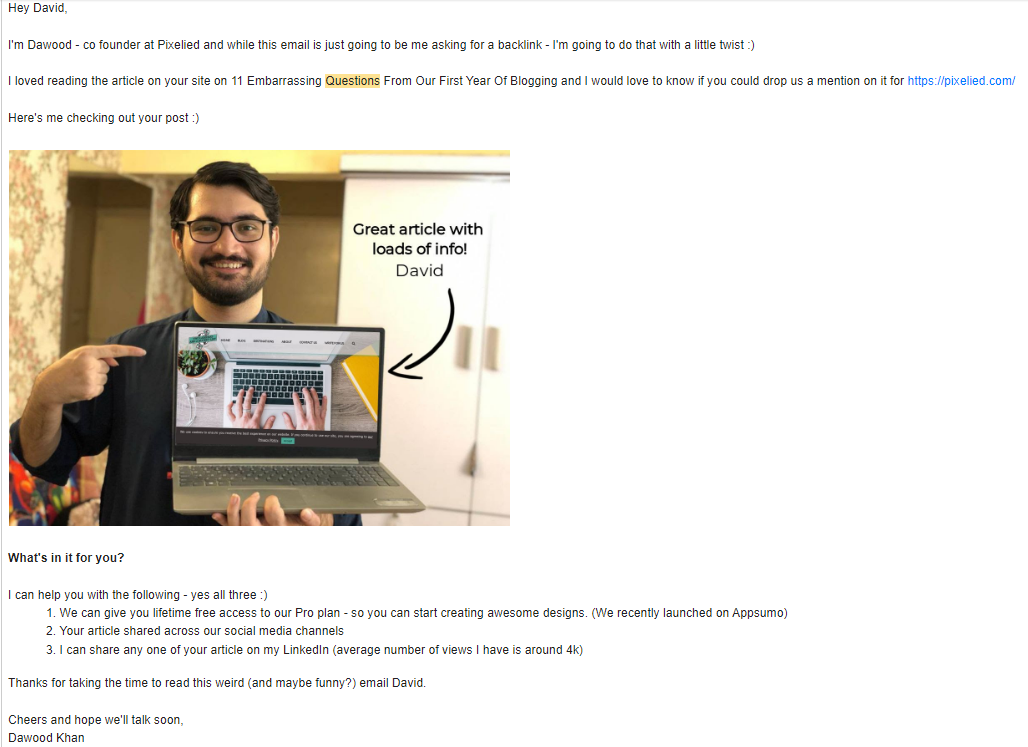
Here's the response we got: (Not one but TWO mentions )

Due to this, we were able to get placements on some of the most reputable websites.
But we only approached those websites that met these criteria:
8. Improved core web vitals:
We analyzed the client’s website and noticed its layout and content were not optimized for mobile users, despite mobile being the largest traffic source.
The site’s in-house developers were roped in for a redesign and migration of the site to a content distribution network (CDN). Next, the CSS and Javascript (JS) files on which the website was built were compressed or minified by the developers. A smaller file size means faster downloads and a reduced time for the file to be read.
Last but not least, unnecessary elements from the site’s theme were removed to reduce bloat.
All these changes immensely helped load the pages faster and eventually passed core web vitals and mobile experience for all the landing pages.
9. Fixed 404 errors:
We analyzed the client’s site server log for a period of 2 months to ensure if any landing pages had 404 errors. A server log file can tell you A LOT about your website because it is accurate data coming from Google's own crawlers.
Here’s what we found:
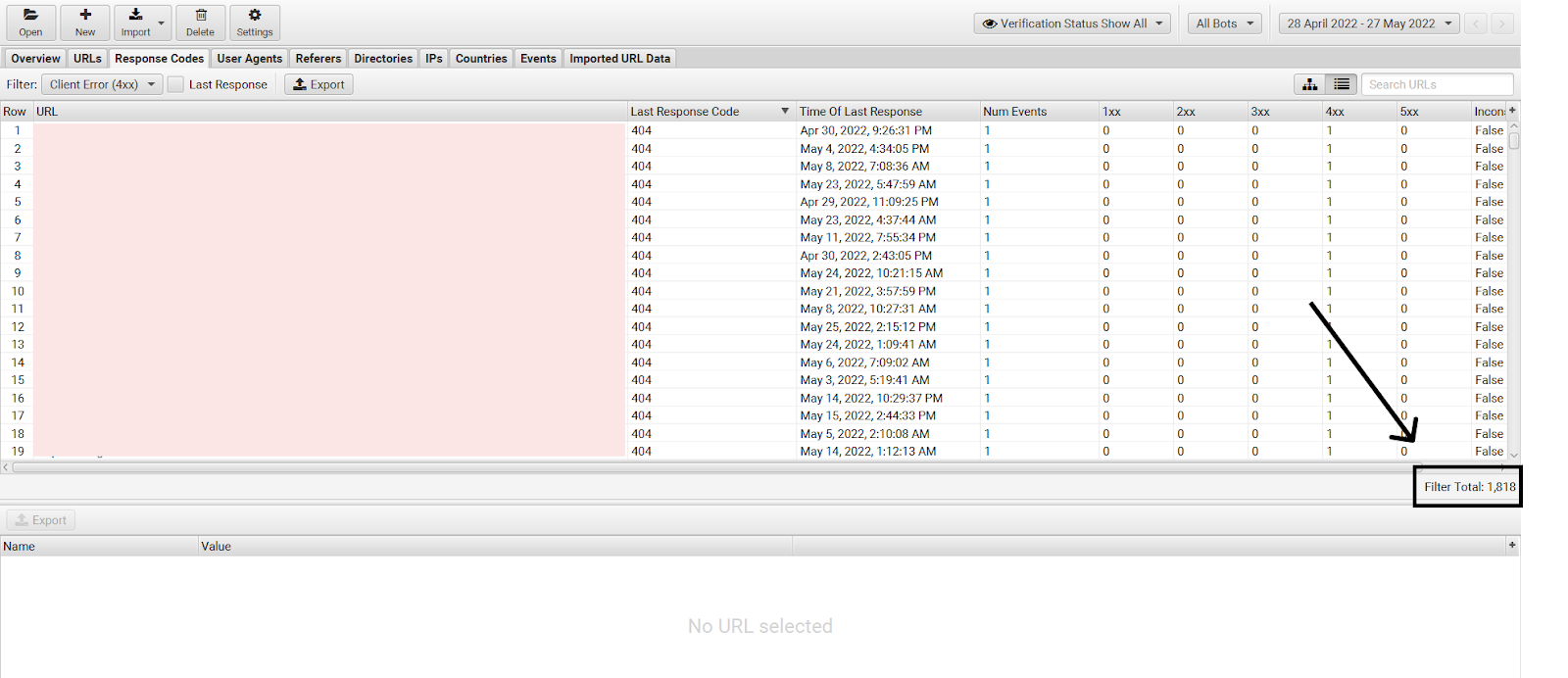
As you can see on the bottom right of the image, the website had a WHOPPING 1800+ 404 links from the log file analysis. This means that the Google crawl bot had crawled all these pages and saw the 404 status code.
Having such a high number of errors erodes your authority and credibility in the eyes of a search engine.
Why would Google rank your content if a significant chunk of your site is not working? From their perspective, you’re an unreliable source to satisfy user intent.
Just fixing these URLs significantly increased the website’s organic traffic.
Conclusion:
That's it for this SEO case study! I hope you liked the in-depth guide.
SEO is both an art and science.
Sometimes, minor fixes go a long way, but a major overhaul is often required to improve performance on SERPs and conversions.
The entire credit goes to the one who published it on Reddit (it is a copypasta of what I found there). In no way I am affiliated with it nor affialiate links (if any) are mine. Happy reading!
In case the mods find it inappropriate, feel free to REMOVE IT.
------------
Hey! I’ve published an in-depth case study on how we were able to grow a client of ours from 0 to 20,000+ organic traffic in only 12 months using on-page, off-page and technical SEO strategies. I’ve documented the entire process on the changes we implemented and the results they got during this time period.
Here is an overview of their traffic:
When the client approached us to work on their website, it had a lot of issues. The traffic was constantly declining. Their main keywords had started to lose rankings. All this had a great impact on their bottom line growth.
The full post is down in the comments, but here’s a brief rundown:
Optimizing for On-Page SEO:
1.Planning out a content calendar:
We immediately noticed that the client’s content effort was uneven.
On their blog, new content was being published with not much consistency.
To fix this, our team created a six-month data-driven content calendar with the help of keyword research.
Here is what it looks like:
We first identified MoF (middle of the funnel) and BoF (bottom of the funnel) keywords the client’s target audience was most interested in, using data such as monthly search volume, keyword difficulty, and looking at the SERPS to attract potential customers.
The reason for choosing MoF and BoF keywords was to first go for keywords with some commercial intent and easy to rank. This ensured we had some quick wins early on while increasing their bottom line growth.
Also, the publishing frequency was increased. The client was publishing 5-7 posts every month. We increased that to 30 posts every month. This frequency was followed religiously.
For each post, we prepared a content outline for the writers. The content contained the following information:
- SEO optimization checklist
- Main keyword
- What the URL slug will be
- Related keywords to add
- Relevant internal links to add
- Headings and subheadings for the content
2. Fixed thin content issues:
For our client, we found that their blog posts had no proper structure, such as headings, subheadings, and formatting to provide structure and improve readability.
Similarly, the client did not incorporate the focus or related keywords in subheadings, the title of posts, or the copy.
Hence, we updated the client’s old posts to ensure each article was well optimized with relevant subheadings, main, and related keywords. The content was broken into chunks to improve readability.
The URL structures were improved with the focus keyword only. Meta title and description were updated of the posts with recommended Google character limit. In some cases, posts were updated with additional content where the intent was informational and required in-depth knowledge.
3. Resolved keyword cannibalization:
For eCommerce businesses with extensive inventories and similar product names, keyword cannibalization can quickly become an expensive problem.
To spot keyword cannibalization, a variety of tactics are available.
One of the most comprehensive options is to perform a content audit. This includes grouping similar content, analyzing traffic, impressions, metadata, and more to visualize potential cannibalization issues.
One of the most comprehensive options is to perform a content audit. This includes grouping similar content, analyzing traffic, impressions, metadata, and more to visualize potential cannibalization issues.
Here is what we did for the client:
For existing content: We applied 301 redirects on underperforming content to redirect visitors to a better version of similar content.
For new content: For content that we produced, we first compiled a list of all the keywords from Ahrefs related to our niche and used a keyword clustering tool to properly group keywords with similar intent and avoid cannibalization.
4. Updated internal link structure:
A review of the client’s site architecture revealed an overhaul was required. The process was broken down into several steps.
First, we made a list of all the posts on the site.
This information was then used to group similar posts, and internal links were added across all the posts.
5. Optimized product and collection pages:
After a review of the client’s product and collection pages, we noticed a severe lack of content and proper use of metadata.
As a result, all product and collection pages were updated to include optimized content and metadata to rank and boost traffic from SERPs.
This resulted in the product pages ranking far better on Google than they previously were.
Optimizing for Off-Page SEO:
6. Reduced use of exact match anchor text
Google does not have a problem with exact match anchor text per se, but there’s a fine line between fair use and manipulating the algorithm with keyword stuffing.
This is precisely what happened with our client. The majority of their backlinks were built with exact match anchor text due to which they experienced a decrease in their traffic and rankings.
Therefore, we recommend limiting the use of exact match anchor text in backlinks to between 1-5% per post.
Most of the previous anchor texts were changed by the client, and the new backlinks which we built had a mix of these types of anchor texts:
- Exact Match (Only 1-5%)
- Partial Match
- Branded (Initially, we built most of the backlinks on branded terms)
- Generic
- Naked link
As we worked on fixing the exact match anchor text issue, we started building new backlinks by guest posting on different relevant websites.
We exported all the relevant websites from Ahrefs and did a manual email outreach using Lemlist. We offered to write a high-quality 1000 words guest post on their blog.
The key isn’t to do the above method and expect great results. Anyone can do that.
See here what ‘most’ people do:
Instead of doing ‘Dear Sir/Madam’ and spammy-looking emails, this is what we did for one of our sites:
Here's the response we got: (Not one but TWO mentions )
Due to this, we were able to get placements on some of the most reputable websites.
But we only approached those websites that met these criteria:
- All referring domains must have at least 500/visitors per month
- Backlinks must be from relevant domains at least one-year-old
- Backlinks must be from sites with no previous history of drastic traffic spikes, especially a decrease in traffic
- The website must have a healthy backlink profile
- The website must not be a PBN
8. Improved core web vitals:
We analyzed the client’s website and noticed its layout and content were not optimized for mobile users, despite mobile being the largest traffic source.
The site’s in-house developers were roped in for a redesign and migration of the site to a content distribution network (CDN). Next, the CSS and Javascript (JS) files on which the website was built were compressed or minified by the developers. A smaller file size means faster downloads and a reduced time for the file to be read.
Last but not least, unnecessary elements from the site’s theme were removed to reduce bloat.
All these changes immensely helped load the pages faster and eventually passed core web vitals and mobile experience for all the landing pages.
9. Fixed 404 errors:
We analyzed the client’s site server log for a period of 2 months to ensure if any landing pages had 404 errors. A server log file can tell you A LOT about your website because it is accurate data coming from Google's own crawlers.
Here’s what we found:
As you can see on the bottom right of the image, the website had a WHOPPING 1800+ 404 links from the log file analysis. This means that the Google crawl bot had crawled all these pages and saw the 404 status code.
Having such a high number of errors erodes your authority and credibility in the eyes of a search engine.
Why would Google rank your content if a significant chunk of your site is not working? From their perspective, you’re an unreliable source to satisfy user intent.
Just fixing these URLs significantly increased the website’s organic traffic.
Conclusion:
That's it for this SEO case study! I hope you liked the in-depth guide.
SEO is both an art and science.
Sometimes, minor fixes go a long way, but a major overhaul is often required to improve performance on SERPs and conversions.


