
D
Deleted member 708208
Guest
Google’s “Knowledge Card”.
It’s arguably one of search’s best status symbols. It solidifies your brands authenticity, increases above the fold awareness, and helps those lucky enough to have one to enjoy more traffic to multiple vanity profiles.
Brands want them, agencies have to attempt to edit card information, and most solo entrepreneurs ask how to acquire their own knowledge cards.
If you were perplexed by how to accomplish any of that, great news!
We’ve analyzed over 100 knowledge cards, created 8 signals, and collected over 1400 data points to shed some light on how Google pieces together their sidebar snippet.

In order to understand what we were dealing with it was crucial for us to examine the sidebar snippet across multiple industries and breakdown the characteristics of each person/entity within a knowledge card into several data points.
Our goal is simple.
To understand what Google looks for in an entity before they feel they’re “Knowledge Card Worthy” and what you can do about it.
There’s A LOT of variables. Seriously. We manually inspected each snippet for a variety of signals. Below we’ll demonstrate what all we were examining before we get into the finer data analysis results.

Let’s start this study by breaking down the total numbers among the entire data and how the signals stacked up. Then we will continue our journey by focusing on each individual sector that we explored.
Our aim is to provide each signals weight placed on the sidebar snippet. You can be the judge as to what is most important by the data.
49% Wikipedia Profiles: Out of all knowledge cards examined just 49% mentioned a Wikipedia. We even manually checked if the entity had a Wikipedia which the snippet did not mention.
45% Wikidata Tables: This statistic shows 4% have a Wikipedia profile but was not a part of the Wikidata program. Furthermore, those with Wikidata had more images within the snippet.
94% Rank #1 For Their Brand: A majority of companies and persons who have a sidebar snippet rank for their name or organization. Only 6% have a Knowledge Card and don’t rank first place.
22% Awards Mentioned: 22% of those with a knowledge card had a prominant award. It’s important to note only 7 of those 22 are literally featured within the snippet itself.
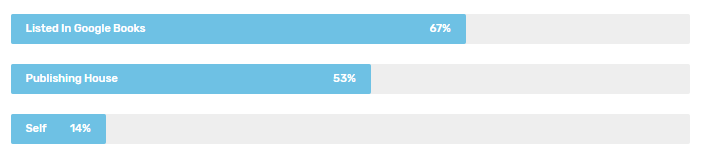
Google loves authors.
As you can see in the aforementioned data, a majority of Google Knowledge Card holders are also authors. There were published authors among those listed on Google Books than those who brought their books to the market as a self-published author.
Now let’s see how social media stacked up.

Twitter was by far the winner.
Over half of all knowledge card holders enjoy being verified on at least one social media platform. Instagram was the rarest platform to see verified.
12% Family Referenced: Some knowledge card recipients are benefactors of well known family members. 25 of our snippet data was companies. So 12% of 75 snippets mentioned family.
76% Mentioned In News: Of all knowledge cards examined, 76% of the companies or persons listed were at least mentioned in a newsworthy article. Look below for a further breakdown.

Being media worthy is obviously a big plus.
The majority of data collected shows that people with Google sidebar snippets have been mentioned around the web. Note how many were in the title of the news articles too. We didn’t count sideline press releases, only authoritative magazine mentions.
Company Oriented Knowledge Cards
The previous data was an overview of all 100 knowledge cards examined. To understand the process better we inspected 25 sidebar snippets of companies exclusively. That way you can have a breakdown of the statistics.
The same signals were collected.
Please note that the below data is a representation of 25 as a whole. The “Family Member” signal has been omitted from this data since it’s not relevant for companies. Let’s take a look at our findings and compare them to personal snippets.
88% Wikipedia Profile: A majority of company snippets included a reference to Wikipedia. Notice a much higher rate of companies with a Wiki profile compared to individuals.
84% Wikidata Table: Wikidata nearly paralleled Wikipedia profiles with a very rare 4% having a Wiki profile without being included in the Wikidata project.
100% Rank For Brand: Each company that acquired a knowledge card was ranked #1 in Google for their organizations name. Notice a higher prevalence compared to the data overview.
32% Have Awards: 32% of all organizations with a sidebar snippet received an award in their respective fields. Note that 0 out of 25 actually had the award mentioned in the snippet.

Companies don’t do books well.
A very small percentage of companies actually published a book. It was interesting to see instructionals (Manuals.) making their way into Google Books. One problem companies have with books is if the CEO published a book, it’s under their own name.
Let’s compare companies social status.

Again Twitter comes out on top.
The prevalence of a company being verified on at least one platform was astonishingly consistent. Instagram was the hardest platform for companies to build a presence.
88% Are Newsworthy: Nearly all companies with sidebar snippets have been featured at consequential news websites. An obviously higher frequency than seen in the overview data.
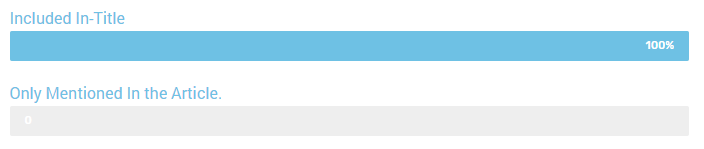
Intitle mention frequency was nearly a standard.
Unlike the data overview we see a complete parallel between news placements and the companies being mentioned in the title of the articles.
Personal Brand Knowledge Cards
You’ve seen the overview data and a breakdown of 25 company knowledge cards. Now it’s time to see what the numbers look like for personal brands. These are bloggers, personalities, consultants, and random people.
We collected our data on all 8 signals.
All data is represented as a percentage of 75 whole knowledge cards collected. You can compare this segmented data with companies and the whole sum of all sidebar snippet statistics. Let’s break it down.
24% Wikipedia Profiles: A smaller amount of individuals included in the Google sidebar snippet had a Wikipedia profile. This could very well be an indicator of a lack of personal references.
36% Wikidata Tables: Those who enjoyed having a Wikidata table generally had a better rate of their knowledge card including a featured image of them.
92% Rank #1 For Their Names: The prevalence of individuals ranking for their names was high, but slightly lower than companies who were featured in the sidebar snippet.
17% Have Awards: Out of 75 individuals we concluded that 17% were awarded, however only 6 out of 13 of those with awards had their award mentioned within the knowledge card.

Individuals can leverage Google Books.
It’s not easy for a company to publish a book, but an individual can. Most Knowledge Cards featuring people also included their books.
Where do individuals fall out on the social stage?
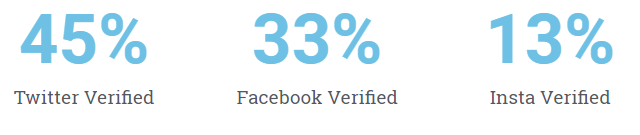
Personal brands have less verified accounts.
For the first time in our study we can see where people verified on Twitter are more likely to also be verified on Facebook. Instagram is still very difficult.
12% Family Referenced: No shock here considering company Knowledge Cards did not have any family and the signal was omitted from that section.
72% Newsworthy: Newsworthiness is an important signal for individuals. Most people with a Google sidebar snippet are included in popular internet magazines.

You see a decline of intitle news mentions.
Compared to company sidebar snippets we see a solid decrease in intitle mentions. It makes sense considering landing interviews at popular magazines isn’t easily earned.
Where do we go from here?
The data is published and now it’s your turn to leverage it for your own use. Whether you’re building a company or personal image you will know which signals matter most. Feel free to share your thoughts and conclusions in the comments below.
It’s arguably one of search’s best status symbols. It solidifies your brands authenticity, increases above the fold awareness, and helps those lucky enough to have one to enjoy more traffic to multiple vanity profiles.
Brands want them, agencies have to attempt to edit card information, and most solo entrepreneurs ask how to acquire their own knowledge cards.
If you were perplexed by how to accomplish any of that, great news!
We’ve analyzed over 100 knowledge cards, created 8 signals, and collected over 1400 data points to shed some light on how Google pieces together their sidebar snippet.
In order to understand what we were dealing with it was crucial for us to examine the sidebar snippet across multiple industries and breakdown the characteristics of each person/entity within a knowledge card into several data points.
Our goal is simple.
To understand what Google looks for in an entity before they feel they’re “Knowledge Card Worthy” and what you can do about it.
There’s A LOT of variables. Seriously. We manually inspected each snippet for a variety of signals. Below we’ll demonstrate what all we were examining before we get into the finer data analysis results.
Let’s start this study by breaking down the total numbers among the entire data and how the signals stacked up. Then we will continue our journey by focusing on each individual sector that we explored.
Our aim is to provide each signals weight placed on the sidebar snippet. You can be the judge as to what is most important by the data.
49% Wikipedia Profiles: Out of all knowledge cards examined just 49% mentioned a Wikipedia. We even manually checked if the entity had a Wikipedia which the snippet did not mention.
45% Wikidata Tables: This statistic shows 4% have a Wikipedia profile but was not a part of the Wikidata program. Furthermore, those with Wikidata had more images within the snippet.
94% Rank #1 For Their Brand: A majority of companies and persons who have a sidebar snippet rank for their name or organization. Only 6% have a Knowledge Card and don’t rank first place.
22% Awards Mentioned: 22% of those with a knowledge card had a prominant award. It’s important to note only 7 of those 22 are literally featured within the snippet itself.
Google loves authors.
As you can see in the aforementioned data, a majority of Google Knowledge Card holders are also authors. There were published authors among those listed on Google Books than those who brought their books to the market as a self-published author.
Now let’s see how social media stacked up.
Twitter was by far the winner.
Over half of all knowledge card holders enjoy being verified on at least one social media platform. Instagram was the rarest platform to see verified.
12% Family Referenced: Some knowledge card recipients are benefactors of well known family members. 25 of our snippet data was companies. So 12% of 75 snippets mentioned family.
76% Mentioned In News: Of all knowledge cards examined, 76% of the companies or persons listed were at least mentioned in a newsworthy article. Look below for a further breakdown.
Being media worthy is obviously a big plus.
The majority of data collected shows that people with Google sidebar snippets have been mentioned around the web. Note how many were in the title of the news articles too. We didn’t count sideline press releases, only authoritative magazine mentions.
Company Oriented Knowledge Cards
The previous data was an overview of all 100 knowledge cards examined. To understand the process better we inspected 25 sidebar snippets of companies exclusively. That way you can have a breakdown of the statistics.
The same signals were collected.
Please note that the below data is a representation of 25 as a whole. The “Family Member” signal has been omitted from this data since it’s not relevant for companies. Let’s take a look at our findings and compare them to personal snippets.
88% Wikipedia Profile: A majority of company snippets included a reference to Wikipedia. Notice a much higher rate of companies with a Wiki profile compared to individuals.
84% Wikidata Table: Wikidata nearly paralleled Wikipedia profiles with a very rare 4% having a Wiki profile without being included in the Wikidata project.
100% Rank For Brand: Each company that acquired a knowledge card was ranked #1 in Google for their organizations name. Notice a higher prevalence compared to the data overview.
32% Have Awards: 32% of all organizations with a sidebar snippet received an award in their respective fields. Note that 0 out of 25 actually had the award mentioned in the snippet.
Companies don’t do books well.
A very small percentage of companies actually published a book. It was interesting to see instructionals (Manuals.) making their way into Google Books. One problem companies have with books is if the CEO published a book, it’s under their own name.
Let’s compare companies social status.
Again Twitter comes out on top.
The prevalence of a company being verified on at least one platform was astonishingly consistent. Instagram was the hardest platform for companies to build a presence.
88% Are Newsworthy: Nearly all companies with sidebar snippets have been featured at consequential news websites. An obviously higher frequency than seen in the overview data.
Intitle mention frequency was nearly a standard.
Unlike the data overview we see a complete parallel between news placements and the companies being mentioned in the title of the articles.
Personal Brand Knowledge Cards
You’ve seen the overview data and a breakdown of 25 company knowledge cards. Now it’s time to see what the numbers look like for personal brands. These are bloggers, personalities, consultants, and random people.
We collected our data on all 8 signals.
All data is represented as a percentage of 75 whole knowledge cards collected. You can compare this segmented data with companies and the whole sum of all sidebar snippet statistics. Let’s break it down.
24% Wikipedia Profiles: A smaller amount of individuals included in the Google sidebar snippet had a Wikipedia profile. This could very well be an indicator of a lack of personal references.
36% Wikidata Tables: Those who enjoyed having a Wikidata table generally had a better rate of their knowledge card including a featured image of them.
92% Rank #1 For Their Names: The prevalence of individuals ranking for their names was high, but slightly lower than companies who were featured in the sidebar snippet.
17% Have Awards: Out of 75 individuals we concluded that 17% were awarded, however only 6 out of 13 of those with awards had their award mentioned within the knowledge card.
Individuals can leverage Google Books.
It’s not easy for a company to publish a book, but an individual can. Most Knowledge Cards featuring people also included their books.
Where do individuals fall out on the social stage?
Personal brands have less verified accounts.
For the first time in our study we can see where people verified on Twitter are more likely to also be verified on Facebook. Instagram is still very difficult.
12% Family Referenced: No shock here considering company Knowledge Cards did not have any family and the signal was omitted from that section.
72% Newsworthy: Newsworthiness is an important signal for individuals. Most people with a Google sidebar snippet are included in popular internet magazines.
You see a decline of intitle news mentions.
Compared to company sidebar snippets we see a solid decrease in intitle mentions. It makes sense considering landing interviews at popular magazines isn’t easily earned.
Where do we go from here?
The data is published and now it’s your turn to leverage it for your own use. Whether you’re building a company or personal image you will know which signals matter most. Feel free to share your thoughts and conclusions in the comments below.