
D
Deleted member 1024843
Guest
SEO is an ever-changing topic. It changes almost every year & whatever is right today, might turn out to be a mistake next month. Having said that, the points that I will mention in this have been around for a while and it is very less likely that these mistakes will turn out to be ‘good things to do’ anytime soon.
Being an internet marketer for over 7 years now, I have seen countless websites who have these mistakes. You don’t need to be a SEO guy to avoid them.
That’s the goal of this article (to make sure your next on-page SEO is on point).
Let’s talk about 5 simple, yet surprisingly common SEO mistakes that are harming your website.
Not Focusing On LSI Data
LSI stands for Latent semantic index. To simplify, it is nothing but the method of using a variety of different ‘similar keywords’ on your copy so that search engine can understand what the page is about.
If you are lucky enough not to be in the SEO community in 2010–12, here’s a little story time for you.
Google was not always smart.
It was dumb.
If I wanted to rank the keyword ‘cat food’ in 2010, I could write ‘cat food’ a 1000 times in a page and it would get ranked because Google thought the page was relevant to cat foods. Some saavy internet marketers used to insert their keyword 100 times and changing the color of their text to white (with a white background) so that it doesn’t affect user experience but pleases Google.
It worked.
People got ranked left and right.
However, things changed.
Google is now smarter than all of us and they use something called Rank Brain (Google’s Algorithm) to rank a page on search results.
One of the many criteria for that page to be ranked is having decent LSI presence.
Here’s how you do it.
Suppose, you have a website about ‘cat food’ & you want to rank for the same keyword.
Instead of filling your page writing ‘cat food’ a hundred time, use LSI data.
Visit LSIGraph & do a search (it is free).
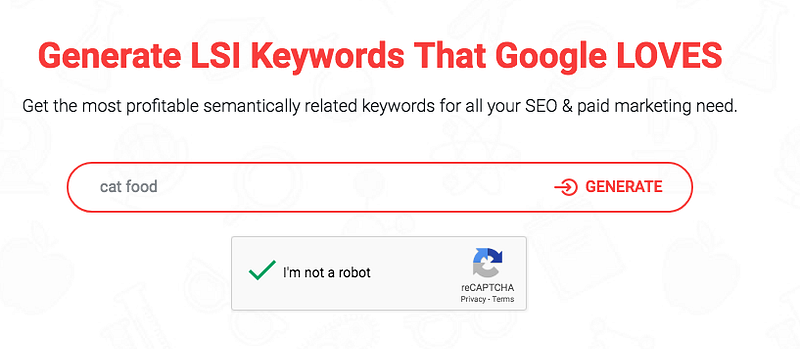
You will get a list of similar keywords immediately. Here’s what mine looks like:
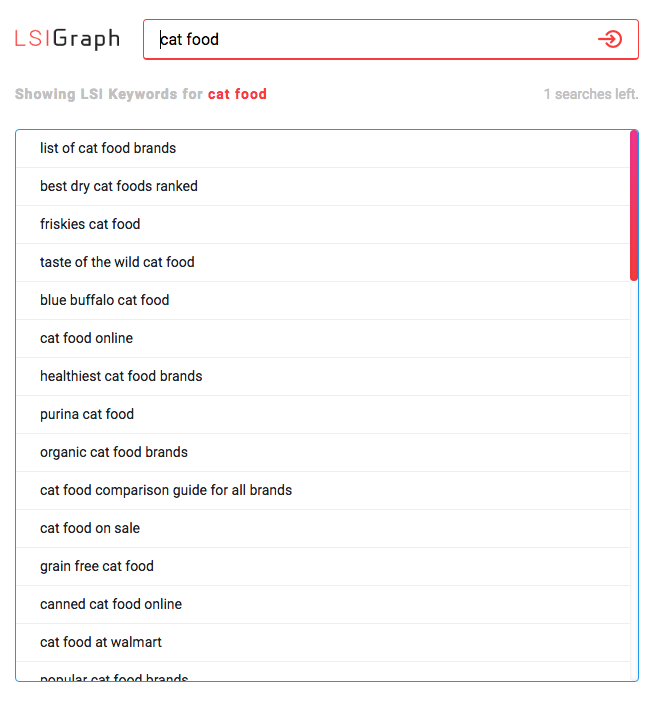
See how I got a list of keywords? Now simply add as many of them naturally as you can throughout your page and Google (and other search engines) will have a clear idea on what your page is about.
Remember, don’t stuff keywords. Use them naturally.
Internal Linking
I get it. Off-page SEO is difficult. Nobody wants to link to you & you seem to get nowhere with backlink opportunities either. You don’t understand what is outreach, guest posting & all those ‘nerd talks’.
However, you can link to yourself, right?
That’s what internal linking is about & it is a very important part of your overall SEO structure.
There are two key benefits when it comes to internal linking
Buying Cheap Links Off Forums/Markets
I see many make the same mistakes over and over again. They buy links off places like Fiverr, Warrior Forum, Black Hat World & god knows where else.
Where it seems an easy solution to do that, it is harming your site both in the short and long run.
Let me explain how.
To get the value of a link, you have to understand the concept of ‘link juice‘. Think of it as a glass of juice that Google provides to every website. The bigger authority the website is, the bigger is the size of that glass.
Each time, when the site gives a link to another site, some of the juice is being transferred to the new site and so on.
For all the sites that are on those forums & marketplaces, the glass is already empty due to providing so many links to other sites.
Pretty much everyone that asks for a link and pays a certain amount, they get a link and this makes the glass empty.
So when you pay and get a link from one of those marketplaces, you basically are not receiving any value. These links will hardly give you any rank improvements or authority.
There’s another risk too.
This is the risk of getting an unnatural link penalty.
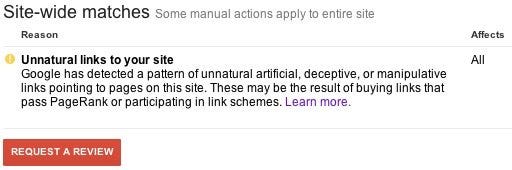
You get one of these bad boys when you get links from non-relevant websites. This may also happen when you receive links from websites that are hosted in a bad neighborhood, have poor backlinks on themselves or have the habit of giving out links to other ‘poor websites’.
This is another risk when you buy links and that’s why, buying link is one of the biggest mistakes you can perform in 2018 and beyond.
Duplicate Content
Wait. I know what you are thinking!
“We don’t have duplicate content on our website”- Each page has different content, right? right?
Well, not really.
Duplicate content can be of many forms and sometimes, you don’t even see ’em coming.
For example, one very common issue is having different versions of a website live. For example, you might have these links published:
If you have three or even 2 different versions of your website and if they are not redirected to one main one, you are in trouble. According to Google, they are all different URLs with same or similar content on every one of them.
That’s duplicate content, right?
Some more common duplicate content errors are:
Once again, another very common SEO mistake that we see many making in recent days. When Google first announced that they are rolling mobile first indexing, webmasters started to freak out.
It was logical.
Not everyone had a mobile friendly website.
The problem is that your website might not be mobile friendly even if you think it is.
A mobile friendly website is not only about acing mobile friendliness in Google’s testing tool. It is a bit more than that.
When you say, you are a mobile friendly website, you have to make sure that your UX supports that claim.
Having big buttons, having small text, non-responsive images or pop ups might not be an indication of a good mobile website even if you are officially ‘mobile friendly’.
Google has said on countless occasions that they will not rank you if you are not mobile first and as per our analysis, we have seen it happening already.
From mid 2018, we have stopped even looking at our SERP rankings for desktop results as it automatically improves when the mobile version improves. However, we can’t say the opposite.
Focus on your mobile site. It will help you to rank better in SERPs. Period.
We will leave it here today.
What do you think is the biggest yet common SEO mistake? Let us know in the comments.
Originally published at passivejournal.com on October 25, 2018.
Being an internet marketer for over 7 years now, I have seen countless websites who have these mistakes. You don’t need to be a SEO guy to avoid them.
That’s the goal of this article (to make sure your next on-page SEO is on point).
Let’s talk about 5 simple, yet surprisingly common SEO mistakes that are harming your website.
Not Focusing On LSI Data
LSI stands for Latent semantic index. To simplify, it is nothing but the method of using a variety of different ‘similar keywords’ on your copy so that search engine can understand what the page is about.
If you are lucky enough not to be in the SEO community in 2010–12, here’s a little story time for you.
Google was not always smart.
It was dumb.
If I wanted to rank the keyword ‘cat food’ in 2010, I could write ‘cat food’ a 1000 times in a page and it would get ranked because Google thought the page was relevant to cat foods. Some saavy internet marketers used to insert their keyword 100 times and changing the color of their text to white (with a white background) so that it doesn’t affect user experience but pleases Google.
It worked.
People got ranked left and right.
However, things changed.
Google is now smarter than all of us and they use something called Rank Brain (Google’s Algorithm) to rank a page on search results.
One of the many criteria for that page to be ranked is having decent LSI presence.
Here’s how you do it.
Suppose, you have a website about ‘cat food’ & you want to rank for the same keyword.
Instead of filling your page writing ‘cat food’ a hundred time, use LSI data.
Visit LSIGraph & do a search (it is free).
You will get a list of similar keywords immediately. Here’s what mine looks like:
See how I got a list of keywords? Now simply add as many of them naturally as you can throughout your page and Google (and other search engines) will have a clear idea on what your page is about.
Remember, don’t stuff keywords. Use them naturally.
Internal Linking
I get it. Off-page SEO is difficult. Nobody wants to link to you & you seem to get nowhere with backlink opportunities either. You don’t understand what is outreach, guest posting & all those ‘nerd talks’.
However, you can link to yourself, right?
That’s what internal linking is about & it is a very important part of your overall SEO structure.
There are two key benefits when it comes to internal linking
- Having a solid site architecture
- Being able to pass link juice from one page to another
Buying Cheap Links Off Forums/Markets
I see many make the same mistakes over and over again. They buy links off places like Fiverr, Warrior Forum, Black Hat World & god knows where else.
Where it seems an easy solution to do that, it is harming your site both in the short and long run.
Let me explain how.
To get the value of a link, you have to understand the concept of ‘link juice‘. Think of it as a glass of juice that Google provides to every website. The bigger authority the website is, the bigger is the size of that glass.
Each time, when the site gives a link to another site, some of the juice is being transferred to the new site and so on.
For all the sites that are on those forums & marketplaces, the glass is already empty due to providing so many links to other sites.
Pretty much everyone that asks for a link and pays a certain amount, they get a link and this makes the glass empty.
So when you pay and get a link from one of those marketplaces, you basically are not receiving any value. These links will hardly give you any rank improvements or authority.
There’s another risk too.
This is the risk of getting an unnatural link penalty.
You get one of these bad boys when you get links from non-relevant websites. This may also happen when you receive links from websites that are hosted in a bad neighborhood, have poor backlinks on themselves or have the habit of giving out links to other ‘poor websites’.
This is another risk when you buy links and that’s why, buying link is one of the biggest mistakes you can perform in 2018 and beyond.
Duplicate Content
Wait. I know what you are thinking!
“We don’t have duplicate content on our website”- Each page has different content, right? right?
Well, not really.
Duplicate content can be of many forms and sometimes, you don’t even see ’em coming.
For example, one very common issue is having different versions of a website live. For example, you might have these links published:
If you have three or even 2 different versions of your website and if they are not redirected to one main one, you are in trouble. According to Google, they are all different URLs with same or similar content on every one of them.
That’s duplicate content, right?
Some more common duplicate content errors are:
- Having subdomains with similar content
- Having mirror pages with same content
- Not 301 redirecting pages when changing urls
Once again, another very common SEO mistake that we see many making in recent days. When Google first announced that they are rolling mobile first indexing, webmasters started to freak out.
It was logical.
Not everyone had a mobile friendly website.
The problem is that your website might not be mobile friendly even if you think it is.
A mobile friendly website is not only about acing mobile friendliness in Google’s testing tool. It is a bit more than that.
When you say, you are a mobile friendly website, you have to make sure that your UX supports that claim.
Having big buttons, having small text, non-responsive images or pop ups might not be an indication of a good mobile website even if you are officially ‘mobile friendly’.
Google has said on countless occasions that they will not rank you if you are not mobile first and as per our analysis, we have seen it happening already.
From mid 2018, we have stopped even looking at our SERP rankings for desktop results as it automatically improves when the mobile version improves. However, we can’t say the opposite.
Focus on your mobile site. It will help you to rank better in SERPs. Period.
We will leave it here today.
What do you think is the biggest yet common SEO mistake? Let us know in the comments.
Originally published at passivejournal.com on October 25, 2018.


