
You are using an out of date browser. It may not display this or other websites correctly.
You should upgrade or use an alternative browser.
You should upgrade or use an alternative browser.
Permanently Closed Marketplace Sales Thread
- Thread starter yenerich
- Start date
- Status
- Not open for further replies.
what is the reason IGR stuck after getting 30 to 40 click ? I am using 24/7 days on my dedicated vps with HMA,I have need manual stop the IGR and start again then IGR working again,If i didn't run igr manually again then it stuck again.Why ? How can i solve this issue?
CryptoGames
Registered Member
- Sep 12, 2014
- 97
- 29
Similar story. I'm using HMA and after some time it just stops changing IP. HMA can't connect so I have to stop IGR and start again. Then HMA connects.what is the reason IGR stuck after getting 30 to 40 click ? I am using 24/7 days on my dedicated vps with HMA,I have need manual stop the IGR and start again then IGR working again,If i didn't run igr manually again then it stuck again.Why ? How can i solve this issue?
Support was on my PC via Teamviewer and just claiming it's HMAs problem. Tried on win 7 , win XP, different versions of HMA and IGR. Problem is the same.
@Yenerich...don't claim that problem is only at my place, because it's not. Many users have this problem.
And one new problem. I'm getting error "no credit available in DeathByCaptcha" even though I have 6$ on account.
Last edited:

gabrielBro
Junior Member
- Jan 3, 2014
- 160
- 23
Yenerich, we raised a ticket about 40 min ago. Please review and get back to us asap on our server settings. We need help urgently. Thanks

yenerich
Supreme Member
- May 26, 2013
- 1,322
- 204
Is there any way to mute the sound that plays endlessly on the youtube videos it launches. Is there a setting to mute audio when we are doing a youtube campaign. The music is driving me crazy.
Nop, only in your system, cut the sound from webbrowser i guess.
----------------------------------------------------
For people getting problems with HMA:
Make sure that the delay between searches is bigger than 140 seconds (in fact today we release a new version and one og the changes is setting a min of 140 seconds between searches in HMA, otherwise it drives crazy sometimes.
Also once again, do not use this thread as a report thread. Your message could get ignored because we only comes here sometimes to annouce things, we dont not monitor all day. We offer a help desk or even the PM for reports.
-------------------------------------------------


Last edited by a moderator:
Same problem, and I try 150 secs between searches and not workswhat is the reason IGR stuck after getting 30 to 40 click ? I am using 24/7 days on my dedicated vps with HMA,I have need manual stop the IGR and start again then IGR working again,If i didn't run igr manually again then it stuck again.Why ? How can i solve this issue?
abyssal_miss
Power Member
- Jun 18, 2011
- 621
- 140
There were so many bugs with this the last time I used it.
Has anyone ranked so far with this? Any improvements?
Has anyone ranked so far with this? Any improvements?

crashover
Power Member
- Dec 7, 2008
- 565
- 657
Still going an duntill now i lost almost 10 Positions
My KeyPhrase went from pos 40 to pos 50.

Also, on google searches ( G webmaster ) I cannot see results, it says i received 1 or 2 clicks against the 90 your software says....looks a bit odd to me, and you should reply here aswell since here is where you sell....
Or do you want to have just positive reviews avoiding people having issues ?
helixstone
Registered Member
- Jul 8, 2014
- 56
- 4
Can someone please help me with understanding this. I have backconnect proxies from reverseproxies and they show up like this:
188.226.129.201:2336
188.226.129.201:2337
etc etc.
Now when i use these proxies they are working fine but in the stats of igr when it does the search it shows ip always as
188.226.129.201. Even when it changes to use the different back connect proxies it always shows it searches from 188.226.129.201.
Does this mean it is coming from the same ip each time or is igr just not showing proper details of backconnect proxy being used for eaxmple 188.226.129.201:2336 then 188.226.129.201:2337.
thank you for anyone that can help me understand
188.226.129.201:2336
188.226.129.201:2337
etc etc.
Now when i use these proxies they are working fine but in the stats of igr when it does the search it shows ip always as
188.226.129.201. Even when it changes to use the different back connect proxies it always shows it searches from 188.226.129.201.
Does this mean it is coming from the same ip each time or is igr just not showing proper details of backconnect proxy being used for eaxmple 188.226.129.201:2336 then 188.226.129.201:2337.
thank you for anyone that can help me understand
abyssal_miss
Power Member
- Jun 18, 2011
- 621
- 140
sorry yenerich, but i'm not interested in the beta results, as when I was using it back in jan-feb. I didn't see positive results. But I had other factors going on, so in all fairness. I wasn't sure if it was the bot or me and had to stop testing with your bot. But when I was using it, it was very flawed and I could find at least 5 major footprints that seemed like things google would have been picking up on for years.
Because it's been so long, I forget fully what those were, and if I need to. I'll go back into the old thread to find my comments, but I'd just prefer to know if any customers already have seen positive results. Not comments from your sales graphics.
This shouldn't be something you comment on yourself either, this should be something customers that have used this successfully write a response to, as that's the whole point of a forum, and being able to ask this question.
IF you're going to respond to this, maybe cherry pick a testimonial form an actual customer responding on the good results from somewhere within the 15 pages.
Because it's been so long, I forget fully what those were, and if I need to. I'll go back into the old thread to find my comments, but I'd just prefer to know if any customers already have seen positive results. Not comments from your sales graphics.
This shouldn't be something you comment on yourself either, this should be something customers that have used this successfully write a response to, as that's the whole point of a forum, and being able to ask this question.
IF you're going to respond to this, maybe cherry pick a testimonial form an actual customer responding on the good results from somewhere within the 15 pages.
crashover
Power Member
- Dec 7, 2008
- 565
- 657
No you do not have to explain this many times, do not threat us like retards.
the fact you can post only one time per day, doesn't mean anything to me, if when you do... you still avoid my questions.
I posted some stats which you avoided to comment on your "daily reply", than i had to quote my self again and keep asking you to get your attention/reply, and yet, not a reply to my question.
That image is not from Google Webmaster, but from a serp tracker, at the end of the story is what the software is intended for, increasing serp rank, correct ? And my serp are getting down in rank.
I could post also Google webmaster results, showing barely 1 click on 100 that software pretend to have done.

Better?
Anyway im moving my questions to PM to avoid unusefull waste of time for both of us.
I suggest everyone to try using "System" as cleaning options and to tick "show internal browser" (apparently doing this will also allow G.A. to see the visits and Search Keyword), seems to give better results to me apparently, i will post more when i will have more results to compare with.
the fact you can post only one time per day, doesn't mean anything to me, if when you do... you still avoid my questions.
I posted some stats which you avoided to comment on your "daily reply", than i had to quote my self again and keep asking you to get your attention/reply, and yet, not a reply to my question.
That image is not from Google Webmaster, but from a serp tracker, at the end of the story is what the software is intended for, increasing serp rank, correct ? And my serp are getting down in rank.
I could post also Google webmaster results, showing barely 1 click on 100 that software pretend to have done.
Better?
Anyway im moving my questions to PM to avoid unusefull waste of time for both of us.
I suggest everyone to try using "System" as cleaning options and to tick "show internal browser" (apparently doing this will also allow G.A. to see the visits and Search Keyword), seems to give better results to me apparently, i will post more when i will have more results to compare with.
Last edited:
yenerich
Supreme Member
- May 26, 2013
- 1,322
- 204
This answer help everybody that is not getting the desired results yet:
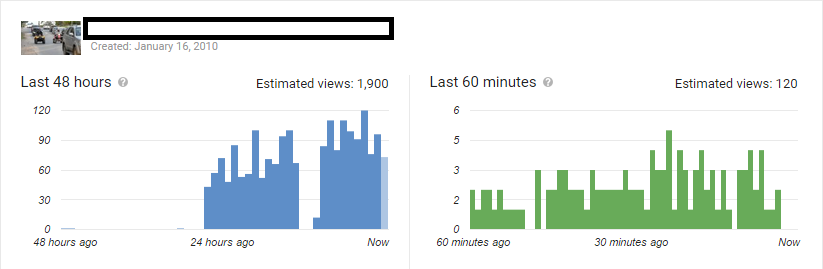
Listen, per example, running 2 VPS with backconnects during 20 hours, gave us this results in Youtube.
Its from Youtube analytics.
You can see that before there was almost no visitors at all and when we start to searching in Google for the video and then visitings (and watching it) it suddenly show 1900 visits in 20 hours (at the end we get something like 2400 for 24 hours))
In Google Webmaster Tools, doing a Case Study in the website of a customer that is a member of BHW we get this, per example: (Its not BETA testers)

You can see that the position grows, the click grows and the CTR too.
In fact the rank start growing with the first "kick" of CTR increment. And at the end it get the same point exactly that the CTR!!
Its official infomation from Google. I made this screenshots during a TeamViewer connection, from the VPS of the customer and she was there, watching that this are the real stats that we find at that moment.
The customer (thebat1980) is a member of this BHW forum (we didnt knew her before) and this was not during a BETA.
Yes, this was after maybe 10 days and after 2500 clicks or more.
If you want to give 100 clicks and see the results... im not sure that is enough to impact in Webmaster Tools.
Also, as i already explain, webmaster tools is delayed for 2,3 or 4 days.
Also, as we explain many times in the forum, to have a better impact on Google, we discover that they are paying much attention to mobile, so unselect all user agents and only use mobile ones and you will see soon a better performance. Spoecially if you use backconnect proxies from reverseproxies.
But the more important thing is that you need to make that IGR do a lot of clicks per day (the best combination is with backconnects and using mobile as user agent) and it will increase the CTR a lot in Webmaster Tools.
Doing just a few clicks per day (less than 250) will not have enough impact on Google, according to our experience.
Like this one, we run 2 VPS with Backconnects and mobile user agents, and in 6 days we get this high impact:

If you need help to make it run in this way, we can connect to your VPS using Team Viewer (its freeware) and help you. I repeat, our Case Studies teach us that the best combination is backconnects, a lot of daily clicks using mobile user agents.
After doing that, with 500 daily click, in 4 or 5 days you will see a big increment on clicks and CTR in Goole Webmaster Tools... and after some days more (depending in your keyword/niche and how competitive it is) in your ranking.
Yes, maybe some will need to use the "system" cleaning option of the software, it depends on each windows installation. Some could hang using this option, some will have better results. For this stats we dont use that option.
We usually runs 2 or even 3 VPS in our campaigns to get even best and faster results.
I hope this helps to make it more clear for every one.
If anybody needs help to achieve this kind of results, contact us (use PM or our HelpDesk) and we will gladly do a TeamViewer session to help you.
Note: as we already said before, we usually use 2 VPS to achieve FASTER results like this last stats, that GROWS A LOT IN 6 DAYS.
We will not be able to answer tonight anything, as we are doing this "earlier" post. This is the last time that we do it (doing a post before the 24 hours), we dont want to break BHW rules at all.
Listen, per example, running 2 VPS with backconnects during 20 hours, gave us this results in Youtube.
Its from Youtube analytics.
You can see that before there was almost no visitors at all and when we start to searching in Google for the video and then visitings (and watching it) it suddenly show 1900 visits in 20 hours (at the end we get something like 2400 for 24 hours))
In Google Webmaster Tools, doing a Case Study in the website of a customer that is a member of BHW we get this, per example: (Its not BETA testers)
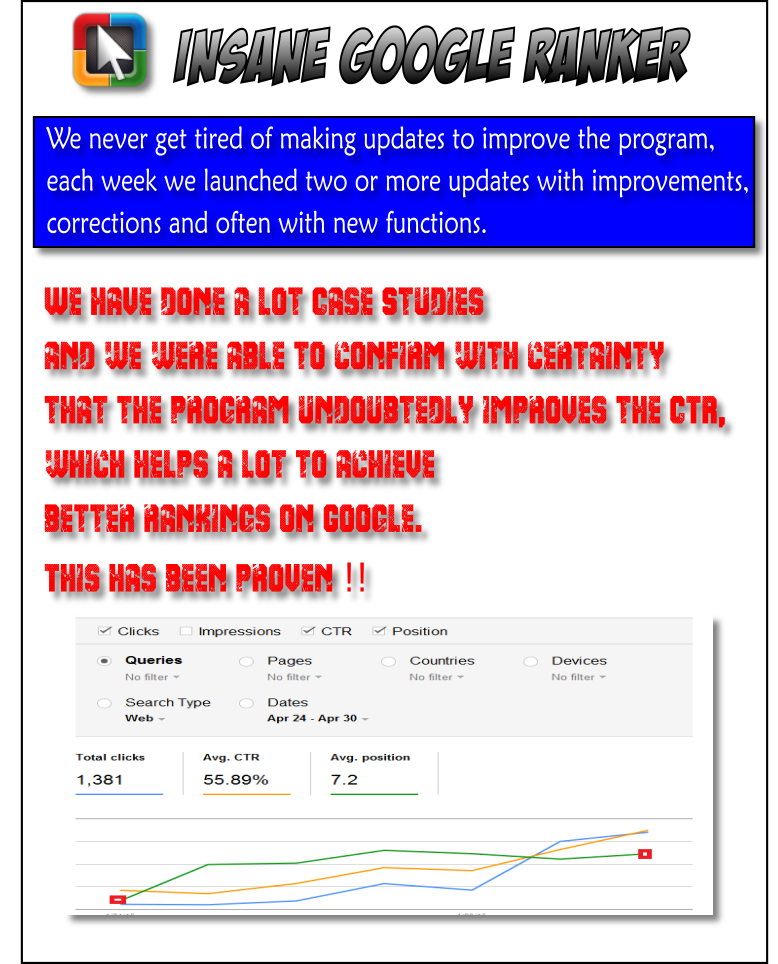
You can see that the position grows, the click grows and the CTR too.
In fact the rank start growing with the first "kick" of CTR increment. And at the end it get the same point exactly that the CTR!!
Its official infomation from Google. I made this screenshots during a TeamViewer connection, from the VPS of the customer and she was there, watching that this are the real stats that we find at that moment.
The customer (thebat1980) is a member of this BHW forum (we didnt knew her before) and this was not during a BETA.
Yes, this was after maybe 10 days and after 2500 clicks or more.
If you want to give 100 clicks and see the results... im not sure that is enough to impact in Webmaster Tools.
Also, as i already explain, webmaster tools is delayed for 2,3 or 4 days.
Also, as we explain many times in the forum, to have a better impact on Google, we discover that they are paying much attention to mobile, so unselect all user agents and only use mobile ones and you will see soon a better performance. Spoecially if you use backconnect proxies from reverseproxies.
But the more important thing is that you need to make that IGR do a lot of clicks per day (the best combination is with backconnects and using mobile as user agent) and it will increase the CTR a lot in Webmaster Tools.
Doing just a few clicks per day (less than 250) will not have enough impact on Google, according to our experience.
Like this one, we run 2 VPS with Backconnects and mobile user agents, and in 6 days we get this high impact:
If you need help to make it run in this way, we can connect to your VPS using Team Viewer (its freeware) and help you. I repeat, our Case Studies teach us that the best combination is backconnects, a lot of daily clicks using mobile user agents.
After doing that, with 500 daily click, in 4 or 5 days you will see a big increment on clicks and CTR in Goole Webmaster Tools... and after some days more (depending in your keyword/niche and how competitive it is) in your ranking.
Yes, maybe some will need to use the "system" cleaning option of the software, it depends on each windows installation. Some could hang using this option, some will have better results. For this stats we dont use that option.
We usually runs 2 or even 3 VPS in our campaigns to get even best and faster results.
I hope this helps to make it more clear for every one.
If anybody needs help to achieve this kind of results, contact us (use PM or our HelpDesk) and we will gladly do a TeamViewer session to help you.
Note: as we already said before, we usually use 2 VPS to achieve FASTER results like this last stats, that GROWS A LOT IN 6 DAYS.
We will not be able to answer tonight anything, as we are doing this "earlier" post. This is the last time that we do it (doing a post before the 24 hours), we dont want to break BHW rules at all.
Last edited:

thebat1980
Senior Member
- Nov 19, 2013
- 836
- 198
The team really helped today! Amazing support thank you - placed on a cheap VPS server with reverse proxies! Wasn'r sure how to do this exactly and they came up trumps!
yenerich
Supreme Member
- May 26, 2013
- 1,322
- 204
The team really helped today! Amazing support thank you - placed on a cheap VPS server with reverse proxies! Wasn'r sure how to do this exactly and they came up trumps!
Thanks !!
-----------------

BTW, the twins thanks all our BHW customers:
------------------------------------------------------------------------------------------------------------------
HI Yenerich, I sent you an email please let me know as soon as you can.
Also, you mentioned on a recent post earlier "500 daily click, in 4 or 5 days you will see a big increment on clicks and CTR in Goole Webmaster Tools". What should we do for "local geotargeted keywords" such as "auto repair kansas"?
Some google analytics show for instance "1000" searches /month for a specific local keyword. Don't you think 500 daily click would be a bit excessive for that type of a local keyword we are trying to rank ? What do you suggest?
Otherwise IGR works great for "nationwide keywords". One of the keywords went from page 7 to page 1!
Thanks
With less then some hundreds of daily clicks it will take more time (maybe a lot of time) to "move the ammeter" (move the "detector" or get noticed by Google).
Kansas is big enough (population: 2,900,000 people according to Google. How many cars can you find in Kansas?)... i mean, only for a very small town, with almost no competition, could be useless to make such a big move to obtain some ranking that is easy to obtain.
Thats is the measure: the difficulty to reach the top 10 or top 5 and stay there will tell us when is "enough":
BUT... if the ranking is not so easy to obtain, is because there is competition, and then everyone could start increasing until Google shows in Webmaster tools that the CTR has increased.
For a big market, per example, it could take 2 or 3 VPS running full to get somewhere.
I will answer you talking about GSA. I am running 4 GSAs in 4 VPS and some of my keywords shows like it only has 1000 monthly searches, and i build maybe 40k daily backlinks and if i stop my VPS my keywords suffer. Now, beside GSA I am running other 4 VPS with IGR to keep my sites i first page... remember that according to Google some of my keywords only have 1k monthly searches.
I think that never is too much, unless you talk about something really small (not in searches, but in population).

Thats good news my friend !!
.
Last edited by a moderator:
HI Yenerich, I sent you an email please let me know as soon as you can.
Also, you mentioned on a recent post earlier "500 daily click, in 4 or 5 days you will see a big increment on clicks and CTR in Goole Webmaster Tools". What should we do for "local geotargeted keywords" such as "auto repair kansas"?
Some google analytics show for instance "1000" searches /month for a specific local keyword. Don't you think 500 daily click would be a bit excessive for that type of a local keyword we are trying to rank ? What do you suggest?
Otherwise IGR works great for "nationwide keywords". One of the keywords went from page 7 to page 1!
Thanks
Also, you mentioned on a recent post earlier "500 daily click, in 4 or 5 days you will see a big increment on clicks and CTR in Goole Webmaster Tools". What should we do for "local geotargeted keywords" such as "auto repair kansas"?
Some google analytics show for instance "1000" searches /month for a specific local keyword. Don't you think 500 daily click would be a bit excessive for that type of a local keyword we are trying to rank ? What do you suggest?
Otherwise IGR works great for "nationwide keywords". One of the keywords went from page 7 to page 1!
Thanks
Thank You for the detailed explanations Yenerich. I am still a bit confused(probably me). Regardless the city, when google shows on their keyword planner that a specific "LOCAL keyword" has 1000 searches a month, don't you think their "spam algorithm" will be "triggered" when we setup IGR for 500 clicks a day for a specific "LOCAL keyword" that has only 1000 searches a month? Meaning this specific local keywords will suddenly get 500 searches/clicks a day (and actually more is someone has the same idea I have)which would be over 15,000 searches/month . And on the top of it for a local website,which is really my concern.
Logically, a search needs to be done first by IGR before clicking on a site. So in order to get 500 clicks for a specific local keyword IGR needs to do 500 searches. correct? Also I don't think it's prudent to leave IGR running 24h a day for local keywords as generally people do local searches during the day / evening but not too much in the middle of the night. Unless I am missing something.
Thanks again for the GREAT SUPPORT!
Logically, a search needs to be done first by IGR before clicking on a site. So in order to get 500 clicks for a specific local keyword IGR needs to do 500 searches. correct? Also I don't think it's prudent to leave IGR running 24h a day for local keywords as generally people do local searches during the day / evening but not too much in the middle of the night. Unless I am missing something.
Thanks again for the GREAT SUPPORT!
Last edited:
yenerich
Supreme Member
- May 26, 2013
- 1,322
- 204
Thank You for the detailed explanations Yenerich. I am still a bit confused(probably me). Regardless the city, when google shows on their keyword planner that a specific "LOCAL keyword" has 1000 searches a month, don't you think their "spam algorithm" will be "triggered" when we setup IGR for 500 clicks a day for a specific "LOCAL keyword" that has only 1000 searches a month? Meaning this specific local keywords will suddenly get 500 searches/clicks a day (and actually more is someone has the same idea I have)which would be over 15,000 searches/month . And on the top of it for a local website,which is really my concern.
Logically, a search needs to be done first by IGR before clicking on a site. So in order to get 500 clicks for a specific local keyword IGR needs to do 500 searches. correct? Also I don't think it's prudent to leave IGR running 24h a day for local keywords as generally people do local searches during the day / evening but not too much in the middle of the night. Unless I am missing something.
Thanks again for the GREAT SUPPORT!
My experience with SEO has taught me not to do too asumptions, and I learned to base my actions only on measurable facts.
Google is not a person and does not reach conclusions as a person.
For example, the video we use to test how well it worked Insane Google Ranker with Youtube is a video that deals with something very specific reference to a small village on the coast. This town has 20 000 inhabitants and the video had, according Youtube, visits an average of 3 or 4 per day (not 3 or 4 daily searches at Google!!) ... But this video visits grows from having 3 or 4 visitors per day, to have 2400 visits in 24 hours (spread over 24 hours a day) which did not seem to bother at all to Youtube, or Google.
Some Case Studies have been based on local services (referred to a city), much more specific than automotive repairs in Kansas ... and really were much more specific. I can not disclose them because that was the agreement we made when the Case Studie: we agreed that I would not divulge the keywords or websites, just the statistics.
These studies were done running the program 24 hours a day, for more than 12 days.
In all cases, the reaction of Google, according to statistics that Google provides us, was a reaction to reward these sites, improving their ranking on these keywords, based on the dramatic increase CTR. It looks like Google ignore the hour of the search and that Google do not make maths about the number of searchs at 3:00 a.m. and at 3:00 p.m (the searches where the same number per hour during the 24 hours of the day, and Google does seams to care about that at all).
In summary, I believe that the facts and data will show us "how much is enough".
While we can not improve the CTR and the ranking of a web site, that means, in my opinion and experience, something very clear: the program is not doing enough number of clicks to "force" Google to improve our ranking.
A high CTR, sustained over time, usually force an improvement in the ranking.
So, personally, I do not just run a VPS, rather often use two or three in my own campaigns. This program was basically done by my own need to improve my rankings in Google.
In short, we know that is enough, when we achieve a very high CTR and we must sustain it over time to improve the ranking (how long depends on how competitive is the niche and keyword).
I have come to the conclusion that in this topic CTR responds to some mathematical equation ... I repeat, Google is not a person and does not think as a person, it seams to responds to mathematical equations.
The equation is: The higher the CTR * long time / competitiveness of niche or keyword = higher ranking.
That said in words is more or less like: A higher CTR, multiplied by the period of time that it remains divided between the competitiveness of the keyword or niche, all this results in the boost that we can give to the ranking using this method.
Last edited:
yenerich
Supreme Member
- May 26, 2013
- 1,322
- 204
------------------------------------------------------------------------------------------------------------------------
Minimal VPS
SetUp Tutorial
Here is how you need to configure your VPS to works fine in the IE security and privacy.
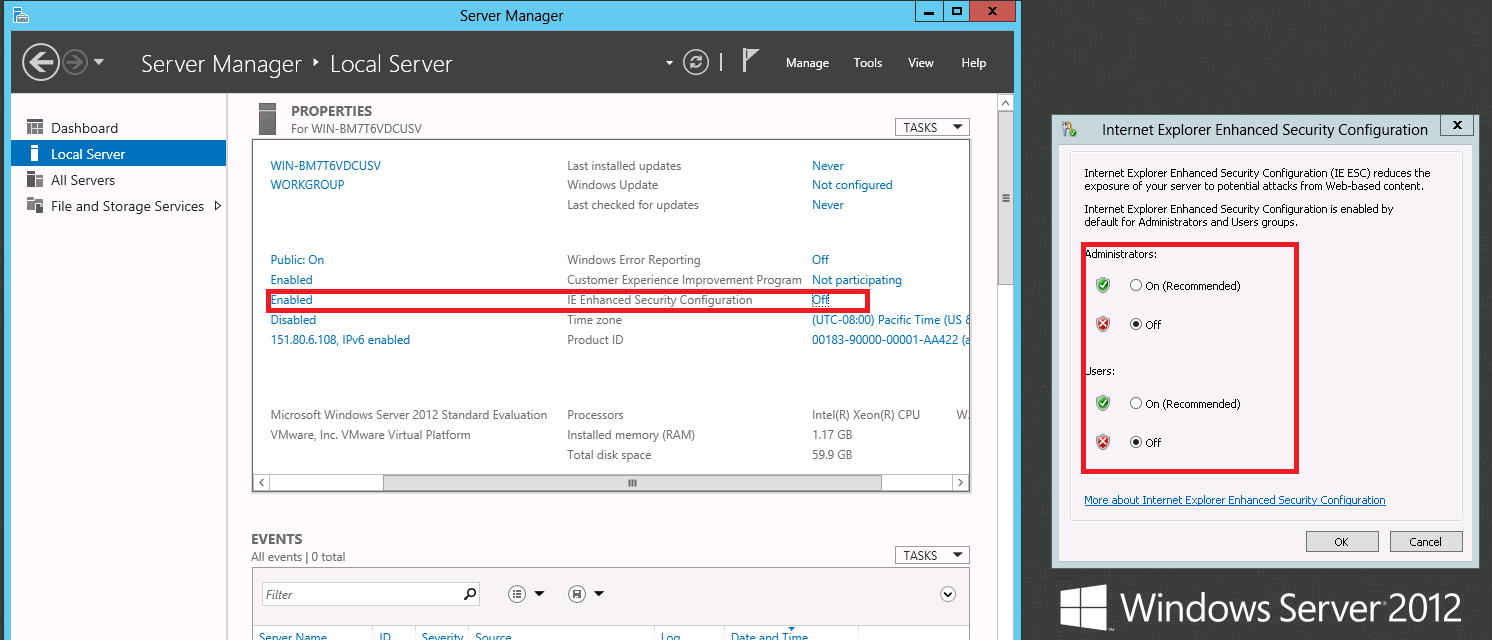
If you are using Windows Server 2012/2008
You need to go to the server manager, select the item that we selected here and choose OFF in both security options:
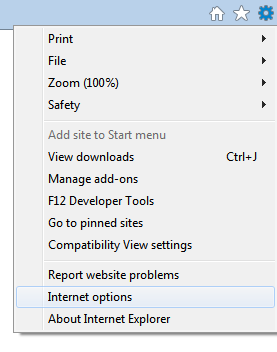
If you use a VPS with W7 (in our opinion is a better option),
you need to run IE and pick this option:
And then select this setting:

This option will work 100% for IGR (and most SEO Tools).
In fact it could be even better to pick the "Never allow websites to request your physical location", but as we are using BackConnect and we are taking advantage of browsing from many different locations, we leave it unselected.
If you are running from your home computer, you need to pick this last option (the W7) to run most SEO tools, including IGR. Other option could compromise your privacy, could make your IP to be blocked, etc.
Its like the ABC of a VPS configuration.
NEVER run a VPS without configuring it with this options.
- Status
- Not open for further replies.