[Hosting Services] Most Important Question To Ask

litemere

Junior Member
Joined
Jan 21, 2021
Messages
188
Reaction score
171
Greetings, Fellow BlackHatWorld Members,

When seeking out website hosting services, it is imperative that you ask questions and do more than listen to the salesperson speak. Industry professionals know what questions to ask; this post is not for you all. This post is for everyday individuals.

What is the most critical question to ask? I tell you, from years of experience, ask, "What type of Web server are you using?" If the salesperson asks what is that or asks you to explain, immediately hang up if you are on the phone, and if you are in person, run in the opposite direction! The answer you want to hear is LiteSpeed.

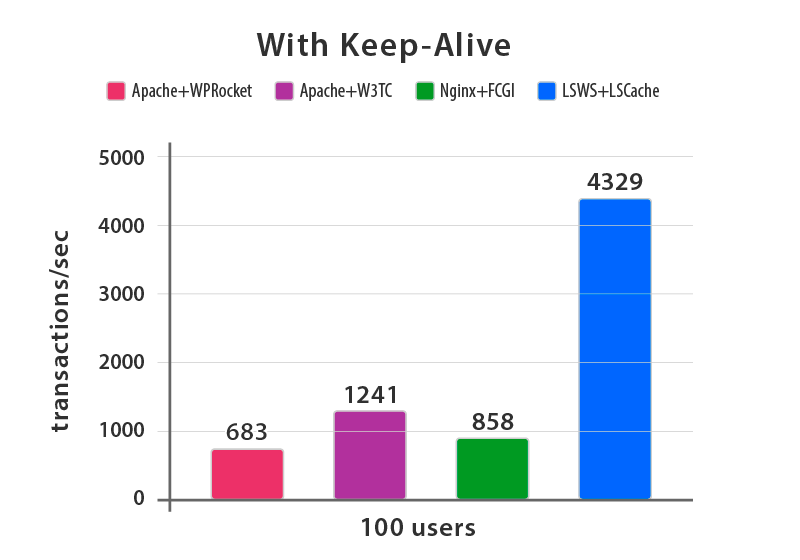
There are essentially three types of Web Servers a hosting provider can choose from Apache, NGINX, and LiteSpeed (LSWS). To illustrate the importance of knowing what kind of webserver the service provider is using, I bring your attention to the chart below:
wp-performance-graph.png


LiteSpeed (LSWS) Web Server outperforms Apache and NGINX. The LiteSpeed Web Server can perform more functions/operations per second compared to the other two.

Most service providers offering hosting services use Apache or NGINX, not LiteSpeed. The proper term for LiteSpeed Web Server is LiteSpeed Enterprise, a paid service. Apache and NGINX are open-source and do not require a service agreement. A webserver called OpenLiteSpeed is an open-source version of LiteSpeed Enterprise; however, very few, if any, hosts use OpenLiteSpeed due to the .htaccess limitations and reboot requirements, which is a more advanced issue, and this post is for the everyday person.

In conclusion, when you are in the market for web hosting services, always ask your service provider what type of Web Server they are using.
 
Heh, over-optimizing is a thing I suffer from as well.

You don't need the fastest webserver if your SQL queries have no indexes or no caching strategies used.

Avarage Wordpress user will not benefit from litespeed if the application itself is slow.
 
Heh, over-optimizing is a thing I suffer from as well.

You don't need the fastest webserver if your SQL queries have no indexes or no caching strategies used.

Avarage Wordpress user will not benefit from litespeed if the application itself is slow.
I'm afraid I have to disagree. Navigating the backend of the WordPress Admin Panel is slow on Apache and NGINX compared to using LiteSpeed. In addition, many novice users are incorporating shortcodes which increases database queries.
 
Few milliseconds gain on litespeed vs nginx will have close to no impact on overall performance if the page load speed is 3-4 seconds or more.

My point was if there is no caching mechanism used or no static resources optimized, there is really no point if you use nginx, litespeed or apache.

Applications always have bottlenecks and very rarely its the webserver.
 
There is one simple check I always do before choosing a web hosting - check their website speed. If they can't host their own website on a fast server how they can do it for you?

The second thing are features and then comes support.
 
Few milliseconds gain on litespeed vs nginx will have close to no impact on overall performance if the page load speed is 3-4 seconds or more.

My point was if there is no caching mechanism used or no static resources optimized, there is really no point if you use nginx, litespeed or apache.

Applications always have bottlenecks and very rarely its the webserver.
The performance of the webserver and the performance of the internet connection are two different beasts. Considering page load, we have to factor in the DNS server, the distance between the host and remote server, CDN factors, and of course the port speed.
 
The performance of the webserver and the performance of the internet connection are two different beasts. Considering page load, we have to factor in the DNS server, the distance between the host and remote server, CDN factors, and of course the port speed.
Alright, that is true, but again - if these factors adds up few seconds of page load, then gain of few ms gain from litespeed is insignificant. So its not like when choosing hosting provider - webserver is the most important factor, I would say its even the last important one.
 
There is one simple check I always do before choosing a web hosting - check their website speed. If they can't host their own website on a fast server how they can do it for you?

The second thing are features and then comes support.
The speed of the service provider's website is in no way suggestive of the service you will experience. I understand your logic; however, they very well can host their website on a dedicated server and host you on a server with a "higher server load."
 
The speed of the service provider's website is in no way suggestive of the service you will experience. I understand your logic; however, they very well can host their website on a dedicated server and host you on a server with a "higher server load."
Yes, I use this to cut out all those who host theirs on a slow servers. If their site is fast check it where is hosted, then go deeper.
 
Alright, that is true, but again - if these factors adds up few seconds of page load, then gain of few ms gain from litespeed is insignificant. So its not like when choosing hosting provider - webserver is the most important factor, I would say its even the last important one.
I would really like to see this from your perspective, give me an example. I will share an example I have:

Initially, I hosted websites on apache servers for years and did not really think it could get any better on the backend. Then one day I tried a LiteSpeed Webserver and I was hooked, like an addict. I transferred all websites to LiteSpeed Webservers. All my clients noticed significant performance improvements, stronger on the backend than the front end. We were already using a 10Gbps network.
 
I would really like to see this from your perspective, give me an example. I will share an example I have:

Initially, I hosted websites on apache servers for years and did not really think it could get any better on the backend. Then one day I tried a LiteSpeed Webserver and I was hooked, like an addict. I transferred all websites to LiteSpeed Webservers. All my clients noticed significant performance improvements, stronger on the backend than the front end. We were already using a 10Gbps network.
apache vs litespeed would feel a lot faster, yeah, that's for sure, I agree 100%.

litespeed vs nginx, the difference would not be so big.

litespeed advantage is concurrency, it can handle more connections than nginx. and overall it's faster for sure.

but my main point is that its not the most important factor, as you said it yourself - location would benefit even more. I would add CPU speed, SSD disks, and of course - smart maintenance of the web application itself.

Its hard to give an example if I did that already few times, but here it goes again.

If the webserver is located US but most of the visitors are EU, speed will suffer for approx 100-150 additional ms and no webserver will fix that.

If application has db bottleneck and there is unoptimized queries that on each load takes 150 ms, no webserver will fix that.

If website has tons of static resources like javascript files, heavy images and stylesheets - no webserver will help there to gain speed if the overall loading will take multiple seconds anyways. Would it be faster than apache? yes. Would litespeed help and save the day? No.

So my main point is, webserver is the least of things you must check when choosing hosting provider, its nice to have but not even close to be the most important question.

btw, your own website loads slow because of many unnecessary dependencies on your main page, for example - no need to load stripe if its not the checkout page.
 
apache vs litespeed would feel a lot faster, yeah, that's for sure, I agree 100%.

litespeed vs nginx, the difference would not be so big.

litespeed advantage is concurrency, it can handle more connections than nginx. and overall it's faster for sure.

but my main point is that its not the most important factor, as you said it yourself - location would benefit even more. I would add CPU speed, SSD disks, and of course - smart maintenance of the web application itself.

Its hard to give an example if I did that already few times, but here it goes again.

If the webserver is located US but most of the visitors are EU, speed will suffer for approx 100-150 additional ms and no webserver will fix that.

If application has db bottleneck and there is unoptimized queries that on each load takes 150 ms, no webserver will fix that.

If website has tons of static resources like javascript files, heavy images and stylesheets - no webserver will help there to gain speed if the overall loading will take multiple seconds anyways. Would it be faster than apache? yes. Would litespeed help and save the day? No.

So my main point is, webserver is the least of things you must check when choosing hosting provider, its nice to have but not even close to be the most important question.

btw, your own website loads slow because of many unnecessary dependencies on your main page, for example - no need to load stripe if its not the checkout page.
I launched the website less than 48 hours ago, it is not optimized yet. I do not even have security headers on the site yet...

Regarding the topic in question, I was hoping for a real-life professional experience you personally had, as in my explanation, not "What if" scenarios. When we start looking at js and CSS, that is a HTTP/2 and QUIC issue that is easy to address with upgrades. You could add more CPU cores, however, you are rate-limited based on internet connection and type of webserver. SSD Drives, you can not write faster than your internet connection. There are cheap providers that do not use RAID-10, however, this was not meant as a technical article. I was speaking to my professional experience and the reported experience of my clients. I never claimed you are going to get faster page load times with the webserver as the primary factor. If you have LiteSpeed WebServer and 100Mbps port speed, you are not going to get the performance I am referring to. In my experience, if the service provider is using a LiteSpeed server then their port speed is often above the industry average.
 
- if you come to forums to talk about performance, at least fix your own website.

- real-life professional exp: my opinion is based on 4 years of web hosting business and 15 years of web application development business.

- You literally claimed that the most important question to ask about is the webserver, I explained why it's not. Your own website is a great example, it loads slow.

- 100Mbits port speed is just fine depending on WHAT you serve on that port and to how many peers. This metric does not affect SPEED but only HOW MUCH at the same time it can go through, e.g. if you serve thousands of clients and they all download heavy images or streams video files.
 
- if you come to forums to talk about performance, at least fix your own website.

- real-life professional exp: my opinion is based on 4 years of web hosting business and 15 years of web application development business.

- You literally claimed that the most important question to ask about is the webserver, I explained why it's not. Your own website is a great example, it loads slow.

- 100Mbits port speed is just fine depending on WHAT you serve on that port and to how many peers. This metric does not affect SPEED but only HOW MUCH at the same time it can go through, e.g. if you serve thousands of clients and they all download heavy images or streams video files.
Just because a website loads slowly does not mean the webserver is slow. This is where the disagreement is. My focus is not on page load speed, yours is.
 
okay, but how then asking web hosting providers about their webserver is the most important question? :smirk:

p.s. its cool to disagree, imagine how the world would be if everyone would always agree with each other. boring!
 
okay, but how then asking web hosting providers about their webserver is the most important question? :smirk:

p.s. its cool to disagree, imagine how the world would be boring if everyone would always agree with each other. boring!
I refer to the chart . It does not say anything about load speed, it is about transactions per second.

wp-performance-graph.png
 
Okay, and as for everyday individuals with an average Wordpress website that would never benefit from this metric - why its the most important thing to ask when choosing a hosting provider?
 
In my professional experience and the experiences reported by clients, switching from Apache to LiteSpeed resulted in significant overall performance improvements. This does not mean page load speed was improved significantly, it means, "overall performance." Such as navigating the backend of WordPress, the transaction between the webserver and MariaDB, etc...

We should be clear for the readers, you are not against LiteSpeed, you are just claiming it is not the most important factor for everyday consumers. I am saying it is a simple choice that will lead to overall better performance. This is not a technical article. I could say, yea CPU, RAM, you want dedicated and NOT shared resources, blah, that's technical. The purpose of this article is for everyday users to make a simple choice at the start, go with LiteSpeed, it is better than Apache and NGINX period.
 
This is the second time this week when someone says "it's not a technical article" when I dive into a disagreement with them. :D

Well, I guess it's a risk you must take - someone will want to go technical if you claim something and they disagree with you.

Yes, you are right that overall performance will improve. I like Litespeed, no doubt there.

And no, even with shared hosting - its important to know how much CPU or RAM your account gets, no need to get dedicated if you server a couple hundreds of visitors in the day but these metrics become important if your application is something heavier than Wordpress site, e.g. - a forum engine.

My main questions to the hosting provider would be in this specific order:

- What backup and disaster recovery policy do you have?
- Where your backup copies are located, same DC or offshore?
- Do you use Cloudlinux or how do you achive user space virtualization?
- Is technical support available 24/7?
- Location of servers if I have geo-based visitors.
- What IOPS limits do you enforce per account and how much CPU gets shared?
- SSD or HDD, perhaps even nvme m.2?
- Flexibility of managing PHP versions, adding or disabling extensions.
- Auto installers for Wordpress and similar so I can drop that Wordpress with a single click.

And I would not ask them about webserver. If I see they use litespeed, I would be like "oh that's cool, + for this one". But it's not even close to being the most important thing.
 
I have to say that consumers are not really concerned and they are not that tech savvy as you mentored in your posts. They have their own image and set of expectations and if they get them that makes them happy and loyal customers. That's it. And web hosting provider should do its best in order to make sure he use cutting edge technologies and hardware to deliver the best price/quality combination to their clients.
 
Back
Top