Google Ranking Algorithms Update in 2024: What has changed and how to adapt?

SpyLead

BANNED
Jr. VIP
Marketplace seller
Premium Member
Joined
Nov 29, 2022
Messages
2,387
Reaction score
278
1715203554326.png


The Google system is constantly evolving. Developers are rolling out updates that affect the life of sites and ranking in search results. In order for advertising campaigns to remain effective and sites not to receive bans, webmasters must be aware of the latest changes.

In this article, we'll talk about Google's March 2024 updates and how to quickly adapt to it.


Google Algorithms Update: Core Update and Spam Updates

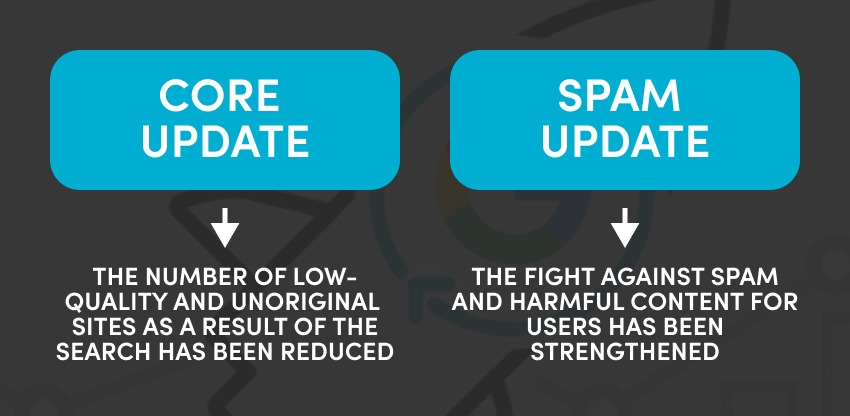
On March 5, 2024, the developers released two search engine updates at once: https://blog.google/products/search/google-search-update-march-2024/. So Google has established new rules that should rid the search results of spam and show users sites with useful and high-quality content.
65464663e77dc99c4ce1c.jpg


After the launch of the new policy, 1,500 sites were thrown out of the search results. Let's figure out what criteria are in the "red zone" for Google to avoid bans and prolong the life of sites:


  • Old domains
Webmasters buy expired domains, then post content on them. For example, texts about casinos, slots, quick earnings, and so on. The idea is that the site is "white", so even with low-quality content it will occupy high positions in the ranking.

Google's new policy prohibits this. Such sites are quickly banned, and traffic becomes zero. But at the same time, sites are not prohibited at all.

If the site is filled with high-quality content and does not contradict Google's policy, then there is nothing to be afraid of.

  • The same type of useless content
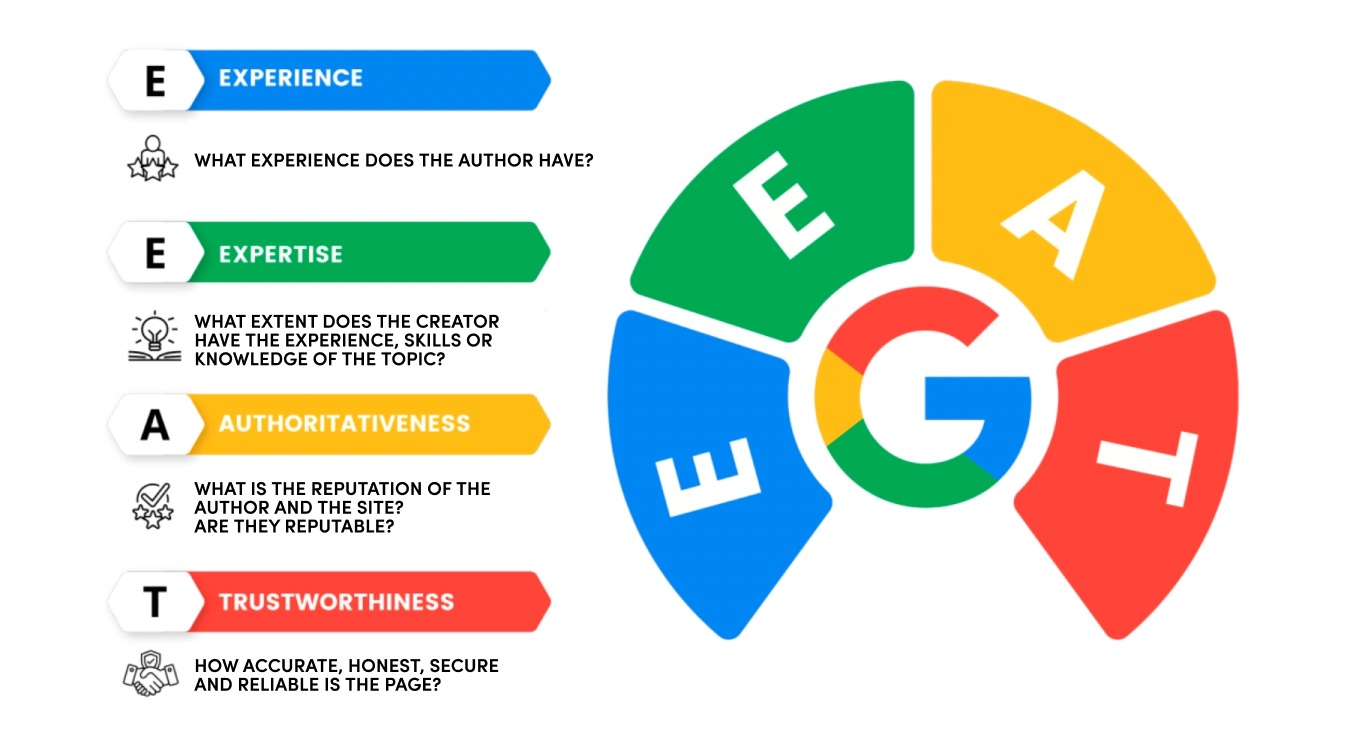
Now Google is carefully monitoring sites that want to rise in the search results and publish a lot of useless and unoriginal content for this purpose. Even if it is generated by a human, not an AI. For example, Google now believes that the quality of content determines 4 criteria: experience, expertise, authoritativeness and trustworthiness.
e49490e65fdb5e568e669.jpg


In terms of using AI, Google does not have strict rules. "The quality of the content is much more important than the way it is created," Google says. And with each update, there are more and more requirements for quality.

Let's clarify for ourselves that the uniqueness of the text is also important. Therefore, if you are working with AI, double-check the material and add a little "humanity" to it.

  • Abuse of the site's reputation
"Parasitic SEO" or the placement of material such as advertising, affiliate content or extraneous links on reputable resources is now banned. An example of "parasitic SEO": pages with reviews of casinos and quick loans are being placed uncontrollably on educational and medical sites. This is how webmasters manipulate search engine rankings at the expense of "donor" sites.

Now, Google will lower the sites where such material is posted in the search results.

If there is such content on the site, webmasters recommend that it be https://developers.google.com/search/docs/crawling-indexing/control-what-you-share.


First results after Google Core Update

The updates quickly showed the first results. 2 weeks after the launch, the SEO community noticed such changes:

  • The complete removal of sites from the Google search index
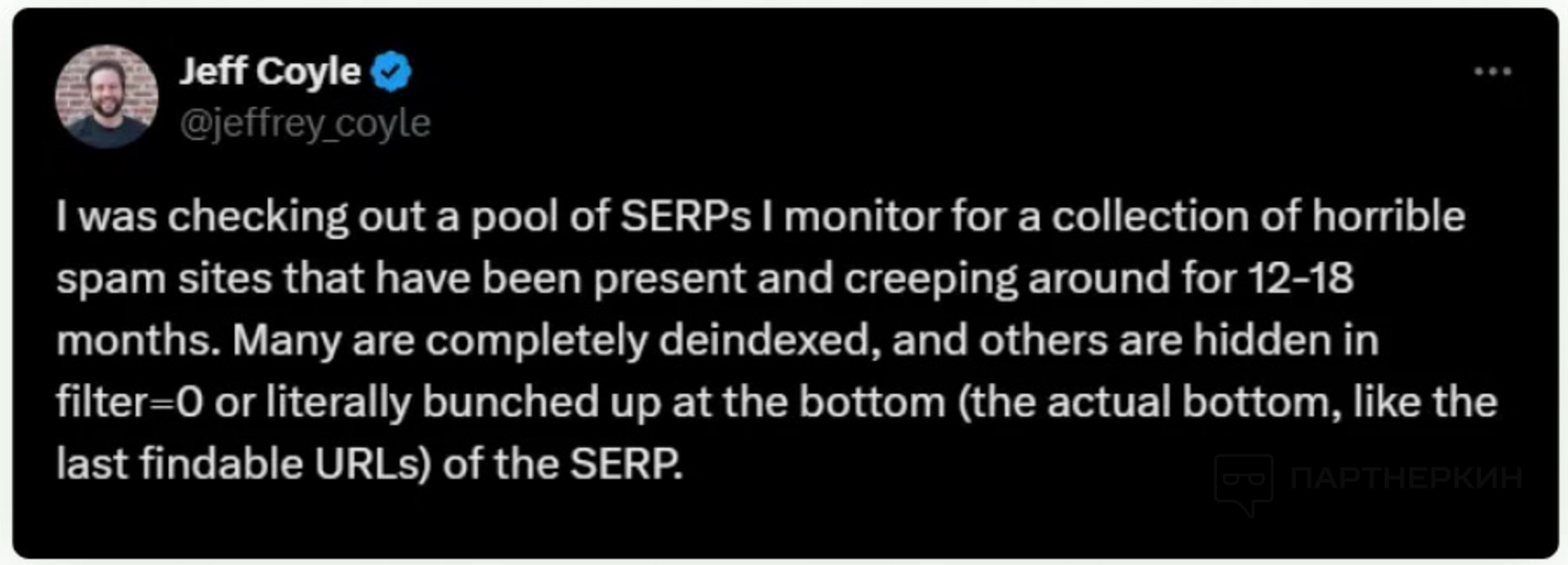
If the site meets the criteria we mentioned above, consider that it no longer exists. This is how Google fights against junk content in search results. According to the forecasts of the search engine, this will affect up to 40% of low-quality sites.
11f73c7c1c0a78f99fe8b.png


  • Even those who have survived previous updates are not immune from the new rules
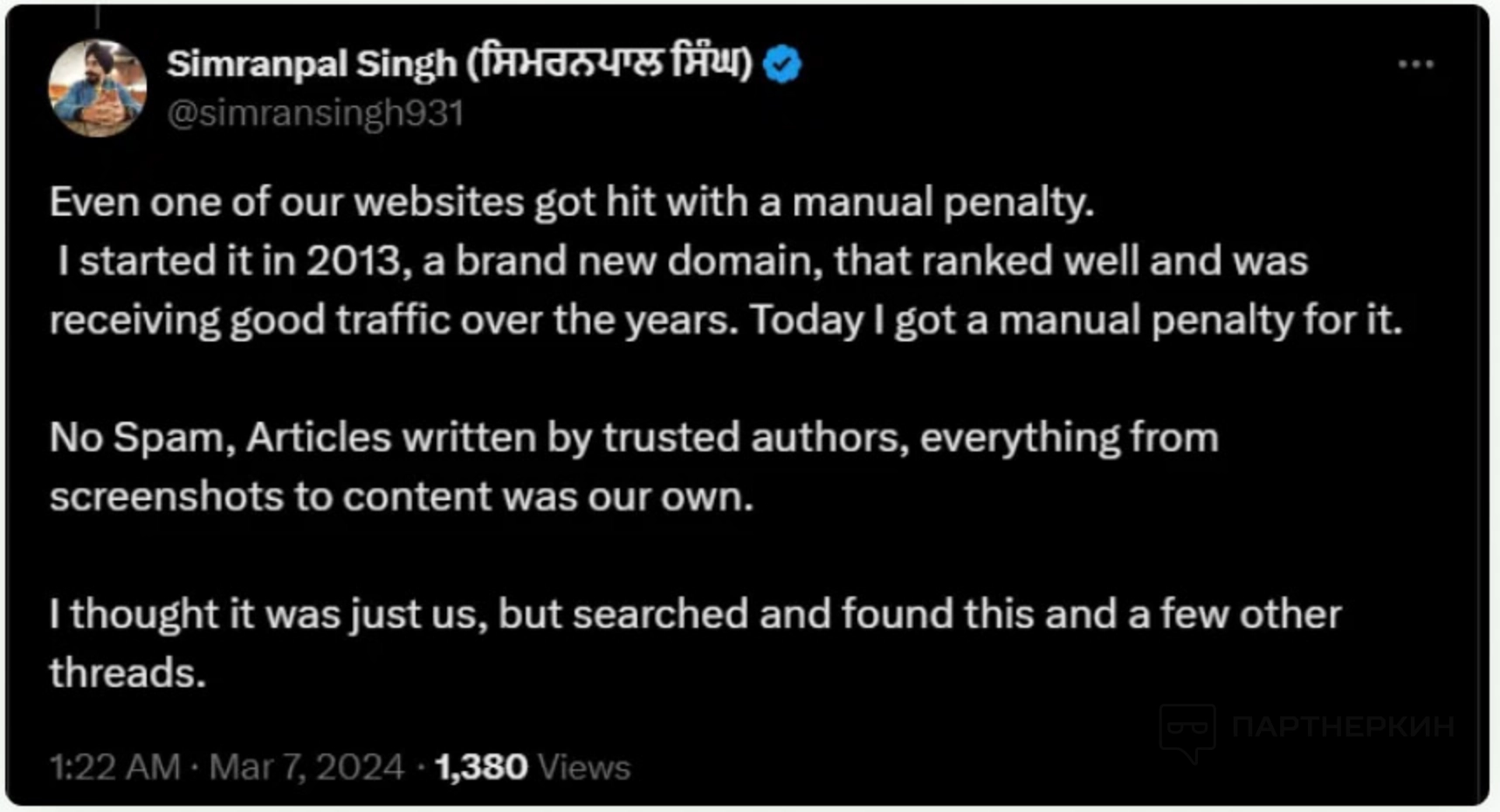
Even if the site is at the top of the search results, filled with high—quality content and receives good traffic, this is not a guarantee of security.
198a1fd2fc9bfbd1b9e95.png


  • Outdated sites and sites with errors are at risk
The position decreases for sites that contain outdated or erroneous information. That is, two more principles have been added to the four principles of E-E-A-T: relevance and correctness of data.

  • Reducing the position of sites with AI-generated content
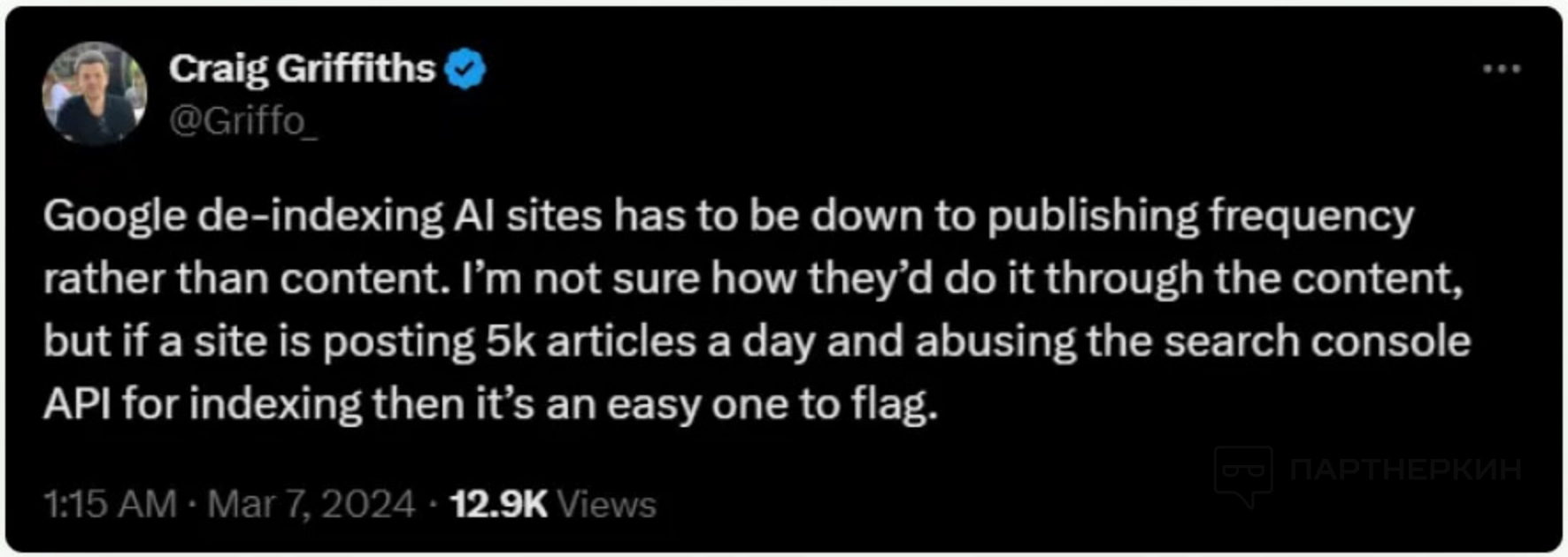
Google has become more accurate in identifying content that is created by AI. We are talking about junk, unoriginal and repetitive content that is useless to users. Even on small resources that generate content using AI, ranking positions have decreased.
862fa46f736265de2019f.png


How to adapt to Google updates

We have compiled top recommendations for site owners in order to adapt to Google updates as quickly as possible and not lose their position in the search results:

  • Check the content of the content on the site
It is better to remove useless and low-quality content altogether or redo it: add relevant information, correct inaccuracies and errors.

  • Add only useful and high-quality content to the site
Work on the content of the new text content so that it meets the needs of users.

  • Exclude "gray" promotion methods
It is becoming more and more difficult to deceive search engines, so webmasters should forget about cheating and automatic content generation.

  • Try to abandon IT for creating texts
Another option is to process the generated text yourself, check and supplement it.

  • Completely changing the site and trying to fix everything at once is a bad idea
It is better to act gradually and not resort to fundamental changes on the site. As a result, Google's updates are aimed at site content and cleaning up search from spam and useless content.

Therefore, the main advice to maintain the position of sites is to create more useful materials, rely on the interests of the target audience and avoid deceiving the search network.


Results

The Google update is another step towards clearing the search engine of unnecessary and useless information, and increasing the relevance of content and advertising to user requests.

Webmasters should be aware of the latest changes in order to have time to adapt to the new rules. Otherwise, there is a threat to get banned from the search engine and end up with zero traffic.
 
Great post, thanks for sharing.

Unfortunately, E-E-A-T just shows us one thing: If you are a random guy making a new site, you won't rank. If you are a professor, writing an article on any high authority website, you will get ranked. So, it doesn't matter anymore how good or relevant your content is, it only matters who you are and where you post the content. But Google decides what a reputable website is and if you are an experienced/skilled person with expertise.
 
Great post, thanks for sharing.

Unfortunately, E-E-A-T just shows us one thing: If you are a random guy making a new site, you won't rank. If you are a professor, writing an article on any high authority website, you will get ranked. So, it doesn't matter anymore how good or relevant your content is, it only matters who you are and where you post the content. But Google decides what a reputable website is and if you are an experienced/skilled person with expertise.
EEAT at the current state is a myth. Except if Google thinks randomjoe that posted on reddit 8 years ago has the ultimate expertise.

Also Google thinks it’s own SGE is also an expert in every field. While actual experts get hit by Updates and lose almost all traffic.

I would not believe everything that Google puts out there.
 
Great post, thanks for sharing.

Unfortunately, E-E-A-T just shows us one thing: If you are a random guy making a new site, you won't rank. If you are a professor, writing an article on any high authority website, you will get ranked. So, it doesn't matter anymore how good or relevant your content is, it only matters who you are and where you post the content. But Google decides what a reputable website is and if you are an experienced/skilled person with expertise.
Absolutely, it's a valid concern that E-E-A-T might seem to favor those with established reputations. But here's a more hopeful perspective: Google's goal is really about valuing content that's trustworthy and truly useful for people searching for answers. This does present a challenge for newcomers, but it also opens up a path to build and demonstrate real credibility in your niche.
 
EEAT at the current state is a myth. Except if Google thinks randomjoe that posted on reddit 8 years ago has the ultimate expertise.

Also Google thinks it’s own SGE is also an expert in every field. While actual experts get hit by Updates and lose almost all traffic.

I would not believe everything that Google puts out there.
I understand your skepticism about E-E-A-T, and it's valid to question how these criteria are applied. Google’s system isn't perfect and sometimes seems to overlook valuable contributions from smaller or newer experts. Here are some things to keep in mind:
  1. Balancing Algorithms: Google tries to balance delivering quality information with maintaining fairness, but its automated processes don't always get it right. That's why updates sometimes affect legitimate sites negatively, while other, less reliable sources still slip through.
  2. SGE Limitations: Google's new search generative experience (SGE) is promising but still in development. While it aims to provide accurate information, it's not flawless and will improve with time. That's why combining it with human expertise is crucial.
  3. Diversified Traffic: While Google remains a key traffic source, it’s wise not to put all your eggs in one basket. Building a community on different platforms like social media or email lists can help protect against sudden changes in search algorithms.
 
Back
Top