

- Nov 29, 2022
- 2,461
- 284

Facebook Ads has been a cornerstone of digital advertising for over 18 years. Since its inception, it has remained one of the most powerful tools for advertisers. However, leveraging its full potential can be challenging due to the vast array of tools and settings within the platform.
Today, we will focus on a critical aspect of running successful advertising campaigns—the learning phase of Facebook’s algorithms. We will break down how it works and explore effective methods to restart the learning phase when necessary.
How Facebook's Learning Phase Works
The learning phase is the period when Facebook’s ad delivery system gathers data on the effectiveness of your creatives. The algorithm requires as much data as possible to refine targeting and improve overall campaign performance.When an ad set is in the learning phase, its delivery status will reflect this. This means Facebook is actively determining the most effective way to reach the target audience.
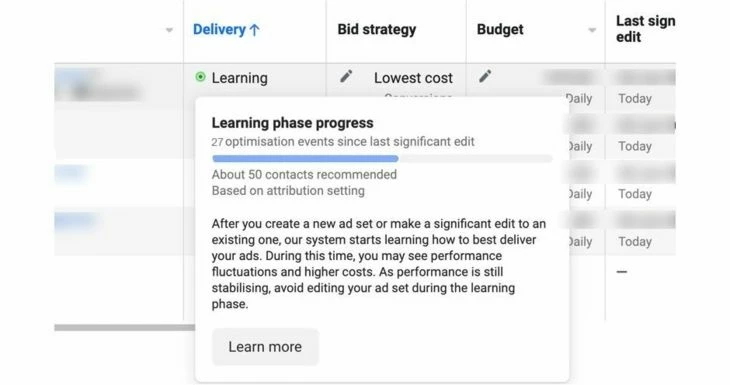
The learning phase is triggered not only upon the initial launch of a campaign but also whenever significant changes are made to targeting parameters or other critical settings. If an ad set is modified while still in the learning phase, the algorithm will restart the process to reassess optimal delivery strategies.
Facebook Ads is designed to maximize results within the allocated budget. During the learning phase, the algorithm tests ad placements across different segments to find the best balance between cost and performance. During this testing period, key metrics such as cost-per-click (CPC) may fluctuate significantly.
In most cases, exiting the learning phase requires at least 50 optimization events (e.g., conversions). Once this threshold is met, the ad set’s status will update, signaling that the campaign has stabilized. However, Facebook's algorithms will continue analyzing data to further optimize ad delivery over time.
Skipping the learning phase is not an option—attempting to do so will likely result in poor campaign performance. Without proper data collection, the algorithm cannot accurately identify the best audience for your ads, leading to inefficient spending and subpar results.
Restarting the Learning Phase and Optimization Strategies
For affiliate marketers, the learning phase can be frustrating due to the high initial budget consumption and limited conversions. However, this phase is not wasted spending—it is a necessary investment that paves the way for improved performance once optimization is complete.Early results may appear costly, but it is crucial to remain patient and allow the campaign to progress to the next stage. In most cases, once the ad set gains momentum, scaling becomes easier and more effective.
Common Issues with the Learning Phase
Occasionally, advertisers encounter issues where the learning phase resets multiple times, causing delivery inefficiencies. Below is an example of a scenario where the algorithm continuously restarted the learning phase, eventually displaying a warning regarding limited learning.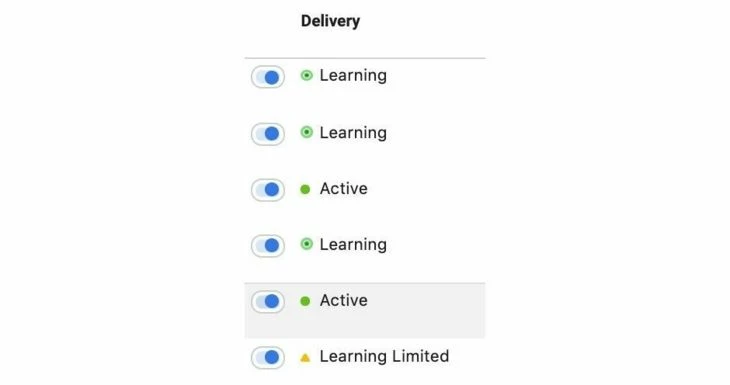
Another common message is “Not Enough Results”, indicating that Facebook’s neural networks have not gathered sufficient data. This lack of data prevents the system from stabilizing the flow of traffic, leading to inconsistent ad performance.
When such problems arise, restarting the learning phase is necessary. The most effective way to do this without disrupting campaign performance is by temporarily increasing the budget. Experienced marketers recommend increasing the budget by 200–300%, waiting 10–15 minutes, and then reverting it to the original amount.
How This Budget Hack Works:
- The system detects the budget increase and expands the audience reach at a higher cost.
- The “Not Enough Results” status changes to “Learning”.
- The algorithm resumes its search for the ideal target audience, allowing the campaign to stabilize.
Alternative Approaches and Risks
Some suggest restarting ad sets or refreshing creatives, but these actions may trigger a new moderation process. This review can take several hours, and for campaigns promoting restricted products, the risks of rejection increase significantly.If the creative is performing well but the learning phase has stalled, restarting the phase without undergoing a new moderation process is the preferred approach. Facebook’s algorithms can sometimes complete learning even with fewer than 50 conversions, making a full reset unnecessary in certain cases.