Arbitrage on the Parallel Exchange Rate in Bolivia

D

Deleted member 999516

Guest
Hello everyone,

I’d like to make some friends on this forum. I’ve been registered for a long time, but I haven’t been active until now.

I work in the gray but non-harmful processing of card payments. For the past three years, I’ve been involved in arbitrage of parallel exchange rates in “problematic” countries such as Argentina, Bolivia, Ukraine, and Egypt.

At the moment, this opportunity is primarily relevant for Bolivia, but even there, this source is nearing its end due to banking restrictions. I’d like to publish a series of articles written from my personal perspective: explaining what this is, where the profitability comes from, and how to find and work with people in this niche.

I’ll start with Bolivia since it’s the freshest and still active example. To make the information easier to digest, I plan to break it down into separate posts. Some details will be omitted to avoid turning this into a full-length book.

Let’s talk about what it takes to get started. Several factors must align, and nowadays, such countries are rare and almost a luxury.

Parallel Exchange Rate​


A parallel exchange rate emerges due to internal circumstances in a country where the demand for foreign currency rises relative to local currency, but supply is limited. This creates a parallel market. If a country cannot "put out the fire," there are typically two choices:
  1. Allow the local currency to freefall, often causing panic in currency markets and among the population.
  2. Establish strict FX controls to regulate the flow of foreign currency within the country.
The favorable environment for this kind of work exists only under the second scenario. A simple currency drop without FX control, such as with the Turkish lira (TRY), does not create the same opportunity. Currently, the difference between Bolivia’s parallel exchange rate and its official (and banking) rate is up to 60%.

Banking Restrictions​

Higher limits simplify the work and reduce the number of people required. For example, it’s manageable to work with card payment limits of $200–300 USD per month. However, as I write this, international card purchase limits in Bolivia range between $30–100 USD.

There are numerous other details to consider, such as:
  • How quickly banks shut down MIDs.
  • How willing they are to release foreign currency during tough times.
  • How difficult it is to obtain debit or credit cards locally.

Trained and Motivated Locals​

Transactions must be carried out using local bank cards. The goal is to make a transaction from a local bank card, top it up at an inflated internal exchange rate, and then make a purchase (transaction) at a rate closer to the official one. Access to such cards is available only to the local people. OTC platforms will be expensive and will only create problems.

Operational Tools​

Transactions need to be processed reliably and without headaches. We use a popular payment solution in the U.S., though it’s not Stripe. It offers unique billing names, MIDs, and, importantly, a neutral MCC code that banks don’t classify as quasi-cash.

In this topic, I’ll delve into the operational details of working in Bolivia:
  • How the parallel exchange rate emerged (favorable environment).
  • Banking restrictions.
  • Features of working with locals who conduct transactions.
  • The tools used to process everything.

This introduction sets the stage. Stay tuned for updates!

Screenshot_1.jpg

Screenshot_2.jpg
 
So

1 USD = 7 BOB using the official rate
But on P2P platforms, 1 USD = 11 BOB

And you earn money with wire transfers, people buy USDT paying them using BOB with this unofficial rate.

Like, they send you 1000 BOB, and you send 90 USDT for them. But 1000 BOB in reality worth 144 USD.

(all numbers are rounded, not exactly that)

Did I understand?
 
So

1 USD = 7 BOB using the official rate
But on P2P platforms, 1 USD = 11 BOB

And you earn money with wire transfers, people buy USDT paying them using BOB with this unofficial rate.

Like, they send you 1000 BOB, and you send 90 USDT for them. But 1000 BOB in reality worth 144 USD.

(all numbers are rounded, not exactly that)

Did I understand?
I provide them with a payment form, and some of their banks charge the currency at approximately 6.96 BOB per USD. They receive USDC, convert it to USDT at a 1:1 rate, and sell it on the P2P market for ~11.3. My profit margin from these transactions is up to 15%.photo_2025-01-18_00-57-08.jpg

Screenshot_3.jpg
 
I provide them with a payment form, and some of their banks charge the currency at approximately 6.96 BOB per USD. They receive USDC, convert it to USDT at a 1:1 rate, and sell it on the P2P market for ~11.3. My profit margin from these transactions is up to 15%.View attachment 413249

View attachment 413250
Uh-oh, hmmm! I had an impression that even with my national currency I'd loose shitloads of money just converting it to crypto...
 
Let’s continue the discussion and explore how a parallel exchange rate comes into existence. Each country has its unique scenario, but it always leads to one outcome: an economic crisis.


  • Ukraine: Military actions.
  • Egypt: The collapse of the grain deal in November 2022, which acted as a catalyst, causing a domino effect.
  • Argentina: A perpetual state of crisis since 1994 (greetings to Mr. Milei).
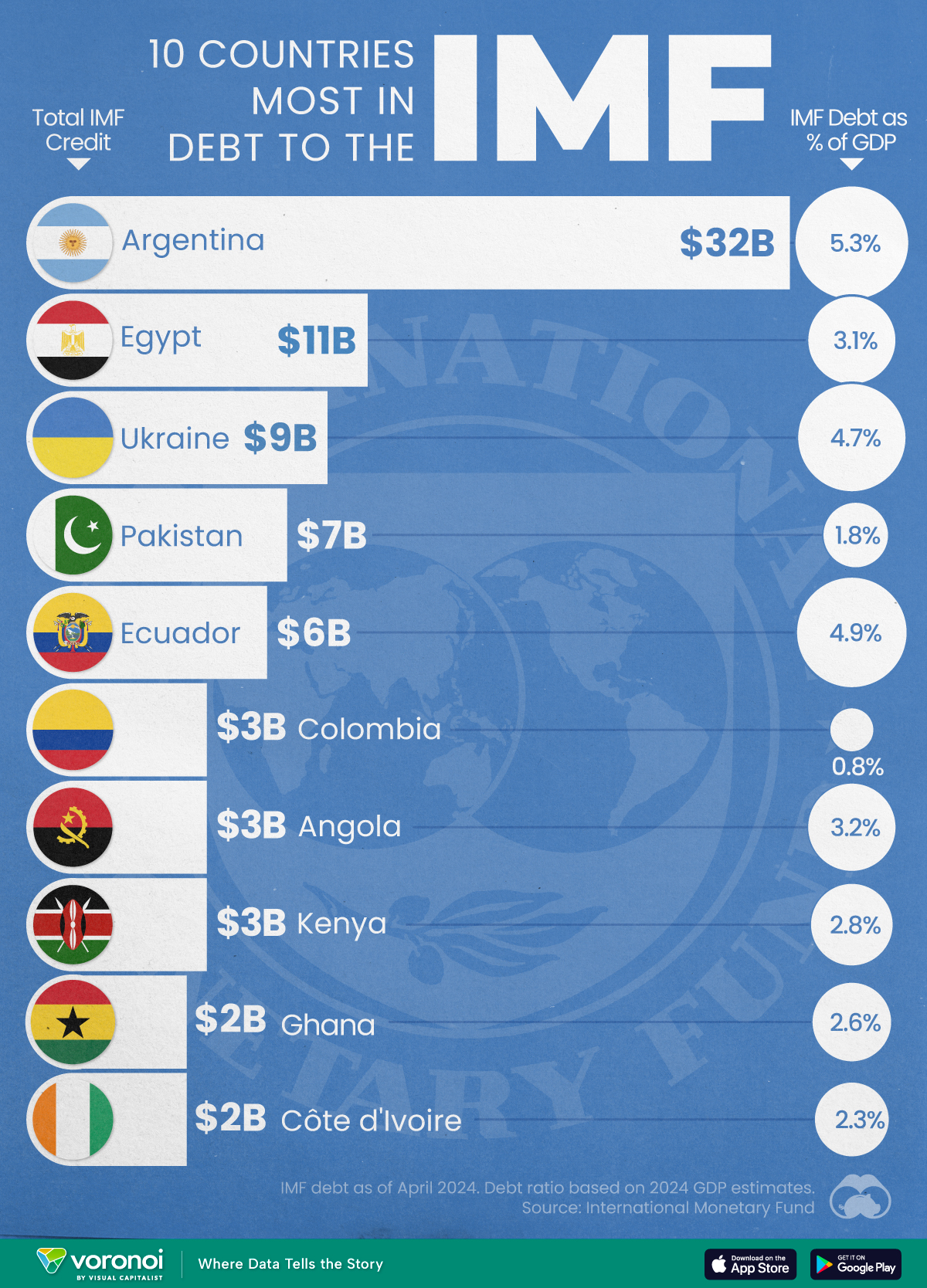
  • Bolivia: Low import levels (lack of new money entering the country), no support from allies, and no help from the IMF. (Here’s a chart — Bolivia is notably absent).
10-Countries-Most-in-Debt-to-IMF_Website_05072024.jpg


The combination of these factors led to a collapse. With elections looming in the summer of 2025, the current government refuses to let the official exchange rate freefall due to fears of electoral failure. This situation has created favorable conditions for operations.


The Role of Local Cardholders​


Let’s now talk about local cardholders. Without them, this operation wouldn’t be possible.


The most obvious solution is to look for bank accounts in these specific markets. Local cardholders are essential because the transactions must be made using cards issued by local banks. This ensures that the system works, leveraging the differences between inflated local rates and the official exchange rate.


In the next post, we’ll delve deeper into the details of working with local cardholders and sourcing accounts efficiently. Stay tuned!
 
Let’s talk about local cardholders — without them, this operation cannot work.
The most obvious solution might be to search for bank accounts in foreign markets, but this approach is highly inconvenient and fraught with risks:
  • You’ll need to handle both merchant moderation and P2P operations, taking on the risks of frozen funds.
  • You’ll encounter scams from sellers.
  • You’ll overpay for accounts.
  • You’ll become dependent on and centralized around a small group of individuals.
  • There may not even be a "drop" market for such accounts — for example, try finding accounts from Bolivian banks; they simply don’t exist.
  • You’ll be exposed to scams by sellers and account owners alike.

This is a risky and inefficient approach.

The Advantage of Local Cardholders​

Local people understand how their banks work. They have a nearly unlimited resource in the form of friends, acquaintances, and family members. They can call their bank, visit it in person, and take on all the risks that occur before the transaction.

When I come to a country on the verge of collapse, the people I need often don’t exist yet. It takes significant time to train and prepare them for this type of work.

For instance, when I started looking for people in Bolivia, I found only one person who understood what was happening. It’s a complicated process where you’ll often be scammed, lose money on tests, and spend weeks or months verifying people. But it’s worth it in the end.


Step-by-Step Guide to Finding and Recruiting Locals​

All suitable candidates are typically found in the P2P market. They essentially do the same thing you do, but within the country: they have accounts, experience, and an understanding of how their local banks operate.

Recruiting via P2P​

The correct and obvious approach is to visit their P2P trading platform and start recruiting. Here’s how:
  1. Buy a Binance account with KYC for any neighboring country. Neighboring countries often allow orders in each other’s currencies. For Bolivia, Argentina KYC works well due to its availability.
  2. Enter the purchase book (you’re BOB, and you need USDT).
  3. Obtain valid bank details from the payment instructions in the order.
  4. Add these details to your payment methods.
  5. Enter the sell book (you’re USDT, and you need BOB).
  6. Undercut the market price by dumping your order value, e.g., offering 20% below the market rate initially.
  7. Keep order sizes small, e.g., no more than 10 USDT.
  8. Include your contact information in the autoresponder and the order description, offering stable, long-term work at this favorable rate.
Ten minutes of such an order can generate 10–15 inquiries. It’s crucial to blacklist users after a successful order to prevent abuse. The goal is to showcase the offer, not give away free money.

Cost of Recruitment​

  • A Binance KYC account for another country: up to $100.
  • Advertising orders: ~$300.
  • Be prepared to lose some funds due to misdirected payments or people abusing your offer.
Funds that are paid out to incorrect payment details or random traders can’t be recovered. These “random” traders effectively receive free small payments and don’t understand what’s happening, but this tradeoff often leads to communication with your target audience.


Recruitment Process​


Cardholders who respond are often skeptical, thinking it’s a scam. The goal is to explain the opportunity clearly, showing the motivation and potential earnings. Here’s how:
  1. Demonstrate the profit potential with numbers. Show the difference between the official rate (including bank rates) and the parallel/black market rate.
  2. Once someone expresses interest, create a wow effectimmediately.
    • Send them 10 USDT for free.
    • Ask them to top up their local card.
    • Provide a payment link.
    • Complete the transaction and send back USDC.

Once they see that 10 USDT can turn into 12–13 USDT (depending on rate differences) with minimal effort, they’re hooked. This starts a long-term relationship.


Building the Network​

Your new partner will start experimenting with payment forms from different cards, testing bank limits, rates, and other important details. They’ll also invite friends, building a referral network.

This snowball effect works the same way in every country. At present, I have a network of over 200 people from Bolivia alone.


In this post, I’ve outlined the basics of finding and recruiting local cardholders.
Next, we’ll discuss the restrictions banks may impose, how to protect yourself, and how to adapt to new conditions. Stay tuned!
 
Banking Restrictions and How to Handle Them

Let’s assume the preliminary tasks are complete:
  1. The country is suitable for parallel arbitrage: bank exchange rates are close to the official rate, and there’s a gap with the parallel rate.
  2. Motivated and trained local cardholders with access to cards have been found.

Now, the real challenge begins. Countries facing economic collapse actively resist any outflow of foreign currency. Common measures include shutting down Visa Direct, Western Union, or other public mass-transfer methods. Often, these methods are restricted, for example, allowing Western Union transfers only in USD instead of the local currency, forcing people to keep "weaker coupons" in the economy.

Quasi-cash operations are typically the first to be cut off — MCC codes for services like Transak, MoonPay, and Skrill are among the initial casualties. Any card-based balance withdrawal methods are blacklisted by MCC.

These are the first steps local governments and banks take to control the situation.


Impact on Arbitrage​

Ironically, these restrictions often push parallel exchange rates even higher, as demand for affordable foreign currency remains unmet.


What Do Banks Do to Prevent Currency Outflow?​

  1. Limits:
    These include daily and monthly limits on international purchases and transfers.
  2. Blocking External Transfers:
    All foreign money transfers may be disabled, if possible.
  3. Exchange Rate Increases:
    In cases where FX exists, banks might attempt to raise the rate but are often restricted by government policies to prevent panic.
  4. Targeting Specific Users ("Gymnasts"):
    This is where our specific tools and approach come into play — precise and efficient, like a scalpel in skilled hands.


How Banks Target Arbitrageurs​

Their primary goal is the same: prevent currency outflow. The tactics include:
  • Blocking MIDs.
  • Blocking billing names.
  • Blocking MCCs.
  • Blocking acquiring banks.
  • Closing networks via marked accounts (unique to Bolivia).

Each block often results in a failed transaction, even when limits, balances, and other factors are in order. Decline descriptions can vary, from "invalid secure code" to "limit exceeded" or "fraud attempt." Bank support staff often claim everything is fine and blame the merchant, either out of ignorance or due to limited access to accurate information.

Types of Blocks and Solutions​

1. Every merchant has an identifier, and if targeted, this will be disabled. This is the most common block type.​

Solution: Request payment in a different currency if your acquirer supports multi-currency DCC.
  • Each currency corresponds to a new MID due to technical specifics.
  • If USD purchases from local cards are blocked, try EUR, PLN, BRL, or others.
  • This often reopens access to the blocked bank.

2. This type of block often occurs alongside MID blocks. Generating a new billing name effectively bypasses this.​

  • Most processors provide this option.

3. If you use miscoding (referred to as "cloaking" on this forum), you’re in luck. MCC category blocks often apply to gambling, money transfers, or similar categories involving "value transfer."​

  • Proper miscoding prevents this type of block.

4. Rare but highly problematic, seen primarily in Egypt with debit cards.​

  • If an acquiring bank is blocked, it’s a severe and usually irreversible issue.
  • To mitigate this risk, maintain multiple acquirers for your merchants. Replacing MID or billing names won’t help here.

5. This unique scenario was observed in Bolivia. Banks mark "suspicious" accounts, monitor their activity, and block sales processed through these accounts.​

  • This highlights the importance of careful recruitment: the fewer people involved, the longer operations can run.
  • These blocks can target MIDs, billing names, or even acquirers.


What Can’t Be Avoided​

  • Limits:
    Limits apply universally, and there’s no way to bypass or adapt to them. Credit cards are often unaffected, as they’re harder to obtain and less commonly used for large-scale outflows than debit cards.
  • Whitelist MIDs:
    In some countries, only certain merchants are allowed (e.g., Amazon, Aliexpress, Netflix). There’s no way to counteract this.

In the next post, we’ll discuss the requirements for acquirers handling this type of transaction. Stay tuned!
 

Continuation of the Discussion: Payment Processing Tool​

A payment processing tool for card transactions must meet three key requirements:
  1. A verified and predictable merchant/bank account.
  2. Support for multi-currency transactions (DCC).
  3. Control over the billing name field.
Many forums discuss account blocks in systems like Stripe, PayPal (Braintree), and others. The main issue is the inability of users to fulfill the first requirement. Creating a reliable merchant account capable of successfully processing arbitrage transactions is the most challenging and crucial task. It must not only process payments but also ensure minimal payout times to allow for quick turnover of funds.

However, that’s not all:
  • Daily transaction volumes must not raise suspicion or trigger reviews-moderation.
  • The process should follow a clear chain: payment → processing → bank → wire to USDC.
While the reliability of the tool is straightforward (funds must not be frozen for review), the last point deserves closer consideration.

Our local friends receive instant USDC transfers immediately after payment:
card payment → USDC transfer.
Funds on the merchant's and bank account balance remain an intermediate step. It’s crucial to quickly and cost-effectively convert fiat to USDC on the merchant’s side.

In the U.S., the process is relatively simple: banks rarely question wire transfers to accounts like Circle or Crypto.com. You just need to specify them as the recipient, and you’re good to go. Once the payment arrives, you buy USDC — process complete.

In Europe, including the UK, things are more complicated. Banks require documentation explaining the purpose of SEPA transfers to companies dealing with cryptocurrency. If you cannot provide this, the transfer will be rejected.

In one case, it took a month of correspondence and calls with an Estonian bank to enable a transfer to a crypto-related company. The U.S. is much more lenient in this regard, especially given the current crypto boom.

In summary, the first requirement involves three critical steps:
processing → bank → fiat-to-USDC conversion on the merchant’s side.


Multi-Currency Support (DCC)​

Previously, I mentioned the issue of card issuer banks blocking transactions. This problem can be resolved by switching MID (Merchant Identification Numbers). Each new currency requires a separate MID, and for arbitrage traffic, this is a mandatory feature. In case of a block, you don’t need multiple merchants—one with multi-currency support is enough.

Additionally, DCC allows you to choose the optimal currency for debiting from the bank. For instance, the USD exchange rate may be inflated, but if the transaction request is made in the cardholder's local currency (e.g., BOB), the bank provides the Visa/Mastercard rate, which is often more favorable.

It’s important to note that some processors charge additional fees for multi-currency transactions. For example, Stripe adds a 1% fee for such operations.


Control Over the Billing Name Field​

This feature helps bypass blocks related to the billing name field that appears in the buyer's statement or banking app. Most processors support editing this field, making it a crucial requirement.


Conclusion​

These are the basic requirements for a payment processor used in card arbitrage. This topic will be updated as needed.
 
Hi everyone,

For those exploring arbitrage opportunities in Bolivia, one potential avenue is leveraging platforms where individuals wish to purchase items from sites like Amazon and eBay using cryptocurrencies. On these platforms, users list their desired products, and you can fulfill these orders using your bank cards. In return, you receive payment in Bitcoin or other digital currencies. This method allows you to effectively convert funds from your bank card at the official exchange rate into cryptocurrencies, which can then be sold on the parallel market at a higher rate, capitalizing on the existing exchange rate disparity.
 

Continuation of the Discussion: Payment Processing Tool​

A payment processing tool for card transactions must meet three key requirements:
  1. A verified and predictable merchant/bank account.
  2. Support for multi-currency transactions (DCC).
  3. Control over the billing name field.
Many forums discuss account blocks in systems like Stripe, PayPal (Braintree), and others. The main issue is the inability of users to fulfill the first requirement. Creating a reliable merchant account capable of successfully processing arbitrage transactions is the most challenging and crucial task. It must not only process payments but also ensure minimal payout times to allow for quick turnover of funds.

However, that’s not all:
  • Daily transaction volumes must not raise suspicion or trigger reviews-moderation.
  • The process should follow a clear chain: payment → processing → bank → wire to USDC.
While the reliability of the tool is straightforward (funds must not be frozen for review), the last point deserves closer consideration.

Our local friends receive instant USDC transfers immediately after payment:
card payment → USDC transfer.
Funds on the merchant's and bank account balance remain an intermediate step. It’s crucial to quickly and cost-effectively convert fiat to USDC on the merchant’s side.

In the U.S., the process is relatively simple: banks rarely question wire transfers to accounts like Circle or Crypto.com. You just need to specify them as the recipient, and you’re good to go. Once the payment arrives, you buy USDC — process complete.

In Europe, including the UK, things are more complicated. Banks require documentation explaining the purpose of SEPA transfers to companies dealing with cryptocurrency. If you cannot provide this, the transfer will be rejected.

In one case, it took a month of correspondence and calls with an Estonian bank to enable a transfer to a crypto-related company. The U.S. is much more lenient in this regard, especially given the current crypto boom.

In summary, the first requirement involves three critical steps:
processing → bank → fiat-to-USDC conversion on the merchant’s side.


Multi-Currency Support (DCC)​

Previously, I mentioned the issue of card issuer banks blocking transactions. This problem can be resolved by switching MID (Merchant Identification Numbers). Each new currency requires a separate MID, and for arbitrage traffic, this is a mandatory feature. In case of a block, you don’t need multiple merchants—one with multi-currency support is enough.

Additionally, DCC allows you to choose the optimal currency for debiting from the bank. For instance, the USD exchange rate may be inflated, but if the transaction request is made in the cardholder's local currency (e.g., BOB), the bank provides the Visa/Mastercard rate, which is often more favorable.

It’s important to note that some processors charge additional fees for multi-currency transactions. For example, Stripe adds a 1% fee for such operations.


Control Over the Billing Name Field​

This feature helps bypass blocks related to the billing name field that appears in the buyer's statement or banking app. Most processors support editing this field, making it a crucial requirement.


Conclusion​

These are the basic requirements for a payment processor used in card arbitrage. This topic will be updated as needed.
Hi! Any updates?
 
Back
Top