

- Feb 25, 2018
- 2,085
- 1,608
I am currently learning about YouTube (YT) keyword (KW) research tools and methodologies. Comparing approaches, algorithms, and effectiveness from the most known YT KW research tools, here is what I see...
if you want to see how all the tools that me and you are paying for show different results on the same keywords just follow the white rabbit...
To see what I see here first you have to understand how the tools actually calculate the keyword ranking difficulties
Let's pick "Bart Simpson rap"
VIDIQ offers an option to see the keyword SEO parameters directly on the YT search results
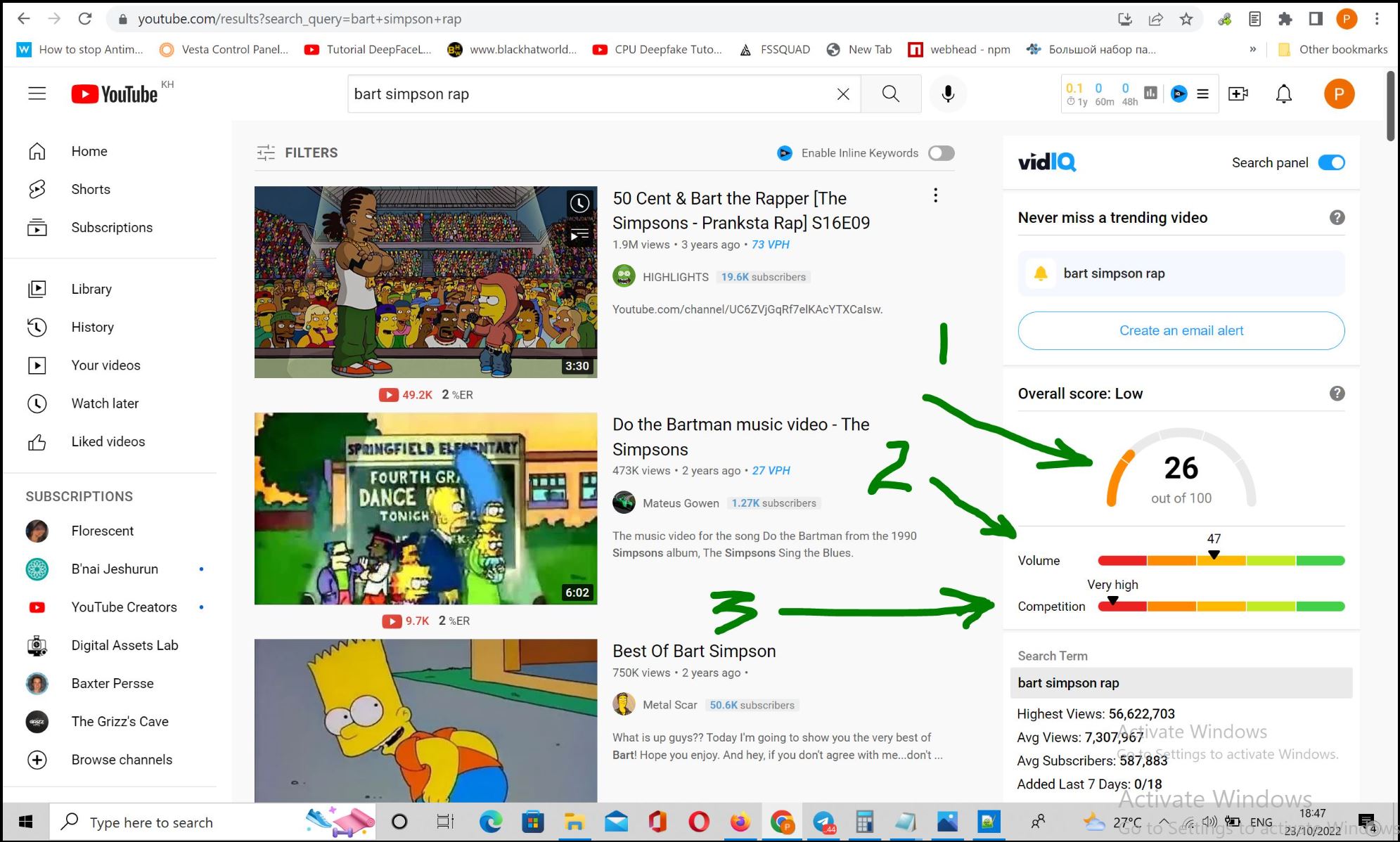
#1 Overall score. Here is what they put as a definition of this parameter:
#2 Volume. The definition given by VIDIQ is bellow
The calculation algorithm is not shared by VIDIQ
Why?
Because numbers are hard-coded... They did not exactly say we take the number of views and divide that by like likes and that way get engagement rate... Nope, anything even close only what we get is some general text explanation. Common sense style.
it's hard to find how VIDIQ counts those values... Therefore, in my opinion, it's a black box for us, and that's bad. Because what is our guarantee that it really works? The only way to find out this kind of a tool, which does not share its mechanics, would be through tests and experiments, collecting data. What I want to show you now is a case study where I will cross-compare this and other values between a few tools and YouTube keyword research methodologies.
First of all, here is the overall unweighted score for this search term estimated by TB
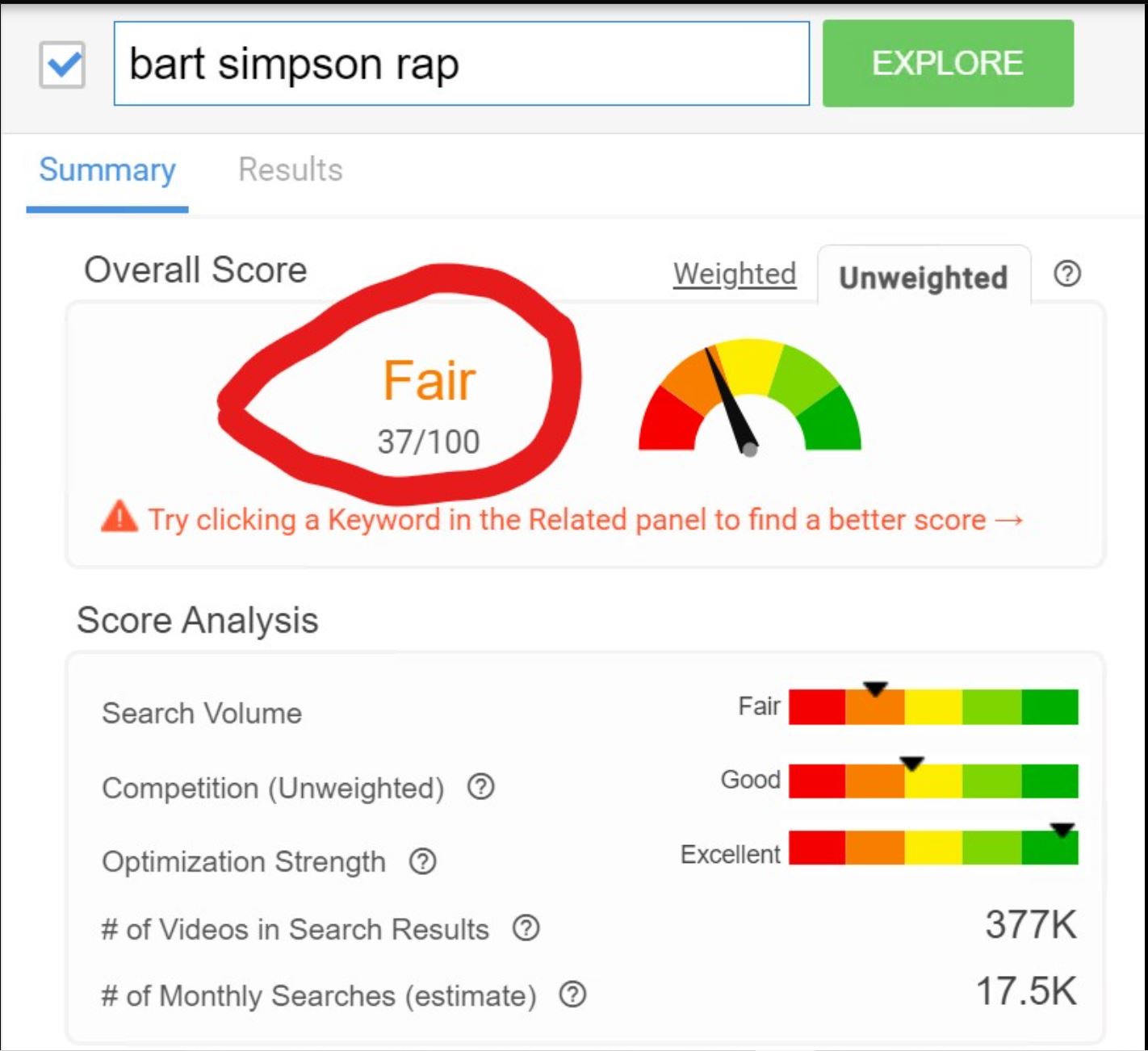
As you can see the values differ significantly compared to VIDIQ results... But as for now let's just dig into TB KW ranking research parameters. Later we will dive deeper into comparison across tools.
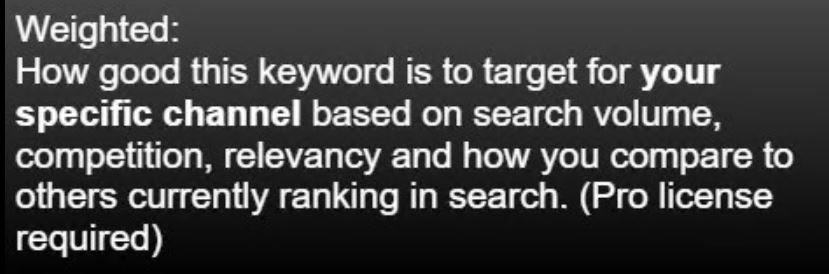
TubeBuddy offers weighted and unweighted data

Now, TubeBuddy (TB) seem not to reveal how they count the overall score and search volume, however, they do reveal more details about the following parameters
Competition. Quoted from TB website...
Now, they also do offer this small graph, which I believe is related to competition as well
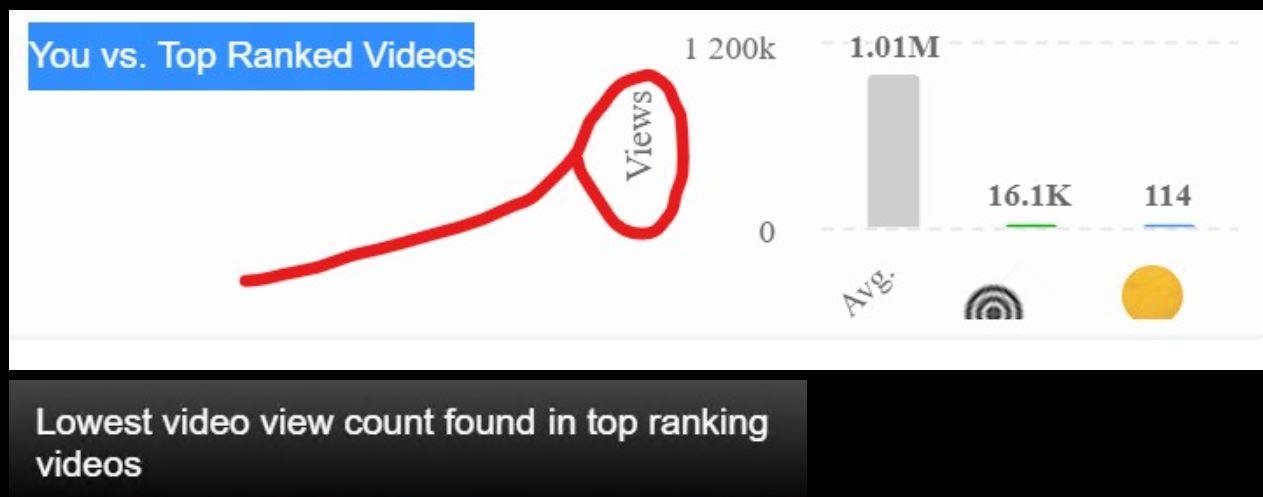
Notice how TB is taking the average amount of views per video for a specific search term ranking difficulty barrier value. This is important as later in this case study I will show you how other tools are taking a different approach to competition analysis.
Optimization strength.
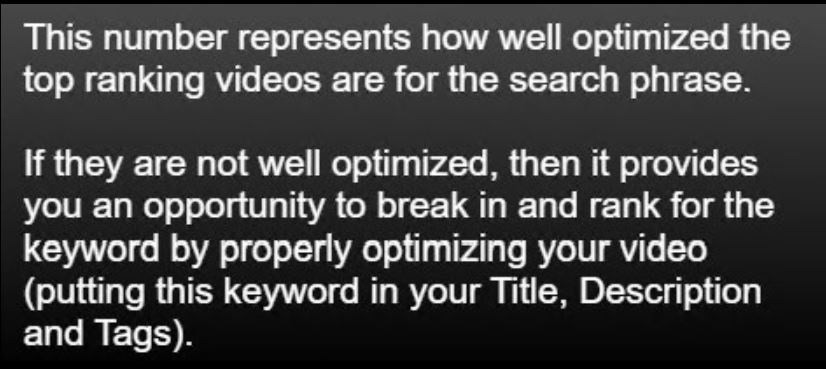
As I understand the higher the number of "exact matches", when the search term is found in the title of the video, the higher would the optimization strength.
It seems to me that the values above are the main TB keyword research parameters however there are a bunch more worth looking into. I.e.
"# of Videos in Search Results"

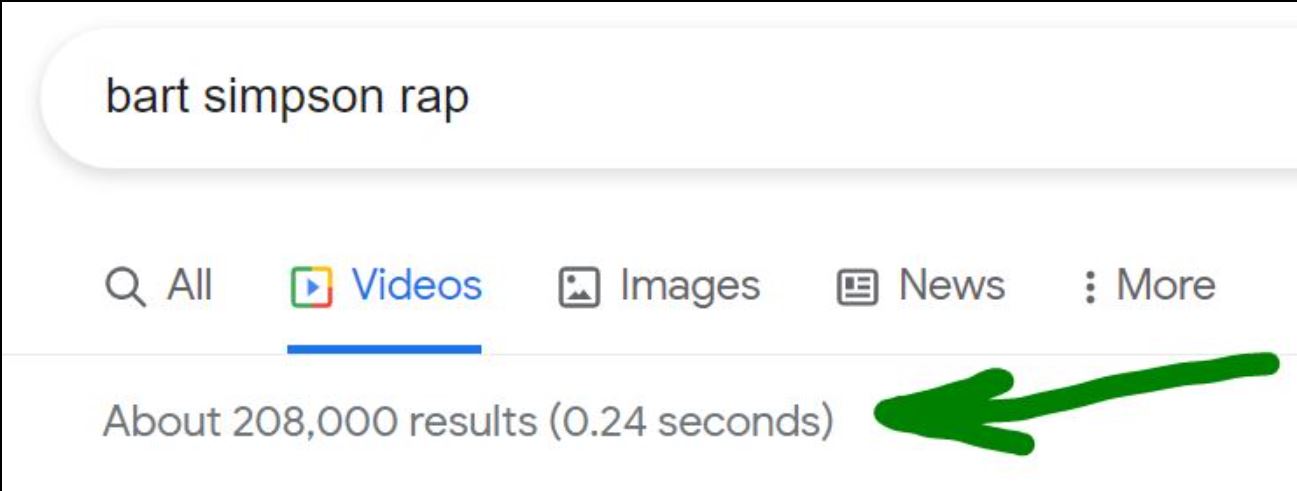
Honestly, I have no idea where this number is coming from... YT, as far as I know, does not reveal the number of vids in search results, however, if we do a "video" search for a keyword in google we can get an overall number of vids from various sources. And as you can see that number is almost twice less for this KW...
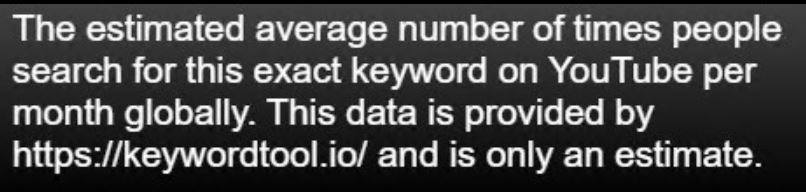
TB also mentions # of Monthly Searches (estimate) and for some reason, it goes independently from the search volume (or maybe somehow connected on the back end). Anyways, here is what they state it is
To sum up...
At the first glance, it seems like TB is giving us more parameters and in a slightly more open way, briefly explaining the maths behind a few values. We managed to learn something about the algorithm they use to calculate optimization strength (keyword exact matches) and competition (opt., str,. + avg views per video).
Now, in my opinion, MF is the most transparent among the above, especially when it comes to explaining where they are taking the numbers from... It also seems to give much more parameters to take into account when doing your KW research. I am not going to dive deep into all of them so let's go with the ones that are also mentioned by the tools that we have investigated above.
The first one would be the Search Volume.
There is no easy definition given on how they calculate SV, however, they confess that it is an estimated value and they give an extensive explanation of what are their and their competitor's actual possibilities and approaches to calculating SV. The most important thesis they are giving here is that no one except for google trends (youtube section) really has access to the search volumes on YT and the only effective way, in their opinion, to calculate SV would be to use a bunch of tools cross-checking on another.
Jump to the next post to continue reading...
if you want to see how all the tools that me and you are paying for show different results on the same keywords just follow the white rabbit...
To see what I see here first you have to understand how the tools actually calculate the keyword ranking difficulties
Let's start with VIDIQ
Here is a quick exampleLet's pick "Bart Simpson rap"
VIDIQ offers an option to see the keyword SEO parameters directly on the YT search results
#1 Overall score. Here is what they put as a definition of this parameter:
The Overall score is determined to help gauge how effective this keyword would be in your video optimization efforts.
If you have a 1M+ subscriber channel, you might be able to break into highly competitive search terms, but if you are a smaller channel it's better to stay focused on the mid-range search terms with low competition.
#2 Volume. The definition given by VIDIQ is bellow
#3 Competition. Here is what I found they are saying the definition of this is:The first thing to look for is the ‘Search Volume’ score. Chocolate Cake is a solid 100, which is the highest it can be. What does that mean? Essentially, lots of people are looking for chocolate cake, which is great, there is no point making a video nobody's even searching for. Now we've told you the search volume is nice and high. Perfect. Do we go ahead and just make this video now? No, not yet.
What conclusions do I make after reading all the above?The next thing we got to look at is something called the ‘Competition Score.’ What does that mean? Well, we have a high search volume, but look at the competition! Look how many other people are delivering value on this keyword, and how many videos are being made. The ‘Competition Score’ is a solid 89, which means the odds of your ranking amongst these major videos are going to be pretty slim if you only title your YouTube video with the words "chocolate cake’.
vidIQ Tip: Ideally, find a keyword with lots of search volume, and very little competition. It's rare, but when you find it, it's amazing.
The calculation algorithm is not shared by VIDIQ
Why?
Because numbers are hard-coded... They did not exactly say we take the number of views and divide that by like likes and that way get engagement rate... Nope, anything even close only what we get is some general text explanation. Common sense style.
it's hard to find how VIDIQ counts those values... Therefore, in my opinion, it's a black box for us, and that's bad. Because what is our guarantee that it really works? The only way to find out this kind of a tool, which does not share its mechanics, would be through tests and experiments, collecting data. What I want to show you now is a case study where I will cross-compare this and other values between a few tools and YouTube keyword research methodologies.
Now let's move to TubeBuddy
First of all, here is the overall unweighted score for this search term estimated by TB
As you can see the values differ significantly compared to VIDIQ results... But as for now let's just dig into TB KW ranking research parameters. Later we will dive deeper into comparison across tools.
TubeBuddy offers weighted and unweighted data
Now, TubeBuddy (TB) seem not to reveal how they count the overall score and search volume, however, they do reveal more details about the following parameters
Competition. Quoted from TB website...
and if weighted...Competition is another relative score based on several factors. We look at how many results there are for a specific keyword or phrase and how many views the video results have. Also, how many times your search term appears in the title, tags, and description of each video in the results. These things help predict how hard it would be for you to rank high in the search results.
Now, they also do offer this small graph, which I believe is related to competition as well
Notice how TB is taking the average amount of views per video for a specific search term ranking difficulty barrier value. This is important as later in this case study I will show you how other tools are taking a different approach to competition analysis.
Optimization strength.
As I understand the higher the number of "exact matches", when the search term is found in the title of the video, the higher would the optimization strength.
It seems to me that the values above are the main TB keyword research parameters however there are a bunch more worth looking into. I.e.
"# of Videos in Search Results"
Honestly, I have no idea where this number is coming from... YT, as far as I know, does not reveal the number of vids in search results, however, if we do a "video" search for a keyword in google we can get an overall number of vids from various sources. And as you can see that number is almost twice less for this KW...
TB also mentions # of Monthly Searches (estimate) and for some reason, it goes independently from the search volume (or maybe somehow connected on the back end). Anyways, here is what they state it is
To sum up...
At the first glance, it seems like TB is giving us more parameters and in a slightly more open way, briefly explaining the maths behind a few values. We managed to learn something about the algorithm they use to calculate optimization strength (keyword exact matches) and competition (opt., str,. + avg views per video).
Let's move to the next tool which would be Morningfa.me (MF)
Now, in my opinion, MF is the most transparent among the above, especially when it comes to explaining where they are taking the numbers from... It also seems to give much more parameters to take into account when doing your KW research. I am not going to dive deep into all of them so let's go with the ones that are also mentioned by the tools that we have investigated above.
The first one would be the Search Volume.
There is no easy definition given on how they calculate SV, however, they confess that it is an estimated value and they give an extensive explanation of what are their and their competitor's actual possibilities and approaches to calculating SV. The most important thesis they are giving here is that no one except for google trends (youtube section) really has access to the search volumes on YT and the only effective way, in their opinion, to calculate SV would be to use a bunch of tools cross-checking on another.
Jump to the next post to continue reading...
Last edited:


