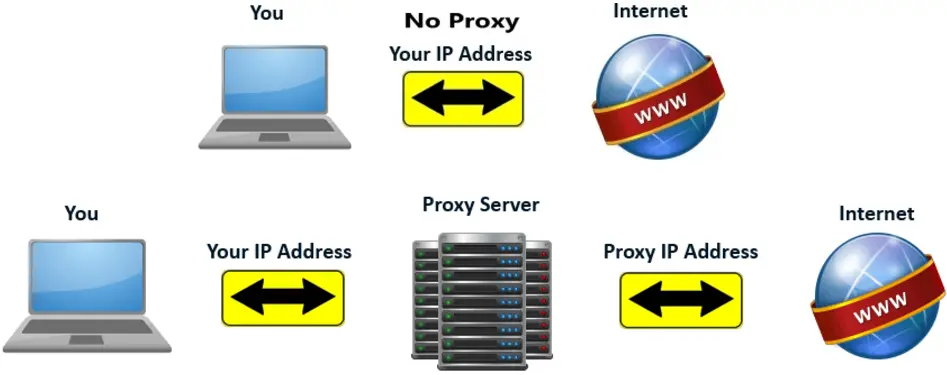
Crash course
Every device has an IP
Websites always log accounts IPs
A lot of bad actions from IP? - Block/limit the IP and accounts associated with it
Proxies you will see being for sale:
- 4G proxies one of the most popular nowadays, when using mobile internet
not every user gets an unique IP, instead many users are NATed through smaller pools of IPs
See the issue that websites encounter with 4G? They can no longer say, well this IP is definitely bad - let's block it, because there are literally millions of people using it over time ( many users using it at the same time, and over time users moving from one IP to another)
There will be several variations, like 'private' meaning you get a modem all to yourself, 'shared' where many people are using the same modem at the same time, and some services offer you the ability jo use any modem in their owned pool.
-
Datacenter IPV4 - Sellers would have a server with IP subnets rented out, and just route the traffic through them.
Advantages - Speed, price
Disadvantages- The whole subnets can be blocked, and they usually are. Websites know that you are using a DC proxy (real users never do)
-
Datacenter IPV6 - Because IPV4 was invented with an inbuilt limit of about 4B addresses ( There's no chance we would eeever need that many. right...?)
That didn't age too well, and if you've read what I wrote about 4G proxies, you know that we are forced to use NAT because there's not enough unique IPs for each user.
IPV6 has so many addresses that I don't have a fucking clue what's the number called, it's fucking a lot. So now each little shit can have it's own unique IPV6 address.
Pros- There's A LOT of them, speed (just like ipv4 dc), price
Cons - Not many websites support it, means that you couldn't even access most of the websites through it
Harder to get accounts 'trust' on them (it's like visiting a jewish bar with a swastika on your forehead), websites know what's up.
Many sellers scamming users with the pricing, sellers can set up billions of proxies on a /64 ipv6 subnet, and websites would treat it as one IP address.
I know it looks tempting to buy 1000 proxies for 10$ , but always remember what looks too good to be true - often is.
-
Residential IPV4/MOBILE - The highest quality and the most expensive proxies, can also be ipv4 or ipv4 addresses, now that you know the difference between the two let me tell you where the traffic actually comes from and why it is so HQ.
There are 2 types of residential proxies
1) Illegal botnets - Hackers spread their viruses to take control of the machines, let it be windows computers, phones or your fridge - and forwards traffic through it.
2) Legal botnets - Think Luminati or Oxylabs. Ever wondered why the hell is nordVpn(oxy) or HolaVpn(luminati) (
I believe they are called brighdata now, and probably the VPN name has changed as well so don't quote me on this)
Well, hackers have to break in to the machines to gain the access, and VPNs are installed by the users themselves , with some smart wording in the TOS you yourself accept to them tunneling the traffic through your device. Sketchy, I know, but it's a very lucrative business so they are okay with defending in courts.
There are some other apps that do tell you clearly 'share your internet and earn money' example - honeygain. I would say these are more ethical, but in the end - the users really don't understand what they are signing up for.
Cons- Slow, expensive
Pros - Targeting by country/city, highest IP pools. Highest quality 'trust' of the IPs until they get spammed to death,
Ohh and also
Backconnect proxiez
Basically, they are ipv4 DC proxies, sometimes mixed with some free proxies. You get 1 proxy to connect through, and the seller does all the 'magic', checking if the proxies are alive, the load balancing etc. and your request just shoots out to the website you requested.
Ohhhh, and also the last but not the least... Free proxies

Sometimes on the forums you will see 'free proxies list' being shared, or a proxy scraper. There are 2 types of proxy scrapers
1) A scraper that uses a predefined list of known proxy websites (other aggregators share it on their websites), with a combination of google dorks. So you are basically searching in google for proxies that someone has shared, and many people are already using
2) A scanner that can scan all the internet rather quickly, but most of the time they are only monitoring the known VPS IP ranges like vultr or AWS, and just waiting for someone to make a mistake in their firewall... Give it a go, set up squid or 3proxy and leave 3128 or 8080 open, you'll start seeing some funny traffic real quick. That's what some people do actually, and it's called 'honeypots' , so the 'scanners' actually become victims. Honeypots are usually left for monitoring, tracking scanners, but some guys just hunt your cookies through MITM
To sum it up, this would be a very rough example
IPV4 dc - Downloading stuff, managing several already trusted accounts
IPV6 dc - Managing spam accounts, scraping
4G - Social media account management (you are a real user based on IP)
Residential - Account creation