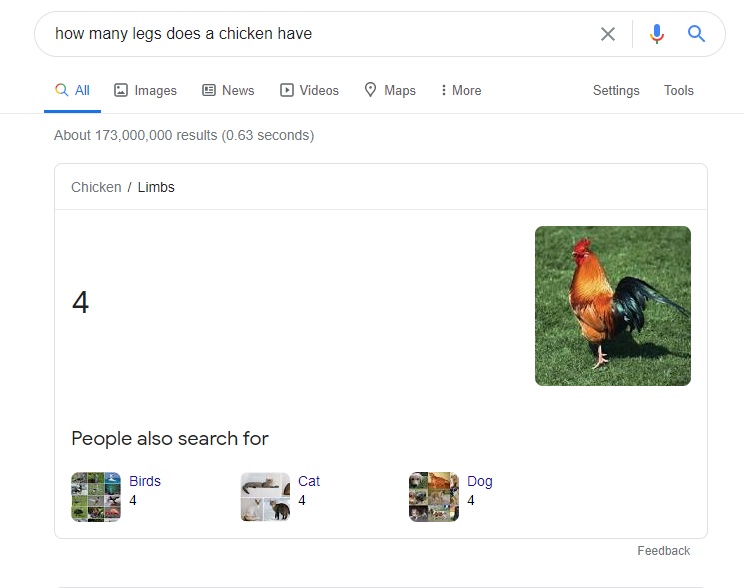
I'm not saying Google is doing this but what if....

Nah, I think what happens is there's a natural link decay caused by sites being offline - Google recrawls backlinks and some sites are down at the time of checking, so the backlink doesn't count. Then months later it checks again and finds the site is back and re-adds the value.

Imagine it doing that for several sites and that means tons of backlinksthat disappear and then appear back again.
 
Yup, so they are not building links. They are writing content to attract visitors and possibly links.


You can call it what you want, but the industry is quite clear on what's white hat and what's black hat. Everybody who's been in the business for a while, knows the difference between black- and white hat.

But I understand that you say that, since you are a PBN seller.

Ah here it comes. "You're a PBN seller, so everything you say is a lie" -- Ok. Don't listen to me. Stay poor.

SEO is a game and anyone claiming to know how it works including @splishsplash is a liar.

We are making a best guess at everchanging algorithms where even the people who work on them do not understand what is happening because it's all done via machine learning.

Anyone claiming that Google is "smarter than that" is ridiculous.

6e50dcf3bdfbdcc855085a8cba7982cc.png

Really? Tell that to the 100's of clients who I've helped rank, and the countless people who have read my guides, applied it to their sites and made $$.
 
Ah here it comes. "You're a PBN seller, so everything you say is a lie" -- Ok. Don't listen to me. Stay poor
Poor? I am far from poor.

I just don't listen to you because you don't know what you're talking about and because you are a PBN seller. So everything you say and do, is to boost your sales. Which have been proven in all the "guru threads" that you created in the past, where you got passive-aggressive with anyone who spoke against your bullshit.

I.e you are not objective like the rest of us. You have a dog in the fight and you have a chip on your shoulder. Your grandiose self-image is threatened as soon as someone speaks against your bias. You are not the guru you think you are.

If I ever fail in SEO, I might start selling PBN links too ;)
 
I don't understand why so many people think the engineering team would have a meeting and decide "Guys. I know. Let's stop trying to solve search. Let's just add some fucking randomness and go to the pub"

The serps would be A GIANT MESS. How can you add randomness? Does anyone understand information retrieval theory? This is a scientific problem, not some joke where you just add in randomness.

The randomness is a temporary fluctuation in response to new links and also on-page changes to stop people from just testing every permutation to cheat the algo.

Everything they do is only concerned with returning the best possible pages for the user. That's how they stay on top. It's how they have stayed on top for 20 years.

They don't NEED to do anything to make ad revenue. They don't NEED to squeeze more quarterly profits. All they need to do is keep users coming back to google and searching, and they won't achieve that by adding randomness into the algo to fuck with some SEO's. You are insignificant to them. If blackhat seo was such a problem they would just buy all the services here and blacklist everything, including blackhatworld.com

This is my conclusion from my personal tests, and by checking out other sites that's ranking in the SERPS.

Yes, I am insignificant in Google's eyes. That's how I like it.
 
Thank you for that information. I thought SEO was just buying links. That's why I wrote a 10k word guide to siloing before most people even knew what siloing was. :)
Don't take me wrong, I read your guide and it's a good write-up.
But saying you brought it to the masses is a bit of an over-statement.
It's a natural thing to do and I did it 12 years ago as I had 3 categories and it just makes sense rather than throwing everything in one pot and see what cooks.

Overall, you and bart have very good points and the reality is somewhere in the middle.

But google is not here to save the world... Google is in the business of making money.

On the final note, I agree with bart that all those gurus and big sites talk shit. They all build/buy links.
My favourite part... "link out to authority sites"... I remember the days when every donkey was linking to wikipedia and now wiki ranks practically for anything. Of course, gurus will tell you to link to authority sites as people would link to them and build even more "authority" for them.
 
Nobody becomes #1 by accident.
As we all have both our own similar and unique experiences with regards to working with search engines and / or any other tech company, I feel like it's a bit of a disservice to lump peoples' interpretations and critical thinking into such an all-inclusive term as "conspiracy theory", and to then discard it as nonfactor.

I personally would not discount the potentiality of a degree of "randomness" being a vital part of Google's spectrum. Consider this, from Google, for example::
"
What webmasters should know about Google’s core updates
Thursday, August 01, 2019
Each day, Google usually releases one or more changes designed to improve our search results. Most aren’t noticeable but help us incrementally continue to improve.
"
By releasing changes every day, they are undoubtedly doing a lot of testing (aka, "Trial and Error"). It's virtually inevitable.
How do I know?
Because they also say this:
"
Of course, no improvement we make to Search is perfect. This is why we keep updating. We take in more feedback, do more testing and keep working to improve our ranking systems. This work on our end can mean that content might recover in the future, even if a content owner makes no changes. In such situations, our continued improvements might assess such content more favorably.
"
By their own admission, at least some of it is random, as they don't always know what will work best and what will not. There's a certain element of randomness to that.
It's much like writing code. You may not always know what the output will be, so you pop in a value, see what happens, and tweak until satisfied, or you may have to get rid of it altogether and try a different approach.

What I am arguing against is people thinking that google would actually go to the effort of launching updates that are just completely random in order to confuse people and drive more adwords sales.
I would agree with you on this. Not because I don't believe they test random things to see what works. I do believe they do. I agree with you on the basis that I believe there's a difference between random and nonsensical. An update just to confuse people wouldn't make sense for them to do, in my opinion, as their public agenda is not to confuse people, but rather, to serve quality search results to people using their search engine. Being random just for the sake of confusion, would not accomplish such a goal. With that being said, would I believe that it could be a push to get people into using Google Ads? Perhaps. But I think this would depend more on the type of content, than just having a "throw-shit-on-the-wall-to-see-if-any-of-it-sticks" approach. For example, informational article content wouldn't need to be pushed to Google Ads, as it wouldn't make sense to force Newbie Blogger #1 and Informational Blogger #2 to do this. Now on the other hand, if you're an eCommerce store selling best shaving razors for men, then sure, I could see them wanting to urge you to use Google Ads.

Here's a helpful hint for Newbie Blogger #1 and Informational Blogger #2:
I recently ran a test on an informational article on my website, where there was a keyword that gets around 20,000 monthly searches. There's nothing to sell inside of my content for this particular page. No affiliate programs or anything. It's strictly information-based. As a test, I setup a $10 / day budget with Google Ads and sent a pretty nice amount of traffic to it. Within 3 days, my organic keyword rank went from position 80-something to 12. This is just some food for thought. Anyway, I digress.

There's nothing wrong with randomness, as it may be that one seemingly random tweak that helps them to achieve their goal(s). I've spent over a decade as an engineer and working alongside other engineers. Sometimes we have a spark of creativity and we know what goals we're trying to accomplish, and sometimes we need to get creative with our approaches, so we say things like, "hey, let's try this and see what happens", and then we explain to our managers what we did and why we did it, and if it sounds good to them, they say things like, "okay, let's take a backup first, and we'll try it. If it works, great! If not, we'll roll it back." Boom! Update.

Also related to what I said above, is the fact that different tiers of management have different agendas and goals than lower tiers of management as well as the other employees below them. Many of the engineers focus less on agenda and focus more on goals -- ie: meeting goals set forth by the ones who do have agendas. Again, nobody becomes #1 by accident.

If these mega corporations didn't have agendas, they'd be much more responsive, specific, and understandable at these congressional court hearings, for example. Instead, they beat around every bush that gets thrown at them. If these mega corporations didn't have agendas, then privacy policies wouldn't be the lengths of novels.

Related to this, they also have part of the algorithm that will drop your rank if it detects overly unnatural link building, and if you remove those links you'll then have a permanent drop.
I cannot subscribe to this belief, as I have (and I'm sure many others have, as well) removed problematic links, in a sense, by way of both manually removing bad backlinks and by using Google's Disavow Tool. I personally have done this and have removed everything from spam links to SAPE links and everything in between. To the best of my knowledge, there were never any permanent drops experienced, as a result of removing such links. In fact, my results were often that I'd generally be restored back to normal [or even better than before] within a day or two (though sometimes a bit longer).

But there are loads of sites ranking that aren't building links (white hat).
White-Hat isn't necessarily not building links, just as Black-Hat isn't limited to building links. Some internal stuff can be very much Black-Hat. Some external stuff can be very much White-Hat.

SEO is a game
This is something I 100% agree with. BUT, I wouldn't go as far as calling @splishsplash a liar. He's very knowledgeable about a lot of things revolving around SEO, and his experiences are different than my experiences which differ from your experiences, and so on. He knows what he knows about what he knows, as do you, and as do I. Here's the thing, as is stated directly from Google:
"
How pages link to each other is one well-known signal that we use. But we use many more, which we don’t disclose to help protect the integrity of our results.
"
So all that is to say that none of us know everything about Google and how they work. None of us. Does that mean we're all a bunch of liars? No. Not necessarily. Again, we can know what we know, but we don't know what we don't. So please, let's refrain from the insults and name-calling. It does none of us any good. We're all in this same boat, just trying to figure things out. There's no need for that other stuff. It's okay to disagree on things.

Anyway, there's more I want to say in this post, but I'll probably have another post a bit later. I need to go let the dogs out for a bit. :)
Sorry for being all over the place, but I've been reading this thread at different times throughout the day and just wanted to get some of my thoughts out before I forget them (old people problems lol).
 
Don't take me wrong, I read your guide and it's a good write-up.
But saying you brought it to the masses is a bit of an over-statement.
It's a natural thing to do and I did it 12 years ago as I had 3 categories and it just makes sense rather than throwing everything in one pot and see what cooks.

Overall, you and bart have very good points and the reality is somewhere in the middle.

But google is not here to save the world... Google is in the business of making money.

On the final note, I agree with bart that all those gurus and big sites talk shit. They all build/buy links.
My favourite part... "link out to authority sites"... I remember the days when every donkey was linking to wikipedia and now wiki ranks practically for anything. Of course, gurus will tell you to link to authority sites as people would link to them and build even more "authority" for them.

I never said I brought siloing to the masses. My exact words were "wrote a 10k word guide to siloing before most people even knew what siloing was " after being accused of being an SEO newbie.

Having categories is not siloing. Everyone's site has categories. It's quite a difficult thing to do, and if you get it right you'll know it because the results are insane.

You keep misquoting me..

I never at any point said google is here to "save the world".

Every company has a vision, and it's rarely "let's go make money". That's more the mindset of regular people who want to "make money online". Entrepreneurs are NOT like this.

Bill Gates with Microsoft wanted "A computer on every desk on every home". Not money. He wanted to create a very user friendly/accessible OS.

Seriously, money is boring without purpose. REALLY boring. What are you going to do? Drive sports cars and sit on a yacht all day? Gets old, fast.

Companies that go places are started by people that have some vision other than money.

If you start a site about laptops, you will do better if your vision is to help as many people as possible make the right choice when buying a laptop and get the most out of their laptops. Not "my vision is to make lots of $$ from my laptop review site"

Google are not trying to make money, or save the world. They are trying to master search. That's it. At least the search department. It's a big company with a lot of divisions, but who you are referring to here is a team of search engineers and their goal is not to make money. The ads team are completely separate, and they don't influence the search engineers. They just trust that they are continuing to roll out a great product that will keep users coming in. This is how business works.

My favourite part... "link out to authority sites"... I remember the days when every donkey was linking to wikipedia and now wiki ranks practically for anything. Of course, gurus will tell you to link to authority sites as people would link to them and build even more "authority" for them.


You link out to trustworthy, topically relevant sites. This connects you to good neighborhoods and helps google understand more about what your page is about.


Nobody becomes #1 by accident.
As we all have both our own similar and unique experiences with regards to working with search engines and / or any other tech company, I feel like it's a bit of a disservice to lump peoples' interpretations and critical thinking into such an all-inclusive term as "conspiracy theory", and to then discard it as nonfactor.

I personally would not discount the potentiality of a degree of "randomness" being a vital part of Google's spectrum. Consider this, from Google, for example::
""
By releasing changes every day, they are undoubtedly doing a lot of testing (aka, "Trial and Error"). It's virtually inevitable.
How do I know?
Because they also say this:
""
By their own admission, at least some of it is random, as they don't always know what will work best and what will not. There's a certain element of randomness to that.
It's much like writing code. You may not always know what the output will be, so you pop in a value, see what happens, and tweak until satisfied, or you may have to get rid of it altogether and try a different approach.


I would agree with you on this. Not because I don't believe they test random things to see what works. I do believe they do. I agree with you on the basis that I believe there's a difference between random and nonsensical. An update just to confuse people wouldn't make sense for them to do, in my opinion, as their public agenda is not to confuse people, but rather, to serve quality search results to people using their search engine. Being random just for the sake of confusion, would not accomplish such a goal. With that being said, would I believe that it could be a push to get people into using Google Ads? Perhaps. But I think this would depend more on the type of content, than just having a "throw-shit-on-the-wall-to-see-if-any-of-it-sticks" approach. For example, informational article content wouldn't need to be pushed to Google Ads, as it wouldn't make sense to force Newbie Blogger #1 and Informational Blogger #2 to do this. Now on the other hand, if you're an eCommerce store selling best shaving razors for men, then sure, I could see them wanting to urge you to use Google Ads.

Here's a helpful hint for Newbie Blogger #1 and Informational Blogger #2:
I recently ran a test on an informational article on my website, where there was a keyword that gets around 20,000 monthly searches. There's nothing to sell inside of my content for this particular page. No affiliate programs or anything. It's strictly information-based. As a test, I setup a $10 / day budget with Google Ads and sent a pretty nice amount of traffic to it. Within 3 days, my organic keyword rank went from position 80-something to 12. This is just some food for thought. Anyway, I digress.

There's nothing wrong with randomness, as it may be that one seemingly random tweak that helps them to achieve their goal(s). I've spent over a decade as an engineer and working alongside other engineers. Sometimes we have a spark of creativity and we know what goals we're trying to accomplish, and sometimes we need to get creative with our approaches, so we say things like, "hey, let's try this and see what happens", and then we explain to our managers what we did and why we did it, and if it sounds good to them, they say things like, "okay, let's take a backup first, and we'll try it. If it works, great! If not, we'll roll it back." Boom! Update.

Also related to what I said above, is the fact that different tiers of management have different agendas and goals than lower tiers of management as well as the other employees below them. Many of the engineers focus less on agenda and focus more on goals -- ie: meeting goals set forth by the ones who do have agendas. Again, nobody becomes #1 by accident.

If these mega corporations didn't have agendas, they'd be much more responsive, specific, and understandable at these congressional court hearings, for example. Instead, they beat around every bush that gets thrown at them. If these mega corporations didn't have agendas, then privacy policies wouldn't be the lengths of novels.


I cannot subscribe to this belief, as I have (and I'm sure many others have, as well) removed problematic links, in a sense, by way of both manually removing bad backlinks and by using Google's Disavow Tool. I personally have done this and have removed everything from spam links to SAPE links and everything in between. To the best of my knowledge, there were never any permanent drops experienced, as a result of removing such links. In fact, my results were often that I'd generally be restored back to normal [or even better than before] within a day or two (though sometimes a bit longer).

Randomness is different to unpredictable behavior. They can't predict how each update will impact the live rankings, but it's not random.

The only real randomness is the dance so people can't work out what changes are resulting in what.

I think you misunderstood my comment about the removal of links.

I'm not saying that if you remove problematic links then you will get a permanent drop.

I'm saying, when google picks up some new links that it deems as unnatural, to page X, then it will sometimes drop the rankings for page X to test to see if the backlinks will then be removed. If they are, that drop remains "permanent". Permanent in the sense that it won't rise up in a couple of weeks like it would if you had left the links untouched.

Here:-

https://www.seobythesea.com/2012/08/google-rank-modifying-spammers-patent/
This talks about it.

It's called a rank transition function and they apply it when going from rank X to rank Y, like I was saying earlier the going from A to B, it might go from A to F, to D, to X, to C, to B, or it might go A to C, to B.

"When Google believes such techniques are applied to a page, it may respond in ways that the person engaging in spamming might not expect. Instead of increasing rankings of pages, or removing them from search results, Google might respond with a time-based “rank transition function.”

"For example, instead of raising the rank of a page when there have been some modifications, and/or to the links pointing to a page, Google might wait for a while and even cause the rankings of a page to decline initially before it rises. Or the page might increase in rankings, but to a much smaller scale than the person making the changes might have expected."

"Google may monitor changes to a page and to links pointing to the page to see what type of response there is to that unusual activity. So, if someone stuffs a page full of keywords, instead of the page improving in rankings for certain queries, it might instead drop in rankings. If the person responsible for the page then removes those extra keywords, it indicates that some kind of rank-modifying spamming was going on."

"If there’s a suspicion that spamming might be going on, but not enough to positively identify it, the page involved might be subjected to fluctuations and extreme changes in ranking to try to get a spammer to attempt some kind of corrective action. If that corrective action helps in a spam determination, then the page, “site, domain, and/or contributing links” might be designated as spam. "


This is also an interesting read

https://www.seobythesea.com/2016/07/fake-business-spam-detection/
 
Last edited:
Nobody becomes #1 by accident.
As we all have both our own similar and unique experiences with regards to working with search engines and / or any other tech company, I feel like it's a bit of a disservice to lump peoples' interpretations and critical thinking into such an all-inclusive term as "conspiracy theory", and to then discard it as nonfactor.

I personally would not discount the potentiality of a degree of "randomness" being a vital part of Google's spectrum. Consider this, from Google, for example::
""
By releasing changes every day, they are undoubtedly doing a lot of testing (aka, "Trial and Error"). It's virtually inevitable.
How do I know?
Because they also say this:
""
By their own admission, at least some of it is random, as they don't always know what will work best and what will not. There's a certain element of randomness to that.
It's much like writing code. You may not always know what the output will be, so you pop in a value, see what happens, and tweak until satisfied, or you may have to get rid of it altogether and try a different approach.


I would agree with you on this. Not because I don't believe they test random things to see what works. I do believe they do. I agree with you on the basis that I believe there's a difference between random and nonsensical. An update just to confuse people wouldn't make sense for them to do, in my opinion, as their public agenda is not to confuse people, but rather, to serve quality search results to people using their search engine. Being random just for the sake of confusion, would not accomplish such a goal. With that being said, would I believe that it could be a push to get people into using Google Ads? Perhaps. But I think this would depend more on the type of content, than just having a "throw-shit-on-the-wall-to-see-if-any-of-it-sticks" approach. For example, informational article content wouldn't need to be pushed to Google Ads, as it wouldn't make sense to force Newbie Blogger #1 and Informational Blogger #2 to do this. Now on the other hand, if you're an eCommerce store selling best shaving razors for men, then sure, I could see them wanting to urge you to use Google Ads.

Here's a helpful hint for Newbie Blogger #1 and Informational Blogger #2:
I recently ran a test on an informational article on my website, where there was a keyword that gets around 20,000 monthly searches. There's nothing to sell inside of my content for this particular page. No affiliate programs or anything. It's strictly information-based. As a test, I setup a $10 / day budget with Google Ads and sent a pretty nice amount of traffic to it. Within 3 days, my organic keyword rank went from position 80-something to 12. This is just some food for thought. Anyway, I digress.

There's nothing wrong with randomness, as it may be that one seemingly random tweak that helps them to achieve their goal(s). I've spent over a decade as an engineer and working alongside other engineers. Sometimes we have a spark of creativity and we know what goals we're trying to accomplish, and sometimes we need to get creative with our approaches, so we say things like, "hey, let's try this and see what happens", and then we explain to our managers what we did and why we did it, and if it sounds good to them, they say things like, "okay, let's take a backup first, and we'll try it. If it works, great! If not, we'll roll it back." Boom! Update.

Also related to what I said above, is the fact that different tiers of management have different agendas and goals than lower tiers of management as well as the other employees below them. Many of the engineers focus less on agenda and focus more on goals -- ie: meeting goals set forth by the ones who do have agendas. Again, nobody becomes #1 by accident.

If these mega corporations didn't have agendas, they'd be much more responsive, specific, and understandable at these congressional court hearings, for example. Instead, they beat around every bush that gets thrown at them. If these mega corporations didn't have agendas, then privacy policies wouldn't be the lengths of novels.


I cannot subscribe to this belief, as I have (and I'm sure many others have, as well) removed problematic links, in a sense, by way of both manually removing bad backlinks and by using Google's Disavow Tool. I personally have done this and have removed everything from spam links to SAPE links and everything in between. To the best of my knowledge, there were never any permanent drops experienced, as a result of removing such links. In fact, my results were often that I'd generally be restored back to normal [or even better than before] within a day or two (though sometimes a bit longer).


White-Hat isn't necessarily not building links, just as Black-Hat isn't limited to building links. Some internal stuff can be very much Black-Hat. Some external stuff can be very much White-Hat.


This is something I 100% agree with. BUT, I wouldn't go as far as calling @splishsplash a liar. He's very knowledgeable about a lot of things revolving around SEO, and his experiences are different than my experiences which differ from your experiences, and so on. He knows what he knows about what he knows, as do you, and as do I. Here's the thing, as is stated directly from Google:
""
So all that is to say that none of us know everything about Google and how they work. None of us. Does that mean we're all a bunch of liars? No. Not necessarily. Again, we can know what we know, but we don't know what we don't. So please, let's refrain from the insults and name-calling. It does none of us any good. We're all in this same boat, just trying to figure things out. There's no need for that other stuff. It's okay to disagree on things.

Anyway, there's more I want to say in this post, but I'll probably have another post a bit later. I need to go let the dogs out for a bit. :)
Sorry for being all over the place, but I've been reading this thread at different times throughout the day and just wanted to get some of my thoughts out before I forget them (old people problems lol).

Thanks for this post! A lot of useful things I picked up while going through it.

The Adwords thing is quite interesting because that has also came to my mind before. I thought that what if I send some traffic to one article that has good on-page SEO? This page has a lot of internal links, basically designed to get the visitor to visit another page as soon as they are done reading the article thus, lowering my bounce rate and having high visitor page duration.

The reason that I've thought about this is that I had a site before that had a few articles, one article has seasonal keyword. I posted it 2 weeks before the season started. It was already on the lower half of the first page when it got indexed. The top results were not that good really. So when the season started, I still got visitors to that article from people who were unsatisfied from the top results.

The next day, my article jumped to the number one position. The first time this happened was 3 years ago. The 2nd time was last year. So I suspect that legitimate visitors to your site, and if these visitors actually make the Analytics metrics of your page better because they found it useful, will have a positive impact on your rankings. But I think this only works if the top results has poor user experience. I think I will try Adwords on a cheap informational keyword soon haha
 
But I think this only works if the top results has poor user experience.
Not necessarily. One of my competitors that was sitting at the bottom of page 2, is arguably the best in my industry. I flew past them in a matter of days, and onto page 1, just a couple days after that. I went as high as position #2 on December 2nd. On December 3rd, my website got punched by Mike Tyson. :(
giphy.gif
 
Not necessarily. One of my competitors that was sitting at the bottom of page 2, is arguably the best in my industry. I flew past them in a matter of days, and onto page 1, just a couple days after that. I went as high as position #2 on December 2nd. On December 3rd, my website got punched by Mike Tyson. :(
giphy.gif

Ahh. For me it stayed there until the site itself lost Google's favor because I neglected to update it for many months. It ranked maybe because the other sites are ranking there because I was the only one optimizing for that niche really. All other sites were large content sites that ranked for that specific keyword because of their very high authority (it's a user-generated content site). But it is interesting that Google does this. It would make sense that they would move that site upward to accommodate the demands of the searchers which are not being met by the current sites.

Poor Moe lol.
 
Google are not trying to make money, or save the world. They are trying to master search. That's it. At least the search department. It's a big company with a lot of divisions, but who you are referring to here is a team of search engineers and their goal is not to make money. The ads team are completely separate, and they don't influence the search engineers. They just trust that they are continuing to roll out a great product that will keep users coming in. This is how business works.
Didn't mueller say just a few days ago that organic and paid bots shared the crawl budget?
Google were forced to split into 2 but they still share a lot of information. So ad and search engine teams are not really seperated.
It's the same for all google products. Please remind me how many times google were fined for abusing their dominant position... especially when those honest engineers made sure google products ranked high???

I guess those honest engeneers knew nothing about it.
here's an example, and note, this example is just 3 years old... how many times those "honest" engeneers manipulated the results only god knows.
https://www.vox.com/2017/6/27/15878...,Tony Romm @TonyRomm Jun 27, 2017, 6:13am EDT
 
Last edited:
Ahh. For me it stayed there until the site itself lost Google's favor because I neglected to update it for many months. It ranked maybe because the other sites are ranking there because I was the only one optimizing for that niche really. All other sites were large content sites that ranked for that specific keyword because of their very high authority (it's a user-generated content site). But it is interesting that Google does this. It would make sense that they would move that site upward to accommodate the demands of the searchers which are not being met by the current sites.

Poor Moe lol.
If you have Google Analytics on your website, I think that Google Ads allows Google to quickly see how users interact with the page you're sending users to. They can quickly see the time spent on the page, how much scrolling and clicking through to other pages the users are doing. They can identify any bounce rate issues. They can see which keywords make the users want to click onto your page to begin with. It's like you're directly feeding Google a bunch of data about your page without having to wait for all of this stuff to happen:
going from rank X to rank Y, like I was saying earlier the going from A to B, it might go from A to F, to D, to X, to C, to B, or it might go A to C, to B.
"For example, instead of raising the rank of a page when there have been some modifications, and/or to the links pointing to a page, Google might wait for a while and even cause the rankings of a page to decline initially before it rises. Or the page might increase in rankings, but to a much smaller scale than the person making the changes might have expected."
This let's you bypass all the "what ifs" and playing hopscotch around the SERPs.

I'm saying, when google picks up some new links that it deems as unnatural, to page X, then it will sometimes drop the rankings for page X to test to see if the backlinks will then be removed. If they are, that drop remains "permanent". Permanent in the sense that it won't rise up in a couple of weeks like it would if you had left the links untouched.
This makes sense, and I can see that happening. However, that would also go against what their Disavow Tool is intended to solve. Also, how do they distinguish these "unnatural" links from being links you've created for your website vs what a crafty competitor may have created against your website?
 
If you have Google Analytics on your website, I think that Google Ads allows Google to quickly see how users interact with the page you're sending users to. They can quickly see the time spent on the page, how much scrolling and clicking through to other pages the users are doing. They can identify any bounce rate issues. They can see which keywords make the users want to click onto your page to begin with. It's like you're directly feeding Google a bunch of data about your page without having to wait for all of this stuff to happen:


This let's you bypass all the "what ifs" and playing hopscotch around the SERPs.


This makes sense, and I can see that happening. However, that would also go against what their Disavow Tool is intended to solve. Also, how do they distinguish these "unnatural" links from being links you've created for your website vs what a crafty competitor may have created against your website?

The disavow tool isn't meant to be used like that. john mueller has said this a lot. He said the algorithm is generally good at working out things by its self. Which it is.. Neg seo is hard these days. Possible, but hard.

But, think about it..

If you create a link, then 3 days later you see a drop and remove it. What are the odds that you just happened to see that link, to that page, that quickly after it was created? It wouldn't show up anywhere for quite a while. Not the search console and not ahrefs. So how did you know about it?

And it's even more of a coincidence if the link is removed immediately after the page drops.

It would have to be something you created and are monitoring the results like a hawk, and that's what they want to catch.

You see this a lot. I in particular see it a lot because I'm building links for a lot of clients. I would say about 1/4 of the pages I build links to will see a slight drop for around 10 days. 10 days seems to be the sweet spot. Sometimes, in particular with larger volume keywords they can drop a little and hold that for a good 3-4 weeks. It's rarely longer than that, but sometimes it's 6 weeks then you see it suddenly shoot up.

It's a very stark pattern. A page might be on #12, then it'll rise to #10-11 for a day or 2, then drop to #13-#14, then drop down to about #17-#18 and hold there, then all of a sudden BOOM it shoots up to between #11 and #13 usually, then the next day shoots up to #9-10, then maybe the 3rd day it'll go to #8 and it'll then hover around #8-#10 for a few weeks, and sometimes after about 6-8 weeks of the link being live you'll see it then gain another place putting it at #7-8. I see this a LOT.

The danger time is the first few days after it happens if you suddenly remove the link. It's the sort of thing a novice would do. Create some links, or make some on-page changes, then panic and remove them.
 
Don't take me wrong, I read your guide and it's a good write-up.
But saying you brought it to the masses is a bit of an over-statement.
It's a natural thing to do and I did it 12 years ago as I had 3 categories and it just makes sense rather than throwing everything in one pot and see what cooks.

Overall, you and bart have very good points and the reality is somewhere in the middle.

But google is not here to save the world... Google is in the business of making money.

On the final note, I agree with bart that all those gurus and big sites talk shit. They all build/buy links.
My favourite part... "link out to authority sites"... I remember the days when every donkey was linking to wikipedia and now wiki ranks practically for anything. Of course, gurus will tell you to link to authority sites as people would link to them and build even more "authority" for them.

@praetserge LOL @ Donkey, you're 100% right. I don't link out to shit anymore, unless I feel that adding an external link is of any value. I remember being one of those donkeys back in the day. This really made me crack up. Thanks for the laugh!

@splishsplash you're on point regarding search intent. I spoke with a few people and 3 of them complained about losing "Product Keywords" to Amazon/eBay, I then asked well is your site e-commerce or a content site? and all of them said it was a content site. The thing is, people are not looking for a 2000 word article when they search for product keywords, they are looking for that shit when they go for best/top/review. Product keywords are for e-commerce sites, that's just how it is.

I have a site that I'm working on, it's on a strong non-dropped domain, been adding content since 2 months, sitting at almost 2.5K monthly traffic already. None of my keywords took a hit. They're exactly where they were, improving every week in a very competitive niche. I don't build links, I just focus on content and all I do is use "common sense" and look at the results on the first page, without focusing on big sites that might only be there because of authority. This helps me understand the search intent, which I already have a pretty good idea about even before I look at the competition.

If I were to add links, I would be ranking a lot higher right now. Links definitely work! But without the RIGHT content things are not going to work out in the long run. What most people don't understand is that well written article isn't necessarily right, it has to answer the fucking search query.

I am no expert, but that's my take on that.
 
The disavow tool isn't meant to be used like that. john mueller has said this a lot. He said the algorithm is generally good at working out things by its self. Which it is.. Neg seo is hard these days. Possible, but hard.

But, think about it..

If you create a link, then 3 days later you see a drop and remove it. What are the odds that you just happened to see that link, to that page, that quickly after it was created? It wouldn't show up anywhere for quite a while. Not the search console and not ahrefs. So how did you know about it?

And it's even more of a coincidence if the link is removed immediately after the page drops.

It would have to be something you created and are monitoring the results like a hawk, and that's what they want to catch.

You see this a lot. I in particular see it a lot because I'm building links for a lot of clients. I would say about 1/4 of the pages I build links to will see a slight drop for around 10 days. 10 days seems to be the sweet spot. Sometimes, in particular with larger volume keywords they can drop a little and hold that for a good 3-4 weeks. It's rarely longer than that, but sometimes it's 6 weeks then you see it suddenly shoot up.

It's a very stark pattern. A page might be on #12, then it'll rise to #10-11 for a day or 2, then drop to #13-#14, then drop down to about #17-#18 and hold there, then all of a sudden BOOM it shoots up to between #11 and #13 usually, then the next day shoots up to #9-10, then maybe the 3rd day it'll go to #8 and it'll then hover around #8-#10 for a few weeks, and sometimes after about 6-8 weeks of the link being live you'll see it then gain another place putting it at #7-8. I see this a LOT.

The danger time is the first few days after it happens if you suddenly remove the link. It's the sort of thing a novice would do. Create some links, or make some on-page changes, then panic and remove them.
Yeah I want to say I had the same experience where I saw a page drop to page 4 even after a link thrust. Only to jump back up to page 1 a few weeks later. Granted my silo was all jacked up... So I think that would have had a part in Google figuring it out. But that is definitely true. Probably ignore 30 or 40 days after a link before you start to Interpret the effects
 
It's just not how Google works at all.

The search team is just a bunch of geeky engineers trying to make search better and they have to go through really strict approvals to roll out changes in the live index.

Forget blackhat and whitehat. This is not what google are interested in anymore.

The rollouts are all AI. No one really knows what to expect. Sometimes they work, sometimes they need tweaking based on how the world responds.

There's a few concepts at play in google.

1) Relevancy
2) Authority
3) Power

Relevancy comes first in most niches.

In some niches they weigh authority more, like health/finance.

Power boosts everything. How they judge authority in the past was based on links only.

Now, it's machine learning.

Machine learning is looking at EVERYTHING. Images, layouts, content.. It's trying to identify the best possible sites for the users, based on what it knows the users choose. It's constantly learning.

You rank in 2020 by looking at what's on page 1. That tells you what the machine learning algo is looking for. Then you make something similar, but unique, because it also looks for unique stuff. You'll probably have noticed that there's more variety on page 1 these days.

Google will penalize sites less and less, because the machine learning is working out what users want and showing it to them, regardless of whether you have pbn links, bad anchors or anything else.

SEO is becoming both easier and harder.

In the past they would try to target sites who were doing spammy things, as this was a pretty reliable way of removing "bad" sites. Now, you have the machine learning getting more and more sophisticated and accurate and choosing sites that people want to see. So naturally, they aren't needing to allocate resources to go after "spammers", because the system just takes care of things better by its self now.


Oh?

Where did you learn that?

There's actually 2 people behind Google. Larry and Sergey.

The team behind the search is just a bunch of engineers who love their job. All these conspiracy theories are just wild.

No investment firm has any say at google. Vanguard only has something like 7% of the voting shares. Larry and Sergey have 51%.

You have no idea how long I have been waiting for your comment on this whole bullshit.

This makes so much sense at the same time it gives hope.

It kinda frees me from that victim mindset of

"The system is wired against me or the system wants to stifle the upcoming"

Splishsplash, can you take a look at my site/project.

I'll appreciate a word or two from you.

And yes, I was affected by -50% on this new update.

My site took off on 1st Sep, it was slowly climbing and now this.. Smh.

Please Splash!
 
It's very difficult, almost impossible, for the algorithm to determine a natural, editorial contextual vs one that was paid for, or a site that was setup to be a pbn

I agree with this, hence the "********, Sponsored, NoFollow" attributes, especially the Sponsored. In this case they felt webmasters will make things easy for them.
 
iu


I'm certain that they're shuffling shit around to make people move over to PPC. It's just... smart from their end. SEO doesn't pay them anything, PPC does. Even I tried their ads for a while after an update popped my anus.

If I owned Google, I'd do the same to be honest.

But hey, I could be wrong. It's not like I have proof. Just my opinion.
 
Back
Top