I'm not saying Google is doing this but what if....

Also because they've brainswashed a bunch of idiots who will support them no matter what.
thank-you-memes-90.gif
 
I believe something along those lines too.

I'm certain that there is a randomized variable in the algorithm as well, to confuse/combat SEO. It would only make sense from them to do so.

They really care very little about SEO.

Do you think if it was a big problem they wouldn't just come on bhw and buy up all the services and just blacklist all the sites selling links?

Is that not easier than a "random variable" in an already complex system with AI in it?

Google's sole goal from day 1 was to organize the world's information. That's it. It's just a bunch of guys who wanted to do something cool.

Same as many people here. People are just people. We just want to do cool shit with our time. That's all. There's no grand conspiracies and dark schemes.
 
They dont know what they are doing. Its Like being 6 years old and depended of your heorine addicted mother.
 
Did you not bother to read any of my post?

How does this "randomness" get past committees and teams of engineers?

Are they all in on the conspiracy?

Do you understand the mindset of top 1% engineers? Top 10% even.

LOL It's a Google patent.... There is randomness inserted in search results on purpose.

About "Conspiracy": everyone see what I was talking about?

Folks don't have a clue. When presented with how Google actually works, they call it a conspiracy.
 
LOL It's a Google patent.... There is randomness inserted in search results on purpose.

About "Conspiracy": everyone see what I was talking about?

Folks don't have a clue. When presented with how Google actually works, they call it a conspiracy.

So your response to my detailed post explaining how companies work and how the engineering processes work was just skipped, and instead you've replied with

"LOL It's a Google patent".

This is a giant, giant straw-man argument.

It's not a "google patent". There is no "randomness" in the algorithm.

The patent you are referring to is about how the algorithm responds to new links.

It adds in an element of randomness for a period of around 5 days to 10 weeks based on how natural it deems the link building.

This is to prevent people from reverse engineering what links do and don't work. Without this you could build a link, and X days later you'd have an exact rank response.

The randomness for up to 10 weeks makes it hard to pin-point which links did what.

Related to this, they also have part of the algorithm that will drop your rank if it detects overly unnatural link building, and if you remove those links you'll then have a permanent drop.

This has absolutely nothing to do with "randomness" in the algorithm. It's a short, random response to new links in order to confuse link builders. Nothing more. Think of it as I want to move from point A to point B. Instead of going in a straight line I can move to E, then to X, then to C, then to F, then to B. The end result is still the same, but the path there has elements of randomness.

Understand? Or are you just going to give me another "LOL everyone.. peeps are so clueless they dont know whats what"
 
Of course there is an element of randomness in Google's algo. I thought that was common knowledge by now? Offline, you can never be certain if your business venture will turn out ok. So many factors affect the outcome. And a big part of this is LUCK. Luck = randomness. Of course having vast amount of resources, knowledge and experience helps a lot to tip the odds in your favor. But even multi-million companies make bad business/investnent decisions. Heck even churn and burn method is a numbers game. You are spamming the same parasite with the same links but for some reason some never shows up in top 100. Some lands in 5th position some reaches number 2. Some is in 25th.

It just doesn't make sense for Google not to add randomness to the algo. I mean, that's the reason why they removed the public viewing of PageRank right? To keep us guessing - to keep it random. Because it was just too easy before. Just get high PR links and more or less you are good to go. You just needed a higher budget. Today, we have 3rd party metrics. And there is never ending debate on which is the most accurate. That's what Google wants. To keep us guessing. To remove the "exact formula". Combine that with the longer time it takes for link building efforts to show any effect then you have a recipe for chaos. Suddenly the market is much harder to penetrate especially for newbies and those who aren't ready to burn money.
 
LOL It's a Google patent.... There is randomness inserted in search results on purpose.

About "Conspiracy": everyone see what I was talking about?

Folks don't have a clue. When presented with how Google actually works, they call it a conspiracy.

This has to be a wind-up, surely. Is he the resident jester?
 
Of course there is an element of randomness in Google's algo. I thought that was common knowledge by now? Offline, you can never be certain if your business venture will turn out ok. So many factors affect the outcome. And a big part of this is LUCK. Luck = randomness. Of course having vast amount of resources, knowledge and experience helps a lot to tip the odds in your favor. But even multi-million companies make bad business/investnent decisions. Heck even churn and burn method is a numbers game. You are spamming the same parasite with the same links but for some reason some never shows up in top 100. Some lands in 5th position some reaches number 2. Some is in 25th.

It just doesn't make sense for Google not to add randomness to the algo. I mean, that's the reason why they removed the public viewing of PageRank right? To keep us guessing - to keep it random. Because it was just too easy before. Just get high PR links and more or less you are good to go. You just needed a higher budget. Today, we have 3rd party metrics. And there is never ending debate on which is the most accurate. That's what Google wants. To keep us guessing. To remove the "exact formula". Combine that with the longer time it takes for link building efforts to show any effect then you have a recipe for chaos. Suddenly the market is much harder to penetrate especially for newbies and those who aren't ready to burn money.

I don't understand why so many people think the engineering team would have a meeting and decide "Guys. I know. Let's stop trying to solve search. Let's just add some fucking randomness and go to the pub"

The serps would be A GIANT MESS. How can you add randomness? Does anyone understand information retrieval theory? This is a scientific problem, not some joke where you just add in randomness.

The randomness is a temporary fluctuation in response to new links and also on-page changes to stop people from just testing every permutation to cheat the algo.

Everything they do is only concerned with returning the best possible pages for the user. That's how they stay on top. It's how they have stayed on top for 20 years.

They don't NEED to do anything to make ad revenue. They don't NEED to squeeze more quarterly profits. All they need to do is keep users coming back to google and searching, and they won't achieve that by adding randomness into the algo to fuck with some SEO's. You are insignificant to them. If blackhat seo was such a problem they would just buy all the services here and blacklist everything, including blackhatworld.com
 
Maybe. Or maybe they just run more in depth report about clickthrough rates, bounce rate, return visits etc and ajust everything based on that. So theres no change to algorithm, they just run some really heavy data crunching periodically rather than in real time, to save on resources and keep everything running fast.
 
They really care very little about SEO.
How do you know? Is that why they have guidelines, online talks and updates about their algorithm?

I would say they care a lot about SEO. They are a search engine, why wouldn't they care about search engine optimization?

Do you think if it was a big problem they wouldn't just come on bhw and buy up all the services and just blacklist all the sites selling links?
That what is a big problem? I don't see anyone mentioning "a big problem", so I'm not sure what you are referring to.

It seems like you think SEO is just buying links...

Is that not easier than a "random variable" in an already complex system with AI in it?
Again, SEO is more than just buying links.

I still don't understand exactly what you are arguing against here. You seem to think that SEO is only buying links and that Googles "combat" with SEO's is to bust their PBNs.

Google's sole goal from day 1 was to organize the world's information. That's it. It's just a bunch of guys who wanted to do something cool.
Google's sole goal is to make money. Like any other company.

Same as many people here. People are just people. We just want to do cool shit with our time. That's all. There's no grand conspiracies and dark schemes.
So discussing variables in Google algorithm is "grand conspiracies" and "dark schemes"? Not really..
 
How do you know? Is that why they have guidelines, online talks and updates about their algorithm?

I would say they care a lot about SEO. They are a search engine, why wouldn't they care about search engine optimization?

SEO is a side effect of information retrieval. In the early days it was super simple to game the system with keyword stuffing etc. Their goal has always just been to organize the world's data. To make it so that you can access the right information you want.

You aren't suppose to "optimize". In a perfect world you don't need to optimize, but just create useful content.

In the early days they had to focus more on combating the optimization because it was too easy to abuse.

Guidelines in the early days would help you structure your pages so they could better understand it.

With advances like BERT they are able to understand language a lot better, so these days we really don't need to optimize. Now, it's more about topical depth. You no longer rank for "content marketing" by having "content marketing" in the title. You need to first find out what most people want to see when they search for "content marketing" and then write about those topics, on top of that you need to have a ton of supporting content on your site that's related to the broad topic "content marketing".

Google don't really want people to try to optimize. They want them to just write content, and let the algorithm do its job and match the right content with the right queries. You can of course still highly optimize by understanding topical depth and how topics all relate to each other.

That what is a big problem? I don't see anyone mentioning "a big problem", so I'm not sure what you are referring to.

It seems like you think SEO is just buying links...


Again, SEO is more than just buying links.

I still don't understand exactly what you are arguing against here. You seem to think that SEO is only buying links and that Googles "combat" with SEO's is to bust their PBNs.

Thank you for that information. I thought SEO was just buying links. That's why I wrote a 10k word guide to siloing before most people even knew what siloing was. :)

What I am arguing against is people thinking that google would actually go to the effort of launching updates that are just completely random in order to confuse people and drive more adwords sales. This is what the entire thread is about. Essentially "google make updates to hurt webmasters and drive more adwords sales".

I'm saying that google doesn't think in terms of blackhat vs whitehat. Just information retrieval. Is a site relevant. Is it authoritative. Is it expert. Is it trustworthy. Updates have nothing to do with combating blackhat SEOs. Not anymore. In 2010-2011 blackhat sites would dominate and it was very easy to create an utterly trash site, spam it with xrumer and beat more legitimate/useful sites. That's why google focused heavily on anti-spam back then. No one ever replaced Matt Cutts. The problem is essentially solved since about 2015-2016. You might still have a few obscure niches with trash sites ranking, but for the most part, the results in google are pretty clean.

What they ARE focused on more now is advancing the machine learning part of the algo. They call it DeepRank, and it includes BERT and other AI things. They want to perfect the results so when people search for all sorts of hard to understand natural language phrases, the algorithm understands what kind of page they want to see.

This is very important to understand.

If a site drops it is NOT because google considers it spam. It is NOT because it's blackhat.

This is why people get so confused and are saying "I'm seeing blackhat and whitehat sites drop"

There IS NO BLACKHAT OR WHITEHAT ANYMORE!

A site that does no link building is the same in google's eyes vs a site with pbns, guest posts and niche edits.

It's very difficult, almost impossible, for the algorithm to determine a natural, editorial contextual vs one that was paid for, or a site that was setup to be a pbn. It might SEEM simple, but it if you were to exclude things like homepage links, or posts with a lot of links on the homepage in order to try and detect pbns you would absolutely destroy the serps, because so many legitimate sites are all mixed up in it.

Plus, google understand that someone can create an AMAZING site, and still buy guest posts/pbns. It doesn't really matter to them. If your site deserves to rank, it should rank.

Do you understand? Google is radically different since 2018-2019. This is why people are so confused with updates. It's just the machine learning adapting to the data and the engineers tweaking the AI to better understand language, better match up pages to queries. It's a hard problem, and sometimes an update isn't ideal so you see sites dip, then come back with another minor update. They test as much as they can before going live, but they never really know if something will properly work UNTIL it is deployed in the live index.

Google's sole goal is to make money. Like any other company.

No, no it's not. Only hedge funds and other investment companies sole goal is to make money.

Google's goal is to index the world's information and make it accessible in under a second to anyone, anywhere.

Larry and Sergey did not start the company to make money.

No one that creates successful companies of this size does.

Money is a side effect and it's required to build companies. Most of the world is poor and thinks that everyone does things for money. Once you make a certain amount of money you stop caring about money and you become more interested in filling your day/life with something fulfilling. Money is ONLY the thing we use to keep score. It's not the goal. It's just a piece of paper or a number on a screen.

So discussing variables in Google algorithm is "grand conspiracies" and "dark schemes"? Not really..

There are no variables in their algorithm. It's way beyond variables. They aren't tweaking variables and rolling them out. :)

And again, we are not discussing variables. We are discussing "Do google deliberately fuck up the serps to drive more adwords sales". Do you think they do?[/QUOTE]
 
SEO is a side effect of information retrieval. In the early days it was super simple to game the system with keyword stuffing etc. Their goal has always just been to organize the world's data. To make it so that you can access the right information you want.

You aren't suppose to "optimize". In a perfect world you don't need to optimize, but just create useful content.

In the early days they had to focus more on combating the optimization because it was too easy to abuse.

Guidelines in the early days would help you structure your pages so they could better understand it.

With advances like BERT they are able to understand language a lot better, so these days we really don't need to optimize. Now, it's more about topical depth. You no longer rank for "content marketing" by having "content marketing" in the title. You need to first find out what most people want to see when they search for "content marketing" and then write about those topics, on top of that you need to have a ton of supporting content on your site that's related to the broad topic "content marketing".

Google don't really want people to try to optimize. They want them to just write content, and let the algorithm do its job and match the right content with the right queries. You can of course still highly optimize by understanding topical depth and how topics all relate to each other.


Thank you for that information. I thought SEO was just buying links. That's why I wrote a 10k word guide to siloing before most people even knew what siloing was. :)

What I am arguing against is people thinking that google would actually go to the effort of launching updates that are just completely random in order to confuse people and drive more adwords sales. This is what the entire thread is about. Essentially "google make updates to hurt webmasters and drive more adwords sales".

I'm saying that google doesn't think in terms of blackhat vs whitehat. Just information retrieval. Is a site relevant. Is it authoritative. Is it expert. Is it trustworthy. Updates have nothing to do with combating blackhat SEOs. Not anymore. In 2010-2011 blackhat sites would dominate and it was very easy to create an utterly trash site, spam it with xrumer and beat more legitimate/useful sites. That's why google focused heavily on anti-spam back then. No one ever replaced Matt Cutts. The problem is essentially solved since about 2015-2016. You might still have a few obscure niches with trash sites ranking, but for the most part, the results in google are pretty clean.

What they ARE focused on more now is advancing the machine learning part of the algo. They call it DeepRank, and it includes BERT and other AI things. They want to perfect the results so when people search for all sorts of hard to understand natural language phrases, the algorithm understands what kind of page they want to see.

This is very important to understand.

If a site drops it is NOT because google considers it spam. It is NOT because it's blackhat.

This is why people get so confused and are saying "I'm seeing blackhat and whitehat sites drop"

There IS NO BLACKHAT OR WHITEHAT ANYMORE!

A site that does no link building is the same in google's eyes vs a site with pbns, guest posts and niche edits.

It's very difficult, almost impossible, for the algorithm to determine a natural, editorial contextual vs one that was paid for, or a site that was setup to be a pbn. It might SEEM simple, but it if you were to exclude things like homepage links, or posts with a lot of links on the homepage in order to try and detect pbns you would absolutely destroy the serps, because so many legitimate sites are all mixed up in it.

Plus, google understand that someone can create an AMAZING site, and still buy guest posts/pbns. It doesn't really matter to them. If your site deserves to rank, it should rank.

Do you understand? Google is radically different since 2018-2019. This is why people are so confused with updates. It's just the machine learning adapting to the data and the engineers tweaking the AI to better understand language, better match up pages to queries. It's a hard problem, and sometimes an update isn't ideal so you see sites dip, then come back with another minor update. They test as much as they can before going live, but they never really know if something will properly work UNTIL it is deployed in the live index.


No, no it's not. Only hedge funds and other investment companies sole goal is to make money.

Google's goal is to index the world's information and make it accessible in under a second to anyone, anywhere.

Larry and Sergey did not start the company to make money.

No one that creates successful companies of this size does.

Money is a side effect and it's required to build companies. Most of the world is poor and thinks that everyone does things for money. Once you make a certain amount of money you stop caring about money and you become more interested in filling your day/life with something fulfilling. Money is ONLY the thing we use to keep score. It's not the goal. It's just a piece of paper or a number on a screen.


There are no variables in their algorithm. It's way beyond variables. They aren't tweaking variables and rolling them out. :)

And again, we are not discussing variables. We are discussing "Do google deliberately fuck up the serps to drive more adwords sales". Do you think they do?
[/QUOTE]

Bud, you are taking this "I want to be a guru and I'm always right"-stuff too far. Remember that people are supposed to read your massive wall of text.

I'm obviously not going to read all of that.

You clearly don't know what you are talking about, that's why you must write 2000 words to explain the most simple things.

I went through your initial post, point by point.

I suggest that you don't know SEO. Which is why you always write 2000 words to describe the most simple things. That's why you always get into fights when people don't agree with you. That's why you always write in absolutes, when nobody knows for sure, except for Google.

And again, we are not discussing variables. We are discussing "Do google deliberately fuck up the serps to drive more adwords sales". Do you think they do?
I'm certain that there is a randomized variable in the algorithm as well, to confuse/combat SEO. It would only make sense from them to do so.
So why are you quoting my post then, saying it's wrong? I said I believe it's a variable, but now you say "we arent discussing variables".
 
Bud, you are taking this "I want to be a guru and I'm always right"-stuff too far. Remember that people are supposed to read your massive wall of text.

I'm obviously not going to read all of that.

You clearly don't know what you are talking about, that's why you must write 2000 words to explain the most simple things.

I went through your initial post, point by point.

I suggest that you don't know SEO. Which is why you always write 2000 words to describe the most simple things. That's why you always get into fights when people don't agree with you. That's why you always write in absolutes, when nobody knows for sure, except for Google.


So why are you quoting my post then, sayaing it's wrong? I said I believe it's a variable, but now you say "we arent discussing variables".


Ok. I don't know SEO. Fair enough.

I concede. You are right. Google's algorithm and the updates are a really simple thing and don't require even 2000 words.

Yep, it's just basically down to google trying to make more money and push people into adwords.
 
Honestly I agree with splishsplash. There is no whitehat or blackhat. More or less, everyone gets backlinks somehow.. whether it be guest posting link buying etc.. and it doesn’t mean the website should or shouldn’t rank
 
There is no whitehat or blackhat. More or less, everyone gets backlinks somehow.. whether it be guest posting link buying etc..
That goes without saying. I think everybody knows that.

But there are loads of sites ranking that aren't building links (white hat).

And even if most people did build blackhat sites, it doesn't change the meaning of white- and blackhat. It still means what it means.

and it doesn’t mean the website should or shouldn’t rank
According to Google it does, since it's against their rules to build links. Even if everybody does it, it's still against their guidelines. Then how you treat their guidelines is a different matter.
 
That goes without saying. I think everybody knows that.

But there are loads of sites ranking that aren't building links (white hat).

And even if most people did build blackhat sites, it doesn't change the meaning of white- and blackhat. It still means what it means.


According to Google it does, since it's against their rules to build links. Even if everybody does it, it's still against their guidelines. Then how you treat their guidelines is a different matter.


The sites that don't build links still attract links eventually.

It's just a different approach. Some people get sick of link building and decide to just focus purely on content. I like both strategies.

I don't call this white vs black. Just link building vs non-link building.
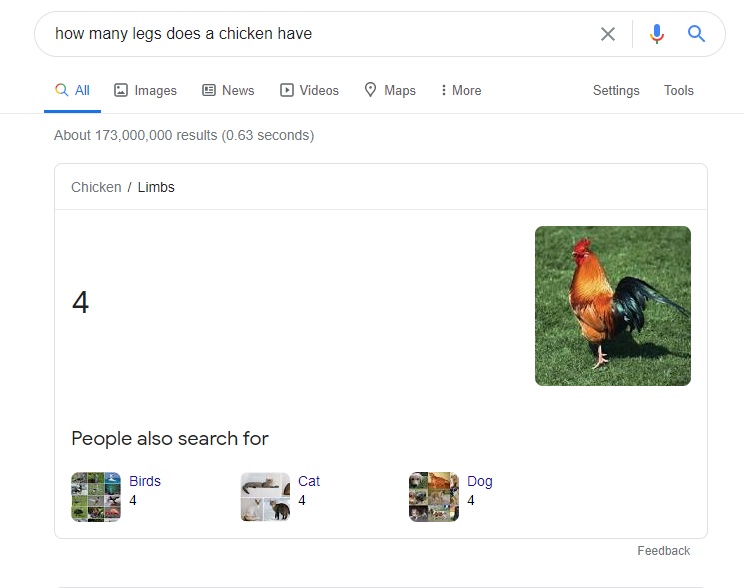
And the problem is the non-link building is harder for small businesses.

Maybe 1 or 2 plumbers can make amazing info sites about plumbing, but every plumber in every city can't do that, so they rely more on link building to give them a push.
 
The sites that don't build links still attract links eventually.
Yup, so they are not building links. They are writing content to attract visitors and possibly links.

I don't call this white vs black. Just link building vs non-link building.
You can call it what you want, but the industry is quite clear on what's white hat and what's black hat. Everybody who's been in the business for a while, knows the difference between black- and white hat.

But I understand that you say that, since you are a PBN seller.
 
SEO is a game and anyone claiming to know how it works including @splishsplash is a liar.

We are making a best guess at everchanging algorithms where even the people who work on them do not understand what is happening because it's all done via machine learning.

Anyone claiming that Google is "smarter than that" is ridiculous.

6e50dcf3bdfbdcc855085a8cba7982cc.png
 
Back
Top