The Ultimate PBN Guide

A few things to think about:

1. Google has access to ICANN history data and knows if you register it, even if you do private registration
2. Using the same website / plugin configurations is a footprint
3. Using the same Google Analytics account is a footprint
4. Logging into multiple Google Analytics accounts from the same IP is a footprint
5. Logging into multiple PBN site admins from the same IP is a footprint
6. Using the same credit card on multiple hosting accounts is a footprint
7. Using different ips on the same subnet is a footprint
8. Having a group of individuals collaborate is a much better approach.

On the PPC side, Google evaluates over 100,000 datapoints for each individual auction (every time you search a keyword that had ads at the top)

These data points help fulfill Google's business goal for that auction: to have the searcher click an ad to generate revenue AND THEN BUY THAT PRODUCT.

If Google just sells ads, but no one buys, then they will lose revenue. This process is facilitated by AI.

There is no reason to assume they don't also use this on the "natural search side".

This helps feed the Google personalized search results, which are based on the individuals last 180 days of search...even when you are not logged into Google.

But what else do they look at?

- Search last 180 days
- Lifetime Credit Card Purchases?
- Lifetime locations through your Google Maps on your phone?
- Association memberships?
- Facebook Friends?
- University Attended?
- Jobs you have had?
- Sorority / Fraternity?
- Websites you have joined?
- Where you were born?
- Countries you have visited?
- Military Service?
- Level of Education?
- Age?
- Marriage Status?
- Race?
- Current location (for location based searches like "nearest coffee shop")
- Current credit card balances?
- Bank accounts?
- Income?
- Employment status?
- Social Media networks?

IF what I am saying about the natural search results is true (I know the PPC side is true, because I heard it straight from Google Partner Trainers during the AI launch), then it would suggest that links and social media profiles are definitely correlated, but not as causal as they used to be.

Rather than banning everyone for BPN's, they have decided to pass legislation to further restrict emails by requiring you to file trademark protection. This is a sneaky way of getting rid of PBN's and affiliate marketers without looking like the bad guy. They will not ban them outright. They will "heavily value links from verified companies"... so going forward, emails from your company will also show your company logo and be marked "safe" inside of gmail, yahoo, bing kind of like they did with SSL which means that you will have to file a business license for each site and pay to register the logo, pay taxes on the revenue that site produces...etc.

But... I'm not selling anything...I am just using it boost my network... well guess what? The value of those links is going to be greatly reduced. If you are in a niche where everyone uses the method then everyone will be de-valued the same and it won't affect you as much... but if you are in an industry like mortgage, insurance, etc... it could have a big effect on your rankings.

Just one man's opinion. Don't crucify me... prove me wrong and I will gladly change my opinion!

I really believe collaboration is the key to beating the Google model going forward.


I think we've found such kind of PBN, marked with trademarks. Not sure.

Is this the notification for it?

"TRADEMARK FREE ZONE - Network Solutions has no knowledge of whether any content on this page violates any third party intellectual property rights. Network Solutions will promptly remove any content reasonably objected to by the Owner of a pre-existing trademark. If you have a Trademark issue, please contact..."
 
Great Post @janist!

A quick question:

Let's say your Moneysite is a pretty rare niche like bungee jumping. In this case, it won't be possible to get decent Domains in the same niche.

Would you still recommend buying strong Domains with good metrics from non-related niches? For example, Domains in business, studying or cars, but with good metrics?

If I want to link from those non-related pbns to my bungee jumping website, should I repurpose those non related Domains and post content on Bungee jumping on them and then link out to my money site?

OR

Should I only post content on those domains about the original niche they were in before? And before I link out I to my ms I create an article and connect those 2 niches together?

Looking forward to your answer!

Greetings
 
Great Post @janist!

A quick question:

Let's say your Moneysite is a pretty rare niche like bungee jumping. In this case, it won't be possible to get decent Domains in the same niche.

Would you still recommend buying strong Domains with good metrics from non-related niches? For example, Domains in business, studying or cars, but with good metrics?

If I want to link from those non-related pbns to my bungee jumping website, should I repurpose those non related Domains and post content on Bungee jumping on them and then link out to my money site?

OR

Should I only post content on those domains about the original niche they were in before? And before I link out I to my ms I create an article and connect those 2 niches together?

Looking forward to your answer!

Greetings

You can go for Sports, Hobby or Lifestyle related domains. Those can all work. But you can even go for obscure niches and twist it to make it related.

Got an expired domain in the Finance niche? Write about "Why Extreme Atheletes need a good life insurance" or similar - include a paragraph about Bungee Jumpers with the link - done.

Having said that - you can also repurpose the domain and complete re-design it to make it related to your site. Works too. Even if its non-related.

But ideally you should try to keep it related to the previous installments / niche of the PBN domain.
 
You can go for Sports, Hobby or Lifestyle related domains. Those can all work. But you can even go for obscure niches and twist it to make it related.

Got an expired domain in the Finance niche? Write about "Why Extreme Atheletes need a good life insurance" or similar - include a paragraph about Bungee Jumpers with the link - done.

Having said that - you can also repurpose the domain and complete re-design it to make it related to your site. Works too. Even if its non-related.

But ideally you should try to keep it related to the previous installments / niche of the PBN domain.

Thank you for your prompt response.

1. Do you think you lose linkjuice by changing the PBN to a completely different niche? What are your observations there?

2. How close do you stay with your content to the niche the domain was in before?

As an example, you have an excellent domain from a former restaurant in New York City: Will you just post 3-5000 Words of Content about Food on the PBN? Or about Restaurants? Or Nutrition?

Also how do you split those 3000 Words of content on the Site? Do display a 1000-Word Article on the Homepage and then add 2-3 Post on inner pages?

Looking forward to your answer!
 
Thank you for your prompt response.

1. Do you think you lose linkjuice by changing the PBN to a completely different niche? What are your observations there?

2. How close do you stay with your content to the niche the domain was in before?

As an example, you have an excellent domain from a former restaurant in New York City: Will you just post 3-5000 Words of Content about Food on the PBN? Or about Restaurants? Or Nutrition?

Also how do you split those 3000 Words of content on the Site? Do display a 1000-Word Article on the Homepage and then add 2-3 Post on inner pages?

Looking forward to your answer!

1. No, not really. As long as the links are live, they'll pass link equity.

2. Broadly related. If it's a domain about insurance, we build out a business or finance PBN. If it's a domain related to hotels, we build a travel PBN.

So based on your example, yes, you can simply make it a PBN about Food, Health, Nutrition, Recipes. Or even all of them combined. Broadly related is ALWAYS good.

3. We put a good chunk of content on the homepage. BUt usually not more than 2000 of homepage copy alone.

If there is an inner page on the expired domains that has lots of links, we'll recreate the structure, add some fresh content to it and usually sticky it on the homepage (in full) + add internal links from and to the homepage.
 
Clear Guide to understand the Concepts of PBN from the scratch. I would strongly recommend this guide to all the beginners those would like to learn the concepts of PBN.
 
Hello! So I've decided to start building money sites and I'm hosting them on Digital Ocean. I've created a Droplet and installed Wordpress through Ubuntu on my droplet. Do I have to create a different droplet for every domain? Or am I able to host all of the domains on a single droplet?
 
Hello! So I've decided to start building money sites and I'm hosting them on Digital Ocean. I've created a Droplet and installed Wordpress through Ubuntu on my droplet. Do I have to create a different droplet for every domain? Or am I able to host all of the domains on a single droplet?

One droplet per PBN domain. Otherwise they all share the same IP, which you want to avoid at all costs.
 
Amazing direct! I unquestionably learned from it. Indeed in the event that you're not into PBNs, you'll be able to choose up a parcel from this. Thanks
 
So,

as many of you like the https://www.blackhatworld.com/seo/ama-about-pbns-setup-footprints-things-to-avoid-et-al.1268356/page-18#post-14721643and the https://www.blackhatworld.com/seo/how-to-301-an-expired-domain-guide.1358904/.

Let's throw another guide onto the forums.

Grab some coffee. This is gonna be a bit longer.


Glossary

  • PBN - Private Blog Network
  • RD - Referring Domains
  • DR - Domain Rating
  • DA - Domain Authority
  • OBL - Outgoing Backlinks
  • Droplet - Server on a cloud host
  • Money Site - Your main website

What is a PBN and why is everyone raving about them?

First let's start with a basic definition: What exactly is a PBN?

PBN is short for "Private Blog Network"

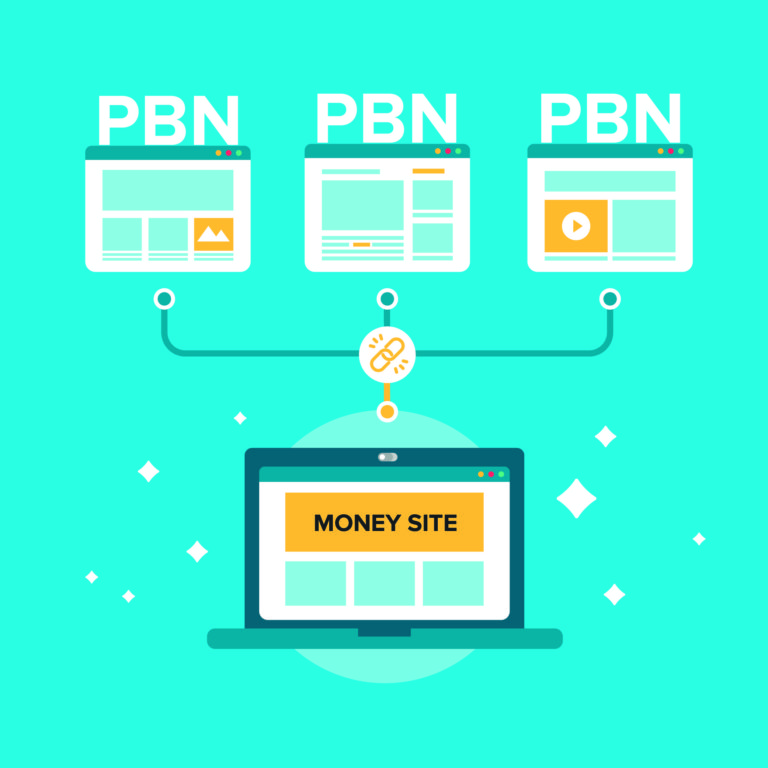
And as the name suggests, it's basically a network of expired domains with strong link profiles and clean histories that you leverage to funnel link equity to your money site. If it's done right, the PBN should help improve your rankings over time.


Typical PBN structure:

PBNLINKS_1-768x768.jpg


Source: https://seolutions.biz/shop/pbn-guide/​


Why does that work?

Well, as most of you already know, Google uses links as one of their key ranking factors.

It all started with a little algorithm called PageRank.

PageRank was used to determine the value of a site by looking at what other sites were linking to it. It was scored logarithmically on a range from 0 to 10. With 10 being the highest.

You can still read about it in the original paper (http://infolab.stanford.edu/~backrub/google.html)


View attachment 187532

Source: http://infolab.stanford.edu/~backrub/google.html


Pagerank eventually evolved to become the GOLDEN METRIC to determine the value of a backlink for years, up until Google discontinued the public display of it in 2016.

However, Google still uses PageRank internally:


View attachment 187533

Source: https://twitter.com/JohnMu/status/1232014208180592641?ref_src=twsrc%5Etfw%7Ctwcamp%5Etweetembed%7Ctwterm%5E1232014208180592641%7Ctwgr%5E%7Ctwcon%5Es1_&ref_url=https%3A%2F%2Fseolutions.biz%2Fshop%2Flink-building-guide%2F


The key takeaway here is that Google still uses links as one of their KEY ranking signals.

And while the search algorithm today is much more complex and advanced, links remain as important as ever.

There's actually a really great study done by Perficient (https://www.perficientdigital.com/insights/our-research/links-as-a-ranking-factor) that shows the correlation between links and respective rankings in the SERPs in 2018 and 2019 (so rather recent).

Their results show that links still play a key part in ranking higher in the SERPs.


View attachment 187522

Source: https://www.perficient.com/insights/research-hub/links-as-a-ranking-factor

Give it a read, it really is a great post!


Cool story, bro. We already knew ALL that.

Okay, dude, chill your nuggets. I'll explain why it's important stoll good to know.

So, we've learned that Google loves links. But not just any type of link. You can't just load up the ol' xRumer and send a few hundreds thousands forum posts to your site. Those days are gone (sadly).

These days Google heavily favors CONTEXTUAL links.

By contextual I mean in-content links from sites with great link profiles and superb metrics. These can be guest posts, editorials, link insertions and, you guess it, PBNs!

Just imagine having a small PBN of powerhouse domains that only YOU control. You say what goes where.

Sounds pretty awesome, right? It is.

Here's just a small glance at one of our low-key PBNs:


Don't you think owning a small network like this would be a huge asset for your overall SEO success?

Even for smaller niches with low-mid competitive keywords.

Yep, we think so too.

That's why we love PBNs and use them for almost all of our own sites.

However, building, running and especically scaling a PBN comes with certain risks.


RISKS OF A PBN


As you may know, Google is highly AGAINST any type of active link building. According to their guidelines:

"Any links intended to manipulate PageRank or a site’s ranking in Google search results may be considered part of a link scheme and a violation of Google’s Webmaster Guidelines."

So, by definition, any type of link building you do is against their guidelines.

But fuck it, this is Blackhatworld, not Webmastercentral.

We love building links. We always have.

We just need to be extra cautious these days. Especially since we don't know what Google is planning for future algo updates.

The fact is that links stillö work. They work SOOOOO f*king well, that all the big players out there use PBNs to rank their sites.

However, building a PBN is not a simply task.

You can't just buy a random domain, host it wherever, slap on a free theme and link to all your site. Nuh-uh. Big no no.

By doing that, you will leave a lot of so-called digital 'footprints' in the proverbial sand that Google can find. If they do, you will end up in the 'penalty zone' sooner than later.

For those of you that were already here in 2012-2014, you'll probably remember the big blog networks like ALN or BMR?

Incredibly powerful networks that worked like a treat. Sites were ranking left and right and it was beautiful.

However it was not long until Google found all their PBNs and penalized the whole network including the sites that bought links on it.

It sucked. BIG time.


View attachment 187528

Source: Archive.org


So, in order to keep your PBN safe, you need to avoid these dreaded 'footprints' at all costs.

In addition to those risks, a PBN can become quite expensive. I'll just quote myself here.


And that's just a bare minimum.

For really good domains, i'd ballpark it somewhere between $500 and $2000 per site.

Yep, PBNs are not cheap. But with high risks come high rewards.

So for those of you who are not scared to spend money to make money, read on.


WHERE TO FIND PBN DOMAINS?


Okay, so we now know that PBNs work excpetionally well to help your rankings.

We also learned that PBNs are only as good as the domains that it is built on.

So where do you find these golden nugget domains with incredible metrics, link profiles and age?

Well, there are basically two options you have: Buy them from a vendor or find them yourself.


DOMAIN VENDORS


Many of your probably don't have the time, expertise or patience to sift through hundreds and thousands of expiring domains every day.

The good news is that there are domain vendors, that did all the groundwork for you. They went through the abundance of garbage domains out there, bid at auctions, hassled with site sellers and scraped until their di*ks fell off.

That's a lot of work. So, clearly, you have to pay a pretty penny for these domains.

Having said that, if it saves you valuable time, it's a no brainer. Most of the domains offered by vendors all have great DR and RD with a balanced link and anchor profile.

There are several good domain vendors here on BHW, that you can try out. I don't want to give any recommendations.


FINDING THEM YOURSELF


If you don't want to use a vendor, you have to find your PBN domains yourself.

We recommend to use https://www.expireddomains.net/ for that.

It's completely free to use and integrates with the biggest domain marketplaces.


View attachment 187529

Source : http://Expireddomains.net

There are several stages that an expiring domain goes through. And, technically speaking, a domain can be snatched up during different times of that expiration process.


Stages of an expiring domain

Renewal Grace Period - the domain owner still has a few days to renewe their domain. During this time there is no way to bid or buy the domain in question.

Domain Auction Period - if the domain owner decides not to renew the domain, the domain moves into the auction phase. Here you can bid on the domain name and the highest bidder usually get the domain. This is one of the best times to snap up a really good PBN domain, but know that you won't be the only one bidding for the domains. GoDaddy, in particular, has a HUGE auction marketplace, where hundreds and thousands of bid are added every day.

You can check them here (for Godaddy): https://member.expireddomains.net/domains/godaddyexpired/?o=bids&r=d#listing


View attachment 187534

Source : http://Expireddomains.net

Clouseout Period - if the domain is not successfully sold at auction, it will become a 'clouseout domain'. These can be purchased for a fixed price and are available for a few days. There are quite a few gold nuggets in here that people overlooked at auctions, so you may get lucky.

You can browse through them here (for GoDaddy): https://member.expireddomains.net/domains/godaddycloseouts/ (GoDaddy)


View attachment 187535

Source : http://Expireddomains.net

Pending Deletion Period - if the domain has not been sold at clouseout, it will move into the 'pending deletion stage'. After that it will become available to the public for everyone to register.

At this point it would make sense to use a backorder / dropcatch service to register the domain once it drops to make sure that you get it before anyone else does.

Good dropcatch providers are SnapNames.com, Dropcatch.com or Nicsell.com

You can browse through all pending delete domains here: https://member.expireddomains.net/domains/pendingdelete/ or https://member.expireddomains.net/domains/dropcatchauctions/


View attachment 187536

Source : http://Expireddomains.net

Deleted Domains - if no one dropcatched the domain or no backorders have been placed, the domain will become available to everyone again.

There are literally millions of domains available in this stage and most of them are utter garbage. But who knows, maybe a domain vendor overlooked a nice domain. If youre lucky, you still may find a domain that you can use (but don't expect too much)

You can browse through them here: https://member.expireddomains.net/domains/combinedexpired/


View attachment 187538

Source : http://Expireddomains.net


PBN Domain Analysis

Okay, so now you know where and how to find PBN domains, let's dig into the analysis part of this guide.

Before you even think about buying an expired domain for a PBN you want to make sure that it is actually worth your hard earned bucks.

You specifically want to do the following:

  • Check Indexation
  • Check History
  • Check Trademarks
  • Check Link Profile
  • Check Anchor Profile

Check Indexation

First of all you want to make sure, that the domain is still indexed.

While this is not a necessity, it is a good sign that the domain is suitable for a PBN.

To do that, simply go to Google.com, type in site:domain.com and check the results.

Example:

JyeLMJg


Takeaway: An indexed domain is a good domain ;-)


Check Domain History

Next, you want to make sure that the domain has a clean history and has never been used as a PBN or for other rather shady or spammy techniques.

The easiest way to do that is by using Archive.org.

Archive.org gives you snapshots of the domain throughout it's time in the WWW.

You want to click on those little circles for each individual year and spot check how the site looked in the past.

Example:

2.png


Takeaway: If it has never been used for a PBN or other spammy technique, you are good to go.


Check Domain Trademarks

Next up, you want to see if the domain name is currently trademarked. It would suck to have a company send you a C&D, only because you skipped this step.

Just do it, it takes literally a minute.

The easiest way to do check for active trademarks are these sites:


  • For the US: https://www.uspto.gov/trademarks-application-process/search-trademark-database
  • For the UK: https://trademarks.ipo.gov.uk/ipo-tmtext
  • For the EU (and specifically Germany): https://register.dpma.de/DPMAregister/marke/einsteiger
If the domain is not trademarked, you are good to go.

Takeaway: No trademarks? Cool, proceed.


Check the Link Profile

This is the most crucial step.

You want to make sure that the potentially interesting expired domain has strong links that are still live.

The easiest way to check all live links to a domain is via Ahrefs' site explorer.

Go to ahrefs.com, enter the domain name and then navigate to "Site Explorer 2.0" -> "Backlinks".

We recommend to use the following filters:

  • D0 Follow
  • Backlink Type "in content" - to only show contextual links
  • DR from 10
  • One link per domain
Then sort by DR (descending).

This will give you an overview of all the powerful contextual links pointing at a specific domain, to see if it's worth it.

Here is BHW for example:

Backlinks-blackhatworld-com.png


Ahrefs will also show you if those links are still live or if they dropped, which can give you a concise picture on the state of the link profile.

Takeaway: Make sure that the expired domain has strong (and live) backlinks. Preferrably contextual ones.


Check the Link Targets

Next, you want to check to which pages have the most links pointed to them.

You will want to re-create these pages on your PBN. So it's imperative that you check this.

Go to "best by links" and sort by "referring domains"

This will give you an overview of where the links are pointed to and what pages you SHOULD re-create once your PBN is hosted and live.

Example:

Best-by-links-blackhatworld-com-on-Ahrefs.png


Takeaway: Make sure that the links are pointed to pages you can re-create.


Check the Anchor Profile

Lastly, you want to take a look at the anchor profile of the potential PBN domain.

Ideally, you want your PBN domain to have a diverse anchor profile with <10% of exact match keyword anchors and no spammy sh*t.

Example:

Anchors-blackhatworld-com-on-Ahrefs.png


Takeaway: Make sure that the expired domain has a diverse and natural anchor profile.


That's it for the domain analysis part. Now let's get into the most complex part of it all - the PBN setup and what footprints to avoid.


PBN FOOTPRINTS (TO AVOID)


So far we have learned:
  • Why PBNs are so powerful
  • How to find a PBN domain
  • How to analyze a PBN domain
Now let's dig into the setup of a PBN. Let's start with all the footprints you need to avoid and end with a step by step guide on how to host your next PBN site.


#1 Bad Hosting

This is typically the most common footprint we see.

You want to avoid shared hosting, VPS hosting or even worse PBN hosting at all costs.

We usually recommend to get one single droplets per PBN from reputable cloud hosting companies, like:

  • Digital Ocean
  • Vultr
  • Linode
  • Cloudways (managed DO/Vultr hosting)
  • Atllantic
  • etc.
With those providers you can get truely unique and dedicated A, B and C-class IPs for each and every one of your PBN sites.

Quick breakdown:

Typically a IP is split into 4 blocks, namely AAA.BBB.CCC.DDD

We don't want to host our PBNs on servers in the same C class and we also don't want our PBN hosted with any other website. This is how huge networks got de-indexed in the past. So we want to avoid that at all cost.

Instead we want our PBNs hosted on different A, B AND C block, like this:

  • PBN SITE A hosted on IP 45.58.9.22
  • PBN SITE B hosted on IP 69.85.223.214
  • PBN SITE C hosted on IP 138.195.192.21
  • etc. pp.
By going with cloud hosts you can get this level of IP diversity while leaving no virtual footprints.

It is definitely more expensive than other hosting options out there.

But it is oh-so-worth it.

Don't use:


  • Shared Hosting - like HostGator, Siteground etc. While you can hide in plain sight (so to speak), the scaling and management of shared hosting for PBNs is an absolute nightmare, as you need a separate hosting plan for each PBN. It's economically not feasible.
  • VPS Hosting - just don't ... seriously!

#2 Bad Registrars

Don't register all domains on the same date and DON'T use dropcatch providers. We can recommend Dynadot, Name, Namesilo, GoDaddy.

#3 No Whois

In times of GDPR and privacy concerns, this is more of a privilege instead of a footprint. It's completely free with most registars these days and highly recommended. Not having a private WhoIs probably leaves a bigger footprint.

#4 Custom Nameservers

The big cloud hosts we mentioned above all give you the option to use their DNS networks. This means you can use their nameservers, for example:

ns1.digitalocean.com, ns2.digitalocean.com etc.

These nameservers are used by hundreds and thousand of sites and apps, so you will blend right in with those.

We don't recommend to use custom nameservers.

#5 Blocking Crawlers

If you know how Ahrefs et al. work, it makes no sense to block bots via .htaccess - unless you have an up to date IP list (which I bet you don't).

Also, how many real sites block these crawlers? Right. So why would you, if 80%+ of all sites don't?

In our opinion BLOCKING is the real footprint, especially when you use plugins like spiderblocker and co.

#6 Build unique PBNs

Having the same ugly a** layout for all of your PBNs will certainly leave a huge footprint.

You know the look, right? Simple free theme, full posts on the homepage and no customization whatsoever.

Ugh...

Instead you want to build real sites. Sites that pass a manual inspection if it ever comes to that.

Each PBN should have a custom logo and a custom layout (menus, stock images, design, etc.)

Today, the use of page builders makes it quite easy without leaving much of a footprint.

You really only need Elementor Pro + Astra/Hello/OceanWP Theme ; Divi and/or GeneratePress+GenerateBlocks to build 100s of unique sites. You can also invest into 4-5 of the top selling themes from Themeforest for more diversity.

In addition they all should have mandatory pages like about us, contact us, privacy policy, t&c, cookie policy, etc. GDPR compliance is mandatory these days and not having these on your PBNs will leave a certain footprint (albeit not as big).

We highly recommend to try and build sites that look unique and resemble real businesses.

You can easily find someone here on BHW that can help you with this.

#7 Use unique content

We mentioned that before.

We never, ever use thin (spun or worse) or scraped / expired content. The first is just garbage and the algorithm is just too smart these days, the later involves certain risks of copyright strike, which we absolutely want to avoid on a $500+ domain.

ALso don't use scraped images (same reason -> copyright). Use stock free images from Pixabay or Pexels instead.


#8 Don't interlink your PBNs

Duh. Self explanatory.

You also want to make sure, that the money sites that you link to are on separate and unique hosts.

#9 Build Links to your PBNs (optional)

Real sites lose and gain links all the time.

So it's recommended to add a few quality tier 2 links into the mix.

This will not only help your PBN sites, but also your money site.

It's not absolutely necessary, but incredibly helpful

#10 Use internal links on your PBNs

Real sites have a LOT of internal links. Not only can they help to pass link juice from internal pages to the homepage (and vice versa), but they can help to create topical relevance for the whole PBN site.

Definitely recommended.


#11 Skip GA/GSC

Don't use Google Analytics or GSC on your PBN domain.

Another duh. Paranoia gets the best of us.

But why risk it?

#12 Use internal redirect correctly.

Some sites have more links pointed to the root version (non-www) some sites have more links pointed to the www. version. Make sure to know which one you want to use and redirect the other variant. Otherwise you may experience underwhelming results.

Also make sure to rebuilt inner pages that have links pointed to them with the exact same URL structure and add fresh content to those with internal links to the homepage.

We go into a bit more detail in this
https://www.blackhatworld.com/seo/how-to-301-an-expired-domain-guide.1358904/.

#13 Say no to CloudFlare

It's just not necessary.

Whoever tells you that it's super useful to hide any footprints, has never run a large scale PBN.

You DON'T need it, if your hosting is done right.

#14 Say yes to SSL

While there are still many sites on non-SSL, it has become pretty much the standard for new sites.

It's completely free with letsencrypt and we definitely recommend to add it to your new PBNs.

Having said that, a few years back SSLs were very pricey, so we still have a lot of PBN sites without SSL for PBN sites that are 5years+. Tbh, we've seen no adverse effects (yet). But ALL of our new builds are with SSL.

#15 Maintain your PBN

Keep your PBN sites updated (themes + plugins) and add non-commercial content once in a while.

This is just common sense.

We've had a few hacking attempts for some of our PBNs in the past years and we've learned from our mistakes.

Keep maintenance up and use a good security plugin like Wordfence.

Optional A: Create some social accounts for your PBNs. Not really necessary, but makes the site more legit.

Optional B: Use a caching plugin. We love WP-Rocket, but you can also use a free one from the Wordpress directory.

Think that mostly covers the footprints.


PBN SETUP


One of the easiest ways to install Wordpress on one of the clouds hosts are "one-click-apps"

Here's a great video on how to do it on DigitalOcean:


It works similar on Vultr and Linode.


Alternative #1 - Use Runcloud.io


You can use also use server manager like http://runcloud.io to connect your Digital Ocean / Vultr and Linode droplets.

From there you can easily install Wordpress, SSLs and manage your service.


With RunCloud, you don’t need to be a Linux expert to build a website powered by DigitalOcean, AWS, or Google Cloud. Use our graphical interface and build a business on the cloud affordably.

However, it's not free and comes at $12.5 / month - but you can manage unlimited servers on it.


Alternative #2 - Use Cloudways


You can also Cloudways to host your PBNs.

Cloudways is basically managed cloud hosting for the biggest providers like DigitalOcean, Vultr, Linode, AWS and Google Cloud.

You get the full percs of footprint free hosting with a managed service on top.

Downside: The price.

Te cheapest droplet is $10.00 / mo - which includes the $5.00 fee for the droplet itself and $5.00 for their managed service (basically)(.


If you only want to host a few PBNs and a few bucks more per month don't hurt your wallet, go for it.

It's super convenient and easy to install Wordpress via Cloudways.

Here's their guide on how to install a DigitalOcean Droplet: https://www.cloudways.com/blog/host-wordpress-on-Digitalocean


That's it.

You see, hosting a site on a cloud host is not rocket science, especially with the help of one-click-apps or server managers like Runcloud.

Anyone can do it.

Now that the PBN site is live, you can get ready to link out.


How to link out from your PBN


Here are a few factor to keep in mind when linkin to your money sites.


Linking to just one page of your money site:

This is the best and safest approach to using your PBNs. By keeping OBL = 1 you leverage all of the link power. This is our recommended way to use PBNs. Of course you can target diff. inner pages on your money site by using separate PBNs. That's totally fine. So PBN A links to moneysite.com/abc/ and PBN B links to moneysite.com/xyz/.

That's fine.


Linking to several pages on one single money site:

You can link to more than one inner page on your money site from a single PBN, but we would recommend to use it VERY sparingly, as it can leave a footprint.


Linking to several money sites

Linking to more than one money site from a single PBN is fine, if the niche is somewhat related or suitable and the money sites don't share any footprints (same hosting server, DNS, email, monetization).

Example: You could easily link to a tech affiliate blog AND a web dev site from one tech PBN, while linking to an insurance money site wouldn't be ideal (tho you can still do it by using creative content topics).

In the end it's up to you. We like to keep OBL = 1 or max. 2 for private dedicated PBNs.


FAQ - FREQUENTLY ANSWERED QUESTIONS

What anchors should I use?

Anchor diversity is something that you have to keep an eye on at all times. It's super easy to overoptimize.

We like to keep our anchor profiles at the following ratios:

  • Branded Anchors (see above): 70-80%
  • Generic Anchors: 8-10%
  • Longtail and Partial Phrase Matches: 5-8%
  • Exact Match: 3-5%
Having said that, PBNs are perfect to snipe exact match or phrase match anchors. But they also work well for branded and generic anchors.

The beauty here is that you are in full control of your anchors.


Should I display full posts on the homepage?

If you plan to keep the OBL = 1 on the homepage, you don't even have to use full articles on the homepage.

You can make the site look like a business page instead and add the link (surrounded by at least 250-300 words of content) in one of the elements.

For example if you want to create a roofing PBN, you could use Astra's Roofing template (https://websitedemos.net/roofing-services-02/) and add a anchored link here:


Home-Roofing-Services.png


Obviously you want to adjust the template a bit, so it doesn't look like the stock version.

But that's just one example.

There are many ways you can go about this.

We also have PBNs where we only display excerpts via the content views pro plugin or use a script with an "expand" feature but in a way that the link is still visible and clickable. (for OBL > 1 cases)

We also have PBNs where we display several full posts on the homepage, fi the structure of the homepage allows for it. (for OBL > 1 cases or our PBN services)

We also always rebuild all inner pages that have decent links and add a fresh piece of content and a link to it. We power these up with a few more additional t2 links. We don't always add them to the homepage, if the links are strong enough, hence the hybrid model.


How much content should I use on my PBN?

The bare minimum is 3000-5000 words of content, imo.

This does not include static content and content for legal and mandatory pages (contact, about, privacy, ToS, cookie policy etc.)

We add a few new article to each site every few months. But it's not a priority. The baseline content is enough.


Do you guys use anything expect PBNs for your own sites?

Yes, of course.

We usually start like this (both national and local niches):

  • 5x branded guest posts (focus on niche relevancy)
  • 5-10x branded link insertions / niche edits
  • 60-90x structured and unstructured citations. We use these for both affiliate sites and local sites (of course. These include must have accounts on authority directories, social sites, video sites and image sites.
  • 15-20x manually crafted & branded web 2.0s with unique and WELL WRITTEN content that is extremely targeted to your brand and your niche. We typically add 2-3 articles to each web 2.0 and embed our videos and add 1-2 branded links. For local sites we also add a citation, map embed and gmb cid links on top.
That's a really good foundation of branded links for any site and you can build these right away without worrying too much about any algorithmic penalties.

You can probably get all those links sorted for < $2000 incl. content.

After that scale up and get more aggresive with anchors.

While doing all the link building, we try to emulate a natural anchor profile as shown above.


Does the PBN have to be 100% niche related? Will it still be effective if it's not?

Yes, it will still be effective. You can still create relevancy on a page level instead of a domain level. However we do not recommend it.

But it works nonetheless.


Closing Thoughts

That's it. Hope you liked the guide.

Now get to work and set up your first PBN.

What a work ! Thank you, im gonna implement this in my SEO strategy
 
How many unique money sites can we link with a PBN network assuming all have 0 footprints?
 
Should we check the Spam Score when selecting the domains?
 
How many unique money sites can we link with a PBN network assuming all have 0 footprints?

Ideally - and our approach: Only one.

Theoretically you can link out to more than one site, if those money sites don't share any footprints (monetization in particular).

So if you absolutely want to link out to more than one, we'd say a realistic goal would be 2-5x max, depending on the metrical baseline of the domain. Tier 2 links are (in our opinion) mandatory if OBL > 5.


Should we check the Spam Score when selecting the domains?

If it is a relevant metric that plays a part in your domain evaluation - sure. We never use it.
 
Should we also avoid linking to generic sites like healthline and wikipedia? would it decrease the value of PBN?
 
Should we also avoid linking to generic sites like healthline and wikipedia? would it decrease the value of PBN?

Well, that's up to you. Healthline can certainly work, just make sure their article is not actively competing with your keywords.

We personally like to link to non-competitive sites or community hubs that provide a bit of value to your PBN post, for example we often use reddit embeds of discussions or simple reddit links, quora links, links to forum posts, youtube embeds with a complementary source links, etc.
 
Back
Top