

- Nov 29, 2022
- 2,501
- 285
In affiliate marketing, mastering traffic arbitration is key to maximizing ROI. This article explores essential strategies, from using spy tools for analytics to refining creatives and scaling successful campaigns. By implementing these methods, marketers can optimize campaigns, reduce costs, and achieve better results in a competitive landscape. Let's dive into these best practices for success.
Analytics
The first step in any test is to analyze data using spy services or the Facebook Ad Library, whichever is more convenient. We select the desired GEO and examine which ads have been running for the past couple of weeks. We focus on the reach of each ad individually and the number of days they have been active. High reach indicates that the ad is generating cheap leads; otherwise, it wouldn’t be shown to so many users. A long active period suggests that Facebook's moderation is lenient towards the ad, not banning or rejecting it. We also investigate the cloaking (Clo) and see what promotions the traffic is directed to. After the analysis, we proceed with the following steps:- Selecting Ads: Choose a few of the most successful ads and either create similar creatives or commission a designer to do so.
- Reviewing Promotions and Landing Pages: We review the promotions and landing pages, fix any issues, clean out unnecessary scripts, and make them unique.
- Creating Content: We pay attention to the main text, as well as the headline and description, and create our own inspired by the examples.
Refinement
Everything we take from spy tools or the ad library needs to be refined and made unique. Ideally, we should be inspired, create something original, test it, and then compare it with the refined approaches from the spies. If we have working approaches in creatives and converting landing pages that perform well in another GEO, we can translate them into the language of the GEO we want to test and launch them.Test Launches
Once we have our creatives and landing pages ready, it's time for test launches. The more varied the creatives and approaches, the more diverse the audience Facebook will offer, making the test more effective. The goal of the test is to identify the combination of "creative-landing page" that provides the cheapest leads.- Setting Up Campaigns: We launch one ad campaign for each creative, using the 1-2-1 scheme. We conduct tests without manual bids and set limits. The budget is set for each ad set, which should be small but not less than 1.5 times the CPM for the GEO.
- Optimizing for Best Performance: We need to identify the most profitable combination and know the cost per lead (CPL) it can deliver. We use small budgets because, recently, Facebook has been providing better audience targeting with smaller budgets.
Scaling
After finding the best combination, we proceed to scale. We use a high-limit account and follow the 1-1-1 scheme, using the creative and landing page that performed best in the test. We set the budget for the campaign, starting at $200-250, and use "cost cap" bidding.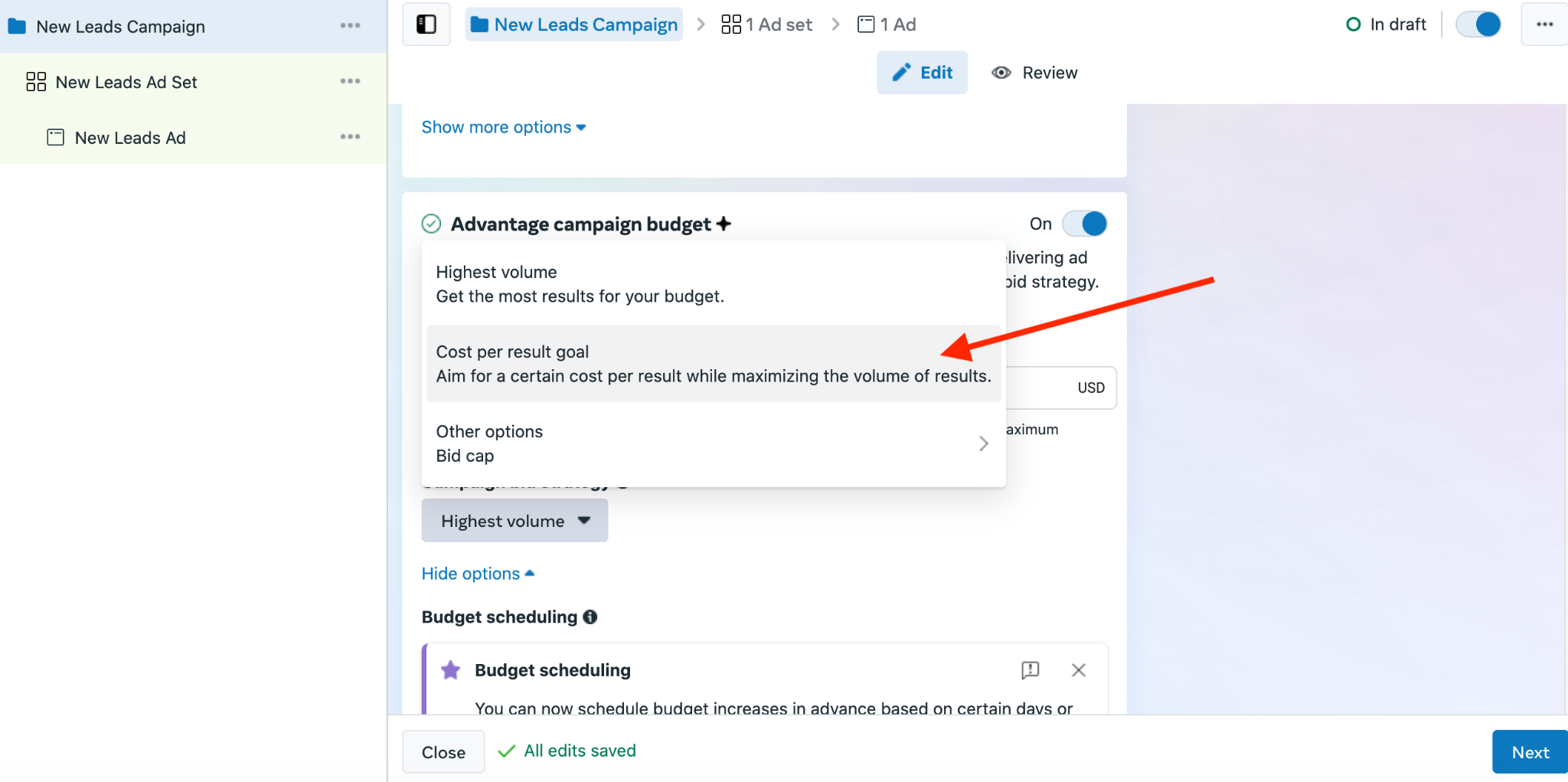
• Monitoring and Adjusting: We carefully monitor the spend. If spending doesn't start within 2-3 hours, we increase the cost cap by $1. If spending does start, we watch the metrics and leads.
In theory, it’s suggested that a minimum of $30 should be spent to ensure the bid strategy works correctly. However, given the volatile nature of Facebook, we approach budgeting cautiously, spending $0 on the first day. If no leads are generated within this spend, we pause the ad set until the next day. If the same happens the next day, we re-launch.
• Maintaining Performance: If we find a combination that works, we keep the budget steady, monitoring the CPL. If leads start to drop off, we pause the ad set for the rest of the day and resume it the next day.