
You are using an out of date browser. It may not display this or other websites correctly.
You should upgrade or use an alternative browser.
You should upgrade or use an alternative browser.
★ [Method] ★ Make Profit with SEO ➡️ Beginner friendly
- Thread starter RealDaddy
- Start date


DeadJoe
Elite Member
- May 18, 2014
- 2,235
- 2,992
Low-Competition, Problem-Solution Keywords
When I created my first site back in 2015, I thought writing product reviews was the only way to make money with niche websites. I understood why reviews worked because of buyer intent, but I didn’t understand the power of low competition keywords, nor the power of problem-solution keywords.
By combining these two concepts, I was able to publish and rank a 550-word article and earn a commission the same day with Amazon affiliate.
What are low-competition keywords?
Aren’t low-competition keywords and long-tail keywords the same thing? A lot of times yes, but not always. Long-tail means less searched for keywords, while low-competition means just that, less competition, meaning fewer sites targeting the same keyword.
It’s possible you can have a long-tail keyword with lots of competition or a generic keyword with low competition. In general, though, long-tail keywords will be low-competition.
What are problem-solution keywords?
Problem-solution keywords are keywords around a particular problem that users want a solution to. These aren’t exactly buyer intent keywords since the user doesn’t always plan on buying something, but these users do have problems they want solutions to, which can often be solved with products.
Here are some examples of problem-solution keywords:
Starting to get the hang of it now? All these problems people are using as keywords can be solved with products.
- Problem: How to get rid of warts
Solution: Wart remover products- Problem: How to fix broken galaxy s8 screen
Solution: Galaxy s8 screen replacement kit- Problem: How to prevent hair loss
Solution: Anti-hair loss shampoo- Problem: How to make headlights look new
Solution: Headlight restoration kit- Problem: How to prevent razor burn
Solution: Skincare products
How I Put It All Together
All this came together a few days ago when I started looking for low-competition kws in my niche. I like to use Keywords Everywhere chrome extension and Google autosuggest.
Google autosuggest is a great resource to find queries that people are already searching for.
Here’s an example:
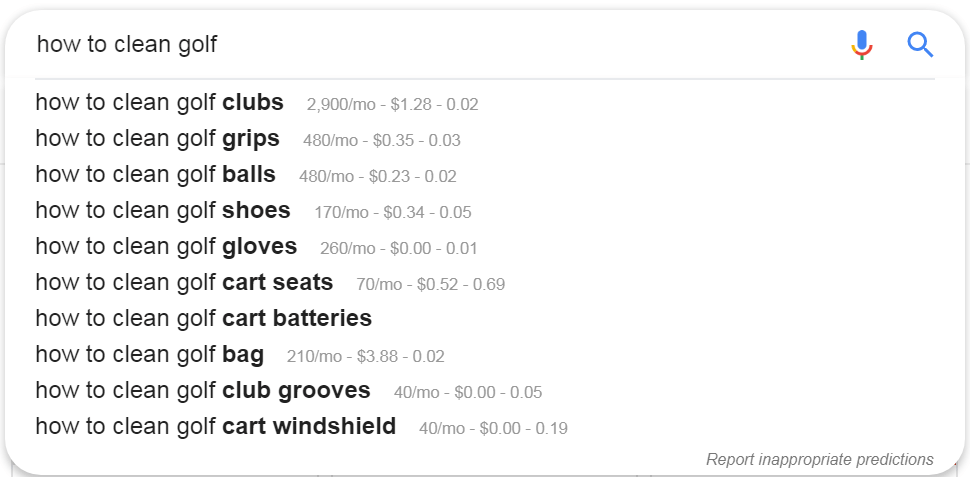
Keywords Everywhere will tell you the estimated number of searches for each query.
To find out whether it’s low competition, you’ll need to look at the search results. If there’s a lot of authority sites answering the question well, that’s a sign of high competition. But if there’s a lot of forums with people asking the same question, that’s a sign of low competition.
With a little practice and familiarity with your niche, you’ll be able to find low competition keywords fairly quickly.
The keyword I found actually had 0 search volume:
Keywords Everywhere estimated 0 searches per month
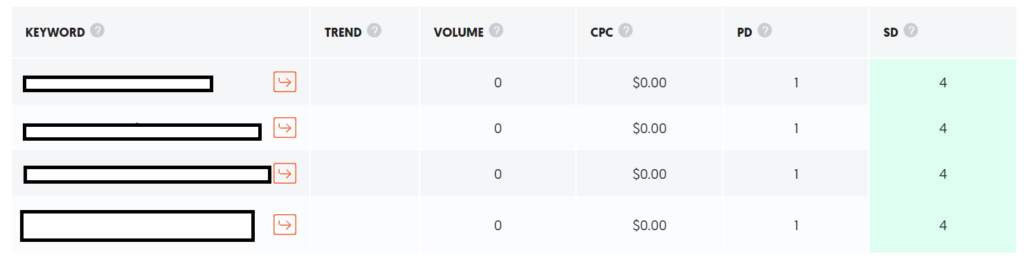
I wrote my article addressing the question and providing helpful information. It wasn’t anything fancy and was something that required only a little bit of research.
During my research, I found a product that was recommended several times. It made sense for me to recommend that product in my article. I added two links to my article, one at the top and one at the bottom. I didn’t even add any product images.
After I published, I requested to have Google index my page in Google Search Console. Because there was zero competition, I was able to rank for this keyword immediately after publishing, earning the #1 spot in the SERPs.
Checking back later in the day, I saw a sale for the same product I had recommended. Nice! It wasn’t huge commission, a dollar earnings from a $20 dollar product. But for the amount of work, having a quick article like that bringing in $10-$30 or more per month is actually pretty good, especially for a new site. And remember, 10 of these articles could equate to $100-$300 a month!
To get the best of all worlds, targeting low competition, problem-solution keywords that can be solved with higher-priced products would be ideal.
Source.
Regards
Awesome guide, I almost always ignore KW search volume and go for stuff where I can fit in products, especially since searches are semantic. I'm ranked for a 20 sv/m KW which is giving me 60 hits a week, and a few more with higher volume which are driving a lot more traffic than they should. So many related keywords exist that you can get a lot of highly targeted traffic initially.
D
Deleted member 1203133
Guest
I liked the way how you demonstrated this with as simple examples as possible. Thumb up

- Mar 26, 2019
- 3,520
- 1,800
Nice share
D
Deleted member 657006
Guest
Would you say that long tail keywords with ask questions are know the new long tail SEO power?Low-Competition, Problem-Solution Keywords
When I created my first site back in 2015, I thought writing product reviews was the only way to make money with niche websites. I understood why reviews worked because of buyer intent, but I didn’t understand the power of low competition keywords, nor the power of problem-solution keywords.
By combining these two concepts, I was able to publish and rank a 550-word article and earn a commission the same day with Amazon affiliate.
What are low-competition keywords?
Aren’t low-competition keywords and long-tail keywords the same thing? A lot of times yes, but not always. Long-tail means less searched for keywords, while low-competition means just that, less competition, meaning fewer sites targeting the same keyword.
It’s possible you can have a long-tail keyword with lots of competition or a generic keyword with low competition. In general, though, long-tail keywords will be low-competition.
What are problem-solution keywords?
Problem-solution keywords are keywords around a particular problem that users want a solution to. These aren’t exactly buyer intent keywords since the user doesn’t always plan on buying something, but these users do have problems they want solutions to, which can often be solved with products.
Here are some examples of problem-solution keywords:
Starting to get the hang of it now? All these problems people are using as keywords can be solved with products.
- Problem: How to get rid of warts
Solution: Wart remover products- Problem: How to fix broken galaxy s8 screen
Solution: Galaxy s8 screen replacement kit- Problem: How to prevent hair loss
Solution: Anti-hair loss shampoo- Problem: How to make headlights look new
Solution: Headlight restoration kit- Problem: How to prevent razor burn
Solution: Skincare products
How I Put It All Together
All this came together a few days ago when I started looking for low-competition kws in my niche. I like to use Keywords Everywhere chrome extension and Google autosuggest.
Google autosuggest is a great resource to find queries that people are already searching for.
Here’s an example:
Keywords Everywhere will tell you the estimated number of searches for each query.
To find out whether it’s low competition, you’ll need to look at the search results. If there’s a lot of authority sites answering the question well, that’s a sign of high competition. But if there’s a lot of forums with people asking the same question, that’s a sign of low competition.
With a little practice and familiarity with your niche, you’ll be able to find low competition keywords fairly quickly.
The keyword I found actually had 0 search volume:
Keywords Everywhere estimated 0 searches per month
I wrote my article addressing the question and providing helpful information. It wasn’t anything fancy and was something that required only a little bit of research.
During my research, I found a product that was recommended several times. It made sense for me to recommend that product in my article. I added two links to my article, one at the top and one at the bottom. I didn’t even add any product images.
After I published, I requested to have Google index my page in Google Search Console. Because there was zero competition, I was able to rank for this keyword immediately after publishing, earning the #1 spot in the SERPs.
Checking back later in the day, I saw a sale for the same product I had recommended. Nice! It wasn’t huge commission, a dollar earnings from a $20 dollar product. But for the amount of work, having a quick article like that bringing in $10-$30 or more per month is actually pretty good, especially for a new site. And remember, 10 of these articles could equate to $100-$300 a month!
To get the best of all worlds, targeting low competition, problem-solution keywords that can be solved with higher-priced products would be ideal.
Source.
Regards
I think getting indexed on question on your niche very powerful traffic paullers and money makers.
Bigger stronger long tails
Only my opinion.
Of course what you shown with diversity of keywords works well.
But the real power stuff people are reading know as a question on that indexed page.
Maybe I am thinking wrong but sounds write to me .
Last edited by a moderator:
D
Deleted member 657006
Guest
The whole concept of your stats
0 comp
0 CPC
0 volume
Will only work on keywords that are popular products looked for and accidentally hit your website for a sale on a 1 off.
Of course, will work as it a specific item looked for, but unless you do this for hundreds, thousands of products the income will be low opposed to normal long-tail indexing.
You right what you say and fantastic for hanging fruit but as a method for solid income unless you index many products that way, not a long term income.
You need to keep adding and indexing
I suggest you look at an auto blog method to make this work on the auto.
Argo content will help a lot for this.
Maybe also a browser automation programming app to get the correct keywords to place on Argo content posts. .
0 comp
0 CPC
0 volume
Will only work on keywords that are popular products looked for and accidentally hit your website for a sale on a 1 off.
Of course, will work as it a specific item looked for, but unless you do this for hundreds, thousands of products the income will be low opposed to normal long-tail indexing.
You right what you say and fantastic for hanging fruit but as a method for solid income unless you index many products that way, not a long term income.
You need to keep adding and indexing
I suggest you look at an auto blog method to make this work on the auto.
Argo content will help a lot for this.
Maybe also a browser automation programming app to get the correct keywords to place on Argo content posts. .
Last edited by a moderator:


singabecerro
Junior Member
- Apr 12, 2020
- 134
- 25
Low-Competition, Problem-Solution Keywords
When I created my first site back in 2015, I thought writing product reviews was the only way to make money with niche websites. I understood why reviews worked because of buyer intent, but I didn’t understand the power of low competition keywords, nor the power of problem-solution keywords.
By combining these two concepts, I was able to publish and rank a 550-word article and earn a commission the same day with Amazon affiliate.
What are low-competition keywords?
Aren’t low-competition keywords and long-tail keywords the same thing? A lot of times yes, but not always. Long-tail means less searched for keywords, while low-competition means just that, less competition, meaning fewer sites targeting the same keyword.
It’s possible you can have a long-tail keyword with lots of competition or a generic keyword with low competition. In general, though, long-tail keywords will be low-competition.
What are problem-solution keywords?
Problem-solution keywords are keywords around a particular problem that users want a solution to. These aren’t exactly buyer intent keywords since the user doesn’t always plan on buying something, but these users do have problems they want solutions to, which can often be solved with products.
Here are some examples of problem-solution keywords:
Starting to get the hang of it now? All these problems people are using as keywords can be solved with products.
- Problem: How to get rid of warts
Solution: Wart remover products- Problem: How to fix broken galaxy s8 screen
Solution: Galaxy s8 screen replacement kit- Problem: How to prevent hair loss
Solution: Anti-hair loss shampoo- Problem: How to make headlights look new
Solution: Headlight restoration kit- Problem: How to prevent razor burn
Solution: Skincare products
How I Put It All Together
All this came together a few days ago when I started looking for low-competition kws in my niche. I like to use Keywords Everywhere chrome extension and Google autosuggest.
Google autosuggest is a great resource to find queries that people are already searching for.
Here’s an example:
Keywords Everywhere will tell you the estimated number of searches for each query.
To find out whether it’s low competition, you’ll need to look at the search results. If there’s a lot of authority sites answering the question well, that’s a sign of high competition. But if there’s a lot of forums with people asking the same question, that’s a sign of low competition.
With a little practice and familiarity with your niche, you’ll be able to find low competition keywords fairly quickly.
The keyword I found actually had 0 search volume:
Keywords Everywhere estimated 0 searches per month
I wrote my article addressing the question and providing helpful information. It wasn’t anything fancy and was something that required only a little bit of research.
During my research, I found a product that was recommended several times. It made sense for me to recommend that product in my article. I added two links to my article, one at the top and one at the bottom. I didn’t even add any product images.
After I published, I requested to have Google index my page in Google Search Console. Because there was zero competition, I was able to rank for this keyword immediately after publishing, earning the #1 spot in the SERPs.
Checking back later in the day, I saw a sale for the same product I had recommended. Nice! It wasn’t huge commission, a dollar earnings from a $20 dollar product. But for the amount of work, having a quick article like that bringing in $10-$30 or more per month is actually pretty good, especially for a new site. And remember, 10 of these articles could equate to $100-$300 a month!
To get the best of all worlds, targeting low competition, problem-solution keywords that can be solved with higher-priced products would be ideal.
Source.
Regards
Would you be writing all of these articles in the same website? Website for each? Or how would you do it?

WhiteTiger69
Junior Member
- Aug 4, 2020
- 117
- 44
as always, to the point! thanks!!!

chroniczzz420
Junior Member
- Jul 23, 2018
- 141
- 48
nice simple and easy to understand everytime I read or study seo stuff my head just explodes lol pbn, backlinks, keywords, guest post, omg...

Mikaelwong
Regular Member
- Nov 12, 2020
- 214
- 20
Thanks for your advice and tip! I learn a lot

sivagurunathan.s
BANNED
- May 18, 2021
- 10
- 0
very intrusting