

jeffz
Regular Member
- Nov 12, 2014
- 238
- 155
Having free trial users using your SaaS product, without becoming a paying customer won’t buy you that Mansion or porch car you always dreamed of. You won't be able to pay your running expenses if you are a solo founder. You need to be rewarded for all your effort - sounds fair to me.
But the question is; How can you convert your free trial users into paying customers?
The short answer is onboarding emails.
Yes, you read it right. Did you know that onboarding is the key to converting free trial customers into paying users? Few of us might be aware, but are we actually taking advantage of it? I have seen some pretty funny and crappy onboarding for SaaS companies. Imagine when you sign up for a product and you get something like this;
Lol... I'm not claiming to be an expert or anything when it comes to email marketing or writing copy.
I can bet my money that this kind of onboarding will be next to zero conversion rate.
The onboarding process is very crucial when it comes to SAAS marketing. It helps in getting customers invested in your product. And ensuring they see the value in upgrading to a paid subscription. There are some things you can do to improve your onboarding process. To convert more free trial customers into paying customers. Here are a few actionable tips:
1. Send onboarding emails
One of the most effective ways to onboard new users is to send them a series of onboarding emails.
These emails should introduce the user to your product, explain how it works, and offer helpful tips on getting the most out of it. It is all about nurturing your customers to attain the MVP/MPA according to Christoph. Helping them achieve the goal your software promises.
The Welcome onboarding email you send gives your user an impression of who you really are. so you can't afford to mess it up. Because study shows that; welcome email has 4 to 5 times open rate compared to normal email - Experian.
Jeffz I know, but what can I do to improve my welcome onboarding email?
No worries.
Let's review the Product Hunt welcome email for example.
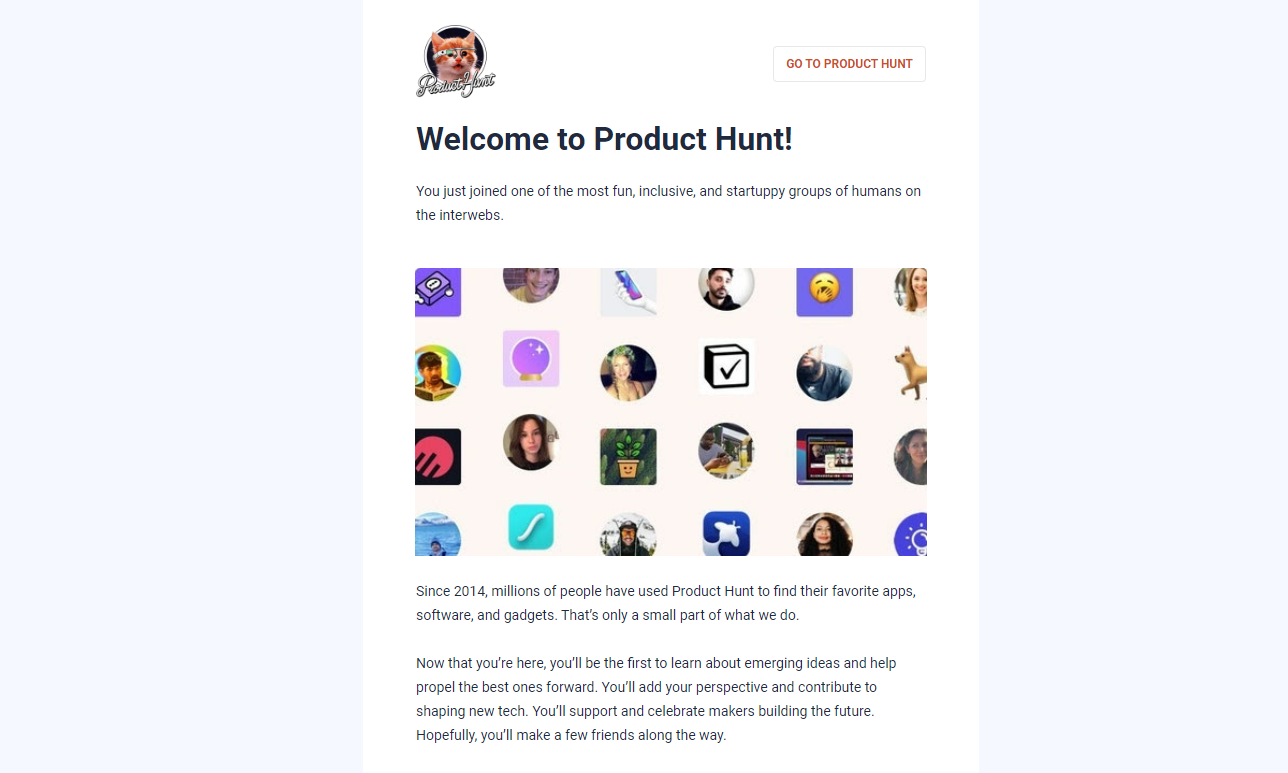
In the first two paragraphs of the welcome email. They used social proofing to get your attention, by stating that you just started using a product that other people are using. They even added photos of different users with a little bit of history.
If you are familiar with Robert Cialdini's book. The psychological Influence of persuasion; Social proofing is one of the 6 weapons of influence you can use to your advantage when writing an email copy or any other copywriting work. Many people prefer to do what others are doing to feel a sense of belonging or prove that they made the right decision. Read again. Using testimonials will help in this regard, I will expand more on that later in the article.
The third paragraph explains their features in the benefit contest. This will remind the new user why they signed up for your product. Give them a clearer understanding of what they should be expecting from your software.
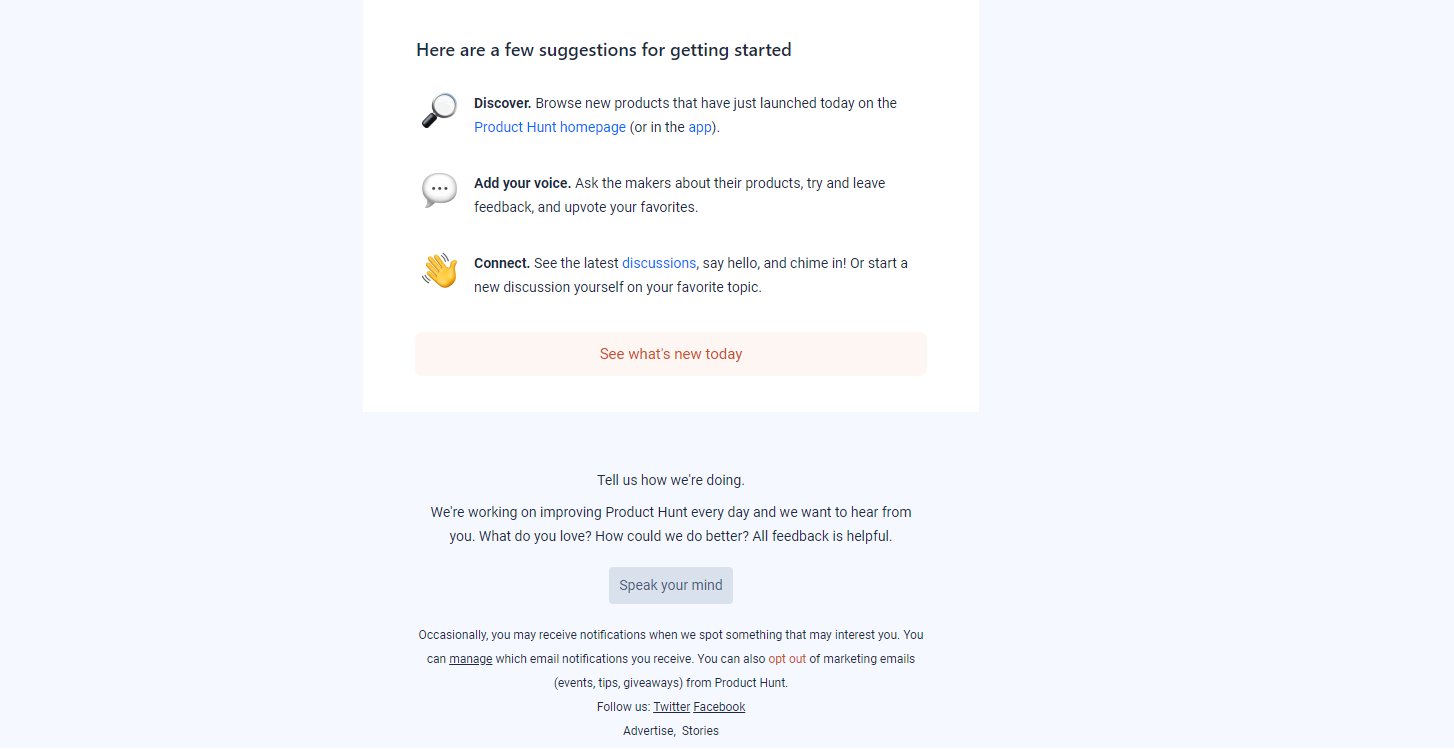
Next, they gave you suggestions of where you can get started; You can also apply this in your own welcome email by giving your user actionable steps they can take in other to achieve the MVP/MPA (MINIMUM PART TO AWESOMENESS) we discussed earlier. The earlier they understand and use your product features, the easier it will be for them to slap their credit card on your Stripe payment gateway.
Nobody will love to pay for software they didn't use or know how to use. Even if you charge them, they will request for chargeback which will increase your churn rate. I believe you don't want that.
Lastly, They ask you to reach out to them. You want to create a husband and wife bond with your customers. No, I don't mean ask your customer out, or marry them...lol. By developing a relationship with them, you demonstrate your interest in their problems, not just their money. This will increase the chances of them upgrading when it is time because they feel they have access to you whenever they have a problem.
Jeffz, could you give me a couple more tips?
Say less my G!
2. Nurture your customers
Just for emphasis; Make sure you're nurturing your customers throughout the onboarding process. This means providing them with the support they need to succeed and offering helpful resources such as educational videos, blog posts, and steps they can take to really make use of your software, etc. And also keeping them updated on the latest features and updates.
3. Use testimonials
As I said earlier, Social proof can be a powerful tool in converting free trial customers into paying users. Including testimonials from satisfied customers on your website and in your onboarding emails. To show new users what others have said about your product. You want your testimonies from a different perspective. If your software provides services to individual businesses, enterprises, or even students, like Grammarly. Then you need to have testimony from these separate users as well. It will give each party an idea that your product can solve their problem.
4. Trigger emails
It is essential to keep in mind that each user has a different problem and stages your product is solving. Using email automation to trigger onboarding emails based on certain user actions. For example, you could trigger an email when a user signs up for a free trial, or when they haven't logged in for a certain period of time.
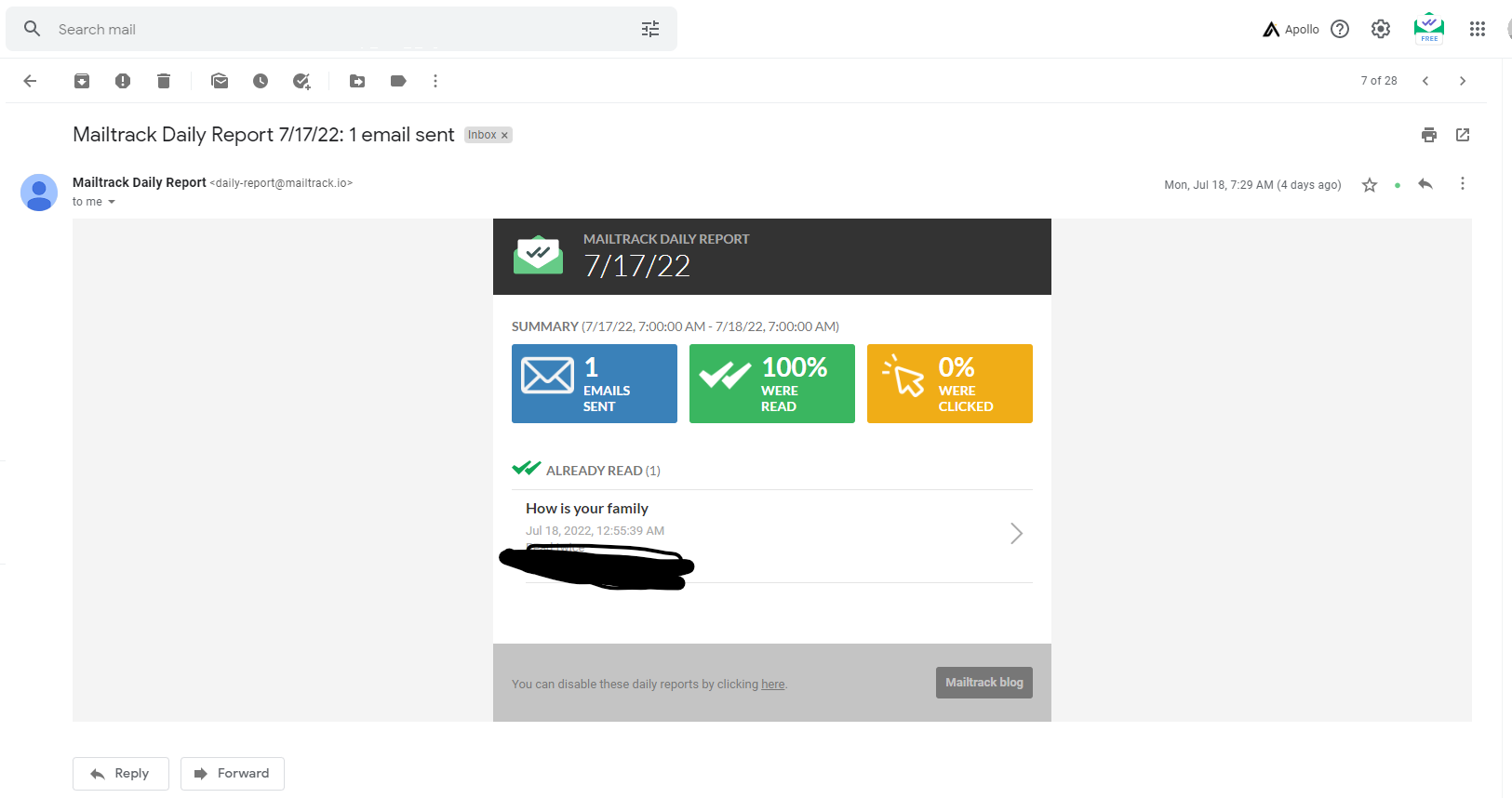
For instance, Mailtrack, for example, sends you information about your current activities such as how many times someone reads your email, CTR records, etc. These tactics keep users using your product. Because they can see the need for using it
5. Communicate with inactive customers
Suppose you have customers who have signed up for a free trial but haven't been active. Reach out to them and see if there's anything you can do to help them get started. You may find that a little extra support is all they need to get on board. Using the trigger email techniques we just discussed will definitely help.
But here is the catch;
Your software must-have feature in your backend that tracks users' activities. You can use this program to accomplish such a task.
6. Extend free trials
In some cases, it may make sense to extend free trials for certain users. This could be an effective strategy for users who have shown interest in your product but haven't had enough time to use it. This strategy will reduce your churn rate drastically. As SaaS products don't actually have a cost of production, it costs 0 to nothing to keep one more customer on board.
By following these tips. You can improve your onboarding process and convert more free trials into paying customers. So why not give them a try today? I'm available to answer any question and in my next article, I will discuss how you can generate new leads for your SaaS product at zero cost. let me know if something you are interested in.
Cheers,
Jeffz.
But the question is; How can you convert your free trial users into paying customers?
The short answer is onboarding emails.
Yes, you read it right. Did you know that onboarding is the key to converting free trial customers into paying users? Few of us might be aware, but are we actually taking advantage of it? I have seen some pretty funny and crappy onboarding for SaaS companies. Imagine when you sign up for a product and you get something like this;
Hey Jeffz,
Thanks for creating an account with XYZ! To login to your account, click the following link:
https: //www.iamcrappysoftware.com/login
If you were not expecting this email, just ignore it.
Lol... I'm not claiming to be an expert or anything when it comes to email marketing or writing copy.
I can bet my money that this kind of onboarding will be next to zero conversion rate.
The onboarding process is very crucial when it comes to SAAS marketing. It helps in getting customers invested in your product. And ensuring they see the value in upgrading to a paid subscription. There are some things you can do to improve your onboarding process. To convert more free trial customers into paying customers. Here are a few actionable tips:
1. Send onboarding emails
One of the most effective ways to onboard new users is to send them a series of onboarding emails.
These emails should introduce the user to your product, explain how it works, and offer helpful tips on getting the most out of it. It is all about nurturing your customers to attain the MVP/MPA according to Christoph. Helping them achieve the goal your software promises.
The Welcome onboarding email you send gives your user an impression of who you really are. so you can't afford to mess it up. Because study shows that; welcome email has 4 to 5 times open rate compared to normal email - Experian.
Jeffz I know, but what can I do to improve my welcome onboarding email?
No worries.
Let's review the Product Hunt welcome email for example.
In the first two paragraphs of the welcome email. They used social proofing to get your attention, by stating that you just started using a product that other people are using. They even added photos of different users with a little bit of history.
If you are familiar with Robert Cialdini's book. The psychological Influence of persuasion; Social proofing is one of the 6 weapons of influence you can use to your advantage when writing an email copy or any other copywriting work. Many people prefer to do what others are doing to feel a sense of belonging or prove that they made the right decision. Read again. Using testimonials will help in this regard, I will expand more on that later in the article.
The third paragraph explains their features in the benefit contest. This will remind the new user why they signed up for your product. Give them a clearer understanding of what they should be expecting from your software.
Next, they gave you suggestions of where you can get started; You can also apply this in your own welcome email by giving your user actionable steps they can take in other to achieve the MVP/MPA (MINIMUM PART TO AWESOMENESS) we discussed earlier. The earlier they understand and use your product features, the easier it will be for them to slap their credit card on your Stripe payment gateway.
Nobody will love to pay for software they didn't use or know how to use. Even if you charge them, they will request for chargeback which will increase your churn rate. I believe you don't want that.
Lastly, They ask you to reach out to them. You want to create a husband and wife bond with your customers. No, I don't mean ask your customer out, or marry them...lol. By developing a relationship with them, you demonstrate your interest in their problems, not just their money. This will increase the chances of them upgrading when it is time because they feel they have access to you whenever they have a problem.
Jeffz, could you give me a couple more tips?
Say less my G!
2. Nurture your customers
Just for emphasis; Make sure you're nurturing your customers throughout the onboarding process. This means providing them with the support they need to succeed and offering helpful resources such as educational videos, blog posts, and steps they can take to really make use of your software, etc. And also keeping them updated on the latest features and updates.
3. Use testimonials
As I said earlier, Social proof can be a powerful tool in converting free trial customers into paying users. Including testimonials from satisfied customers on your website and in your onboarding emails. To show new users what others have said about your product. You want your testimonies from a different perspective. If your software provides services to individual businesses, enterprises, or even students, like Grammarly. Then you need to have testimony from these separate users as well. It will give each party an idea that your product can solve their problem.
4. Trigger emails
It is essential to keep in mind that each user has a different problem and stages your product is solving. Using email automation to trigger onboarding emails based on certain user actions. For example, you could trigger an email when a user signs up for a free trial, or when they haven't logged in for a certain period of time.
For instance, Mailtrack, for example, sends you information about your current activities such as how many times someone reads your email, CTR records, etc. These tactics keep users using your product. Because they can see the need for using it
5. Communicate with inactive customers
Suppose you have customers who have signed up for a free trial but haven't been active. Reach out to them and see if there's anything you can do to help them get started. You may find that a little extra support is all they need to get on board. Using the trigger email techniques we just discussed will definitely help.
But here is the catch;
Your software must-have feature in your backend that tracks users' activities. You can use this program to accomplish such a task.
6. Extend free trials
In some cases, it may make sense to extend free trials for certain users. This could be an effective strategy for users who have shown interest in your product but haven't had enough time to use it. This strategy will reduce your churn rate drastically. As SaaS products don't actually have a cost of production, it costs 0 to nothing to keep one more customer on board.
By following these tips. You can improve your onboarding process and convert more free trials into paying customers. So why not give them a try today? I'm available to answer any question and in my next article, I will discuss how you can generate new leads for your SaaS product at zero cost. let me know if something you are interested in.
Cheers,
Jeffz.
Last edited:


