Market Samurai Research Interpretation Thread

Guys the data is flawed fundamentally in MS. Read the posthttp://vincesamios.com/internetmarke...etition-matrix

MS picks up a ratio of keywords in title to keywords in the copy. All search engines are now Topical and do keywords in head to keywords in anchor tag. The post says it all.

I kinda hate this module of MS ( the keyword research ) !

That dude isn't saying its flawed, just that it's hard to interpret. He's using that standpoint to get people to pay him to do SEO Competition Analysis for them (Read the conclusion). It's all just a marketing scheme. Plus with the right resources, the MS SEOC Matrix is really simple.
 
nah, whitehat - I dont think so, if anyone had to use Google for Keyword volume etc, he is simply being over optimistic. And MS pulls data mostly from Google ( and yes, from MSN and Y ) - so anyway, I wouldnt trust that ..


nayway, which other tool you guys use for sharp keyword research and vol ???

Thanks
 
ms.jpg
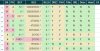
Trying to analyse this one above.
The first 2 positions are from 2 amazon products
the 3rd position is from cnet reviews.
the 4 and 5 position is from the product company, let's say sony.
The final ones are from some not so known review sites.

Well, I think we all agree that it's very very hard to aim for the first spot, has the first ones are well known authority sites, but what makes me thinking is how amazon and cnet can outrank the main site of the product (even so it is a PR0 page and with no backlinks) and the others after sony page with higher PR and backlinks can't.
The one in 6 position, has more BLD a higher PR and higher DA, very similar with amazon page that is in second place, but it is not capable to outrank the PR0 of sony, but amazon and cnet can.
Can someone comment arround the authority sites value in SEO? or if there is any other fact besides this one that might contribut to this particular case of sony page.
 
Last edited:
When you say exactkeyword.com , it makes any different if it goes like a sub domain? exactkeyword.domain.com ?

I would like to know the answer to this too although i think it may be effective as i read setting up ur wp permalinks like /%category%/%postname% helps with seo if ur categories are the keyword...also i glad somebody started this thread...i get lost over at the 30dc trying to find info...has anyone used traffic travis?...i use that in conjunction with ms cuz u can find the keyword and find out if it will be hard or easy to rank for the keyword without interpeting a matrix (dont know how accurate it is) but it also gives on page seo advice.
 
Trying to analyse this one above.
The first 2 positions are from 2 amazon products
the 3rd position is from cnet reviews.
the 4 and 5 position is from the product company, let's say sony.
The final ones are from some not so known review sites.

I'm kind of lost without the keyword. Is it in ANY of the above links? I've noticed that a company won't buy a domain name that IS getting the most searches but sticks to their own company name. So the product is the keyword? But the companys name doesn't contain it? Then it makes sense that the CNEt and Amazon sites are outranking it. Assuming they're mentioning the keyword.
 
MS2.jpg

Here is the links. Well it is a long tail keyword with 4 words, they have all 3 of those keywords but diference is in termination, for example "big sreen tv", which they all have and then the 4th word attached that makes the keyword I was trying to use "big screen tv sony".

Hope you can understand now.

At first glance it seems we are playing here a game, like "guess what's the keyword" hehe
 
Last edited:
You can get your site at first page if you use domain keyword. I guess that #8 site optimize it anchor text for different keyword that relates with keyword that shown in SS above.
 
Hi Guys,

Here's some info I picked up in my quest to fully understand and use the MS SEO Competition analyser.

Hope it helps at least someone here. Oh, and if I'm way off... please correct me as you can never learn too much.

Here goes:

There are a few things you need to look for here to see how the sites you will be competing against are optimized for both on page and off page SEO and before I explain what these are, here is a glossary of what the abbreviations in each of the columns mean:

DA Domain Age: The age of a domain, according to the first registered date in WHOIS records.

PR PageRank: An indicator of the overall quantity and quality of links to a web-page, as determined by Google's PageRank
algorithm.

BLP Page Backlinks: The total number of links pointing to a web-page from outside of that web-site itself.

BLD Domain Backlinks: The total number of links pointing to an entire domain (whole web-site) from outside of that web-site itself.

BLEG Government / Education Page Backlinks: The total number of links pointing to a web-page from Government (.gov) and Educational (.edu) sources that are external to the web-site itself.

DMZ DMOZ Listing: Whether the site is listed in the Open Directory Project's Directory.

YAH Yahoo! Listing: Whether the site is listed in the Yahoo! Directory.

Title Keyword in Title Tags: Whether the web-page <title> tag contains the keyword.

URL Keyword in URL: Whether the web-page URL contains the keyword.

Desc Keyword in META Description: Whether the keyword appears in the <meta> "description" tag.

Head Keyword in Header Tags: Whether the keyword appears in <h1>, <h2>, <h3> etc. tags within the page content itself.

CA Google Cache Age: The number of days since Google last re-indexed the page listed.

And within the results themselves?

Y Means ?Yes?
N Means ?No?

As for the colour patterns?

The more red colours there are the harder it will be to rank highly. Yellow is a ?warning? and the more green that is displayed, the easier it will be to compete and get into the top 10.

So how do you decide whether the keyword phrase is something that you would realistically be able to rank for?

#1 The first thing to look for is whether more than one competitor has a ?Y? (a Yes) in ALL the YAH, Title, URL, Desc & Head columns. If there is more than one site, you should pass on this keyword and move into the next one.

#2 If no (and for this keyword it?s a ?no?), you then need to look at the Pagerank of the each of the websites (PR column) and make sure that there are at least two sites with a Pagerank of 3 or below in the top 10.

#3 You then need to look at the number of backlinks that each of these pages have pointing to them (BLP) and check that there are two sites with less than 50.

As I said, this is just what I have picked up sofar... I might be wrong.

I do have a question though...

When doing keyword research, what's best to focus on... Broad, Phrase or Exact? Also, I have been told to focus on keywords with competition ranging between 20,000 and 150,000. Now, in my opinion that is quite a range to play in.

What's the optimum (golden) number here?

Any help will be appreciated.

Thanks,

Ruoall
 
#1 The first thing to look for is whether more than one competitor has a ?Y? (a Yes) in ALL the YAH, Title, URL, Desc & Head columns. If there is more than one site, you should pass on this keyword and move into the next one.


When doing keyword research, what's best to focus on... Broad, Phrase or Exact? Also, I have been told to focus on keywords with competition ranging between 20,000 and 150,000. Now, in my opinion that is quite a range to play in.

Ruoall

Why would you care if more than 2 pages has *yes* in all of the columns?

Even if more than two pages were properly optimized, that would not really matter if they were thin crappy sites with no significant amount of backlinks now would it?

Analyzing the competition is not that black and white.. You'll see sites that holds authority n the eyes of google, but are poorly optimized, beat better optimized ones all the time, because of off page factors like amount of backlinks, anchor text, and authority of backlinks matter more than the on page stuff. Then there is stuff like internal linking, site structure etc.

Also, I think the advice about looking at the number of competing pages is flawed. In reality, you are only competing with the top 10-20 pages, and sometimes it will be a lot more easy to rank for a keyword that has 600 000 competing pages vs one that has 300 000 comp pages.
 
Here's how I do it:

1. Enter your keyword, smack GENERATE KEYWORDS
2. Select Match type: EXACT (the others just give you a false sense of opportunity)
3. In the organic column: SEO TRAFFIC (SEOT) enter is 25 (this will filter out anything below approx. 100 searches - it's practically the same as entering 100 into the "Total Searches" above it. By entering it into the SEOT box, it's already open so one less click)
4. Hit REFRESH FILTERS (Now we've gotten rid of the "weeds")
5. Hit ANALYZE KEYWORDS
6. Sort by SEOTCR COLUMN.

As the instructions say: "This is the ratio of SEOTC to SEOC. A low score can indicate weak competition in a market." Guess what? You'll notice that everything in the single digits will have less than 50,000 pages in the SEOTC column next to it.

I first glance in the SEOTCR column: Starting at the top, how many single digits (below 10%) are there? Focus on these.

Second glance: How many SEARCHES are there for each of the low SEOTCR's? Don't forget, these are exact searches PER DAY. If you can get to the top of the SERPS you might get 25% of that. If you're off of the front page of Google, you're wasting your time. You'll require at least 100 searches per day. You'll shoot for 200. HOPE you can get 300-500. Just for laughs, you can look at a 1,000.

7. Pick a keyword and click the magnifying glass/key icon, click the tab and generate results.

Is it green all the way up the PR and BLP column? Then you got a winner. It hardly ever is..so you've got to develop the art of looking at this data. (see above for details)

I then have networksolutions.com open in a browser and see if the domain is available for the keyword you're looking at. Are the .com's, .net's and org's already taken? Then this stream has probably already been mined for gold nugggets. Move on. Usually the .org domain is available. If so do this:

CLICK - ADD CUSTOM URLS button and add the .com and .net URL of the keyword you're looking for. (Hit Generate results.) Since these domains already exist and ARE the keyword you're looking for, you can get a good idea how far you'll rank when you first start. You'll find plenty of parked domains that aren't doing anything. They're not your competition. But if the .com version of your keyword looks like somebody has tried to promote it and it's not showing up in the SERPs, then you'll have to figure out why. It's probably because the competition is tough in this neighborhood.

When done: REPEAT A FUCKING HUNDRED TIMES. :-) It's very tough to find good keywords. I would EASILY say the ratio is 100:1 before I buy a keyword. Anyone else have an estimate?
 
Last edited:
I posted the following in a new thread but maybe you guys can help me out:

Before I knew much about keyword research I registered a domain last year thinking it would be a good keyword to pursue since I saw it on one of those high CPC lists. I did some proper KW research and I see it's only getting 11 exact and 30 broad searches a day (330 and 900 a month) but the CPC is more than $20 for broad, $7 for exact, and there are 5 advertisers.

Even as an SEO newbie I'm pretty certain I could dominate the top 3 if not the first position.

Is this worth pursuing as an Adsense site? Should I just do it anyway for practice and then target other keywords with separate pages on that domain? Or should I just dominate this keyword and move on to another keyword/domain?
 
I see it's only getting 11 exact

Don't forget...even if you are at the top of the SERPS for that keyword...people can still leave via the adwords ads in the sidebar or the other 9 listings. You won't be getting 11 clicks per day. Maybe 2-3? You're gonna do all that work for 2 lousy clicks a day?
 
Well now Google Keyword tool is saying 250 global monthly exact searches.

Should I trust Market Samurai's 11 or Google's 250?

Is it enough of a discrepancy to pursue the KW?
 
From what I know, Google over estimates. Which is kind of crazy if you think about it since they are the authority on it.
 
I'm wondering if we aren't over analysing this keyword stuff.

You may end up analysing so much you never do the actual work of getting ranked. And who said getting ranked in 2 days is a good thing?
 
This level of analysis isn't anything compared to what the big dogs do. This is just the intro, general level of keyword analysis that is a must. True that someone looking for the "perfect keyword" could become increasingly hesitant to act but I believe it is better to measure twice and cut once.

And getting ranked in 2 days is a great thing. Why would you want to wait say 6 months? The the benefit in putting off potential profits? Hell if I could rank for "Acai Berry" in 2 days, I'd retire in 30!
 
Well now Google Keyword tool is saying 250 global monthly exact searches.
Should I trust Market Samurai's 11 or Google's 250?

Market Samurai is showing searches per day. Google is doing it per month. Do the math and it basically comes out the same.
 
Damn, I keep forgetting it's daily search. So in this case MS is estimating higher than Google.

Interesting :)
 
38 posts in this thread and no one really understands SEO :D

You can debate SEOTC to SEOC all day long, but the big pink elephant in the room is thaT MS doesn't include anchor text data or the quality of the page that the link originates from.

MS is great for finding lakes to fish in, but it is fuckn useless in telling you how good the other fisherman your competing against are.
 
That's want backlink analysis is for. MS isn't the end all, but it sure is a tool in the tool box.
 
Back
Top