

GhostVision
Elite Member
- Aug 3, 2010
- 2,648
- 1,386
This guide is dedicated to both beginners and those who want to improve their SEO strategies in 2025. Why is it so important to choose the right niche and keywords? In an era where artificial intelligence is becoming increasingly accessible and powerful, on-site optimization is much easier to manage. AI tools like ChatGPT, Bard, or dedicated SEO solutions can quickly analyze the structure of your website, offer technical recommendations, and even generate optimized content.
Thus, the main focus of any webmaster or digital marketer should be on choosing a niche that is not only trending but also has a real monetization potential. The correct niche selection becomes the foundation on which you will build the success of your website. In addition, identifying keywords with a good search volume but less competition will give you a strategic advantage.
In other words, in 2025, the ability to find your "corner of the internet" is more valuable than any traditional SEO technique. AI can do many things for you, but your unique strategy remains a key element that only you can define.

In an SEO project for 2025, the time allocated to initial planning is crucial. If you only have 10 days to lay the foundation for a new website, you should know that 9 of them should be dedicated exclusively to the process of selecting the niche and keywords. Why? Because this step represents the foundation of your success.
Choosing the wrong niche can mean months of wasted work on a website that doesn’t attract the desired traffic or that has too much competition to compete effectively. Similarly, inappropriate keywords can limit your visibility in search engines and reduce your chances of monetizing your website.
By dedicating 90% of your time to this stage, you ensure that you conduct a thorough analysis: researching market trends, analyzing competition, identifying your target audience, and finding those keywords that will give you the best ratio of effort to results. In 2025, AI can simplify the technical aspects of optimization and content generation, but no technology can replace the strategic process of choosing where and how you want to operate.
This massive time investment in this step will allow you to build a solid foundation for the rest of the project. If you neglect this stage, every hour you spend later on optimizations, content creation, or link building will simply be a waste of time. In other words, the success of your project starts and ends with how well you do your homework at the beginning.
Before starting a new online project, it’s essential to have a clear understanding of your level of experience and available budget. The choice of niche and keywords should be made according to the resources you can allocate to reach the top of search engines. Why? Because SEO is not just about strategies and techniques, but also about realism.
If you're just starting out, without a generous budget or advanced experience, it’s pointless to venture into an ultra-competitive niche. For example, niches like "insurance" or "weight loss" are dominated by big players who invest heavily in link building, advertising, and content creation. Instead, we need to identify together those niches that are less exploited or "long-tail" keywords (longer, more specific phrases) that have less competition.
Success in such a niche can be achieved with minimal or even zero investment in link building. In this case, you'll focus on quality content, technical optimization, and a deep understanding of the target audience's needs. By doing this, you'll create value that attracts organic visitors, without having to compete with sites that have huge budgets.
Therefore, in 2025, the right approach is not to aim to dominate an entire industry, but to find a “micro-corner” where your resources, even if limited, can make a real difference. Strategic planning, combined with a good understanding of your own limits and potential, is the key to success in SEO, regardless of your experience or budget.
A common question for those starting in the world of SEO is: "Are there still niches in 2025 where I can reach the top positions without a budget?" While many would answer that this is impossible, this perception is wrong and, most of the time, comes from a lack of experience or a limited view of global opportunities.
The truth is that with technological advances, AI has completely revolutionized how we approach SEO. You're no longer constrained to work only in your native language or on already saturated markets. Now, AI tools allow you to easily identify niches and opportunities anywhere in the world. You can use high-quality automatic translations, research tools like Google Trends, Ahrefs, or Semrush, and analyze less competitive markets where competition is lower or almost nonexistent.
For example, if English or Western markets are dominated by large competitors, there are numerous opportunities in languages like Polish, Indonesian, Vietnamese, or other less exploited languages. In these markets, searches are just as relevant, but competition is significantly lower. Moreover, local niches in these regions can have enormous potential for monetization, whether through affiliate marketing or advertising.
Thus, with well-structured content, translated with AI assistance, and careful research of the right keywords, you can differentiate yourself and achieve results even without investing money in link building. In conclusion, in 2025, success with a $0 budget is not only possible but can be an extremely viable strategy if you open yourself to new markets and learn to use technology to your advantage.
Identifying a niche is one of the most important steps in creating a successful website. Although there are many tools that can help you identify opportunities, I prefer to approach this process manually. Why? Because direct involvement in research gives you a clearer perspective of the market and allows you to discover details that automated tools might overlook.An excellent starting point is your everyday life and the city where you live. Think about local services: towing, carpet cleaning, PC repair shops, and other similar businesses. These are often profitable niches with constant demand but not always saturated online.
To evaluate the potential of such a niche, follow these steps:
It’s simple: analyze the backlink profile of each website using tools like Ahrefs or SEMrush. If you notice that the site has few or no quality backlinks, or if the backlinks are obtained organically, this is a strong indicator that the niche may have less competition, presenting an opportunity to rank without a substantial budget.
A manual approach helps you uncover niches where the effort required to rank well on Google is lower, but the potential to generate traffic and revenue is considerable. By carefully studying the backlink profiles of top-ranking websites, you can identify these low-competition niches with high potential.
Here are some key signs that indicate you may be able to rank without significant SEO investments:
After identifying several potential niches in your city, the next step is to expand your search. Just as you did for your city, you need to apply the same method in other cities across your country. Google searches will vary by location, and this will show you niches that are popular in one city but not as competitive in other regions. It's important to understand that each city has its particularities and specific needs of its inhabitants, and this can create unique opportunities for your website.
After taking this step in the domestic market, I recommend expanding your research internationally. Choosing cities from other countries might seem complicated, but with the help of AI and market research tools, this process becomes much easier. By searching for the same niches in different languages and countries, you'll find less saturated markets with significant demand.
To efficiently organize the information, I suggest creating a detailed table where you note all relevant data: city name, searched services, keywords used, type of competition (sponsored vs. organic), and any other observations that might be useful to you. This table will become a valuable reference tool that will help you visualize patterns and quickly identify the niches with the highest potential.
Thus, having an extensive database about various cities and international markets, you'll be able to make informed decisions about which niches to pursue, how to structure your content, and what SEO strategies to apply to get the best results, regardless of the available budget.
Although in terms of paid advertisements (ADS) the competition will be high, given that car towing services will be aggressively promoted in these areas, things are different when it comes to SEO. In a strategic location with heavy traffic, many local competitors may rely primarily on paid advertising and may not have invested enough in organic optimization of their sites. In this context, you can reach the top of searches with just a well-structured site that follows essential SEO principles, even without investing in backlinks.
This is possible because if you build a technically solid site, optimize content for users, and use relevant keywords for your area, you will manage to position yourself in top places. Additionally, easy-to-use navigation, friendly design, and quality content will make your site attractive to both visitors and search engines. Thus, even without investments in backlinks, a well-structured and optimized site can attract organic traffic and help you become a leader in your chosen niche.
How do you find them? Start by selecting a few niches from the city or region that interests you. Then, search for the top 10 sites that are already well-ranked on Google for these niches. Study their backlinks using tools like Ahrefs, Moz, or Semrush. You'll notice that many of these sites have backlinks obtained from local forums, business directories, or press release sites. These sources are often free and can be accessible even for those with a limited budget.
But the question is: will these backlinks help you? The answer is yes, but only if you've correctly followed the steps above. If you've made a careful niche selection, chosen relevant keywords, and properly optimized the site, these free backlinks will significantly contribute to increasing your site's authority and improving its position in search results.
Let's assume your site reaches the top 3 positions in Google for relevant keywords and that, for example, you receive 10 clicks per day from organic searches. That means 10 clicks x $2 = $20 per day, which means your traffic is theoretically worth $600 per month ($20 x 30 days). This income might seem modest at first, but it's just the beginning.
In this case, if your site reaches the top 3 in Google, there's a high probability you could rent the site for at least $200 per month. In this case, the annual income would be $2400 ($200 x 12 months), and the initial investment would be almost zero.
This example clearly shows how, with a well-optimized site positioned in top positions, you can earn money from a niche with constant demand, without a budget for backlinks. Even without directly monetizing through Google Ads, your site can generate long-term passive income, making it an extremely profitable investment.
This example clearly shows that if you choose your niche correctly and follow the optimization steps, you don't need to spend weeks developing the site. With minimal effort and a well-thought-out strategy, you can obtain a functional and optimized site, ready to compete in organic searches.

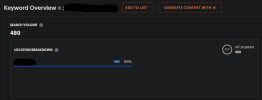
The site is targeted for a main keyword that has a volume of 480 monthly searches. In addition to this, I included other similar words, which together contribute to a total of just over 1000 searches per month.
Backlink Strategy for the Test Site
For this site, the backlink strategy was extremely simple. On the day I finished the site, I created a single free backlink on a quality press release site. This was enough to give an initial boost to the site and help it get indexed and considered by search engines.

The image above shows two backlinks. It's important to mention that only one of them was created by me, intentionally, on a quality press release site. The other backlink was automatically generated by a spam site that creates automatic content and has nothing to do with my optimization strategy.

Results Obtained and Strategy for the Coming Months
With just one manually created backlink, the site has already managed to reach position 7 for the main keyword. This result demonstrates that a well-thought-out strategy, which includes a suitable niche, a well-structured site, and relevant content, can bring remarkable results even with minimal resources.
Meanwhile, I have identified another 5-6 free sources for backlinks, such as niche forums, article directories, or press release platforms. I intend to place links to my site on these sources, thus consolidating the domain's authority. I am confident that by applying this strategy, in the next 2-3 months my site will climb to the top 3 positions in organic searches, if not to first place.
The site was created 90% using ChatGPT, which allowed me to save time and focus on optimization. The site structure includes:
For this site, I chose simple and efficient solutions that would help me create a fast and optimized site. Here's what I used:
If you're new to SEO, it's best to start with easier niches and keywords where competition is low. Choosing such niches will allow you to get results faster, gain experience, and better understand the optimization process.
As we discussed, success doesn't depend only on how many backlinks you create or how many financial resources you invest. A well-structured site, created with a performant theme, efficient free plugins, and optimized content, can reach the top even with minimal investments. Choosing the right niche is key, and a reasonable search volume, along with competition analysis, can ensure a promising start.
As you gain experience, you'll better understand the process, become more efficient in choosing free backlink sources, such as forums, article directories, or press releases, and you'll know exactly what to do to improve your search positions.
When you feel ready to move to the next step, meaning more competitive niches, you'll already have the knowledge and experience needed to evaluate what resources and budget you need. You'll know how to build an optimized site, how to choose the right keywords, and how to use SEO tools to achieve desired positions in search engines.
Each project is an opportunity to learn and refine your strategies. Start simple but strategic, and results will come, especially if you follow the right steps.
The last step and, without doubt, the most important in your path to success is to test constantly. Each project, each strategy, each adjustment you make is a lesson. Don't be afraid to try new approaches, experiment with different types of content, change the site structure, or test new sources of free backlinks.
SEO is not an exact science, but rather a continuous process of learning and adaptation. Testing will allow you to discover what works best for you, for your site, and for the niche you choose. Sometimes, you'll have unexpected results even from the simplest adjustments.
Remember: success doesn't come overnight. It takes patience, perseverance, and lots of testing. If you stay focused and apply the lessons learned from each experiment, you will surely achieve your goals.
Therefore, my advice is simple but essential: test, test, test! Each step forward will bring you closer to the desired success.
Thus, the main focus of any webmaster or digital marketer should be on choosing a niche that is not only trending but also has a real monetization potential. The correct niche selection becomes the foundation on which you will build the success of your website. In addition, identifying keywords with a good search volume but less competition will give you a strategic advantage.
In other words, in 2025, the ability to find your "corner of the internet" is more valuable than any traditional SEO technique. AI can do many things for you, but your unique strategy remains a key element that only you can define.
The importance of planning: Dedicate 90% of your time to choosing the niche and keywords
In an SEO project for 2025, the time allocated to initial planning is crucial. If you only have 10 days to lay the foundation for a new website, you should know that 9 of them should be dedicated exclusively to the process of selecting the niche and keywords. Why? Because this step represents the foundation of your success.
Choosing the wrong niche can mean months of wasted work on a website that doesn’t attract the desired traffic or that has too much competition to compete effectively. Similarly, inappropriate keywords can limit your visibility in search engines and reduce your chances of monetizing your website.
By dedicating 90% of your time to this stage, you ensure that you conduct a thorough analysis: researching market trends, analyzing competition, identifying your target audience, and finding those keywords that will give you the best ratio of effort to results. In 2025, AI can simplify the technical aspects of optimization and content generation, but no technology can replace the strategic process of choosing where and how you want to operate.
This massive time investment in this step will allow you to build a solid foundation for the rest of the project. If you neglect this stage, every hour you spend later on optimizations, content creation, or link building will simply be a waste of time. In other words, the success of your project starts and ends with how well you do your homework at the beginning.
Know Your Level and Budget: Be Realistic About Your Resources
Before starting a new online project, it’s essential to have a clear understanding of your level of experience and available budget. The choice of niche and keywords should be made according to the resources you can allocate to reach the top of search engines. Why? Because SEO is not just about strategies and techniques, but also about realism.
If you're just starting out, without a generous budget or advanced experience, it’s pointless to venture into an ultra-competitive niche. For example, niches like "insurance" or "weight loss" are dominated by big players who invest heavily in link building, advertising, and content creation. Instead, we need to identify together those niches that are less exploited or "long-tail" keywords (longer, more specific phrases) that have less competition.
Success in such a niche can be achieved with minimal or even zero investment in link building. In this case, you'll focus on quality content, technical optimization, and a deep understanding of the target audience's needs. By doing this, you'll create value that attracts organic visitors, without having to compete with sites that have huge budgets.
Therefore, in 2025, the right approach is not to aim to dominate an entire industry, but to find a “micro-corner” where your resources, even if limited, can make a real difference. Strategic planning, combined with a good understanding of your own limits and potential, is the key to success in SEO, regardless of your experience or budget.
Can You Rank with a $0 Budget in 2025? Yes, and Here's Why
A common question for those starting in the world of SEO is: "Are there still niches in 2025 where I can reach the top positions without a budget?" While many would answer that this is impossible, this perception is wrong and, most of the time, comes from a lack of experience or a limited view of global opportunities.
The truth is that with technological advances, AI has completely revolutionized how we approach SEO. You're no longer constrained to work only in your native language or on already saturated markets. Now, AI tools allow you to easily identify niches and opportunities anywhere in the world. You can use high-quality automatic translations, research tools like Google Trends, Ahrefs, or Semrush, and analyze less competitive markets where competition is lower or almost nonexistent.
For example, if English or Western markets are dominated by large competitors, there are numerous opportunities in languages like Polish, Indonesian, Vietnamese, or other less exploited languages. In these markets, searches are just as relevant, but competition is significantly lower. Moreover, local niches in these regions can have enormous potential for monetization, whether through affiliate marketing or advertising.
Thus, with well-structured content, translated with AI assistance, and careful research of the right keywords, you can differentiate yourself and achieve results even without investing money in link building. In conclusion, in 2025, success with a $0 budget is not only possible but can be an extremely viable strategy if you open yourself to new markets and learn to use technology to your advantage.
How to Find the Right Niche: The Manual Approach to Success
Identifying a niche is one of the most important steps in creating a successful website. Although there are many tools that can help you identify opportunities, I prefer to approach this process manually. Why? Because direct involvement in research gives you a clearer perspective of the market and allows you to discover details that automated tools might overlook.An excellent starting point is your everyday life and the city where you live. Think about local services: towing, carpet cleaning, PC repair shops, and other similar businesses. These are often profitable niches with constant demand but not always saturated online.
To evaluate the potential of such a niche, follow these steps:
- Search Google for the respective services. Note which results appear in the top positions.
- Analyze the number of paid ads. If you find many paid ads, it means the niche has demand and monetization potential.
- Examine the top 5 organic sites. Check each site to identify whether they reached the top through a complex SEO strategy or if their position is the result of well-made content but with little or no investment in link building.
How to Determine if a Website Is Ranking Without Significant SEO Investments or Even $0 Budget
It’s simple: analyze the backlink profile of each website using tools like Ahrefs or SEMrush. If you notice that the site has few or no quality backlinks, or if the backlinks are obtained organically, this is a strong indicator that the niche may have less competition, presenting an opportunity to rank without a substantial budget.
A manual approach helps you uncover niches where the effort required to rank well on Google is lower, but the potential to generate traffic and revenue is considerable. By carefully studying the backlink profiles of top-ranking websites, you can identify these low-competition niches with high potential.
Here are some key signs that indicate you may be able to rank without significant SEO investments:
- At least one site with fewer than 10 linking domains – This suggests that not many authoritative sites are linking to it, which can be a good opportunity for you to build quality content and gain backlinks organically.
- Social media or classified websites in the top 10 results – If you see platforms like Facebook, Reddit, or other social and classified sites in the top results, this could indicate that the organic competition is less fierce. These sites tend to rank easily due to their large number of backlinks and traffic, so you can find opportunities to compete with quality content.
- New websites (under 12 months old) in the top results – The presence of new websites in the top results signifies that the niche may not yet be fully saturated, and there’s a chance to outrank these newer competitors with a well-optimized site and a strategic approach.
Expanding your research: Explore local and international markets
After identifying several potential niches in your city, the next step is to expand your search. Just as you did for your city, you need to apply the same method in other cities across your country. Google searches will vary by location, and this will show you niches that are popular in one city but not as competitive in other regions. It's important to understand that each city has its particularities and specific needs of its inhabitants, and this can create unique opportunities for your website.
After taking this step in the domestic market, I recommend expanding your research internationally. Choosing cities from other countries might seem complicated, but with the help of AI and market research tools, this process becomes much easier. By searching for the same niches in different languages and countries, you'll find less saturated markets with significant demand.
To efficiently organize the information, I suggest creating a detailed table where you note all relevant data: city name, searched services, keywords used, type of competition (sponsored vs. organic), and any other observations that might be useful to you. This table will become a valuable reference tool that will help you visualize patterns and quickly identify the niches with the highest potential.
Thus, having an extensive database about various cities and international markets, you'll be able to make informed decisions about which niches to pursue, how to structure your content, and what SEO strategies to apply to get the best results, regardless of the available budget.
Concrete Example: Car Towing in Strategic Cities
To better understand how this process of niche identification and competition assessment works, let's take a concrete example: the car towing niche. Imagine a city located at the border or in a strategic area, where external traffic to a country is intense. For example, a city that is on international transport routes or on an important transit route (a road to a frequently visited tourist spot). In such locations, the demand for car towing services is constant, but competition can vary significantly.Although in terms of paid advertisements (ADS) the competition will be high, given that car towing services will be aggressively promoted in these areas, things are different when it comes to SEO. In a strategic location with heavy traffic, many local competitors may rely primarily on paid advertising and may not have invested enough in organic optimization of their sites. In this context, you can reach the top of searches with just a well-structured site that follows essential SEO principles, even without investing in backlinks.
This is possible because if you build a technically solid site, optimize content for users, and use relevant keywords for your area, you will manage to position yourself in top places. Additionally, easy-to-use navigation, friendly design, and quality content will make your site attractive to both visitors and search engines. Thus, even without investments in backlinks, a well-structured and optimized site can attract organic traffic and help you become a leader in your chosen niche.
Zero Investment in Backlinks - but Not Zero Time
In this example, when I say "zero investment in backlinks," I'm referring strictly to financial investments, not the time you need to allocate. Even without an advertising or link-buying budget, there are effective ways to obtain quality backlinks using only free resources available on the internet. Each city or country has dedicated forums for almost every niche, article directories, links, or press release sites. These can be excellent sources of backlinks that will help you increase your site's authority without paying anything.How do you find them? Start by selecting a few niches from the city or region that interests you. Then, search for the top 10 sites that are already well-ranked on Google for these niches. Study their backlinks using tools like Ahrefs, Moz, or Semrush. You'll notice that many of these sites have backlinks obtained from local forums, business directories, or press release sites. These sources are often free and can be accessible even for those with a limited budget.
But the question is: will these backlinks help you? The answer is yes, but only if you've correctly followed the steps above. If you've made a careful niche selection, chosen relevant keywords, and properly optimized the site, these free backlinks will significantly contribute to increasing your site's authority and improving its position in search results.
How to Monetize a Niche with Almost Zero Investment
You might think that the above example is hard to monetize, but I've studied it in detail and have some information that will help you better understand the potential of this strategy. In the case of the car towing niche, the cost per click for Google Ads varies between $1 and $5, depending on location and competition. In the country where I conducted the analysis, the average is approximately $2 per click.Let's assume your site reaches the top 3 positions in Google for relevant keywords and that, for example, you receive 10 clicks per day from organic searches. That means 10 clicks x $2 = $20 per day, which means your traffic is theoretically worth $600 per month ($20 x 30 days). This income might seem modest at first, but it's just the beginning.
In this case, if your site reaches the top 3 in Google, there's a high probability you could rent the site for at least $200 per month. In this case, the annual income would be $2400 ($200 x 12 months), and the initial investment would be almost zero.
This example clearly shows how, with a well-optimized site positioned in top positions, you can earn money from a niche with constant demand, without a budget for backlinks. Even without directly monetizing through Google Ads, your site can generate long-term passive income, making it an extremely profitable investment.
Concrete Example: A Test Site (For this website, only free resources have been used)
To demonstrate how effective this strategy can be, I'll offer you a concrete example from my experience. I created a site just for testing, without investments, to see what results I could get. The domain is only a month and a half old, and the total time I allocated to build the site was approximately 4-5 hours.This example clearly shows that if you choose your niche correctly and follow the optimization steps, you don't need to spend weeks developing the site. With minimal effort and a well-thought-out strategy, you can obtain a functional and optimized site, ready to compete in organic searches.
The site is targeted for a main keyword that has a volume of 480 monthly searches. In addition to this, I included other similar words, which together contribute to a total of just over 1000 searches per month.
Backlink Strategy for the Test Site
For this site, the backlink strategy was extremely simple. On the day I finished the site, I created a single free backlink on a quality press release site. This was enough to give an initial boost to the site and help it get indexed and considered by search engines.
The image above shows two backlinks. It's important to mention that only one of them was created by me, intentionally, on a quality press release site. The other backlink was automatically generated by a spam site that creates automatic content and has nothing to do with my optimization strategy.
Results Obtained and Strategy for the Coming Months
With just one manually created backlink, the site has already managed to reach position 7 for the main keyword. This result demonstrates that a well-thought-out strategy, which includes a suitable niche, a well-structured site, and relevant content, can bring remarkable results even with minimal resources.
Meanwhile, I have identified another 5-6 free sources for backlinks, such as niche forums, article directories, or press release platforms. I intend to place links to my site on these sources, thus consolidating the domain's authority. I am confident that by applying this strategy, in the next 2-3 months my site will climb to the top 3 positions in organic searches, if not to first place.
Structure and Creation Process of the Test Site
The site was created 90% using ChatGPT, which allowed me to save time and focus on optimization. The site structure includes:
- Homepage: This is a static page, where the text is primarily optimized for the main keyword, but I also mentioned other relevant keywords to cover the entire theme of the site.
- About Us page: Here I invented a fictional team, describing each member's experience. This page adds credibility to the site and contributes to a professional image.
- Services page: I detailed each service offered thoroughly, emphasizing clarity and relevance for users.
- Blog: I added 6 articles, all related to the site's theme. To save time, I translated these articles from another language using ChatGPT, ensuring they are relevant and well-written.
For this site, I chose simple and efficient solutions that would help me create a fast and optimized site. Here's what I used:
- Theme: WPAstra theme, which, for me, is in the top 3 best available themes. It's fast, easy to customize, and very well optimized for SEO, making it an ideal choice for projects that require performance and flexibility.
- Plugins used:
- Rank Math SEO (free version) - This plugin is essential for SEO optimization. I used the free version, which offers all the basic functionalities needed to optimize the site's pages and articles.
- Contact Form 7 - A simple and efficient plugin for contact forms, which helps create a quick connection between users and the site.
- LiteSpeed Cache - An excellent caching plugin that contributes to improving the site's loading speed, an extremely important aspect for both user experience and SEO.
Start with the Easiest Niches and Keywords
If you're new to SEO, it's best to start with easier niches and keywords where competition is low. Choosing such niches will allow you to get results faster, gain experience, and better understand the optimization process.
As we discussed, success doesn't depend only on how many backlinks you create or how many financial resources you invest. A well-structured site, created with a performant theme, efficient free plugins, and optimized content, can reach the top even with minimal investments. Choosing the right niche is key, and a reasonable search volume, along with competition analysis, can ensure a promising start.
As you gain experience, you'll better understand the process, become more efficient in choosing free backlink sources, such as forums, article directories, or press releases, and you'll know exactly what to do to improve your search positions.
When you feel ready to move to the next step, meaning more competitive niches, you'll already have the knowledge and experience needed to evaluate what resources and budget you need. You'll know how to build an optimized site, how to choose the right keywords, and how to use SEO tools to achieve desired positions in search engines.
Each project is an opportunity to learn and refine your strategies. Start simple but strategic, and results will come, especially if you follow the right steps.
Final Advice: Test Constantly and You Will Succeed!
The last step and, without doubt, the most important in your path to success is to test constantly. Each project, each strategy, each adjustment you make is a lesson. Don't be afraid to try new approaches, experiment with different types of content, change the site structure, or test new sources of free backlinks.
SEO is not an exact science, but rather a continuous process of learning and adaptation. Testing will allow you to discover what works best for you, for your site, and for the niche you choose. Sometimes, you'll have unexpected results even from the simplest adjustments.
Remember: success doesn't come overnight. It takes patience, perseverance, and lots of testing. If you stay focused and apply the lessons learned from each experiment, you will surely achieve your goals.
Therefore, my advice is simple but essential: test, test, test! Each step forward will bring you closer to the desired success.


