How does Twitter's algorithm generate more impressions?

jasondenzer

Power Member
Joined
Nov 11, 2015
Messages
644
Reaction score
215
When it comes to Twitter impressions per new Tweet, I average around 2.5k impressions with like 25 likes. I have 1.1k followers, which are all real. How does Twitter's algorithm promote a tweet more towards niche non-followers and followers? What is this based on? Likes? Retweets from niche?

Does anyone know the algorithm?
 
No one here knows about the Twitter algo?
 
No one here knows about the Twitter algo?

I have to confess, I have no knowledge of the Twitter algorithm. I do have to point out, however, that it is pretty likely the algorithm is not static. Twitter comes under fire regularly for promoting misinformation or prioritizing one group over another and so on. It is very likely they continually work on methods to filter and promote tweets. As a result, I think figuring out how the algorithm works would be a short-term exploit at best.

I don't know if it helps, but I came here after reading a book, "Trust Me, I'm Lying", by Ryan Holiday. His book has a lot to say about media manipulation and one of the reasons I came here was to see just how much of it was accurate. From the book, assuming you are promoting a website of some kind, I gather the process would be something like this:
  • Acquire a number of burner email accounts
  • Figure out which blogs might be interested in your website, or product, or service
  • Figure out which blogs use the above-mentioned blogs as feed sites for content (I have no idea how to do this. Maybe run a search on the site for links?)
  • Figure out which large, credible sites, such as news sites and the like, use the above-mentioned blogs as feed sites for content
  • Craft a viral tweet with a relevant link and a reasonably good hashtag
    • According to the book, viral tweets basically follow one mantra: "If it doesn't spread, the story's dead"
    • There are three basic ideas on how to craft the tweet:
      • Create something very saccharine and feel-good. For example, "She was going to walk past the homeless man on the street, but something happened that changed her mind completely!" (with the link to your site, of course). In addition, bland statements of positivity tend to get a lot of traction because they are neutral, generally recognized as positive reinforcement and very easy to retweet and then forget.
      • Promote an idea that everyone wants to believe in despite the fact that it could not possibly be true. For example, according to Holiday's book, a man named John Bohannon was able to create a hoax that tricked millions into thinking that eating chocolate could lead to weight loss. There aren't a lot of people who wouldn't want to believe they could lose weight by eating their favorite sugary confection.
      • The most effective option, again according to Holiday's book, is to create something that enrages people. People get angry, retweet using some snarky comeback, and in doing so unwittingly promote the initial tweet. This is a dangerous option because of all the resulting vitriol, but if it works, it will get more traction than the other options.
  • Once the tweet is sent out, find a way to artificially signal-boost it. The idea is to artificially boost the tweet until it reaches enough people to trend on its own.
  • When a tweet is shared enough, the tweet or hashtag shows up on the Twitter trending page. Here is where you would use the burner email accounts to contact people at the initial set of blog sites. Write something to the effect of "This is blowing up on Twitter and I can't believe you're not covering it", or some variation thereof.
  • If the blogs take the bait, an article will be written and the blog will tweet a link to that article. If you signal-boost that tweet, the blog will think the article has traction and might create more articles and thus more tweets.
  • Save all the links to articles. Use the burner email accounts and go to the second set of blogs and email a similar message as before. This time, something similar to "I've seen this story on all these sites, and I'm surprised your site hasn't talked about it, yet!".
  • If this next set of blogs take the bait, signal-boosting might not be necessary if the Twitter followers are numerous enough. Save the links for more emails.
  • If the news sites pick up the story, you'll probably have all the publicity you need. Each step in the plan has been created to get attention from a larger Twitter base than your follower list, as well as get attention from people outside of Twitter. At this point, if it all works out, you should have all the attention you've been looking for.
That's how I understand things, based off the book. I really don't know if it works or not; that's why I am here. If you try it, please let me know if it worked, what you changed, and so forth. Maybe now that I've laid out the plan, someone could come along and explain why it would or would not work. In any event, I hope this all helps in some way. Good luck!
 
You should use right hashtags, get better engagement from your followers and follow the trends.
 
They try to show tweets relevant to the user habits, so it's not so much about your tweet but about the target user preferences. Hashtags are 70% of the juice IMO.
 
@bartosimpsonio
@Pavan Teja 1

Does the purchasing of retweets have any effect with regards to getting the hastag to spread, or is it wholly reliant on organic sharing?
Is it better to adopt an pre-existing hastag, create a similar hastag to whatever is already trending, or generate a brand new one?
 
Does the purchasing of retweets have any effect with regards to getting the hastag to spread, or is it wholly reliant on organic sharing?
Is it better to adopt an pre-existing hastag, create a similar hastag to whatever is already trending, or generate a brand new one?
If your tweet spreads like virus, Twitter boosts it. Paid retweets are mostly dead ends and they don't spread any further. If you can, it's better to make other influencers retweet your tweet. If you have 5k+ followers, retweeting your own tweets will also work.
 
If your tweet spreads like virus, Twitter boosts it. Paid retweets are mostly dead ends and they don't spread any further. If you can, it's better to make other influencers retweet your tweet. If you have 5k+ followers, retweeting your own tweets will also work.

Is it all right if I follow up on this a bit? I'm trying to put together a plan of action and could benefit from some insight. I'm trying to learn marketing by helping out a friend who wants to promote some upcoming creative work. Nothing will be ready for a while, so I feel I have some time to build a following from scratch.

Originally, I was going to try some modified form of the plan listed above, but I've been researching the target audience and it seems fairly niche. As I revise the plan, I am thinking about the following:
  • Find a repository of attractive images (landscapes and so on) and saccharine or blandly positive quotes. The kind people share for "positivity"
  • Start posting the images with these quotes
  • Identify the largest influencers
  • Identify followers of those influencers with the largest following
  • Follow the above-mentioned followers, or followers of those followers (or both)
  • Get my friend to interact with Twitter two or three times a week, since he know how to talk to the target audience
  • When something is ready, put it into the feed and hope for the best
  • Rinse and repeat
I understand that chances are better with multiple social media platforms, but I'm trying to start small to avoid burnout. Does any of this make sense as a starter plan?

Thank you in advance!
 
Is it all right if I follow up on this a bit? I'm trying to put together a plan of action and could benefit from some insight. I'm trying to learn marketing by helping out a friend who wants to promote some upcoming creative work. Nothing will be ready for a while, so I feel I have some time to build a following from scratch.

Originally, I was going to try some modified form of the plan listed above, but I've been researching the target audience and it seems fairly niche. As I revise the plan, I am thinking about the following:
  • Find a repository of attractive images (landscapes and so on) and saccharine or blandly positive quotes. The kind people share for "positivity"
  • Start posting the images with these quotes
  • Identify the largest influencers
  • Identify followers of those influencers with the largest following
  • Follow the above-mentioned followers, or followers of those followers (or both)
  • Get my friend to interact with Twitter two or three times a week, since he know how to talk to the target audience
  • When something is ready, put it into the feed and hope for the best
  • Rinse and repeat
I understand that chances are better with multiple social media platforms, but I'm trying to start small to avoid burnout. Does any of this make sense as a starter plan?

Thank you in advance!
This is good for a starter plan. You can scale it up as the accounts grow.
 
@bartosimpsonio
@Pavan Teja 1

Does the purchasing of retweets have any effect with regards to getting the hastag to spread, or is it wholly reliant on organic sharing?
Is it better to adopt an pre-existing hastag, create a similar hastag to whatever is already trending, or generate a brand new one?

It depends on who you buy it from.

Getting a retweet from an account like Elon Musk isn't the same as 1000 tweets from Jon Bot.
 
Does any of this make sense as a starter plan?

Thank you in advance!

You're overthinking this way too much.

I suggest you to read this sub-forum more, go through pages and read old threads. There's so many posts that cover how to grow accounts in your niche.

The Instagram sub-forum is helpful as well (and more active than this), Twitter and Instagram are very similar platforms after all.

And finally, use Twitter a lot. There's so many twists that can be found by using Twitter regularly.
 
You're overthinking this way too much.

I suggest you to read this sub-forum more, go through pages and read old threads. There's so many posts that cover how to grow accounts in your niche.

The Instagram sub-forum is helpful as well (and more active than this), Twitter and Instagram are very similar platforms after all.

And finally, use Twitter a lot. There's so many twists that can be found by using Twitter regularly.

This is an interesting coincidence! Just before reading this message, I was having a conversation with someone who was invoking Occam's Razor; basically, the idea that things are always simpler than people think.

I've been applying your suggestion on going through the sub-forum more and found your post declaring that Twitter is no longer viable for traffic generation. This is interesting to me because I wonder if it will help with my own project, or if I should investigate some other method.

Essentially, I am working on a brand-recognition project. A friend produces creative works, mostly illustrated stories, but on a very irregular basis. He would like people to see his work, but the lack of regular output means he has no online presence to build off of. This seemed to me a good project to learn about Internet marketing without too much pressure.

My initial thought was to use Twitter for this purpose. The idea was to build up a following, then direct followers to a site containing the content. Now, I know that your post was mostly centered on adult content, but are you saying this for general content as well? There was some mention of how "Twitter went hardcore". Is that with regards to marketing techniques? Has Twitter developed enough of a bad reputation that the only people on it are the least marketing-receptive?

Thank you, by the way. Any advice is helpful to me.
 
I've been applying your suggestion on going through the sub-forum more and found your post declaring that Twitter is no longer viable for traffic generation.

My latest thoughts on Twitter: https://www.blackhatworld.com/seo/twitter-veteran-getting-back-into-it-in-2021.1311294/post-14165286

I have four traffic sources, Twitter is one of them. However, Twitter doesn't have the highest priority.

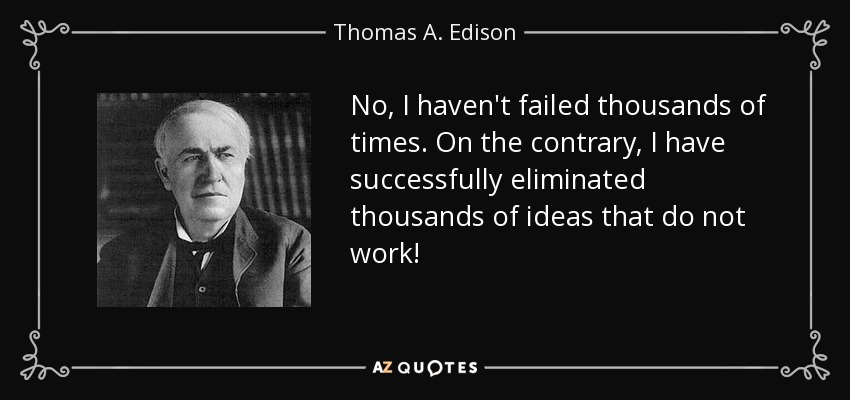
I'll quote Edison and say:

quote-no-i-haven-t-failed-thousands-of-times-on-the-contrary-i-have-successfully-eliminated-thomas-a-edison-106-48-89.jpg


There was some mention of how "Twitter went hardcore". Is that with regards to marketing techniques?

Indeed, now it is much harder than it used to be. Just 2 years ago, I would post a dozen tweets stuffed with hashtags daily, and receive tons of engagement.

Today, it's difficult to tweet without getting search/shadow banned, but it's not impossible.

Has Twitter developed enough of a bad reputation that the only people on it are the least marketing-receptive?

I appreciate Twitter, but it's also broken my heart a lot of times.

If you're serious about marketing Twitter, be ready to fail and start over from 0 a lot of times.
 
Back
Top