How Do You Keep Generated Content High-Quality?

Joined
Aug 11, 2025
Messages
16
Reaction score
6
Time can be saved by AI and content generators, but readability and originality are issues. After creating content, how can you ensure that it still feels valuable and natural?
 
Follow the trends in your niche... adjust the articles accordingly.
no rocket science.
 
Use prompts that actually generate some actual "insight" at least to the point where it's not re-hashed AI slop.
That makes sense thoughtfully written prompts appear to have an impact. Do you often take the effort to write prompts for every subject, or do you have a collection of prompts that consistently produce insightful answers?
 
To do this, you need to ask leading questions, and you will eventually get the best content. It all depends on your queries, which should be more specific
 
Time can be saved by AI and content generators, but readability and originality are issues. After creating content, how can you ensure that it still feels valuable and natural?
To keep AI-generated content high-quality, carefully edit it for clarity and natural flow, add original insights or examples, and ensure it reads like something a real person would write. Check for readability and uniqueness, and lightly optimize for SEO without overstuffing keywords.
 
Hey there,

When it comes to creating high-quality content (think blogs, social posts, or marketing copy) without relying on AI, it’s all about process and intention. Here’s how I ensure my content stands out, based on years of writing and tweaking my approach:

  1. Know Your Audience Cold: Before writing, I dig into who I’m talking to—age, interests, pain points. For example, if I’m writing for small business owners, I’ll focus on practical tips with real-world examples, like how to cut ad costs. Surveys or quick chats with your target group help nail this.
  2. Plan with a Tight Outline: I never freewrite. A clear structure—intro, 3-4 key points, conclusion—keeps things focused. For a 600-word piece, I’ll jot down a headline, a hook (e.g., a surprising stat), and bullet points for each section. This avoids rambling.
  3. Research Deeply, but Smartly: I pull from primary sources—industry reports, case studies, or expert interviews—over generic blogs. For instance, if I’m writing about productivity, I’ll cite a study from Harvard Business Review, not just rehash common tips. Keep a swipe file of credible sources to save time.
  4. Write with Clarity and Voice: Short sentences (15-20 words max) and active voice make content pop. I read my drafts aloud to catch clunky bits. To add personality, I weave in anecdotes or phrases I’d actually say, like “Been there, struggled with that!”
  5. Edit Ruthlessly: After a first draft, I let it sit for a few hours, then cut 10-15% of the word count. Tools like Grammarly help with grammar, but I also check for flow—does each paragraph lead naturally to the next? A second pair of eyes (like a colleague) catches what I miss.
  6. Test and Tweak: I share drafts with a small group or post snippets on social to gauge reactions. Metrics like comments or shares show what hits. For example, a post with a storytelling hook might get 2x the engagement—lean into that.
  7. Stay Consistent: A style guide (e.g., conversational tone, no jargon, 500-800 words) keeps your content cohesive across platforms. I revisit mine every few months to stay on brand.
High-quality content comes from blending deep audience insight with disciplined writing and relentless editing. What’s your go-to trick for crafting killer content? Let’s swap tips!

Best,
 
As far as AI generated (written) content goes, it is good to go as long as 1) There are no grammatical mistakes and 2) Plagiarism is below 10%.
 
Hi, you need to ask the right questions and create a special template for your requests to get the best results.
 
I’ve been using AI for nonfiction projects, and after a lot of false starts I think I’ve finally found a setup that works.

Basically, I use three “reference docs” so I’m not starting from scratch every time:

• Voice guide: examples from writers I like (Gladwell, Mary Roach, etc.), with notes on tone. Works way better than just telling the AI to “sound conversational.”

• Writing rules: my no-go list for AI-ish language (no “tapestries of knowledge,” no boilerplate conclusions, etc.). Keeps the output from sounding robotic.

• Research notes: background + sources so it doesn’t hallucinate.

The more concrete the examples and rules, the better the results.

Vague directions = vague output

—————————————-

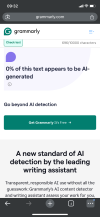
^^^^^ that reply was done with A.I. using the method I mentioned and passes most plagiarism and A.I. detectors.

IMG_5933.pngIMG_5932.pngIMG_5931.png
 
Just use decent models and prompts. Free ChatGPT with a one-line prompt won't do.
 
Don't use just the regular chatgpt and the prompt is as important so what is your prompt right now?You may want to be more creative than just let the AI make a resume
 
Time can be saved by AI and content generators, but readability and originality are issues. After creating content, how can you ensure that it still feels valuable and natural?
AI gen content only “works” if you run it thru human edit fix flow, add stats/examples, make it feel lived-in. I also cluster posts around money pages, so even if 1 article is meh, the topical map carries the weight.
 
Back
Top