

Kha0s
Regular Member
- Oct 31, 2023
- 370
- 156
Let me start with the fact that using Google Trends for SEO provides valuable insights into current search trends and help you optimize your content to align with popular topics.
Many use Google Trends to get inspiration for keywords and topics to address on their websites.
When searching for trends related to specific keywords, Google Trends also provides 'Related queries' on the page, which are valuable pieces of information and represent opportunities for topics to cover on our site.
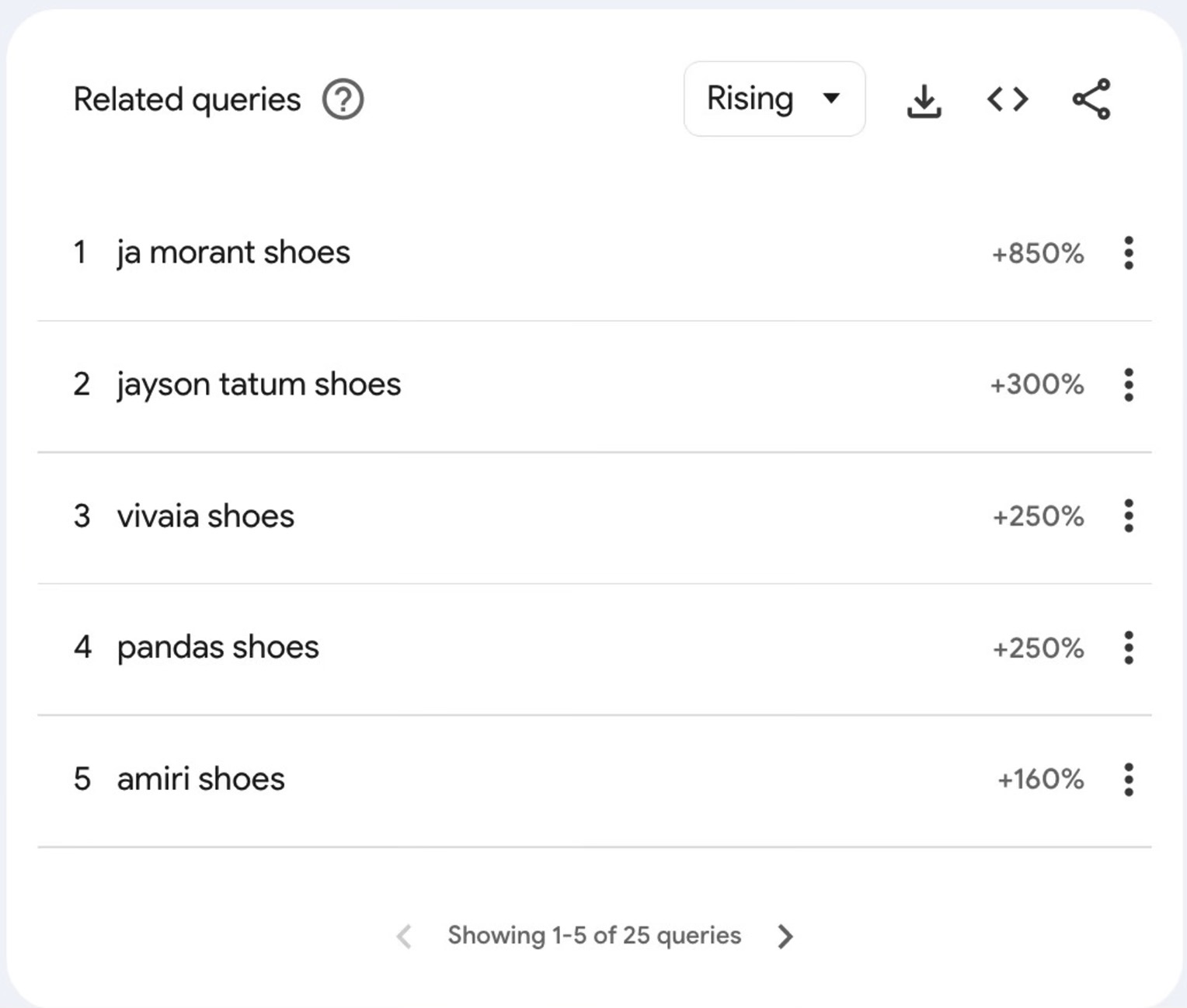
The downside, however, is that we only get 25 such queries. Neither more nor less than that.

Moreover, not all of the 25 query ideas displayed are relevant for our intent.
But did you know that you can filter these queries? And everytime you set a new filter, you receive 25 brand new relevant ideas for your next piece of content?

Not many know that you can use Google search operators in the Google Trends Search Bar, such as:
Here are all the Google Trends supported operators: https://support.google.com/trends/answer/4359582?hl=en
For example, if I'm looking for trends related to "shoes" but don't want to receive queries related to "Nike", then I'll use the query:
shoes -Nike
If, however, I want to eliminate multiple well-known brands, then I type:
shoes -nike -adidas -puma
And after each filter, Google will give us 25 new ideas each time for topics we can address, being trending subjects.
I hope this is helpful to those who are always on the hunt for content ideas.
How to start with Google Trends
- Go to the Google Trends website (trends.google.com).
- Enter a search term or topic related to your niche or industry in the search bar.
- Explore the trending topics and queries related to your search term.
How to use the information from Google Trends
- Check the "Interest over time" graph to see how search interest in your topic has evolved over a specific period.
- Identify any seasonality or recurring patterns in search interest.
- Compare the search interest of multiple topics by entering additional terms in the search bar.
- Analyze the relative popularity of different topics to prioritize your content creation.
- Refine your search by selecting specific locations and time ranges. This is particularly useful for local businesses targeting specific regions.
- Scroll down to the "Related queries" section to discover other terms and queries associated with your main topic.
- Identify long-tail keywords and niche topics that you can incorporate into your content.
- Leverage Google Trends for keyword research by identifying rising search queries in your industry.
- Focus on keywords with a consistent upward trend to align your content with growing interests.
- Create email alerts for specific search terms to stay informed about any changes in search interest.
- This helps you react promptly to emerging trends and update your content strategy accordingly.
- Develop content based on trending topics identified through Google Trends.
- Address user queries and provide valuable information to capture traffic from popular searches.
Many use Google Trends to get inspiration for keywords and topics to address on their websites.
When searching for trends related to specific keywords, Google Trends also provides 'Related queries' on the page, which are valuable pieces of information and represent opportunities for topics to cover on our site.
The downside, however, is that we only get 25 such queries. Neither more nor less than that.
Moreover, not all of the 25 query ideas displayed are relevant for our intent.
But did you know that you can filter these queries? And everytime you set a new filter, you receive 25 brand new relevant ideas for your next piece of content?
Not many know that you can use Google search operators in the Google Trends Search Bar, such as:
- " " — Search for exact results that mention the word or phrase within quotes,
- - (minus) — Search for results that don’t mention the word or phrase after the minus sign. You can combine the minus sign with the quotes mentioned above.
Here are all the Google Trends supported operators: https://support.google.com/trends/answer/4359582?hl=en
For example, if I'm looking for trends related to "shoes" but don't want to receive queries related to "Nike", then I'll use the query:
shoes -Nike
If, however, I want to eliminate multiple well-known brands, then I type:
shoes -nike -adidas -puma
And after each filter, Google will give us 25 new ideas each time for topics we can address, being trending subjects.
I hope this is helpful to those who are always on the hunt for content ideas.
Last edited:


