Crypto transactions safe approaches

ContentCreator8

Regular Member
Joined
Nov 29, 2024
Messages
247
Reaction score
116
What is the safe way to receive and send the crypto? Many people trade the services in crypto only so I feel it would be nice to use it.

I am not referring to scams but the dirty/bad wallets which have wrong history. I have read many in this forum and reddit where people complain that when they sent or received the crypto from a wallet, Binance(as an example) frozen the assets or suspended the account. So, what is the best way to stay safe in such issues like bad wallets or getting in legal troubles without actually doing any wrong!
 
What is the safe way to receive and send the crypto? Many people trade the services in crypto only so I feel it would be nice to use it.

I am not referring to scams but the dirty/bad wallets which have wrong history. I have read many in this forum and reddit where people complain that when they sent or received the crypto from a wallet, Binance(as an example) frozen the assets or suspended the account. So, what is the best way to stay safe in such issues like bad wallets or getting in legal troubles without actually doing any wrong!
Don't use CEX, use no kyc exchanges like godex, change now and so on. For more security use monero or protocols like privacy cash (sol) and so on, basically any private swap doing tornado swaps or using zk protocols.
 
Just use decentralized wallets where you own the private keys like Exodus, Trustwallet, Metamask, Coinomi and non KYC echanges like Fixedfloat.
 
I suggest only working with people and platforms that have a good reputation and long history of successful transactions. Keep records of your transfers and do not rush into deals just because the rates look attractive. Unfortunately, no one can control the full history of a wallet they receive funds from, but being selective about who you transact with can greatly reduce the risk of headaches down the road.
 
Just use decentralized wallets where you own the private keys like Exodus, Trustwallet, Metamask, Coinomi and non KYC echanges like Fixedfloat.
How do I know which one is decentralized wallets? Do you know TonKeeper?
 
Is it possible to rotate the wallet id for example, USDT(TRON20) wallet can be changed after 5 every transactions?
 
I suggest only working with people and platforms that have a good reputation and long history of successful transactions. Keep records of your transfers and do not rush into deals just because the rates look attractive. Unfortunately, no one can control the full history of a wallet they receive funds from, but being selective about who you transact with can greatly reduce the risk of headaches down the road.
How do you check the history of a wallet before sending or receiving crypto? Any good way if you can share.
 
Is it possible to rotate the wallet id for example, USDT(TRON20) wallet can be changed after 5 every transactions?
TRON addresses don't rotate automatically like Bitcoin. If you want a fresh USDT address frequently, you just have to create multiple accounts inside your wallet app and cycle through them manually

How do I know which one is decentralized wallets? Do you know TonKeeper?
TonKeeper is non custodial, so yes, it's decentralized
 
honestly the safest move is just running everything through a non-custodial wallet first and never letting sketchy funds touch your exchange wallet directly.
 
get a physical crypto wallet and store your funds in that wallet, do not save the password and phrase seed on any device write it in a piece of paper or memorize it. If you want to be completely anonymous while sending crypto you can use monero ( create your own node).
 
As someone who read a lot about that in the last few years and just began using crypto, i use 3 descentralized wallets. In the first one i receive the cryptos needed. I then use this first wallet with a non kyc exchange to convert to some other crypto (usually a privacy focused crypto) and then i send this converted crypto to the second wallet. After that, when i want to pay for something, i either send it straight to the third wallet to pay with the third wallet, or i convert (once again with a non kyc exchange) to a crypto i need in the third wallet, and send from this third wallet.

Is it all really necessary? No. But i'm building big projects involving crypto, so since the first time i already done what i'll keep doing in the future. There are some other steps in my system and a heavy opsec, but all in all, once again, this isn't really needed unless you be receiving a lot of crypto.
 
Just use decentralized wallets where you own the private keys like Exodus, Trustwallet, Metamask, Coinomi and non KYC echanges like Fixedfloat.
FixedFloat is NOT a no-KYC exchange and is one of the worst in that regard. There are many cases where they blocked user funds that were not unfrozen even after passing KYC and SoF.
 
What is the safe way to receive and send the crypto? Many people trade the services in crypto only so I feel it would be nice to use it.

I am not referring to scams but the dirty/bad wallets which have wrong history. I have read many in this forum and reddit where people complain that when they sent or received the crypto from a wallet, Binance(as an example) frozen the assets or suspended the account. So, what is the best way to stay safe in such issues like bad wallets or getting in legal troubles without actually doing any wrong!
To avoid getting your account frozen, you should never receive crypto from an unknown client directly into a centralized exchange like Binance. Always use your own private non-custodial wallet like Trust Wallet or MetaMask as an intermediary.

Before you transfer the funds from your private wallet to an exchange, make sure to keep clear records like invoices or chat screenshots showing the services you provided. If an exchange flags the transaction as risky, you can easily provide this proof of source to clear your account.
 
Always filter your funds through a non-custodial wallet like Trust Wallet or Electrum first. Never send or receive payments directly from a client into a major centralized exchange like Binance. If a client hands you tainted crypto, those compliance bots will lock your account instantly.
 
Always filter your funds through a non-custodial wallet like Trust Wallet or Electrum first. Never send or receive payments directly from a client into a major centralized exchange like Binance. If a client hands you tainted crypto, those compliance bots will lock your account instantly.
This is good tip always have burners guys indeed.
 
Based on my experience, the best way to protect your wallet and ensure safe transactions is to verify the sender's identity whenever possible and use well-established networks such as TRC20 or BEP20 when appropriate for the assets you're transferring. This can help reduce transaction costs and minimize the risk of errors.
 
FixedFloat is NOT a no-KYC exchange and is one of the worst in that regard. There are many cases where they blocked user funds that were not unfrozen even after passing KYC and SoF.
Never had an issue for transactions under 2000$. It's better to not swap all your funds if the amount is larger in a single transaction. Also, they have very good support who helped me quickly when I needed it
 
Last edited:
Never had an issue for transactions under 2000$. It's better to not swap all your funds if the amount is larger in a single transaction. Also, they have very good support who helped me quickly when I needed it
I'm not saying it's impossible to do a no-kyc swap there, but I've seen too many cases where people ran out of money. Even passing KYC did not help many
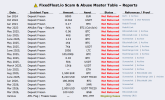
I will not share the link, but here is the SS table
For me, this is enough to treat them as high risk.

1781949915950.png
 
Back
Top