

hasan7707
Elite Member
- Jul 15, 2015
- 1,715
- 910

The reason?
For their personal benefit.
That’s it.
Case shut. Period. End of the story.
Here’s the thing:
Just like you’re reading these starting lines to hone your copywriting, everyone reads copy while secretly wondering what’s in it for them.
And over the course of this piece, I will teach you how to answer that question. That way, you can really give them what they want to hear.
In other words, in this lecture, you’re going to learn how to turn features into benefits — like a true professional copywriter.
I will show you the simple question that you can ask that will magically transform even the trickiest features into benefits.
And I’m going to show you how to dig more in-depth, so your copy has a real competitive edge.
So let’s get started:
Sell The Result — Not The Product
Quick questions for you:
- Do people want to buy the hammer? Or actually, want to hang their family pictures on the wall?
- Do people want the latest iPhone? Or the lightning-fast usage experience?
- Do people want to buy an air conditioner? Or do they want the comfort of cool air?
People don’t care about products and services. Nor the features or technical specifications of those products and services.
They only care about what it can do for them, and the results they’ll get from using it.
So you need to sell the result, not the product or service.
If you only wrote about features, it will be like asking someone to buy a bag because it is white.

Here, white color is obviously a feature of the bag, not a benefit.
Agreed, features are important, but they’re not the sizzle that sells the steak.
But what if you say:
“This bright white bag makes your child stand out, feel special, and fill her with confidence.”
Can you see the difference?
Here’s the thing:
Parents always want the best for their children.
And in that sentence, you’re addressing the child’s confidence, which immediately steals the spotlight.
That’s the power of benefits.
The “So What” Test
It is a mindset to dig into features to extract the benefits from them.
Let’s take some product copy to clarify what I mean:
Feature: This car comes with anti-lock brakes.
So what?
Benefit: You’d get stronger control over your car, warding off accidents.
Another one:
Benefit: This sofa is made up of polyester.
So what?
Benefit: The solid build withstands massive stress of everyday use.
Can you see where this is going? Good.
Now, let’s consider a service-based business. In this case, a content writing agency.
Example:
Feature: Blog post writing services.
So what?
Benefit: To save you the hassle and time of creating content, skyrocketing brand authority, and getting more business.
Again:
Feature: Copywriting services.
So what?
Benefit: Optimizing conversions and making the most profit from every campaign.
Just one more:
Feature: Cover letter writing services.
So what?
Benefit: So you create a great impression, land your dream job, and gain financial freedom.
What we’re basically doing is — interlacing features and benefits as much as possible. Because then, people can visualize how those features will help them in life.
In the next part, we will dig exactly into that.
Let’s Break Down Some Copy
The 1974 Miller Lite ad by MillerCoors went on to dominate the light beer market.
Let’s dive into the ad:
Can you spot how neatly they weaved features with benefits?
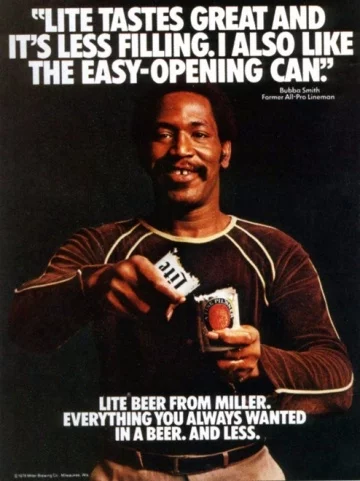
Here the features are:
- Light beer
- Good taste
- Easy-to open can
Converting them into benefits:
- Light tastes great (because people focus on taste when drinking beer)
- It’s less filling (so you can enjoy more of this good taste)
- I also like the easy-opening can (less hassle before drinking)
As you can see, when you interlace both, your copy gets much more compelling.
But don’t just stop at that. Keep asking yourself, “so what” to dig real deep in your customers’ emotional desires and benefits.
Let’s take another example. Advanced SystemCare download landing page:
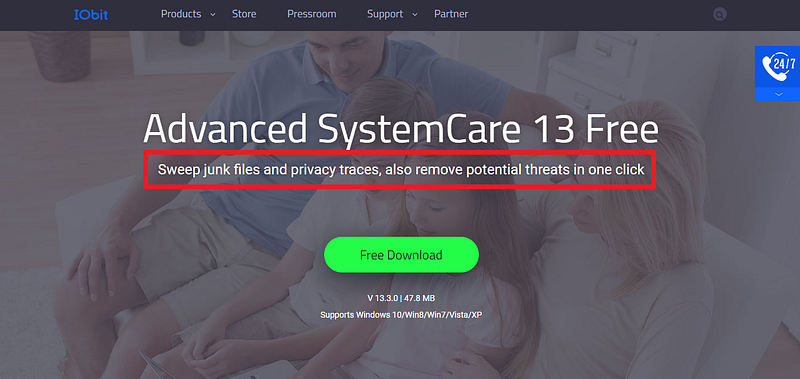
Here they started with some solid benefits:
- Sweeping junk files
- Sweeping privacy traces
- Removing potential threats.
As you scroll down, you can see those features and benefits weaved together unfolding further:
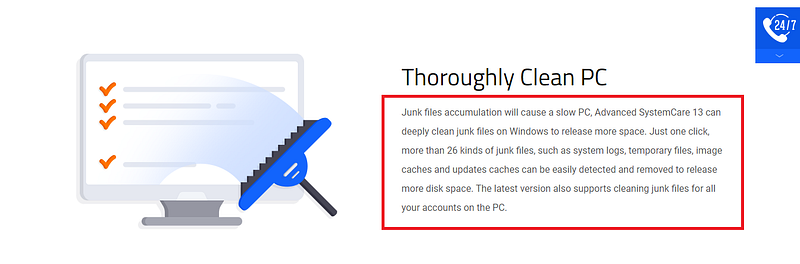
Here, they stressed the downsides of a slow PC, and detailed how the software cleans it.
After that:

They’re stressing the importance of data security. That hackers might steal them.
Then they detailed how their advanced features can keep you stress-less when it comes to data theft.
Moving on:

At this point interlacing, they’ve stressed the frustration of a slow-starting PC. Followed by an explanation that boosts the booting time, working, and gaming performance.
So As A Quick Summary…
To come up with your in-depth benefits:
Write A List of Features: Whatever you’re writing about, list out all the features. These will be technical specifications and facts. These are the raw materials that will help you with production. Once they’re down….
Apply The “So What” Test: Apply the ‘so what’ analysis aiming to uncover the alluring benefits. After the benefits are down, it is time to think harder. Keep digging into deeper benefits. Remember — the features and initial benefits are the branches of a tree. Keep digging until you find the seed.
Collect Insights: Don’t just rely on your experience to find the ultimate benefits. Do research to collect insights. You can contact previous clients or prospects to collect insights. One-on-one meets with some of your most engaged clients is preferred. Alternatively, you can run online surveys with tools like Qualaroo.
After that, when you sit down to write, you’ve got all your messages in one place. So you can swell them throughout your copy as much as you can.
Closing Thoughts
And if I were you, I would always organize a website copy with deeper benefits.
Because those are things that are gonna hook people from the get-go.
You want people to instantly go, “Ohhh, yeah. That sounds just like me. That’s exactly why I want to buy this product.”
Rather than opening with boring, dry facts, always go for the deeper benefits first.
Remember:
Features tell, and benefits sell.
~ hasan7707


