
fishboss
Newbie
- Mar 29, 2019
- 14
- 10
Yeah, I am looking to know more because I did port-forwarding but it didn't work (My network allows port-forwarding). Check PM.
Any particular reason using 3proxy over squid?

Yeah, I am looking to know more because I did port-forwarding but it didn't work (My network allows port-forwarding). Check PM.

Any particular reason using 3proxy over squid?
Multi-Linux mini-PCs with Intel CPU that supports AES-NI (around $100 each) and cellular USB stick, configure each Linux mini-PC as VPN server.
Client side (Windows, Mac, Linux) - VPN client to connect to VPN mini-PC servers.
Cost for each VPN mini-PC server: $150, plus monthly mobile subscription.
In additional, you can refresh the mobile IPs easily. How? In Windows/Mac/Linux PC VPN client side, you can "refresh" the mobile IP via many different methods (webmin, command line, cronjob, etc.) by rebooting the cellular USB stick directly.
This is the basic mobile IP setup. Scale up with multi-Linux mini-PC VPN servers.
Very cost effective if you can afford it.

View attachment 114491
trying to unpack this mla.server tar file into root file of vps using putty with no luck, this is a script for the proxy server
appears im in the root directory and used winscp and have.tar file in /root/

you can use a powered usb adaptor, each usb dongle with create a windows connection (win 10) you just need to assign each connection a proxy server (ccproxy works). I haven`t done this but i believe its possible to use the space on the usb dongle to run the proxy server. you`ll be lucky to find a english tut on the web. good luck
it shouldn't, you only have to be worried by browser info leak and patterns like mouse movement and typing, but depends on the website and you can detect most of this stuff from javascript requests sent to the server.Apologies if this has already been asked but has anyone addressed the issue of these being used with selenium/chrome (desktop browsing) but are mobile proxies? Does anyone know if this sets off flags?

you can use a powered usb adaptor, each usb dongle with create a windows connection (win 10) you just need to assign each connection a proxy server (ccproxy works). I haven`t done this but i believe its possible to use the space on the usb dongle to run the proxy server. you`ll be lucky to find a english tut on the web. good luck

1. How many USB Stick can we run this way with the single machine?
Since, we can use same RaspberryPi for multiple at once.
2. We use Jarvee. Jarvee allows Proxies, there is no config. for the VPN. So we need to run like 100 Proxies on the same VPS on the same program.
Generally, VPN is a program which runs for the whole system. How do we do that?

true but USA proxies have higher trust than others.The biggest technical challenge in the US at least… is finding any SIM cards with data plans that even make creating your own a feasible solution. Currently everything is too expensive to even bother. Cheapest data only thing I could find is $15/month for 2gb data, which is just crazy. You people outside the US are damn lucky in that regard. And maybe others, but I’ll leave politics out of this topic.
My multi-Linux PC mobile IP VPN server system is still under "experimental" stage. I'm planning to implement the full powered USB hub connected to Linux mini-PC with VPN servers running in same mini-PC.
..........
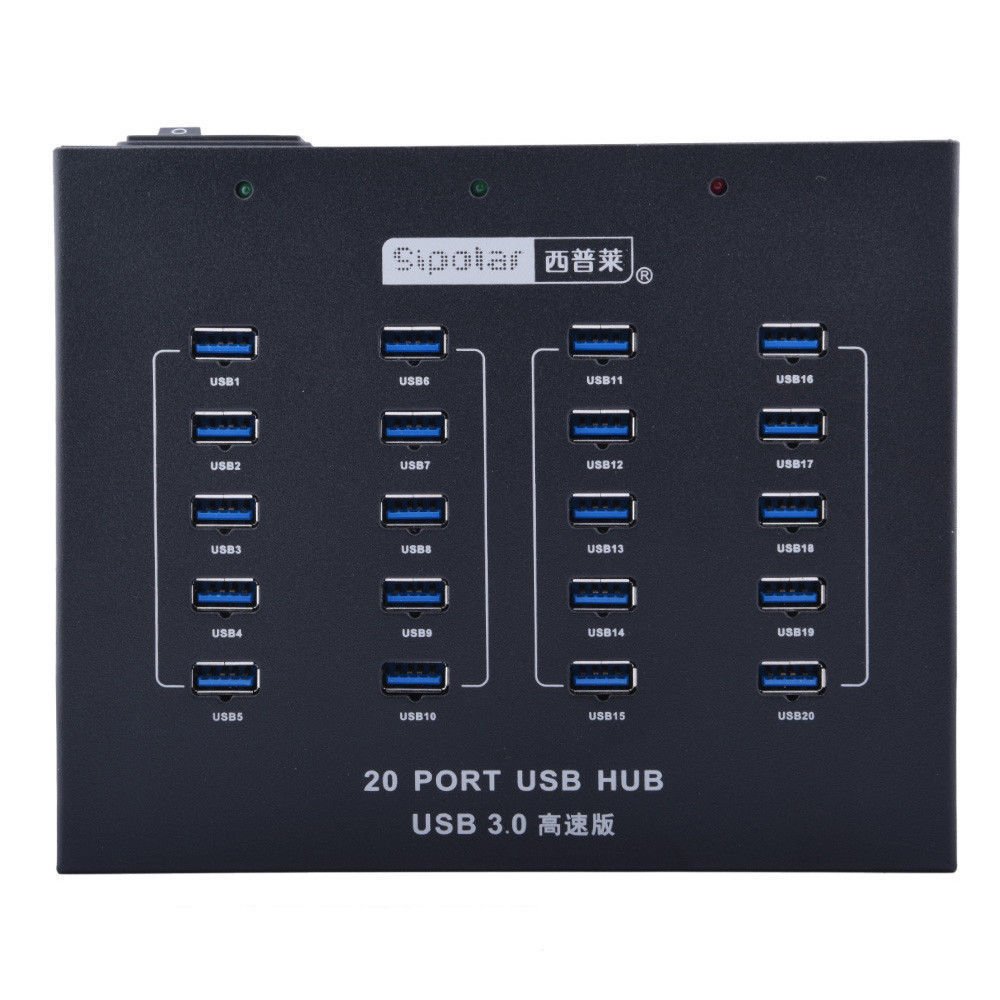
Product Info: UHPPOTE Sipolar A-213 Industrial Grade USB 3.0 Hub 20 Port High Speed Data Transfer
I'm not too crazy about Raspyberry PI - as it's not powerful, and it does not support Intel-based AEI hardware encryption for faster hardware based encryption. (see my earlier messages)
Still experimenting....to find the ways to run my own mobile IP VPN servers.
The biggest technical challenge in the US at least… is finding any SIM cards with data plans that even make creating your own a feasible solution. Currently everything is too expensive to even bother. Cheapest data only thing I could find is $15/month for 2gb data, which is just crazy. You people outside the US are damn lucky in that regard. And maybe others, but I’ll leave politics out of this topic.

My multi-Linux PC mobile IP VPN server system is still under "experimental" stage. I'm planning to implement the full powered USB hub connected to Linux mini-PC with VPN servers running in same mini-PC.
Product Info: UHPPOTE Sipolar A-213 Industrial Grade USB 3.0 Hub 20 Port High Speed Data Transfer
I'm not too crazy about Raspyberry PI - as it's not powerful, and it does not support Intel-based AEI hardware encryption for faster hardware based encryption. (see my earlier messages)
Still experimenting....to find the ways to run my own mobile IP VPN servers.

The biggest technical challenge in the US at least… is finding any SIM cards with data plans that even make creating your own a feasible solution. Currently everything is too expensive to even bother. Cheapest data only thing I could find is $15/month for 2gb data, which is just crazy. You people outside the US are damn lucky in that regard. And maybe others, but I’ll leave politics out of this topic.
Now with 20 3g dongles connected to this, a intel compute stick and a proxy server set up. Looks a lot of fun to get it all going!
I pay $25 for unlimited plan on cricket wireless. Yes, I do agree with the data plan price to be absolute nuts here. Doesn't make any sense why does it cost so much still. It is 2019 already!
Apart from this, this article might be interest of people following this thread:
`mpsocial.com/t/using-your-home-ip-as-a-residential-proxy-with-a-raspbery/40937`