D
Deleted member 969102
Guest
I'm not an expert. I don't claim to be. Don't take mine (or anyone's) word for it. Do your own research. This is my personal strategy for earning passive money with Cryptocurrencies.

Ok, so now that's out of the way, let's get down to business. Before we can begin trading, we first need to know how to buy Bitcoin and how to trade it and, more importantly, how to safely store it.
Buying CryptoCurrencies
Regardless of whether you want to trade in Bitcoin, or another CryptoCurrency, it's easier to purchase Bitcoin with your Pounds, Dollars (whatever) and exchange that into your chosen currency later.
There are literally hundreds of sites claiming to make buying BTC "painless" and "easy" however, the vast majority of those have ridiculous hidden fees and terrible exchange rates.
The site I have been using for all of my Bitcoin buying/selling is LocalBitcoin. There are literally thousands of concurrent sellers online at all times.
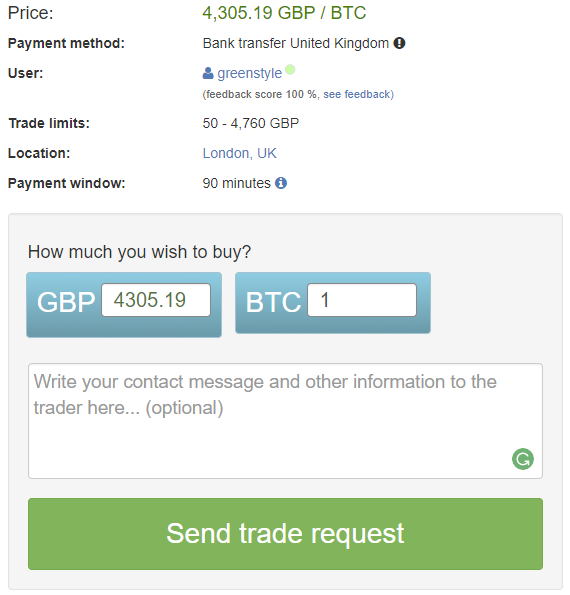
It's as simple as clicking on a seller, entering the number of Bitcoins you would like to buy, sending the payment via your chosen payment method, and then the seller will release the funds from Escrow to your bank account.
The whole process takes no more than 90 minutes and is 100% safe, due to LocalBTC's escrow system. The Bitcoin gets taken out of the seller's account as soon as you start the trade, and sent to you as soon as you pay.
Where to Trade Cryptocurrencies
Bittrex is by far my favourite exchange (Although it looks like someone from BHW made their LP) having a stable volume, and allowing you to withdraw up to $50,000/day (With a verified account, you can withdraw up to 1 BTC/day without verifying your account)
It's worth noting that not all exchanges have the same currencies, and some are much better for selling/buying certain currencies. Coinmarketcap's 24 Hour Volume Ranking page is ideal for picking an exchange to trade on.
It's a good idea to spread your portfolio around multiple exchanges, in case one halts trading or goes offline.
How to (Safely) Store Cryptocurrencies
There are many ways you can store your currencies, however, many of them aren't recommended.
I guarantee that most people who begin trading Crypto just take one look at the exchange they are using and think "cool, they have a built-in wallet for me" DON'T keep all of your money in exchanges. That is the worst thing you can do. However, be smart about it. Don't withdraw money every time you make $5, you're going to lose too much money on withdrawal fees. Just withdraw it every time you earn an amount you can't afford to lose without missing.
Creating an online wallet (For example, Blockchain.info) Is my preferred method of storing Cryptocurrencies. You aren't relying on a hard drive or piece of paper (I actually lost a week's earnings when a brand new SSD failed on me) and you can easily access the same account across multiple devices.
2FA, Touch ID, SMS Texts etc are all security features you can use to ensure the safety of your wallet. However, don't forget to make sure your email account is also secure.
It is possible to store your Cryptocurrencies in a Paper Wallet, however, that is incredibly impractical and, while it prevents the possibility of an exit-scam or hack, leaves all of your money susceptible to a fire, rip, etc. You don't want that.
Ok, so now that you know how to buy, trade, and store coins, it's time to start making money. I'm going to be going over the four main methods you can use to make an impressive ROI.
Hopefully, some of you took something away from that. The main points: Do your own research, spread your investment across different wallets, exchanges and coins.
Don't invest more money you can afford to lose. Although I mentioned you're not actually in the negative until you cash out, many people panic and lose a lot of money. A strategy I use is to invest my previous day's earnings + 10% of my savings. That way, you can never lose all of your money.
Once again, I'm not an expert. I don't claim to be. Don't take mine (or anyone's) word for it. Do your own research.
Resources:

This isn't really related to the rest of the thread, but I wanted to get it off my chest.
People don't like change and there's no bigger contributing factor to misoneism than misinformation. Over the last year or so, since the CryptoCurrency world has really begun to take off, I've seen a constant stream of big corporations and news outlets come out and condemn Bitcoin and other altcoin currencies, claiming that they are scams and nothing more than a gamble, will never "catch on" and are just a "fad".
Digital currency Bitcoin is a fraud and I’ll sack staff who sell it, warns JP Morgan chief
Fancy that! The leader of one of the biggest banks in the world doesn't like a decentralised currency that could see an end to his little bubble.
They conveniently mention that, at one point, Bitcoin rose to $5,000 and then dropped to $4000, however, they don't mention how, even at $4000, you would have made a 522% return on your investment, had you bought it a year earlier.
While biased articles like this mean nothing to people who actually understand Cryptocurrencies, the average Joe will see this as another reason not to trust these emerging currencies.
Let's take a look at the Top Ten CryptoCurrencies and compare them to the Top Ten Stocks (Both sorted by market cap)

Now, if you show this to people who disapprove of Cryptos they will most likely fire back with some patronising comment about how "you don't actually make that money until you cash out" (I'll talk more about how this is a nonsensical point later) however, by the same token, you can't actually "Lose all your money" until you exchange your portfolio into a physical currency.
B..bbb.bbbut how can you just invent a currency? H..hhhhow can you just create money?
This is the case with every currency on Earth. Fractional Banking. It's how banks work. However, unlike paper money, you can't (easily) create fakes. This is one of the biggest problems with paper money. You have no way of knowing whether it's real or not. That's one of the reasons why India wiped out 86% of its cash overnight.
Anyway, the point is, Bitcoin is here to stay. It's already being accepted by many online retailers and is growing by the day. As more and more people discover what Bitcoin really is and how easy it is to get involved, the market will soar.
However, I will say this: One of the last hurdles Bitcoin has to jump over is the price. Sending 0.00105 BTC to buy a Coffee is not exactly practical and, while mBTC is a thing, there needs to be some sort of word (like pennies and pounds) to make BTC a part of our future.
People don't like change and there's no bigger contributing factor to misoneism than misinformation. Over the last year or so, since the CryptoCurrency world has really begun to take off, I've seen a constant stream of big corporations and news outlets come out and condemn Bitcoin and other altcoin currencies, claiming that they are scams and nothing more than a gamble, will never "catch on" and are just a "fad".
Digital currency Bitcoin is a fraud and I’ll sack staff who sell it, warns JP Morgan chief
Fancy that! The leader of one of the biggest banks in the world doesn't like a decentralised currency that could see an end to his little bubble.
They conveniently mention that, at one point, Bitcoin rose to $5,000 and then dropped to $4000, however, they don't mention how, even at $4000, you would have made a 522% return on your investment, had you bought it a year earlier.
While biased articles like this mean nothing to people who actually understand Cryptocurrencies, the average Joe will see this as another reason not to trust these emerging currencies.
Let's take a look at the Top Ten CryptoCurrencies and compare them to the Top Ten Stocks (Both sorted by market cap)
Now, if you show this to people who disapprove of Cryptos they will most likely fire back with some patronising comment about how "you don't actually make that money until you cash out" (I'll talk more about how this is a nonsensical point later) however, by the same token, you can't actually "Lose all your money" until you exchange your portfolio into a physical currency.
B..bbb.bbbut how can you just invent a currency? H..hhhhow can you just create money?
This is the case with every currency on Earth. Fractional Banking. It's how banks work. However, unlike paper money, you can't (easily) create fakes. This is one of the biggest problems with paper money. You have no way of knowing whether it's real or not. That's one of the reasons why India wiped out 86% of its cash overnight.
Anyway, the point is, Bitcoin is here to stay. It's already being accepted by many online retailers and is growing by the day. As more and more people discover what Bitcoin really is and how easy it is to get involved, the market will soar.
However, I will say this: One of the last hurdles Bitcoin has to jump over is the price. Sending 0.00105 BTC to buy a Coffee is not exactly practical and, while mBTC is a thing, there needs to be some sort of word (like pennies and pounds) to make BTC a part of our future.
Ok, so now that's out of the way, let's get down to business. Before we can begin trading, we first need to know how to buy Bitcoin and how to trade it and, more importantly, how to safely store it.
Buying CryptoCurrencies
Regardless of whether you want to trade in Bitcoin, or another CryptoCurrency, it's easier to purchase Bitcoin with your Pounds, Dollars (whatever) and exchange that into your chosen currency later.
There are literally hundreds of sites claiming to make buying BTC "painless" and "easy" however, the vast majority of those have ridiculous hidden fees and terrible exchange rates.
The site I have been using for all of my Bitcoin buying/selling is LocalBitcoin. There are literally thousands of concurrent sellers online at all times.
It's as simple as clicking on a seller, entering the number of Bitcoins you would like to buy, sending the payment via your chosen payment method, and then the seller will release the funds from Escrow to your bank account.
The whole process takes no more than 90 minutes and is 100% safe, due to LocalBTC's escrow system. The Bitcoin gets taken out of the seller's account as soon as you start the trade, and sent to you as soon as you pay.
Where to Trade Cryptocurrencies
Bittrex is by far my favourite exchange (Although it looks like someone from BHW made their LP) having a stable volume, and allowing you to withdraw up to $50,000/day (With a verified account, you can withdraw up to 1 BTC/day without verifying your account)
It's worth noting that not all exchanges have the same currencies, and some are much better for selling/buying certain currencies. Coinmarketcap's 24 Hour Volume Ranking page is ideal for picking an exchange to trade on.
It's a good idea to spread your portfolio around multiple exchanges, in case one halts trading or goes offline.
How to (Safely) Store Cryptocurrencies
There are many ways you can store your currencies, however, many of them aren't recommended.
I guarantee that most people who begin trading Crypto just take one look at the exchange they are using and think "cool, they have a built-in wallet for me" DON'T keep all of your money in exchanges. That is the worst thing you can do. However, be smart about it. Don't withdraw money every time you make $5, you're going to lose too much money on withdrawal fees. Just withdraw it every time you earn an amount you can't afford to lose without missing.
Creating an online wallet (For example, Blockchain.info) Is my preferred method of storing Cryptocurrencies. You aren't relying on a hard drive or piece of paper (I actually lost a week's earnings when a brand new SSD failed on me) and you can easily access the same account across multiple devices.
2FA, Touch ID, SMS Texts etc are all security features you can use to ensure the safety of your wallet. However, don't forget to make sure your email account is also secure.
It is possible to store your Cryptocurrencies in a Paper Wallet, however, that is incredibly impractical and, while it prevents the possibility of an exit-scam or hack, leaves all of your money susceptible to a fire, rip, etc. You don't want that.
Ok, so now that you know how to buy, trade, and store coins, it's time to start making money. I'm going to be going over the four main methods you can use to make an impressive ROI.
ICOs or Initial Coin Offerings are pretty much crowd-funded coins. When developers are looking to bring a new coin to market, they often require start-up capital to launch their coin, so they reward people with "tokens" that can later be used at the exchanges.
Because you are effectively getting in right at the start, ICOs have the potential to make you an obscene amount of money, however, gauging if a coin is going to be the "next big thing" or just another terrible coin on the pile is HARD. I repeat; HARD.
Many people will turn to platforms such as YouTube to see what the "gurus" are investing in, but this is the quickest way to lose all of your investment. These big YouTubers are being paid 1000s to promote coins to their subscribers.
September last year, I was in a random Marketing Skype group, when someone mentioned the ICO Antshares. At the time, I was accepting BTC from clients, so decided to buy up some shares for 17c each (And some later on at $1) That was/is the best decision in my life.
When looking at investing in potential ICOs, make sure that the coin is actually unique in some way, and is being backed by the right people. Investigate the company and make sure there is nothing shady going on (Fake Name used, falling out in the company etc).
There are a lot of great places out there to get tips on upcoming ICO's. Even BHW is starting to become one of them, there are many journeys where people have gone to $100 - 100k and are now sharing their tips. But remember, don't take everything people say on a forum as gospel. Do your own research and don't invest more than you can afford to lose.
My personal strategy is investing a little amount into all ICO's that aren't 100% terrible, and larger amounts into ICO's I actually believe will succeed. Helium and UpFiring look promising to me.
Resources:
Because you are effectively getting in right at the start, ICOs have the potential to make you an obscene amount of money, however, gauging if a coin is going to be the "next big thing" or just another terrible coin on the pile is HARD. I repeat; HARD.
Many people will turn to platforms such as YouTube to see what the "gurus" are investing in, but this is the quickest way to lose all of your investment. These big YouTubers are being paid 1000s to promote coins to their subscribers.
September last year, I was in a random Marketing Skype group, when someone mentioned the ICO Antshares. At the time, I was accepting BTC from clients, so decided to buy up some shares for 17c each (And some later on at $1) That was/is the best decision in my life.
When looking at investing in potential ICOs, make sure that the coin is actually unique in some way, and is being backed by the right people. Investigate the company and make sure there is nothing shady going on (Fake Name used, falling out in the company etc).
There are a lot of great places out there to get tips on upcoming ICO's. Even BHW is starting to become one of them, there are many journeys where people have gone to $100 - 100k and are now sharing their tips. But remember, don't take everything people say on a forum as gospel. Do your own research and don't invest more than you can afford to lose.
My personal strategy is investing a little amount into all ICO's that aren't 100% terrible, and larger amounts into ICO's I actually believe will succeed. Helium and UpFiring look promising to me.
Resources:
- ICO Alert
- Louis Thomas
- ICOCrypto Reddit
- ICO Forum (Can't link due to forum Rules)
I initially wrote this for a blog project I was working on, but it got pushed to the back of my mind months ago, so I'll post it here.
For those of you who aren’t familiar with the terminology, shorting is the process of selling your coins high, and then buying them back low. There’s a lot to account for but, if you can get it right, you can effectively gain free coins.

Let’s run a quick scenario. Say you have 100 ANS which are currently priced at $10 (Just an example, I’m trying to stick to whole numbers). You see that the price is beginning to decrease so you sell all of your ANS and are left with $1000. Over the course of the day, the value of Antshares dips to a low of $5.
You think this is the lowest it’s going to get, so you buy back into ANS with your $1000. Because the price has decreased so much, you are now able to buy 200 coins, instead of the 100 that you had. Now, when the currency begins to rise again, you’ve got double the ANS for very little effort.
This quick graph I made explains it perfectly:

Now, while I made it seem easy with the above example, there are a few things you need to keep in mind. Firstly, unless you’re holding a high number of coins, or the price changes drastically, this isn’t going to make you very much money. If you have 100 coins and the price decreases by $1, that’s $100. Nothing amazing, but you are doing literally no work. Secondly, you need to take exchange fees into consideration, as well as withdrawal fees.
Secondly, you need to take exchange fees into consideration, as well as withdrawal fees. If you like to withdraw your currencies in small chunks like me – for safety reasons – then the fees can really add up. Be sure to check your exchange’s trade fees as well as withdraw fees. Sometimes you can think you’re going to make $50 from a few minutes work, when you actually end up with less than when you started.

Great, it sounds easy! How do I know when to sell and when to buy back?
The short answer: You don’t. This method relies heavily on your ability to analyze trends on the market and understand how much your chosen currency has the potential to dip.
From what I’ve seen, when a few currencies begin to dip, they all begin to dip. If you pay attention to the 24hr change, on Coinmarketcap’s homepage, you’ll be able to spot when these dips are coming.
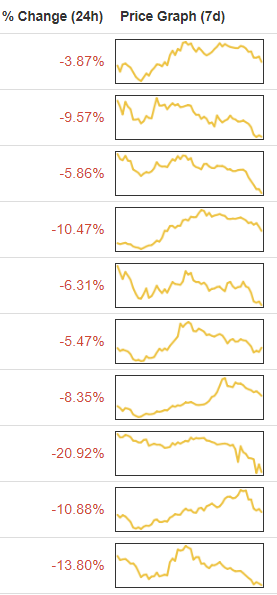
The most important thing is to not panic and buy-back at a loss. Throughout the day it’s inevitable that the price may come up but what goes up must come down. While you may think that your plan has failed and you’re going to be down a lot of coins, sticking to your guns and waiting it out is the best thing to do.
How do you know when to sell?
This one’s a little easier to understand – sell any time after you make a profit. Sure, you could wait it out a few more days and have made a bigger profit, but it’s all down to you. Once again, don’t get frightened if your profit dips for a little bit, it’s likely that it’ll increase again as time goes on.
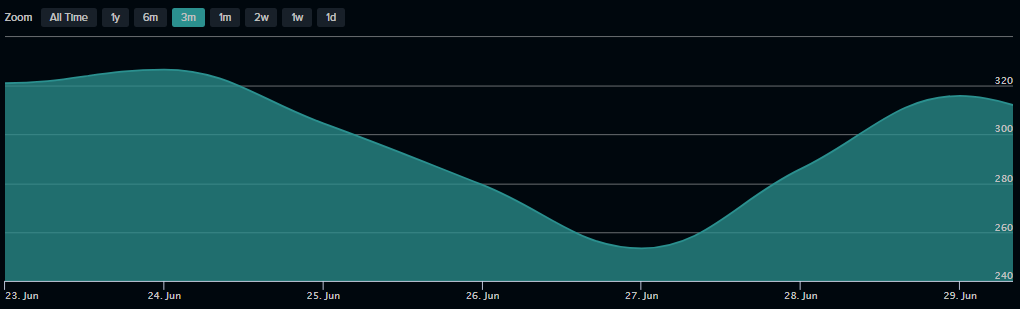
Ethereum was a perfect example of how you can make some extra money on top of your investments. It went from $326 down to $253 and then back up to $315.
Hindsight is a wonderful thing. Don’t beat yourself up for selling/buying at a certain point when you could have waited longer and made a bit more money. Getting greedy is exactly how it can all come crashing down around you.
For those of you who aren’t familiar with the terminology, shorting is the process of selling your coins high, and then buying them back low. There’s a lot to account for but, if you can get it right, you can effectively gain free coins.
Let’s run a quick scenario. Say you have 100 ANS which are currently priced at $10 (Just an example, I’m trying to stick to whole numbers). You see that the price is beginning to decrease so you sell all of your ANS and are left with $1000. Over the course of the day, the value of Antshares dips to a low of $5.
You think this is the lowest it’s going to get, so you buy back into ANS with your $1000. Because the price has decreased so much, you are now able to buy 200 coins, instead of the 100 that you had. Now, when the currency begins to rise again, you’ve got double the ANS for very little effort.
This quick graph I made explains it perfectly:
Now, while I made it seem easy with the above example, there are a few things you need to keep in mind. Firstly, unless you’re holding a high number of coins, or the price changes drastically, this isn’t going to make you very much money. If you have 100 coins and the price decreases by $1, that’s $100. Nothing amazing, but you are doing literally no work. Secondly, you need to take exchange fees into consideration, as well as withdrawal fees.
Secondly, you need to take exchange fees into consideration, as well as withdrawal fees. If you like to withdraw your currencies in small chunks like me – for safety reasons – then the fees can really add up. Be sure to check your exchange’s trade fees as well as withdraw fees. Sometimes you can think you’re going to make $50 from a few minutes work, when you actually end up with less than when you started.
Great, it sounds easy! How do I know when to sell and when to buy back?
The short answer: You don’t. This method relies heavily on your ability to analyze trends on the market and understand how much your chosen currency has the potential to dip.
From what I’ve seen, when a few currencies begin to dip, they all begin to dip. If you pay attention to the 24hr change, on Coinmarketcap’s homepage, you’ll be able to spot when these dips are coming.
The most important thing is to not panic and buy-back at a loss. Throughout the day it’s inevitable that the price may come up but what goes up must come down. While you may think that your plan has failed and you’re going to be down a lot of coins, sticking to your guns and waiting it out is the best thing to do.
How do you know when to sell?
This one’s a little easier to understand – sell any time after you make a profit. Sure, you could wait it out a few more days and have made a bigger profit, but it’s all down to you. Once again, don’t get frightened if your profit dips for a little bit, it’s likely that it’ll increase again as time goes on.
Ethereum was a perfect example of how you can make some extra money on top of your investments. It went from $326 down to $253 and then back up to $315.
Hindsight is a wonderful thing. Don’t beat yourself up for selling/buying at a certain point when you could have waited longer and made a bit more money. Getting greedy is exactly how it can all come crashing down around you.
This is a more complicated subject and I probably can't explain it properly without spewing 5,000 words in front of you, but I'll do my best to try.
If there's one thing I regret more than anything in life, it's cryptocurrency mining. More importantly, lack of.
I was recently going through the HDD from my first computer, and it pained me to find two BTC mining programs and wallets from 2012 and 2015, yet realising that I didn't actually pursue that project at the time (I remember watching videos about creating a mining farm with Raspberry Pi's back when I was twelve) Literally one click of a button five years ago could have turned me into a multi-millionaire.
Anyway, after cashing out some earnings from my first ICO, I decided that I never wanted to say "I wish I had got into x at x time" and started my mining journey.
While I'm not going to go into how Crypto mining works, it is important to note that there are two main types of mining: GPU (Graphics Card) Mining and ASIC Mining. Depending on the Algorithm that your chosen coin uses, you may be better off using one method over the other.

ASIC Miners are much more expensive than GPU's and often manufacturers place minimum order quantity limits on them, meaning you either have to fork out $100,000 on some miners or buy at a premium from a reseller.
GPU Miners, on the other hand, are much more accessible to the general public (Despite the recent price increase) and are comprised of normal, off the shelf components. Just like with ASIC vs GPU mining, different brands of graphics card are better for mining specific currencies.
AMD cards are largely regarded as the best for mining ETH and ETC, while NVidia ultimately tops them at profitability, destroying coins like ZEC.
How to calculate profitability
There are a number of Profitability Calculators out there that make it seem as if you are going to be earning x amount of money per day guaranteed. That is not the case.
As the difficulty increases, you are rewarded with less and less of your chosen currency for your mining efforts. Although the difficulty is somewhat related to the price, meaning as it goes up the price should too, they aren't directly proportional and over, say one year, you will be earning a noticeable amount less than you were before.
I'm not trying to say mining is a bad investment. It's definitely not, but there's no way to calculate exactly how much money you will make in x timescale.
The real earning potential with mining comes from holding the currency and using it to invest in the methods shared above. (This video explains it perfectly) Essentially, you are earning a decent amount of cryptocurrency completely on autopilot that you can then invest and turn into a whole lot more.
How to Pick the parts
This varies case by case. Some people look for the fastest ROI, some people don't mind waiting 2 more months for 2x the earnings, it's all up to you.
There are a lot of resources out there on the subject, but I'd recommend this YouTube channel.
Buying Hashing Power (Cloud Mining)
Just like with ICO's, there are bound to be hundreds of YouTube channels promoting get rich quick mining schemes that promise incredibly fast ROI's with 0 work involved. Let me tell you right now, (almost) all of those websites are pyramid schemes.
Just think about it logically. Why would a company sell you hashing power for less money than they could make themselves? They wouldn't. These YouTube affiliates are making $10,000+ per month by recruiting unknowing investors into these schemes.
Resources:
If there's one thing I regret more than anything in life, it's cryptocurrency mining. More importantly, lack of.
I was recently going through the HDD from my first computer, and it pained me to find two BTC mining programs and wallets from 2012 and 2015, yet realising that I didn't actually pursue that project at the time (I remember watching videos about creating a mining farm with Raspberry Pi's back when I was twelve) Literally one click of a button five years ago could have turned me into a multi-millionaire.
Anyway, after cashing out some earnings from my first ICO, I decided that I never wanted to say "I wish I had got into x at x time" and started my mining journey.
While I'm not going to go into how Crypto mining works, it is important to note that there are two main types of mining: GPU (Graphics Card) Mining and ASIC Mining. Depending on the Algorithm that your chosen coin uses, you may be better off using one method over the other.
ASIC Miners are much more expensive than GPU's and often manufacturers place minimum order quantity limits on them, meaning you either have to fork out $100,000 on some miners or buy at a premium from a reseller.
GPU Miners, on the other hand, are much more accessible to the general public (Despite the recent price increase) and are comprised of normal, off the shelf components. Just like with ASIC vs GPU mining, different brands of graphics card are better for mining specific currencies.
AMD cards are largely regarded as the best for mining ETH and ETC, while NVidia ultimately tops them at profitability, destroying coins like ZEC.
How to calculate profitability
There are a number of Profitability Calculators out there that make it seem as if you are going to be earning x amount of money per day guaranteed. That is not the case.
As the difficulty increases, you are rewarded with less and less of your chosen currency for your mining efforts. Although the difficulty is somewhat related to the price, meaning as it goes up the price should too, they aren't directly proportional and over, say one year, you will be earning a noticeable amount less than you were before.
I'm not trying to say mining is a bad investment. It's definitely not, but there's no way to calculate exactly how much money you will make in x timescale.
The real earning potential with mining comes from holding the currency and using it to invest in the methods shared above. (This video explains it perfectly) Essentially, you are earning a decent amount of cryptocurrency completely on autopilot that you can then invest and turn into a whole lot more.
How to Pick the parts
This varies case by case. Some people look for the fastest ROI, some people don't mind waiting 2 more months for 2x the earnings, it's all up to you.
There are a lot of resources out there on the subject, but I'd recommend this YouTube channel.
Buying Hashing Power (Cloud Mining)
Just like with ICO's, there are bound to be hundreds of YouTube channels promoting get rich quick mining schemes that promise incredibly fast ROI's with 0 work involved. Let me tell you right now, (almost) all of those websites are pyramid schemes.
Just think about it logically. Why would a company sell you hashing power for less money than they could make themselves? They wouldn't. These YouTube affiliates are making $10,000+ per month by recruiting unknowing investors into these schemes.
Resources:
- Team Green
- BuriedOne
- Son of a Tech
- VoskCoin
- CCN
- Mining Forum (Can't direct link due to forum rules)
This one is simple. You buy a currency and just forget about it. Come back in a year's time and cash out.
Cryptocurrency is going to be a massive part of our future and, no matter how many rubbish ICOs come out, the top coins are going to do nothing but skyrocket (Except maybe Bitconnect).
As I showed before, every single of the top 10 Cryptos offers an impressive ROI, especially when compared to stock options.
Around May, when I started paying more attention to the market, I bought up $1000 per coin of the top 10 (at that time) It's safe to say, that was an amazing investment. I'm not down on a single coin.
Many people claim that Bitcoin will reach $100,000 $250,000, even $500k. While I don't think that is the case, it definitely has the potential to increase A LOT more than it has done so far making it and other bigger currencies amazing long-term investments.
Cryptocurrency is going to be a massive part of our future and, no matter how many rubbish ICOs come out, the top coins are going to do nothing but skyrocket (Except maybe Bitconnect).
As I showed before, every single of the top 10 Cryptos offers an impressive ROI, especially when compared to stock options.
Around May, when I started paying more attention to the market, I bought up $1000 per coin of the top 10 (at that time) It's safe to say, that was an amazing investment. I'm not down on a single coin.
Many people claim that Bitcoin will reach $100,000 $250,000, even $500k. While I don't think that is the case, it definitely has the potential to increase A LOT more than it has done so far making it and other bigger currencies amazing long-term investments.
Hopefully, some of you took something away from that. The main points: Do your own research, spread your investment across different wallets, exchanges and coins.
Don't invest more money you can afford to lose. Although I mentioned you're not actually in the negative until you cash out, many people panic and lose a lot of money. A strategy I use is to invest my previous day's earnings + 10% of my savings. That way, you can never lose all of your money.
Once again, I'm not an expert. I don't claim to be. Don't take mine (or anyone's) word for it. Do your own research.
Resources:
- MyAltcoins - Investment Tracking
- Delta - Investment Tracking
- BlockFolio - Investment Tracking
- CryptoMinded - More Resources
- [GUIDE] Beginners Resources To Cryptocurrency
- CoinMarketCap