Godlike Partners — Direct Advertiser of Olymp Casino | iGaming Affiliate Program | CPA up to 120 USD | Betting & Gambling Offer

godlikepartners

Newbie
Marketplace seller
Joined
Jun 19, 2026
Messages
22
Reaction score
1

Godlike Partners — Direct Advertiser of Olymp Casino | iGaming Affiliate Program | CPA up to 120 USD | Betting & Gambling Offer​

At Godlike Partners, we are the direct advertiser for the gambling product Olymp Casino. The Olymp brand has been operating in the CIS for over 20 years and has established a strong presence in the CIS and Asia. We won an award at the SiGMA expo, and are now scaling our funnels to the LATAM market, starting with Argentina.
  • Product: Direct advertiser of Olymp Casino.
  • Vertical: iGaming (Gambling & Betting).
  • Payout Model: CPA.
  • Minimum Payout: USD 100.
  • Payment Methods: USDT (TRC-20).
  • Traffic Sources: SEO, ASO, PPC, Social, Display, Video, Messaging.
  • Restrictions: Incentivized traffic, fraud (bots, multi-accounting, cookie stuffing).
  • Official Website: godlike.partners

Product Statistics and Retention​

Godlike Partners is a mono-offer affiliate network focused exclusively on promoting Olymp Casino. This is a conscious decision by the team, aimed at the deep optimization of a single product. When running Facebook traffic, our internal data shows the average inst2reg (install-to-registration) rate is 50%. The reg2dep (registration-to-deposit) conversion rate holds between 25% and 70%, depending on the traffic source.

High player LTV is supported by the following built-in mechanics:

  • Optimized Funnel: Registration is streamlined to reduce lead drop-offs at the very start.
  • Localized Games: The platform features over 16,000 titles, including highly played slots from Pragmatic Play (such as Gates of Olympus, Joker, Fortune Gems).
  • Gamification and Loyalty Program: The product features an achievement and bonus system designed to retain users.
  • Smart Retention: Specialized support teams and local call centers re-engage players, returning up to 15-20% of inactive registrations back into the funnel based on our internal metrics. Dedicated personal managers are assigned to VIP segments.
  • Urgency (FOMO): The base bonus of 125% + 250 FS can be increased if the player makes a deposit within the first hour after registration, incentivizing them to fund their account.
Your goal is to drive the lead, while ours is to convert them to a deposit and retain the player. We aim to help you reach a competitive ROI.

Payouts and GEOs​

Godlike Partners managers are open to discussing individual terms: CPA bumps, cap increases, or KPI negotiations tailored to your traffic source. In addition to financial matters, we provide assistance with technical integration. We also deliver timely feedback on traffic quality, allowing you to optimize your campaigns efficiently.
We work on a CPA model:

  • Azerbaijan — from 70 USD
  • Turkey — from 60 USD
  • Kazakhstan — from 40 USD
  • Kyrgyzstan — from 25 USD
  • Uzbekistan — from 20 USD
  • Argentina — from 18 USD
  • India — from 15 USD
For new partners, a standard test period applies: a cap of 20 FTDs (First Time Deposits) and a 14-day hold. Trusted partners can discuss switching to weekly payouts.

Infrastructure for Media Buying​

We accept SEO, ASO, PPC, Social, Display, and Video traffic. Fraud and incentivized traffic are strictly prohibited. We provide the necessary infrastructure to assist with technical setups:.
  • We offer ready-made landing pages localized into various languages.
  • We supply promo materials, PWA landing pages, and creatives featuring slots and bonuses.
The affiliate program has its own in-house QA department. Before launching a campaign, testers review your apps and sites. Technical errors are identified before traffic starts, which helps minimize budget waste.

Trusted teams running paid traffic from Facebook or PPC are moved to weekly reconciliations. In this format, traffic is verified on Monday, and the payout is sent on Wednesday, providing quicker access to working capital for reinvestment.

How to Get Started​

Go to our official website and fill out the standard form with your up-to-date contact details. Our support team will contact you to clarify your traffic sources and planned GEOs, and then assign a dedicated affiliate manager to you.
Contacts:
 
Marketplace Thread Approved​

Approval Information
  • The affiliate dashboard/area was checked to ensure that any and all advertised features and bonuses were functional and present.
  • We looked over the affiliate's account to ensure they were properly connected with the affiliate program being offered in this sales thread.
  • Disclaimer: All affiliate programs approved on Black Hat World are not tested in the same way other services are. In other words, we do not actively use the affiliate program for the review. Any affiliate programs on the forum are ones you use at your own risk. Ensure you research this affiliate program thoroughly to see if it's the right one for you.
Thread Edit Log
  • The 5 most recent thread edits will appear here
With anything more than 5 going in here
Information For Buyers:
  • Service Quality: The quality of the product or service that we receive is what you should expect, or better. If you feel that the quality of the service has dropped significantly, please let us know via the report button.
  • Disputes: If you do not receive a product or service as advertised, or at all in the event of a dispute, do not be afraid of a "no refunds" refund policy as you are allowed to request a refund through the Dispute Resolution process. For more information and to see whether or not your dispute qualifies, refer to the dispute rules and procedures.
    IMPORTANT: To initiate a dispute, all orders must be started on BHW, and proof of that will be required.
  • Review Copies: Per the marketplace rules, if a seller does not offer trials or review copies, please do not request them in the sales thread, otherwise your post will be removed and further action may be taken.
 

A Loyalty Program That Actually Impacts Your Traffic​


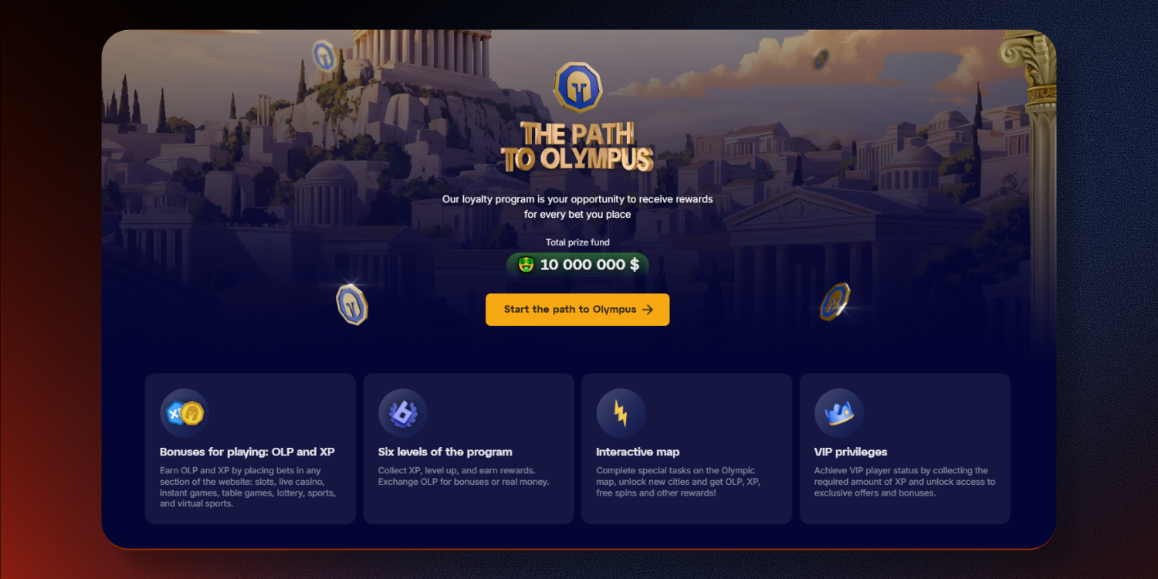
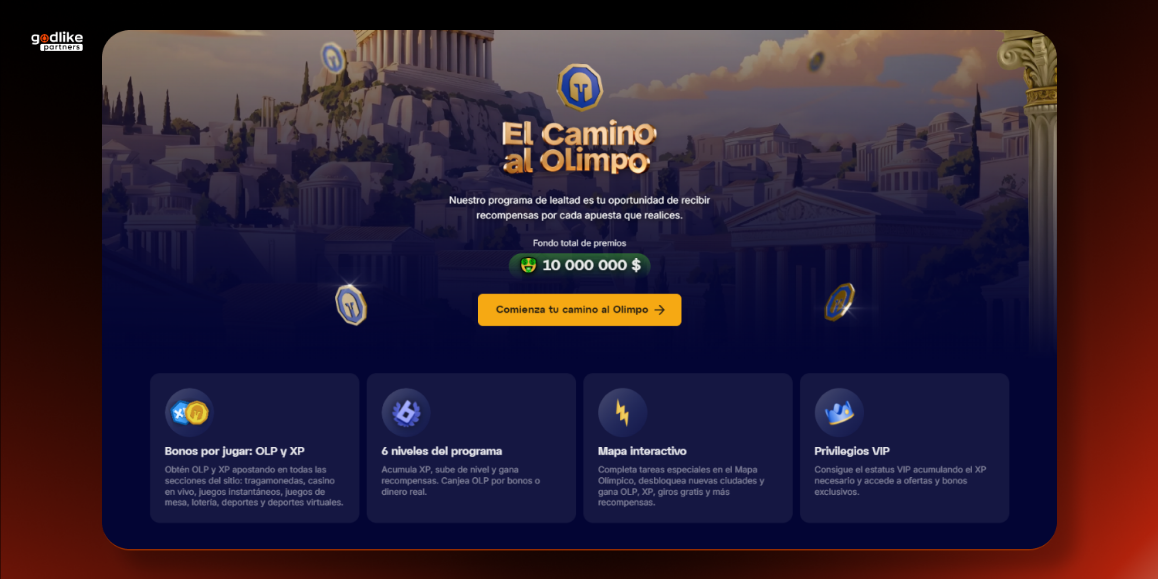
At Godlike Partners, we understand that it's not just about driving a lead, but getting stable profit and fast reconciliations. That's why Olymp Casino has launched a new loyalty system, "Path to Olympus," featuring RPG elements and a 10,000,000 USD prize pool. It won't just attract players; it acts as a tool to help boost your metrics. We'll show you how gamification retains players and why it matters for an affiliate when running traffic.

Interactive Map Instead of Boring Points​

Standard loyalty programs often take a passive approach: a player just spins slots and farms points somewhere in the background. At Olymp Casino, we’ve revamped this approach and integrated full-scale gamification.

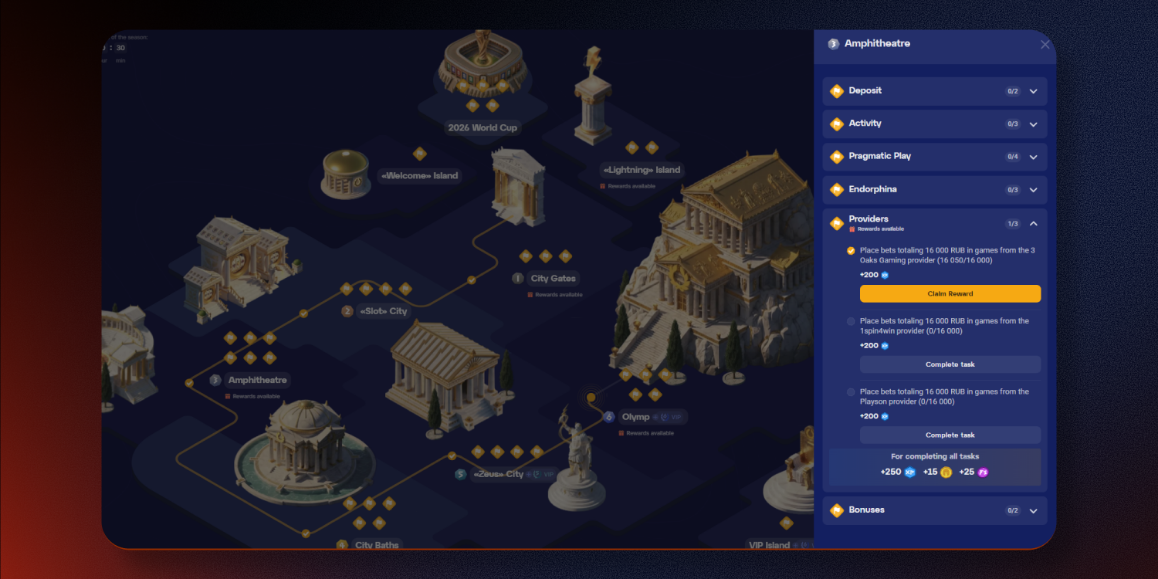
Instead of a basic progress bar, players get an Olympic Map divided into cities. To unlock a new city and claim a reward, the user must be active:

  1. Choosing a goal. The player opens the map and selects an available quest (e.g., make a series of bets or play a specific slot).
  2. Action. Completes the quest conditions in slots, live casino, or sports betting.
  3. Reward. Gets instant bonuses (OLP, XP, FS) upon completion and unlocks access to the next city.
This creates extra engagement for the player. They aren't just spinning slots; they are completing a game, beating levels, and unlocking new locations on the map.
full

Quest Mechanics​

To unlock a new city and progress on the map, the user must be active. The quest system is flexible and covers all casino verticals. For a webmaster, our loyalty system is designed to act as a strong safeguard for traffic quality. We've hardcoded typical KPI behaviors directly into the gameplay.

At Olymp Casino, quests work like an extended Welcome Pack. The player sees added value: they don't just get a deposit bonus, but also complete map goals. The player's goal isn't just to spin slots, but to make a series of 3 deposits to collect all the bonuses.

Example of a real quest chain:
  • Make 3 deposits (min. amount 2.50 USD).
  • Place bets in slots totaling 105 USD.
  • Make 25 spins in different games.
The player strives for closure and wants the reward for clearing the location. This naturally boosts the Re-dep metric (average number of deposits per player). While the user chases bonuses on the map, they naturally help you hit your traffic quality KPIs (such as Re-dep ≥ 2.5) and activity targets.
full


Two Currencies: Status and Cash​

To motivate different types of players, we divided progress and earnings into two in-game currencies — XP and OLP.

1. XP (Experience Points) — Works for status.Blue experience crystals accumulate as quests are completed, moving the player across the map, unlocking access to new levels and perks.

  • The more XP, the higher the player's level.
  • A new level unlocks more valuable rewards and expands the store assortment.
  • Upon reaching level 5, the player gets VIP status and exclusive perks.
2. OLP (Olymp Loyalty Points) — Works as cash.This is the internal currency (golden coins) that a player earns for betting and completing quests on the map. Accumulated OLP can be spent in the "Olympic Shop". The shop offers specific goods, not abstract rewards:

  • FS packs in top slots like Lucky Streak 3 or Amazon’s Riches.
  • Exclusive no-wager FS in games like Janissaries.
  • Instant cash bonuses added to the balance.

full

Achievements​

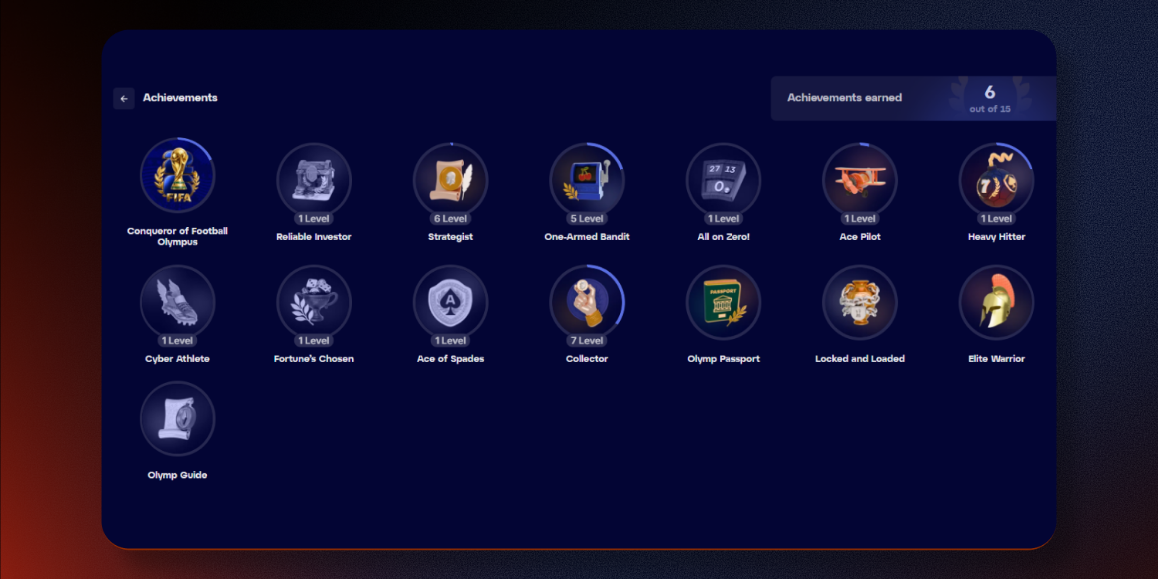
Additionally, the system features Unique Achievements. Each achievement has upgrade tiers (Level 1, Level 2, etc.) and grants extra XP. For example, according to our internal data, 98% of players have the Level 1 "Reliable Depositor" achievement, but rare achievements like "Elite Warrior" or "Guide to Olympus" highlight the top players among the crowd. Upgrading the achievement rank also yields extra rewards.
full

Why the Olymp Casino Loyalty Program Means High ROI Potential for Affiliates​

For an affiliate, our loyalty system isn't just a gimmick; it's a built-in retention engine and a traffic quality booster. We aim to turn chaotic player actions into a structured funnel that directly impacts your payouts and KPI passing.

A Safeguard for Your Leads​

For partners, our loyalty program helps mitigate the risk of unpaid leads. We work with minimum deposits (mindep), but it's crucial for us that the traffic is alive. Here, gamification works as a built-in automated funnel. It catches the raw player right after registration and guides them through a series of deposits toward "active" status. The user is motivated to continue beyond the first deposit to unlock the next city on the map. You drive the traffic, and we focus on retention to help turn registrations into your payouts.

Optimized LTV (Player Lifetime Value)​

A regular casino can get boring after a couple of losses, but the level system and bonus shop create extra motivation.
  • Mechanic: Seeing the map and locked locations, the player is psychologically reluctant to drop their progress. The internal currency (OLP) triggers the "sunk cost fallacy" — the player feels bad leaving before spending their hard-earned coins in the shop.
  • Result: This drives excellent behavioral factors, which can lead affiliate managers to offer CPA bumps and cap increases. Based on our internal metrics, during the closed beta stage, the new loyalty program already showed a 30% LTV boost compared to the control group.

High Traffic Quality (Activity Score)​

Advertisers often cut payouts if they see passive players.
  • Mechanic: The achievement system ("One-Armed Bandit", "Scorer") and daily quests stimulate activity across different verticals (slots, live, sports). The player doesn't just spin one slot; they explore the product.
  • Result: You deliver traffic that the advertiser flags as high quality. Players are active, engaged, make redeps, and have a deep interaction history with the site. This minimizes the risks of hold extensions or payout cuts due to a "poor quality" audience.

Conclusion: A Product Designed to Retain the Player​

While other affiliates cross their fingers hoping the player won't drop off after the first deposit, our partners generate profit from an engaged audience that completes quests, unlocks cities, and spends money chasing status. We don't just accept your traffic — we do the heavy lifting to retain and monetize it. You bring the player, and we motivate them to play long and actively. Register with Godlike Partners, launch a test, and see for yourself.

Contacts:


How to Run Traffic to Argentina with Godlike Partners​

At Godlike Partners, we are continuing to expand in the Latin American market with our active GEO in this region — Argentina at Olymp Casino. So that you enter the market with a clear understanding, we have prepared a detailed breakdown of the GEO. Based on our internal market research, we have analyzed the latest statistics of the Argentine market and will share insights from Anton (author of the iGaming ads lab channel and head of the FB department at Appie Tech), whose team was one of the first to test this GEO in private.

Economy, Regulation, and Market Volumes​

Based on our internal market research, Argentina has solidified its status as a highly promising region in Latin America, holding strong iGaming industry growth rates. The player base is constantly updating, as our internal data shows the market adds approximately 200 thousand new users annually.

Audience and Finances: Market Scale​

In terms of volumes, Argentina holds strong positions in the region. According to our internal market analysis, with a population of about 47 million people, internet penetration reaches 83% (over 39 million users). This forms a large base of potential players.

Based on our internal market research, financial metrics by 2025 show stable growth:

  • Gambling: The audience grew to 5.9 million active players (+3.5%). The segment's revenue reached 2.63 billion (+6.91%).
  • Betting: The base of active bettors is 2.4 million people (+4.3%). Revenue is estimated at 900 million (+8.43%).

​

Regulation and Opportunities for Offshore Brands​

A key feature of Argentina is the absence of a unified federal gambling law. Regulation is decentralized and carried out at the provincial level. To date, the rules of the game are established in only 16 out of the 24 provinces of the country. Legal operators in these regions have faced serious pressure: the introduction of taxes on GGR (Gross Gaming Revenue) forced them to radically reconsider their marketing policy.

For us, this opens up new opportunities. Local brands are forced to cut bonus programs and save on player retention to maintain profit margins. Unlicensed brands can offer players highly competitive bonuses, and the audience naturally migrates to where they are offered better Welcome bonuses, FS, and a developed loyalty system. While blocks happen, alternative access is routinely established.

Cashier and Payments​

The economic environment (including inflation of the Argentine peso) dictates specific rules for working with payment systems. Our internal analysis shows that about 80% of offshore competitors offer a scarce set of payment methods — mostly slower bank transfers and AstroPay. Local wallets are found only sporadically among them.

At Olymp Casino, we address this directly, providing players with a highly convenient infrastructure:

  1. Mercado Pago: A leading e-wallet in the Argentine market. Deposits and withdrawals are processed smoothly.
  2. Transferencia Bancaria: Familiar and reliable bank transfers.
  3. Cryptocurrency: According to our internal data, Argentina is a leading LATAM country for crypto usage. Amidst the inflation of the peso, this is a trigger for an audience with higher purchasing power.
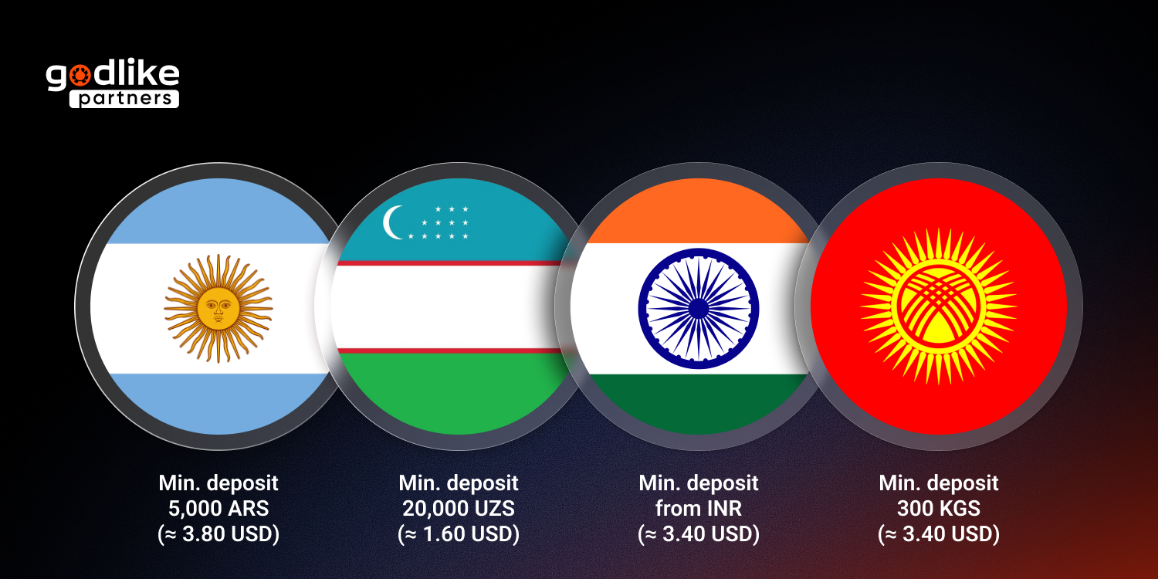
Important note about the minimum deposit (mindep): As previously mentioned in this thread, we maintain a low entry threshold — only 5,000 ARS (about 3.50 USD) for affiliate traffic, both for Mercado Pago and for bank transfers. Such a mindep helps overcome banner blindness and supports an optimized conversion rate from click to deposit. Therefore, test your funnels and grab the traffic while this window of opportunity is open.

Gaming Preferences​

Based on Olymp Casino's internal statistics and market data, we see a clear behavior pattern of the Argentine user. The audience here prefers products with high volatility, understandable mechanics, and the possibility of hitting a huge multiplier (X).

Pragmatic Play​

The market is heavily hooked on products from Pragmatic Play. Besides the usual Gates of Olympus and Sweet Bonanza (including 1000 versions), a top performer in Argentina is the Joker's Jewels series. Our internal statistics show massive volumes of gaming sessions on the classic Joker's Jewels, as well as its variations — Joker's Jewels Cash and Joker's Jewel Dice. This slot converts the local audience so well that right now we are preparing custom landing pages for it for our partners.

The Context of Crash Games​

Many media buyers habitually try to build their funnels in LATAM exclusively around crash games. In Argentina, relying solely on this can be a limiting strategy. The well-known Aviator from Spribe is positioned lower in the top games according to our internal data. Crash games take a part of the audience, but they do not typically generate the main LTV that classic volatile slots provide. You can use crash games in creatives (creos), but to rely 100% on them may limit your overall ROI.

Live Casino for the VIP Segment​

If you are targeting an older audience with higher purchasing power (men 45+), creatives with Live dealers perform excellently. The local top choice is fast-round roulette, such as Live Speed Roulette. This is a product understandable to the older generation, which is associated with classic offline casinos and status.


First Tests and Recommendations with Anton from Appie Tech​

Before fully rolling out Argentina, we gave trusted teams the opportunity to test this GEO in a closed beta. So that you don't waste your budgets on hypotheses, we invited Anton — the author of the iGaming ads lab channel and the head of the FB (Facebook media buying) department at Appie Tech. His team was one of the first to drive traffic to Olymp Casino in Argentina. He honestly shared the first results, working approaches, and the distinct features of this market.

— Anton, your team started testing Argentina early on. Share your first impressions: how did the GEO perform overall at the start?​

This is the third time we are launching a GEO together. The first was Turkey — I wrote a massive case study on it with screenshots and a breakdown, everything turned out very profitable there. The second time was India: we didn't release a separate case study then, but the numbers also performed excellently. And now — the third GEO.

I'll be honest: when the team found out about the launch of Argentina, all the media buyers started asking for a cap (lead limits), as a positive pattern had already formed. If Olymp enters a GEO, you can work well with them. Right from the start, I had the feeling that Olymp wouldn't let us down here either.

Our team has been working with LATAM, including Argentina, for a long time. At the time of the test, we already had working approaches, an understanding of the auction, and live products. Here is what we got from the start with Olymp based on our internal media buying data:

  • First stream: 247 (inst) → 173 (reg) → 58 (dep) | inst2reg: 70% | reg2dep: 33%
  • Second stream: 170 (inst) → 128 (reg) → 36 (dep) | inst2reg: 75% | reg2dep: 28%
As you can understand, it's very comfortable for a media buyer to work with such metrics. When at the start you have 70–75% click-to-registration and almost 30%+ registration-to-deposit, you are no longer trying to save the campaign, but only thinking about how to scale it.

By the time of the test, we had already driven over 30,000 FTDs in Argentina across campaigns, so we had something to compare it with. Based on our test results, Olymp took a solid lead in terms of metrics within the funnel and, accordingly, in EPC.

— And what about crash games like Aviator? Should we focus on them in Argentina, or do the classics yield a better ROI?​

We hardly tested classic crash games like Aviator or Chicken Road in LATAM, so it's hard to talk about their payback and prices. In general, they are not always predictable in terms of quality, so we don't make them our main focus.

Traditionally, classic slots from Pragmatic Play perform stably. As for formats, UGC, simple sketches, statics, and native videos work great. But there is an important observation: in LATAM, they don't really like aggressive banners, screaming bonuses, and blatantly 'promotional' presentations. Live and native ads convert much better.


— What do you advise regarding targeting settings? Should we run broad or is it better to immediately target the segment with higher purchasing power?​

We conducted a specific experiment: we ran the same product in two streams — only to the male audience (M) and to a mixed one (M+F). We didn't notice anything new: traditionally, the male audience performs better than the female one. Therefore, if you experience problems with traffic quality at the start, I recommend turning off F and running exclusively to M.

Conclusion: Time to Tap into Argentina​

The traffic runs confirm that Argentina in Olymp is adapted to the realities of the local market. A strong argument for scaling right now is the mindep of only 5,000 ARS. With such inputs, the entry threshold for the player is minimal, which helps support your conversion from click to deposit. Register with Godlike Partners, write to your manager, and launch tests. As previously mentioned in this thread, payouts are up to 18 USD depending on the traffic source.

Contacts:​


Unity Ads in Argentina: 2,099 FTDs and 88% ROI in 4 weeks. A Godlike Partners case study​

Billions of people open mobile apps every day, and a large share of that inventory still sees very little gambling advertising. While most teams compete for the same audience on Facebook, a huge volume of traffic sits right next to them with almost no one buying it.

Facebook remains the main source for most teams. But it comes with a well-known cost: cloaking, antidetect, proxies, and account farming eat into the budget before a single conversion. In-app is different — gambling is a permitted category, no cloaking is required, and traffic often runs at a lower cost based on our internal buying data.

A team entering in-app for the first time usually takes its proven creatives, runs them, and can't figure out why conversions aren't landing. In this article we break down a campaign run by our partner GPM agency: Unity Ads, Argentina, four weeks, 2,099 FTDs, and 88% ROI. The case is based on a talk by Stepan, Head of Affiliate Program at Godlike Partners, at G GATE CONF 2026.


Why in-app​

One of the core advantages of the source is simple: gambling is a permitted category. No cloaking, no antidetect, and no need to check every morning whether accounts are still alive. You run traffic without constantly wondering when you'll get shut down.

Advantages:​

  • Typically fewer account issues. Gambling is a permitted category, which reduces the amount of work needed on cloaking, account farming, and antidetect setups.
  • Lower CPMs. Based on our internal buying data, in-app CPMs are typically lower than Facebook's.
  • Full control over source apps. You see which apps the traffic comes from and manage them through whitelists and blacklists. If an app delivers registrations without deposits, you disable it manually. Google UAC doesn't offer this level of control — you set the budget and hope the algorithm doesn't spend it on low-quality inventory.
  • Scale. In-app inventory generates a very large volume of daily impressions, and the gambling vertical currently uses only a small share of it.

Drawbacks:​

  • Lower intent. The user was busy playing a game when the ad appeared. This is addressed through the funnel and a strong pre-lander.
  • Not every publisher fits iGaming. Part of the supply delivers non-targeted traffic that doesn't convert, so cleaning the placements is mandatory.
  • LTV is lower than on Facebook. At the same time, the cost per deposit is several times lower, which often results in a higher overall ROI.
There are several networks on the market: Unity, Mintegral, Moloco, AppLovin. Each has its own supply, GEO coverage, and rules around gambling. We'll cover this in detail in a separate article. Here we focus on Unity Ads, which is one of the more accessible entry points into in-app. Gambling is allowed through a managed account, whitelists are configured manually, and GEO coverage is worldwide. This is the network our partner used in the case below.

Case setup​

The partner entered Argentina shortly after we opened the GEO. The market is still fresh, the auction isn't overheated, and players haven't developed ad fatigue toward casino creatives.

Campaign details:
  • Source: Unity Ads
  • GEO: Argentina
  • Period: May 17 – June 17, 2026 (four weeks)
  • Offer: Olymp Casino, CPA model
  • Payout in this case: $15 per FTD (individual terms agreed with the partner for this test campaign; the current public rate for Argentina in our opening post is from $18 per FTD)
An agency account with gambling approval is required — the vertical isn't accepted on a standard self-serve account. Traffic must be sent to WebView applications. The available formats on Unity are Video and Playable Ads.

What didn't work​

The team didn't enter Argentina from scratch: it already had working campaign setups in Europe. The source was the same, the offer was similar, so it seemed the creatives should perform. In practice, they didn't — impressions came in, but no conversions followed.

Plain gameplay​

The first creatives showed the game directly: reels spinning, symbols landing, a win occurring. No hook, no emotion, no bonus mention. On Facebook, that type of creative can still convert on warm audiences. In in-app, the user wasn't looking for a casino — they were playing their own game when an ad block appeared. There was nothing to hold their attention.

Slots unfamiliar to the GEO​

Shining Crown and Black Clover were used — European classics. The Argentine audience doesn't recognize them. Based on our internal data, the local market gravitates toward Pragmatic Play and the Joker's Jewels family, so an unfamiliar slot fails to register on first impression.

Crash games​

Many media buyers, out of habit, build LATAM funnels around crash games. In the buying, they were priced at slot rates. However, the traffic quality was lower, which resulted in lower LTV and a negative ROI impact at scale.

Takeaway from the first phase: a creative that pays off on Facebook can't simply be moved to Unity with the expectation of the same result. On Facebook, the algorithm delivers a warmed-up audience — you get cheap impressions that need to be pushed toward installs, and a hook, emotion, and a clear offer do that job. Without them, you're simply buying cheap reach.


What worked​

After the first tests, the team rebuilt the creatives from scratch, adapted to in-app conditions.

Joker-themed slots with Big Win moments​

The main volume came from creatives built around joker-themed slots: Joker's Jewels and similar titles. The frame shows a large win, multipliers, and vivid animation of the payout.

This aligns with our internal data on the GEO. The Argentine market favors Pragmatic Play and Playson, and the Joker's Jewels family remains among the most-played slot titles. Players recognize the familiar visual within a fraction of a second — and this is the key difference from the European slots used in the first phase.

UGC with a win demonstration​

The second working approach was local UGC. The frame shows a woman with her phone demonstrating the game and her reaction to a win. No studio lighting, no staging — an ordinary person in an ordinary setting. Genuine emotion works as the hook, followed by gameplay and the offer.

Payout proof at the end​

A common element in all the working creatives was withdrawal proof. The creatives included a push notification from Banco Nación showing an ARS credit and the caption "retiro instantáneo a tarjeta" (instant withdrawal to card).

The logo of a familiar bank on the screen acts as a trust signal: the money is real and being withdrawn. For an Argentine dealing with inflation and distrust of offshore products, this removes one of the main barriers before making a deposit.

Localization​

All creatives were produced in Argentine Spanish, amounts were shown in ARS, and the welcome bonus was placed directly on the screen. A small detail — but the one that separates "just another ad" from a product speaking the player's language.

Funnel, optimization, and unit economics​

Cheap traffic alone doesn't close the loop. What matters is whether it reaches a deposit and whether the economics hold up over time. Below we break down the funnel from impression to repeat deposit.

Funnel​

The first thing we look at in in-app is the drop-off from install to registration. This is where cheap traffic most often falls apart: the user installs the app on the emotion of the creative, opens it, and leaves before reaching the form.


According to our internal metrics for this campaign, Install-to-Registration reached 60.57%. More than half of installers reach registration, which is a direct result of Olymp's simple funnel: minimal fields, no long forms, and the player lands in the cashier right away.

The second important metric is the cost per acquired deposit of $7.96, against a $15 payout per FTD in this specific case. That's roughly a 2x margin on the economics, which is what allows scaling without operating near break-even.

Overall results​

Below are the figures pulled from our partner statistics for the full campaign period, May 17 to June 17. Numbers are shown as they are, without rounding in our favor. All figures are based on our internal data.

Why an average deposit of $3.55 still works​

At first glance, the numbers look concerning: the average first deposit in the case was only $3.55 (7,457.61 / 2,099). A media buyer used to Facebook will look at that number and assume the traffic is low-quality.

In reality, this reflects our minimum deposit of 5,000 ARS (around $3.50). The player enters at the lowest possible threshold. On Facebook, teams compete for average deposits in the tens of dollars, but the cost per deposit there also runs higher. Here it came in at $7.96 based on our internal metrics. The economics balance out through the low acquisition cost.

Against 2,099 FTDs there were 4,485 deposits — that's 2.14 deposits per player within the first month based on our internal data. Repeat deposits are coming in, the funnel is working, and the player doesn't drop off after the first spin.

We paid the partner $31,485 at their individually agreed rate for this campaign, and collected $22,024 in deposits. CPA is an investment on our side: we pay upfront and work to recover the cost over time through retention. The affiliate takes their ROI immediately, and we take on the LTV work.


Why the traffic paid off: the product side​

The partner delivered a player with a $3.55 average deposit. In this case, that produced 2.14 deposits per player within the first month.
  • Cashier adapted to the GEO. Mercado Pago is one of the widely used e-wallets in Argentina, and deposits and withdrawals go through in a single click. Bank transfers and crypto are also supported. We keep the minimum deposit at 5,000 ARS (around $3.50). The low entry threshold produces a solid registration-to-deposit conversion for this campaign, as reflected in our internal metrics.
  • Local retention team. In each GEO, Olymp Casino has dedicated staff who work with the player base after the first deposit: multi-channel messaging, calls, cohort segmentation, and personalized offers per segment. This isn't a shared support desk covering every market — each GEO is handled by people who speak the player's language.
  • "Path to Olympus" loyalty program. The player unlocks cities on a map, completes quests, and receives rewards. While chasing progression, they make deposits — which helps hit the repeat-deposit KPI.
This is what turns cheap in-app traffic into a long-term audience: acquisition stays on the media buyer's side, and retention is handled by the product.


Unity launch strategy​

Payouts, bid prices, and auction behavior differ by GEO. The underlying launch logic, however, stays the same, and the partner followed it step by step:

  1. Start on installs. Not on revenue, not on events. At launch, you don't know which placements are worthwhile and which are empty, or which creatives will land. The algorithm doesn't know either — there's no data to optimize on. Use the simplest format and gather the first batch of statistics.
  2. Creative selection. Run 3–5 creatives per campaign — any more and the data becomes hard to read. If the budget isn't spending, raise the bid in small increments, not sharply.
  3. Publisher cleanup. As soon as deposit data has accumulated, clean placements based on it. Registrations but zero deposits — blacklist. Both present — keep. Over time you're left with proven supply only.
  4. Event passing. Registration, deposit, deposit amount. Without these events the algorithm is blind, and the next step has no meaning.
  5. Relaunch on ROAS. Only now, when you have clean placements, working creatives, and events flowing. The mechanics are the same — bids, budget, cleanup. What changes is the objective: the algorithm stops buying everyone and starts choosing whom to pay more for.
  6. Scaling spend. You scale only on what's already been selected and validated.
The main rule: don't switch to revenue-based optimization until you have data. Otherwise you spend the budget on training the algorithm without ever seeing the result.


Summary​

In-app delivers cheap impressions at volumes that are difficult to match on Facebook. With the right approach, campaigns can move into profit. Creatives have to be rebuilt for the audience, cost per deposit has to be monitored, and events have to be passed to the algorithm. From there, the product works on unlocking the LTV that isn't visible on a $3.55 first deposit. We opened Argentina in Olymp Casino recently, prepared the product for the local market, and are ready to work with your traffic. Reach out to your affiliate manager for in-app terms and start testing on a fresh GEO.

Contacts:​


How a single SubID tag saved a team from a stop and preserved elevated terms. The Sinners × Godlike Partners story​

Ever had a run where you're in the green, ROI looks solid, the tracker is showing all the right colors — and then a message from your affiliate manager lands saying the quality is bad and traffic has to be stopped? You're confused, because the creatives are converting and leads are coming in. Usually the story ends the same way: the offer gets stopped, caps get cut, or you get banned — and off you go to look for a new affiliate program, assuming the advertiser is being unfair.

In this case with the Sinners team, we'll show how 10 minutes of analytics turned what looked like a certain "stop" into stable volume. Thanks to one small detail in the tracking link, we didn't lose a profitable campaign setup — we simply switched off the problematic angles, raised the overall quality, and locked in a daily cap of 100 FTDs (individually agreed cap, based on the partner's performance history — the standard test cap for new partners in our opening post remains 20 FTDs). Below is the real story on real numbers of how Godlike Partners and Sinners saved the profit on Kyrgyzstan, and the role SubID played in it.

What SubID is, and why running traffic without it means running blind​

Before we get to how the team solved the problem, let's cover the mechanics of the mistake.

SubID (Sub-identifier) is a tag inside your affiliate link that passes additional data about each click to the advertiser.
  • sub1 — the name of the creative angle (for example, Crash_Video)
  • sub2 — the ID of the specific creative (for example, creo_15)

The "average ROI" trap​

Imagine you're running two angles through a single link with no tags:
  1. Angle A (high quality): brings players who stick around long-term and deposit around 100 USD.
  2. Angle B (aggressive bonus-focused): attracts players who make the minimum deposit of 5 USD and drop off after the first spin.
The advertiser sees all your deposits in one combined stream. Good players are diluted by weak ones, and the average deposit drops to something like 20 USD. For the advertiser's analytics, that reads as low-quality traffic. The result — the campaign is stopped in full. You lose the profitable setup along with the unprofitable one.

The scenario with SubID​

The picture changes completely. The manager opens the stats and sees not a total, but a detailed breakdown. They immediately notice: Approach_A produces an average deposit of 100 USD (verdict: scale it), while Approach_B produces 5 USD (verdict: switch it off). The figures above are illustrative and used to explain the mechanic.

The advertiser's perspective​

From the affiliate program side, the situation looked like this: everything ran steadily for about six months, volumes were growing. But right after the January holidays, key metrics deteriorated. Normally that conversation is short — traffic gets stopped until things are figured out. We spoke with Alexandra, Team Lead of Affiliate at Godlike Partners, who works with this team.

— At what point did the analytics show that Sinners' traffic quality had dropped? Which metrics dropped specifically?​

Alexandra, Godlike Partners: We had been working with Sinners on KG steadily for about six months. Right after the New Year's holidays, we got a report from the Retention department with a recommendation: stop the traffic entirely.

The numbers dropped sharply and the payback fell. The main changes were in player quality, based on our internal metrics:
  • The share of active players dropped by 60%.
  • Churn rate went up — users were leaving the funnel right after their first deposit.
  • The share of repeat deposits (RD) went down.
  • The average deposit fell significantly: from 46 USD to 21 USD.

— How did having SubID help in this situation? How long did it take to analyze the traffic?​

Alexandra, Godlike Partners: Having detailed tagging (SubID) in the partner's links changed everything. The analysis took 10 minutes. Because Sinners were passing us the angle tags (sub1, sub2), we simply compared the payback across different SubIDs. It became clear that part of the campaign setups was still delivering high-quality players, while another part was pulling the overall statistics down.

— What decision would have been made without detailed tagging?​

Alexandra, Godlike Partners: We didn't even consider simply stopping the traffic. Sinners have been working with us for a long time and have shown themselves as a partner focused on quality traffic and long-term cooperation. Throughout the whole period of cooperation, they consistently listened to feedback and sometimes proactively asked us for analytics on their own angles. Partners like that are valuable to us.

If a team is ready to work in a win-win format, we always try to find a solution. In this case, after we shared the quality drop with them, Sinners themselves proposed we look for optimization points together.

— What did we end up with after the optimization?​

Alexandra, Godlike Partners: After the optimization, we separately tested several angles that showed the best payback. Based on those tests, we kept the most stable campaign setups and moved them onto a cap of 100 FTDs per day with the elevated payout preserved.

In parallel, the team continues to test new angles with similar mechanics to scale the result and find additional growth points.

​

The view from the Sinners team​

We passed the mic to Alexey, Head of Media Buying at Sinners, to hear how the situation looked from their side of the monitors.

— Why Kyrgyzstan (KG) and the Olymp Casino offer specifically?​

Alexey, Sinners: Our team tests GEOs often. We had worked with Kyrgyzstan on a spend model. We decided to run an experiment: take strong products and move that traffic onto a clear CPA model in the CIS. We took several offers — Godlike and competitors — and ran a split test. Olymp Casino showed one of the best EPCs (earnings per click) and one of the highest conversion rates from registration to deposit, based on our tracker data. It was clear the product could make money, and we chose Olymp Casino.

— You were running several campaign setups in parallel. What was the difference between the KGF and KGTR angles?
Alexey, Sinners: We always tag our funnels so we understand exactly what the audience is reacting to:
  • KGF (Ice Fishing) — an angle built around a crash game.
  • KGTR (Tower Rush) — a funnel around the specific game Tower Rush.
  • KGCH (Chicken Road) — creatives around Chicken Road.
  • KG — general classic slots.
The numbers — 15, 16, and so on — mark how many creatives were tested for that angle. In total, across this offer and GEO, we tested around 100 different creatives: video, static, bloggers, UGC.

— What exactly was inside the angles, and why did some deliver quality while others didn't?​

Alexey, Sinners: It comes down to the mechanics of the games themselves. Different products engage players differently in terms of excitement and repeat deposits. Based on our observations, an angle built on Tower Rush produces less appetite for repeat deposits than Chicken Road, which shows noticeably higher quality. Classic slots engage even more strongly, but entering the auction with slots and competing against crash-game bids is harder and more expensive.

In some creatives inside the slot angle, we used high-bonus offers. In the moment, that gave us cheap installs and high ROI. But we understood that players coming purely for the bonus tend to drop off quickly.

If we talk about takeaways on the GEO, Kyrgyzstan is a very narrow market (population around 7 million). The capacity of a single angle, or even a couple of creatives, isn't enough for a large team here — we started catching repeat users in the tracker very quickly.

So our strategy in KG is to run several angles in parallel: crashes and slots together. Scaling in such a narrow GEO by simply pushing budget doesn't work: frequency spikes immediately, and the cost per lead rises sharply. Volume from a single angle and a single creative won't hold up in a narrow GEO. You scale by variety instead — more different designs, more angles, and constant creative rotation.

— Did you yourselves see the quality drop before Sasha messaged you?​

Alexey, Sinners: Yes, we were watching it constantly. Our analytics are set up at a high level: we pull spend data directly into Keitaro and see every cent broken down by creative. We try to implement this depth of monitoring for every one of our media buyers.

From the very start, we tracked how the SubIDs were performing on quality. Our strategy is to look for balance: keep the creatives that are profitable for us but that also bring quality for you. Some angles delivered a very strong profit for us in the moment, but that traffic doesn't pay off on the advertiser's side. We understand you can't build volume on an angle like that, and we're focused on working with the advertiser for the long term.

So we kept in rotation the campaign setups that brought the most profit and matched the quality bar. But once we got precise feedback by SubID, we adjusted the flow right away.

— Many affiliates don't use detailed SubIDs. Based on this case — why should an experienced team spend time on this?​

Alexey, Sinners: There's a management principle: "You can only manage what you measure." (Peter Drucker.) For us, passing detailed data to the advertiser is essential. The more information you have, the more effectively you manage traffic.

We recommend passing at least the creative ID, the angle identifier, and the media buyer's name in SubIDs. That's the baseline that allows the advertiser to give you precise quality feedback for each individual ad. Ideally, you also pass ad set or audience settings, so you understand which specific technical launch is making money and which is burning budget. Without that tagging, working closely with the advertiser and optimizing in time is very difficult.

For us, deep analytics is one of our core strengths as a team. Our tracker runs an integration that lets us see every dollar spent, broken down to each specific creative. When a media buyer sees the spend per ad in a convenient view and matches it against quality feedback from the advertiser, their average profit consistently improves. That's why we invest time in the technical side: transparent data is one of the reliable paths to genuinely large volumes and stable earnings.

For Godlike Partners, it's important to build long-term, trust-based relationships. Sinners listen to feedback and are deeply engaged with the analytics of their own product. That's why we continue working with them for the long term: even when quality temporarily drops, we go through the angles and look for a solution together.

Takeaway​

The case with the Sinners team shows clearly that the teams that win are the ones who analyze their own data. Because the team took the time to tag their angles through SubID, we not only preserved a campaign setup that could have been stopped, but also stabilized the quality and kept our partners on high volumes.

Join Godlike Partners to work in a win-win format and get real support on your traffic. We're ready to give you detailed feedback, break down statistics by SubID, and look for growth points together. Our team is focused on helping preserve and scale working campaign setups. Godlike provides everything you need — from private terms to deep product analytics — to make your traffic run as profitable as possible.

Contacts:​


Offer audit checklist: how to vet an iGaming offer before you scale (Olymp Casino case)​


You launch a test cap, your creative delivers a strong CTR, clicks are cheap — but the affiliate dashboard stays quiet. Low registration conversion, zero deposits. The first reaction of most media buyers is to swap creatives, adjust targeting, and assume the source is at fault. But the traffic isn't always the problem. Often, it's the product. Before you launch a campaign, audit the offer through the user's eyes.

At Godlike Partners, we're the direct advertiser behind Olymp Casino, and we know how small product details shape final conversion. Below is our internal checklist for vetting an offer. It'll save you money on tests and help you pick offers worth scaling. Our main examples are drawn from Argentina, a fresh GEO we recently opened, with supporting notes from other markets.

1. GEO adaptation: payments and minimum deposit​

Newcomers often assume localization means a translated website. Experienced buyers know it also means letting the player pay right now, in the way they prefer. If you're running traffic to Tier-2 or Tier-3 GEOs (LatAm, CIS, Asia), forget about "just Visa/Mastercard." These regions run on local wallets and mobile commerce.

Payments checklist​

Two questions cover most of the risk before you commit budget to an offer:

Local payment methods available? Players in Argentina expect Mercado Pago; in India, UPI (Paytm, PhonePe); in Uzbekistan, Uzcard and Humo. If the cashier only shows international bank cards, you can lose a significant share of your traffic at the checkout stage.

Is the minimum deposit reasonable? This is a critical driver of the registration-to-deposit conversion. In markets with lower average incomes, the minimum deposit should feel like pocket change — a sum a player is comfortable spending on impulse.
  • Weak: minimum deposit of 10–20 USD in low-income GEOs. Players register, see the amount, and close the site.
  • Strong: minimum deposit of 1–5 USD.

How Olymp Casino handles this​

Here's how the product looks across our top-performing GEOs. We deliberately lower the entry threshold and integrate local payment methods so that affiliates get a higher registration-to-deposit conversion, based on our internal data.
  • Argentina (ARS). One of the leading payment methods here is the Mercado Pago e-wallet: deposits and withdrawals go through in one click. Bank transfers and crypto are also available. We keep the minimum deposit at 5,000 ARS (≈ 3.50 USD) for both Mercado Pago and bank transfers. That level breaks through banner blindness and drives a solid click-to-deposit rate. The strongest-performing creatives for this GEO are built around the "win → instant Mercado Pago payout" narrative.
  • India (INR). Visa and Mastercard cards work with limited approval rates due to RBI restrictions — industry reports on the Indian market suggest approval rates below 40%. UPI addresses this — QR codes and wallets such as Paytm, PhonePe, and Google Pay. We integrated Paytm and PhonePe, and approval rates hold at 85–90% based on our internal data. The minimum deposit starts at 300 INR (≈ 3.50 USD), a psychologically comfortable amount for the local audience.
  • Uzbekistan (UZS). Local Uzcard and Humo work well. Minimum deposit is 20,000 UZS (≈ 1.60 USD), an impulse deposit made in seconds.
  • Kyrgyzstan (KGS). Mobile wallets and P2P transfers: MBank, Optima, O! Dengi. Minimum deposit is 300 KGS (≈ 3.40 USD).


Takeaway: Before you launch, open the offer's cashier through a VPN in the target GEO. If you only see crypto and cards, reconsider the offer. If you see local bank and wallet logos (Mercado Pago, UPI, Uzcard) and a reachable minimum deposit, the offer is ready to run.

2. Registration funnel: don't get in the way of the deposit​

The user clicked the creative and is warmed up and ready to play. After the install, they land on the registration form. Every extra field, mandatory email confirmation, or complex CAPTCHA measurably reduces your conversion. When you audit an offer, walk through the registration flow yourself. If the form asks for full name, date of birth, ZIP code, and other details before the deposit, drop the offer. Users in Tier-2 and Tier-3 markets dislike typing personal data, especially on budget smartphones, which dominate in India and LatAm.

How registration works in Olymp Casino​

Speed is money. Olymp Casino uses a streamlined, mobile-first entry flow, built around four principles.
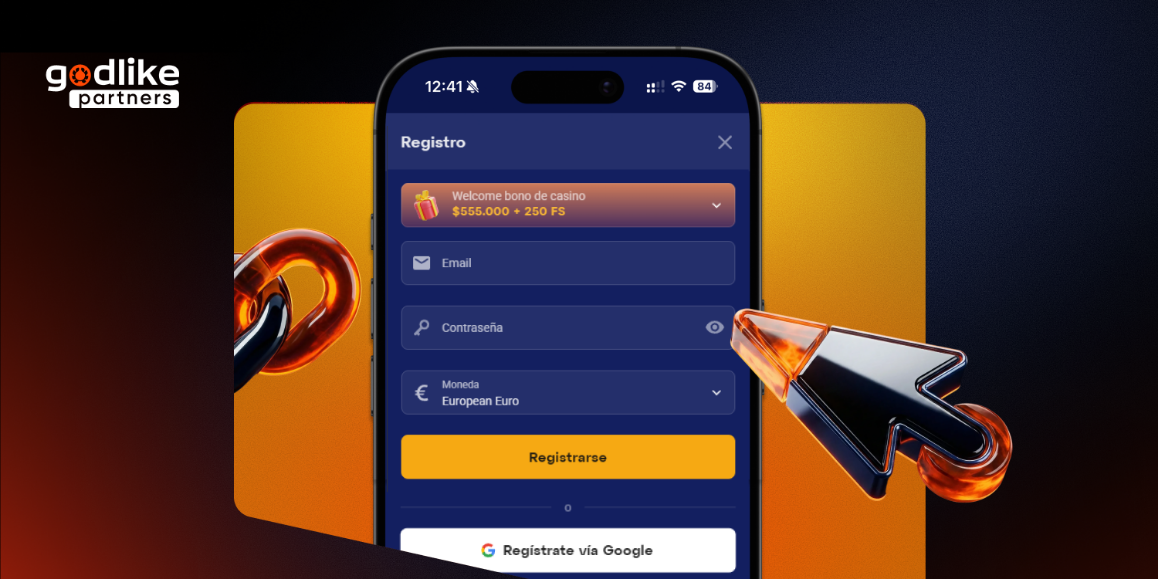
  • Single-window principle. The player sees a simple form: phone or email, plus a password. The account currency is auto-detected based on the player's location, removing extra clicks.
  • No double opt-in at entry. We don't require players to verify email or phone before playing. They register and go straight to the cashier. Verification happens later, once loyalty has formed.
  • Social login. One-click sign-in via Google or Telegram.
  • Brand recognition. Users are hesitant to leave a phone number on unfamiliar sites. When they see a recognizable logo and colors, entering the number feels like a standard step at an established service.

Takeaway: The ideal registration is email or phone plus password, or social login. The shorter the path to the "Deposit" button, the higher your ROI.

3. Retention and bonuses: urgency and reward triggers​

Many affiliates think in a single step: deliver a lead, collect the payout. But the advertiser measures long-term value (LTV). If players don't come back, the traffic is treated as low quality, and your daily caps get cut. If you're playing the long game, or want a higher rate, the player has to stay. What drives that?

Retention: getting more from every lead​

At Olymp Casino, the process is built so that every referred player generates revenue over time. Local team members handle this — staff who understand the mentality and language of each GEO.

The system works end-to-end. Through SMS, WhatsApp, email, and push, we stay in touch on the channels each customer prefers. This isn't blanket messaging; it's segmented outreach. The system identifies the player's status (from newcomer to Super VIP) and offers the specific bonus or promotion most likely to trigger the next deposit.


Promotions and Welcome Pack​

What matters isn't the bonus itself, but how the bonus sells the deposit. A flat percentage match won't hook anyone. You need bold numbers and a time limit. Our bonus grid is built to convert players who are still on the fence.
  • FOMO effect. The standard bonus is 100% on deposit. If the player deposits within one hour of registration, the bonus rises to 125%. That creates urgency.
  • Perceived value. We add 250 free spins on top of the cash bonus. "250 free spins" reads more attractive than a plain sum and reinforces the sense of possible upside.
  • Budget flexibility. Bonus size scales with the deposit: a small deposit unlocks part of the free spins, a larger one unlocks the full pack. This monetizes both low-tier and high-value players.

Beyond the welcome offer, players are retained through a loyalty program with tiers and achievements, so the traffic turns into a long-term audience and LTV goes up. Retention also runs on gamification and recurring campaigns:
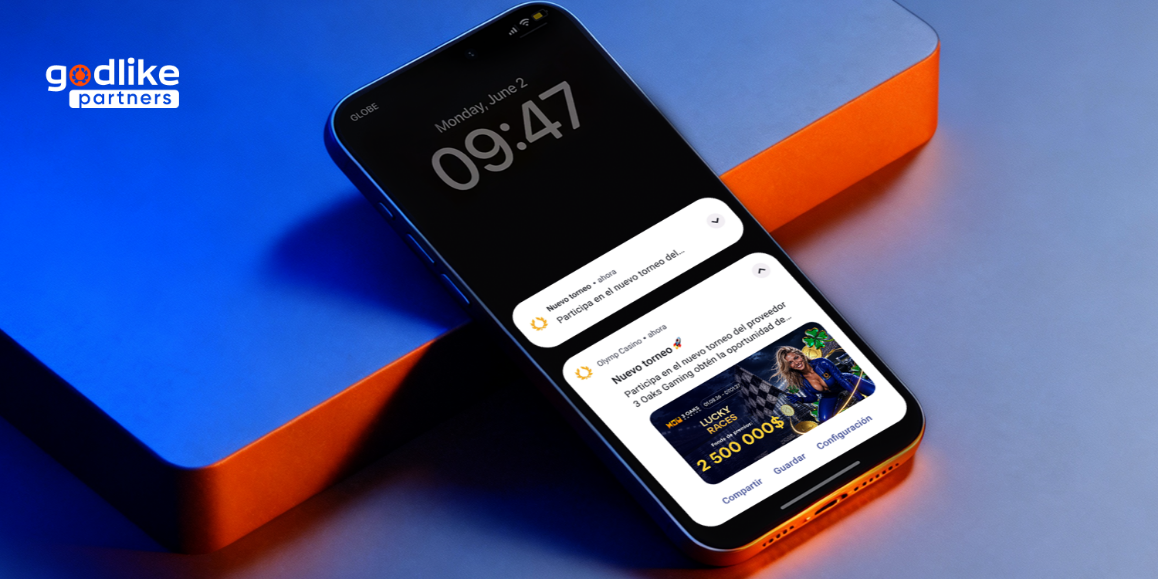
  • Tournaments and Drops & Wins. Regular events with large prize pools.
  • Reload bonuses on subsequent deposits, with cash and free spins scaling per deposit tier. Ask your manager for the current schedule.
  • Sports betting. A unified balance lets casino players bet on sports (over 210,000 events) and vice versa, which lifts LTV.

Takeaway: Check the "Promotions" section before you scale. If it's empty, traffic will drop off after the first deposit. If it's active, as it is at Olymp, you'll build a loyal audience — and a strong argument for negotiating better CPA. Ask your manager how the retention team works players on their end.

​

4. Game content: is there anything to play?​

If a user signs up for Gates of Olympus or Aviator and can't find them in the lobby, they leave and the lead is lost. Before you launch, look through the offer's lobby. It should meet two requirements: scale and local relevance.

Scale: variety retains​


Olymp Casino carries 140 providers and more than 16,000 games — enough to cover every audience segment. Affiliates typically mix crash games with slots, so we pay close attention to the quality of titles from top-performing providers: from Pragmatic Play (Gates of Olympus 1000, Sweet Bonanza 1000) to classic slots in the "Lotomatik" category (Igrosoft: Crazy Monkey, Fruit Cocktail). Crash games — Aviator and Chicken Road — also stay consistently among the most-played titles.


Localized content: what converts by country​


Running the same slots in every country is a mistake. What works in Argentina may fall flat in India. At Godlike Partners, we track game launch data and shape the lobby per GEO, based on our internal metrics.
  • Argentina (ARS). The market is anchored to Pragmatic Play. Alongside the usual Gates of Olympus and Sweet Bonanza (including the 1000 versions), the Argentine top is led by the Joker's Jewels line (classic, Joker's Jewels Cash, Joker's Jewel Dice). That slot converts so strongly that we build custom landing pages around it. TaDa Gaming (Fortune Gems 2 and 3) and the localized Sweet Argentina also perform well. One important note: crash games are overhyped here — Aviator sits at the bottom of the top list, and going all-in on crashes will cut your ROI.
  • India (INR). Tastes are shaped by the Asian market and a preference for fast wins. One of the leading brands is JILI (alongside TaDa Gaming): fast, colorful mechanics with frequent payouts. Top-performing slots include Fortune Gems 2 and 3, Super Ace, Money Coming, Golden Treasure, and Sun of Egypt 4. Live games are especially strong (live-dealer roulette, Andar Bahar) — Indian players spend hours in them for the live chat and the social element.
  • Uzbekistan (UZS). Local releases from 3 Oaks (Magic Apple, More Magic Apple) and BarbaraBang (Yummy Bonanza, Royalty of Olympus) perform well.
  • Kyrgyzstan (KGS). Slots with Hold and Win mechanics (Coin Strike: Hold & Win, Mega Booming Fruits).

Sports as an LTV driver​

Don't overlook the sportsbook: casino players often place bets around a marquee football match. Olymp Casino runs a full sportsbook — over 210,000 events per month, esports, and live streams. The unified balance moves audience between casino and sports, extending player lifetime and lifting your profit.


Takeaway: Check that the offer carries the titles you feature in your creatives. Olymp Casino stocks global hits and local exclusives for each GEO.

5. Affiliate program communication and tracking​


You can find an ideal campaign setup, but if the affiliate program is slow to respond or the tracking is unreliable, the budget goes to waste. People and infrastructure both matter.

The manager​

A common mistake is treating the affiliate manager as tech support. With a direct advertiser, the manager is a partner with a direct stake in your ROI.

The problem with intermediate networks is delayed information. You run traffic, quality slips, but the CPA network hears about it from the advertiser three days later and passes the news on to you a week after that. The result: a week of wasted spend and a cut payout.

At Godlike Partners, negotiation is welcome — and expected. Our managers see your traffic quality and are open to a dialogue. You can optimize campaigns immediately. If your traffic is strong, ask about individual terms: a higher rate, or lifted daily caps.

Links, apps, and domains​

Alongside the people side, the technical side matters. Links break, domains get blocked, apps are pulled from stores. If the offer is technically weak, traffic will land on a 404 page. Before launch, make sure the partner's infrastructure can handle the load. At Godlike Partners, we manage the technical side on our end:
  • Link resilience. We use smart links and rotate domains regularly so that traffic reaches its destination.
  • Launch toolkit. Ready-made landers, pre-landers, and native Android apps (APK). Each one goes through QA to minimize bugs in registration and deposit.
  • Transparency. All statistics are tracked in the platform: clicks and conversions are recorded directly, without manual adjustments.


Takeaway: Choose an affiliate program that gives you more than a link — a full infrastructure and a person who's invested in helping you turn a profit.

Conclusion​

To avoid wasting budget, assess the product through the player's eyes before every launch. You can build a brilliant creative, but if the landing page lacks local payments and the registration form demands a passport, the budget is wasted.

Olymp Casino covers all five points of this checklist: the funnel is tuned, payments are localized, tools are ready. We've specifically adapted the product for Argentina — from Mercado Pago and the 5,000 ARS minimum deposit to the local game top led by Joker's Jewels. Stop wasting budget on unvetted offers. Sign up with Godlike Partners, agree with your manager on a test cap, and run traffic to a brand that converts.

Contacts:​

 
Looks interesting. What payment methods do you support, and how often do you pay affiliates?
We pay in USDT. If necessary, we can pay in USDC. Payments are made once every two weeks. You can discuss the terms and conditions in more detail with our managers after registration
 

Brand in the creative: free advertising or an ROI boost? Breaking it down with Appie Tech​

Affiliate marketing is no longer a hunt for the cheapest click. Today the winners are the teams that manage quality and payback. You can push huge volume, drive hundreds of registrations at a dollar each, and still hit a payout hold or a refusal to raise your daily caps because the players aren't converting downstream.

There's another path — building player loyalty at the creative stage itself. Many affiliates still avoid putting brand logos in their creatives. Some think it narrows the funnel and raises the install cost. Others are used to the same generic pool of slots that gets recycled across spy tools. But an aware player, one who knows which casino they're signing up for, is worth many times more than a "random" one.

In this article we break down why using the brand's logo and identity in your creatives isn't free advertising for the casino — it's a direct lever on your profit. We look at how a brand-driven approach helps you get creatives approved, lifts player loyalty before the first click, and why we at Godlike Partners are willing to pay more to affiliates who don't hide our product.

How brand recognition shapes your traffic​

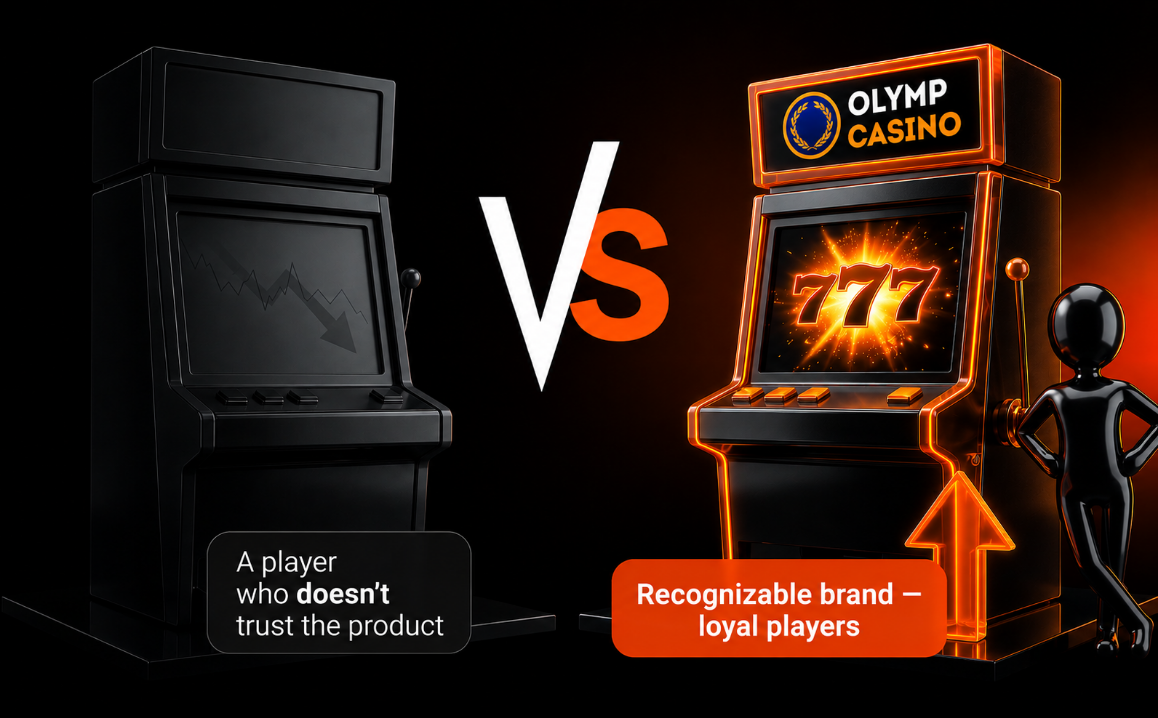
There's a distinction between "cold" and "warm" traffic. When you run a new product, you work with an entirely cold user. You have to sell them not just the idea of playing, but also the trust in this particular site. With Olymp Casino, that problem is solved for you: the brand has been on the market for more than 20 years. In Kazakhstan, players have known the brand practically their whole lives.

Here's how that plays out in your metrics:
  • Faster decisions. The user doesn't need to read reviews or check the license. They see a familiar logo and think, "Oh, that Olymp — I've heard of it." The path from click to deposit gets shorter.
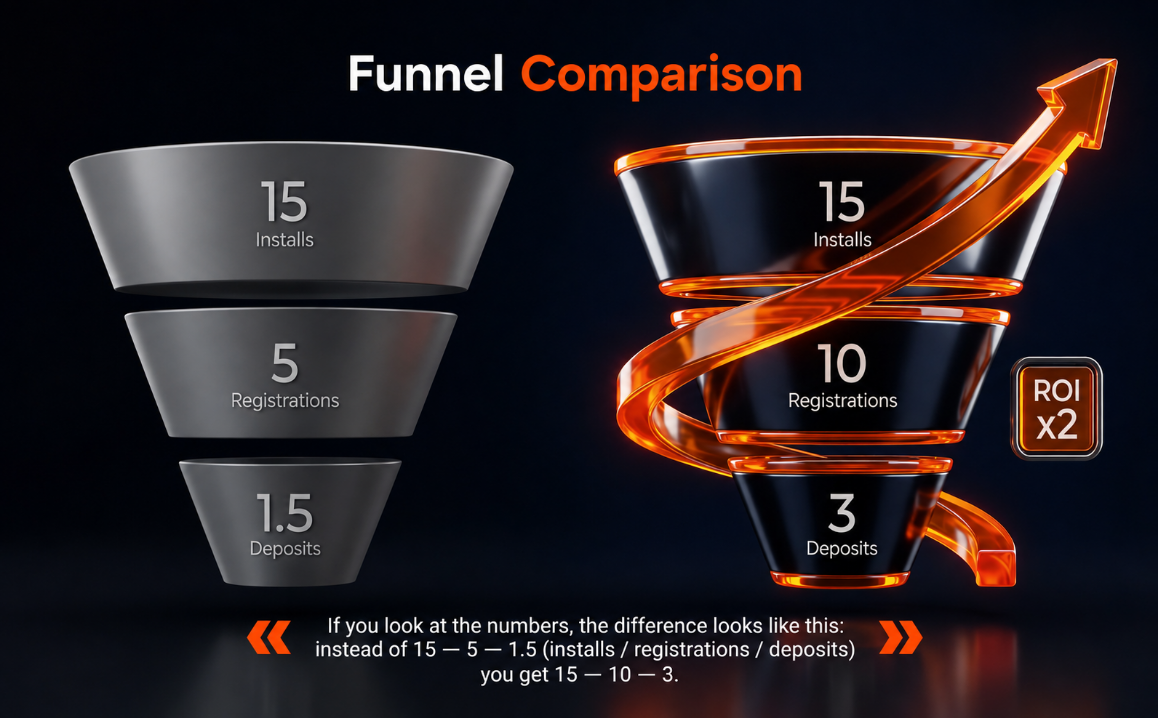
  • Lower psychological barrier. One of the main reasons a registration doesn't turn into a deposit is the fear that money can't be withdrawn. Often, when a user sees a slot, they click out of curiosity or the hope of freebies. When they see the Olymp Casino logo, they recognize an established casino where people play with real money. Your Reg2Dep grows not because of new Facebook settings, but because the user's attitude toward the product shifts.
  • LTV and player durability. Players who come in through the brand are an aware audience. They don't just spin free spins and leave — they come back because the product is familiar. For the affiliate, this is one of the strongest arguments: the advertiser sees high retention and is far more open to rate increases and lifted daily caps.
The bottom line: adding a logo to the creative doesn't narrow the funnel — it filters out users who would never deposit anyway and pulls in users looking for a site they can trust. For the affiliate, this means one thing: Reg2Dep becomes predictable and stable. You're not spending budget on users who will never deposit.

In Kazakhstan, campaigns using brand-driven creatives show a Reg2Dep of 25–35%, based on our internal data. That opens the door to shifting from a "run-and-forget" model to running the same offer for months.
full

Appie Tech on brand-driven creatives​

We asked Anton, Head of Facebook direction at Appie Tech and author of the iGaming ads lab channel, how his team approaches brand-driven creatives.

— Anton, using a brand logo in creatives usually pushes the install cost up. How does the Appie Tech team view this? Do you use the brand in CIS campaigns?​

There are three scenarios for how a brand logo can affect metrics — and all three are logical.

The first is no effect. This happens when the brand has zero recognition in a specific GEO. The user simply doesn't read the logo as an extra trust signal, and it doesn't influence conversion.

The second is a negative effect. Most often this comes down to a poor user experience or an overpopulated base of old players. In those cases the traffic contains a lot of multi-accounts, which the advertiser doesn't pay for, and the branded creative does start to raise the install cost.

The third — the one worth pursuing — is a positive effect, when the brand-driven flow strengthens the funnel and lifts conversion. We've run into this more than once with Olymp Casino. We tried adapting their successful brand-driven funnels to other products where we were offered higher rates. The logic is clear — you have to test better terms.

But the result was almost always the same: as soon as we removed the Olymp brand and swapped in another, the creatives stopped being economically viable.

Put simply: Olymp lets an affiliate lift conversion off the back of its multi-year reputation — and this is a case where a brand in the creative actually works in your favor.

— Many affiliates worry that if they "promote" the brand, the user will just search for it and register outside their link. How do you handle brand traffic leakage?​

The concern is understandable, but in practice it's heavily overstated. Our creatives are designed for immediate performance. They spark interest and prompt the user to install the app and start playing right now. We don't build "think-it-over" creatives — the funnel is built around an immediate action.

Today the "brand traffic leakage" argument looks more theoretical than real. It's typically easier for a user to tap a button, install the app, and keep playing than to save the brand name, open a search engine, and try to reproduce the flow later. User inertia tends to work in the affiliate's favor here.

For particularly cautious media buyers, the solution is simple: ask the Godlike Partners team about additional attribution tools tied to your referral account. That addresses the leakage question and gives you extra control over the traffic.

— What would you tell a media buyer who's afraid CTR will drop once they add a brand logo? Where should they start so they don't waste budget?​

Any marketer will tell you the same thing: start with tests. Not with assumptions and fears, but with facts. See for yourself how the brand is perceived in a specific GEO. With Olymp Casino, you're dealing with a brand that carries strong trust equity, and the user reads that straight from the ad.
full


The key point is to measure the whole funnel, not fixate on CTR or CPI alone. An expensive install doesn't automatically mean an expensive deposit. In practice, using the logo and brand elements at every stage of the funnel often lifts registration and deposit conversion, even if the top-of-funnel metrics look less attractive.

Godlike policy: full payout on SEO and a green light for the brand​

We benefit from having our brand appear in the feed. You benefit from users clicking with trust. You use our 20-year reputation to boost your profit; we offer elevated terms in return. Win-win. Some advertisers reduce the rate on brand-driven SEO, treating affiliate traffic as competition to their own search-driven channel. At Godlike Partners we don't reduce the rate for SEO traffic, and we encourage the use of the Olymp Casino logo and identity in your creatives (Facebook, UAC, In-App). We don't care whether the user found you through a search query or your logo in the feed — if the player is high quality, we pay the full rate.

Conclusion​

Using the brand in creatives is a pragmatic tool for lifting LTV and ROI. Yes, the click cost may edge up, but as the advertiser, this kind of aware traffic delivers more profit. That's why we're prepared to pay higher rates and offer private terms for it. You win through a higher Reg2Dep and rate bumps; we win through stable LTV. When the user already trusts the product, the funnel clears out of low-quality registrations, and the affiliate gets predictable statistics without quality-driven adjustments after the fact. Sign up with Godlike Partners and convert Olymp Casino's 20-year reputation into your profit — on a fresh base.


Contacts:​


Why proprietary casinos monetize traffic better than White Label, plus ASO insights. Godlike Partners × DIVEROLI interview​

New casinos launch on the iGaming market every month. Competition is growing — but the growth is in quantity, not quality. Most of the new products in 2025–2026 are cookie-cutter White Label solutions with near-zero retention. The outcome for affiliates is predictable: you run expensive traffic, the player registers, spins once, and leaves for good.

Stepan, Head of Affiliate Program at Godlike Partners, joined Nikolay DIVEROLI's podcast to break down some of the sharpest issues on the market. This article is the condensed take. You'll learn why proprietary platforms are significantly better positioned than default templates, and how TikTok is overtaking Facebook on install quality. We also cover running traffic to India, share working recommendations for avoiding ASO bans, and explain why teams are stepping away from spend deals in favor of classic CPA.

​

Why a proprietary platform monetizes traffic better than White Label​

Most new brands on today's iGaming market are White Label or turnkey solutions. That's a fast path for the operator, but often a dead end for the affiliate. Templated platforms are limited in customization: they offer standard registration forms and a cluttered interface that significantly reduces conversion at the first touchpoint.

One of the biggest pain points for media buyers working with White Label products is the registration form. On Tier-1 markets, long forms that require passport data at signup are the norm. When the same model is transplanted onto Tier-2 and Tier-3 markets (CIS, Asia), conversion drops.

Stepan (Head of Affiliate Program, Godlike Partners): "The market has changed a lot. In Tier-1, a wall of fields in the registration form is still acceptable, but for CIS and other Tier-2/3 countries it's not. We aim for maximum conversion, and every lead matters. Some products still live in the past when it comes to UX, but in-house development lets us deploy fast registration by default. Building your own platform takes time and money, but it gives you full control over the user funnel. Affiliates running traffic to platforms like this get some of the strongest terms on the market."

​

Traffic source ranking: from SEO to TikTok​

The choice of traffic source is one of the most debated topics. Every source has its nuances. Google Ads (PPC), for example, delivers quality on par with SEO, but scaling with it requires your own ad accounts rather than rented ones. Semi-organic traffic (UBT) is largely ineffective for affiliate programs: too many low-quality leads come through it.


In-app and TikTok​

In-app networks (Moloco, for example) are a source that's hard to ignore, but you have to know how to work with the auction. Everyone bids there, which drives prices up. Teams that paused traffic in December and returned in January to a thinner market were able to pick up installs at meaningfully lower CPMs, based on our internal buying data. TikTok deserves separate attention: thanks to more native UGC creatives and higher audience engagement, it delivers strong quality. Based on our internal buying data, TikTok often delivers stronger quality than Facebook and UAC, and the buy is cheaper.

ASO challenges​

One of the main pain points for affiliates right now is ASO. Google has become more aggressive with app takedowns, and classic keyword optimization is producing weaker results than before.

Stepan: "In 2026, as a year ago, the ASO market is, mildly put, broken, and it's unlikely to stabilize any time soon. Keyword optimization mostly doesn't work. On the ban side, a lot comes down to the quality of the developer account. Only established accounts with a 3–4 year history are effective; new accounts get banned quickly and aren't useful.

There's a workaround: source developers yourself through white-traffic ads on Facebook — something along the lines of 'Buying a developer account, 3–4 years old.' Some developers are willing to sell inactive or outdated accounts they no longer use.

One solid option is to buy the account together with the old apps and their source code. In effect, you get an already-published app with a history. From there you update the code and design, add a WebView, and work with a 'warmed-up' app that already has trust and traffic. This results in fewer bans."


​

Games and mechanics: what to use in creatives​

Creative angles evolve alongside player preferences. The era of the single-button game is fading, giving way to more complex social mechanics and live content.

— DIVEROLI: People used to run traffic exclusively to Aviator. What converts best in India now? Is Aviator still worth using at all?​

Stepan: You can still run it, but the audience is worn out. It's being replaced by fast-round games like Forest Arrow or Ice Fishing. Indian players value the social element. For them, a casino is a form of socializing and live interaction. That's why Andar Bahar, live casino, and live-dealer roulette — where there's communication — consistently perform well.

— DIVEROLI: What about sports? Is cricket still a must-have for India?​

Stepan: Absolutely. But you have to know how to work with sports. Some affiliates launch exclusively around the IPL kickoff, run for a single month a year, and can pull in comparable or larger payouts than year-round slot campaigns.

— DIVEROLI: How do you retain a player so they don't leave for another product after two spins?​

Stepan: That's the product's job, not the affiliate's. We built a loyalty system with levels and achievements. It boosts retention noticeably. When a player sees that they've "completed the game" by 97%, they feel a natural pull to close out the last 3%. In Olymp Casino, we're also rolling out personalized slot recommendations based on the player's behavior. If a player prefers crash games, the system won't recommend classic fruit slots — it'll surface what's relevant. That directly lifts the average deposit.


Why advertisers are moving away from spend deals​

Affiliate marketing has become a systemic business. Teams have grown: there are owners, team leads, analytics departments, account farmers, and designers. No one wants to put payroll at risk or run into cash-flow gaps. That's why the spend-based deal model — in which the advertiser directly reimburses the affiliate's ad spend — has become popular on the market.

— DIVEROLI: A lot of teams today ask for revenue-share or spend-based models so they don't risk their own money. Do you work under that kind of model?​

Stepan: No, and most likely we won't. From the advertiser's perspective, spend deals are difficult to control transparently unless the team has a solid in-house CRM. Affiliate managers shouldn't spend their working hours checking someone else's anti-detect browsers, matching screenshots, and reconciling each media buyer's expenses.

I understand why affiliates want this model. You want predictability and confidence in tomorrow. But if you've found a working campaign setup, you're running traffic on spend, and you're earning — what stops you from putting a second offer into the split on CPA? If everything is working, we're ready to move on the rate. If the traffic pays back, we're ready to pay for it. Yes, spend plus revenue share gives a certain stability — but on CPA, you consistently earn more.


Conclusion​

To capture stable profit in 2025–2026, it's no longer enough to copy a creative from a spy tool and run it against any brand. The market is shifting, source-side pressure continues, but the money in this space is still substantial. What matters most is choosing an advertiser that fits — one whose product can monetize and scale your launch. At Godlike Partners, we bet on our proprietary platform and strong retention so that your traffic pays back. Sign up with Godlike Partners and let's scale your profit together.

Contacts:​


Guide to in-app networks for gambling: Unity, Mintegral, Moloco, and others​

More and more teams are moving into in-app, and the reasons are clear: gambling is allowed, there are fewer bans, and the traffic is cheaper than Facebook. The question is where to start. Almost every newcomer hears about Unity, goes in through it alone, and gets stuck there. Unity really is the right starting point. At the same time, there are dozens of networks, and every GEO has its own requirements.

Below we break down which in-app networks exist, how they differ in gambling access, price, and GEO coverage, and why most of the market runs on just three of them. Based on the talk by Stepan, Head of Affiliate Program at Godlike Partners, at G GATE CONF 2026.


How the in-app network market works​

In-app networks fall into two types:
  1. Pure in-app (SDK networks): Unity, Mintegral, Moloco, AppLovin, Liftoff, IronSource, Digital Turbine. The game developer embeds the network's SDK into the game, and ads are served inside the app through it. This is true in-app traffic, where gambling is allowed and impressions run inside mobile games.
  2. Multi-format networks: for example, RichAds and PropellerAds. They mix in-app with push and pop formats. This is no longer pure in-app, and the quality of that traffic has to be filtered heavily. Going into them makes sense for specific tasks. The bulk of the volume, however, runs on SDK networks.
Gambling isn't allowed everywhere; sometimes you need a license or a manager. A self-serve whitelist is also not available on every network, and without it you can't clean placements manually or control quality. The entry threshold ranges from a small budget to an agency account with a deposit of several thousand dollars.

Network comparison​

We compiled the main networks into a table by the key parameters that drive the choice: gambling access, whitelist availability, CPM, main GEOs, and entry difficulty. Unity is highlighted as the primary platform teams start with.

The three networks that carry the volume​

There are many networks. Even so, a large majority of in-app gambling traffic runs through just three platforms. Each has its own role, and together they cover almost any task.

Unity Ads — the primary platform​

Teams start here and hold their main volume here too. Unity has one of the largest supply pools in the space; the network belongs to the game engine of the same name, which powers a large share of the world's mobile games. Gambling is allowed through a managed account, whitelist and blacklist are configured yourself, and there's Source Bidding — bid control at the level of individual apps. The entry threshold is low, and no agency account is required. It works across CIS, LATAM, and Asia. This is the tool our partner used to reach an ROI of 88% in our case study, where we covered in detail how to launch on Unity and work with creatives.

Mintegral — the second source for Asia​

It complements Unity where cheap traffic is needed in the Asian region. CPMs here are among the lowest on the market, especially for India and Bangladesh, based on our internal buying data. You can onboard directly, without an agency account. As a standalone platform for all traffic, Mintegral is rarely used. Paired with Unity, it noticeably lowers buying costs on Asian GEOs.

Moloco — for scaling​

It gets added once Unity is dialed in and has hit a volume ceiling. Moloco has a strong ML algorithm that optimizes buying toward the target event (a deposit, not an install). The algorithm learns from the data and, over time, brings in paying players more often. The trade-off is the entry threshold — typically from USD 5,000 — and working through an agency account.

Moloco has tightened moderation, and gambling traffic currently rarely gets through. At the time of the talk this was a working setup; today the source is temporarily not relevant.


The remaining networks​

The three main platforms cover most tasks. There are a few more networks worth using for a specific GEO or a particular task.

AppLovin​

AppLovin works with gambling under a license and runs mainly on Tier-1 and Turkey. CPMs here are higher than Unity's (typically USD 2–20, based on our internal buying data), and the whitelist is configured through a manager. As a standalone source, AppLovin is rarely chosen. On Turkey, it complements Unity well.

Liftoff and Digital Turbine​

Networks for experienced teams with a high entry threshold. Both require working through an agency account, and the whitelist is available only through a manager. Liftoff runs on mixed GEOs; Digital Turbine is tuned for the US and EU. Going into them makes sense once the main platforms are already mastered and you need access to specific Tier-1 traffic.

Multi-format networks — RichAds and PropellerAds​

They mix in-app with push and pop, so this can't be called pure in-app. On the other hand, the entry threshold is minimal, CPMs are some of the lowest on the market (typically USD 0.5–3), and they run on all GEOs. Traffic here requires strict quality filtering. For cheap tests or specific tasks, these networks can still be useful.

Which network for which GEO​

  • CIS — Unity. Here Unity covers the task almost entirely: large supply, cheap traffic, straightforward whitelist work. A separate second network for the region is usually not connected.
  • India and Bangladesh — Mintegral + Unity. On Asian GEOs, Mintegral is added alongside Unity for the sake of cheap CPMs. The combination delivers both volume and a low buying cost.
  • LATAM — Unity + Moloco. You start with Unity, and once you hit the volume ceiling, you connect Moloco for scaling. For now, this combination is temporarily not working.
  • Turkey — Unity + AppLovin. On Tier-1 and Turkey, AppLovin complements Unity well thanks to access to a more solvent audience.
We covered how to assemble creatives for a source and how the product affects conversion in our case study Unity Ads in Argentina: 2,099 FTDs and ROI 88%.

Where to start​

If you boil it all down to a simple scheme, the order of entry into in-app looks like this: start with Unity, add Mintegral.

But a network is only access to traffic. Whether the user reaches a deposit and stays in the product depends on the funnel, the offer, and retention work. A player will reach a deposit and stay for the long term only where there's a convenient cashier, local retention, a large game selection, and a well-designed loyalty program.

At Godlike Partners, we know how to work with in-app and help partners enter the networks, provide traffic-quality analytics, and offer terms tailored to a specific GEO. If you want to test in-app on Olymp Casino, sign up, ask your manager for terms tailored to your source, and take a rate matched to your traffic.

Contacts:​

  • Website:https://t.me/godlike_support
 

Tier-3: How not to waste budget on "cheap" traffic. Breaking down the Hardi × Stepan (Godlike Partners) podcast​

Many newcomers enter Tier-3 with a dangerous illusion: "Traffic costs pennies, the auction is empty — I'll run it fast and take the profit." In practice, cheap clicks often turn into zero ROI, blocked payment methods, and a campaign setup that burns out in two days.

Stepan, Head of Affiliate Program at Godlike Partners, came on the podcast with Hardi to discuss what's happening with Tier-3 right now, why flashy creatives still work, and how a direct advertiser designs funnels for difficult GEOs.

Stepan isn't just a representative of an affiliate program. He ran traffic himself, so in the conversation he looks at affiliate marketing from both sides at once: as a media buyer who knows every pain point, and as an advertiser who sees the product from the inside.

As an example, they broke down India in Olymp Casino — a new GEO that Godlike Partners opened just days ago. Based on our internal data from initial tests, Social traffic shows Install-to-Registration conversion (Inst2Reg) of 60–80%, and Registration-to-Deposit (Reg2Dep) of 25–30% in these early India tests specifically, while the market is still fresh.
full


Player psychology: emotions versus life-change​

Many try to move winning campaign setups from Europe to Asia or Africa by simply swapping the language and currency. Stepan explains why that doesn't work and where the difference in mindset lies.

— Broadly, how does running traffic on Tier-1 differ from running it on Tier-3, apart from the difference in price?

Stepan (Godlike Partners): The first thing to mention is the approach. The population of Tier-1 countries is wealthier. Naturally, they play at casinos and place bets not to earn money, but to feel emotions.

In general, when we talk about the target audience, there's a kind of scale. On one side is the desire to make money — a kind of greed. On the other side are emotions. In Tier-1, people come home from work, they're bored, they have nothing to do — they can watch football, place bets, or spin slots.

In Tier-3 the picture is completely different. People there chase emotions too, but for them it's mostly a life-change. It's almost the only way to change their world, earn money, "move up," and go on living like a millionaire, so to speak. That's the main difference, and this is what you should emphasize.


— To sum up: Tier-1 is entertainment, and Tier-3 is a way to earn and a last hope?


Stepan (Godlike Partners): If we put it very bluntly and drop all the nuance, then yes. But there are exceptions on both sides. Money is money everywhere. In Tier-1 there are people who want to earn, and in Tier-3 there's a layer of people who have money and just want to feel emotions. So, roughly speaking, yes — that's the difference, but you always have to remember the exceptions.

Why Google Play cuts conversion, and what Chinese smartphones have to do with it​

The classic funnel "click → Google Play → install" often breaks in Tier-3 countries. The reason isn't traffic quality, but the hardware. The markets of Asia and Africa are saturated with budget Chinese smartphones (Xiaomi, Oppo, Vivo, Huawei) running custom firmware.

These devices have their own preinstalled stores, and Google services are often either absent or simply not used. When a user clicks an ad and lands in an unfamiliar Google Play, or sees the system warning "This file may be harmful" while trying to download an APK, conversion drops significantly. To the local audience, this looks like a hacking attempt or a virus.

The approach experienced teams have converged on is using PWA or native landing pages that imitate a download page but install through a simpler on-device flow, without the extra download friction. This shortens the user's path and removes the trust barrier.

Stepan (Godlike Partners): In Tier-3, a large part of the audience is on brands like Oppo or Huawei. They have their own local markets. And when an ad sends them to Google Play or makes them download an unknown file, they treat it with suspicion — to them it looks like a scam.

We talked with local people, and they confirmed it: "We don't download from Google Play, it's not popular here." So the market shifted to PWA and native sites. You just give the user a "Download" button, and the app installs through the standard on-device flow, without the extra prompts.


Creatives: why "expensive" design wastes budget​


While in Tier-1 (the US, Europe) polished motion design builds trust, in Tier-3 it's perceived as "ad noise" or a scam. Here the principle "the simpler, the better" applies.

The audience wants to see "authentic" content. A glossy image creates distance, while an overloaded, bright, sometimes even gaudy banner (with stickers, bonuses, arrows, and emojis) looks like something accessible and understandable. This reduces banner blindness.

In video creatives, an approach that works well is showing the emotions of an ordinary person (not an actor) who supposedly won right here and now. This hits the very "life-change" pain point discussed above.

Stepan (Godlike Partners): There's a base that never gets old: emotions + news. But in that same Tier-3, static often works better — the kind plastered with a bunch of micro-banners, some labels, bonuses. The clunkier ("folk") the creative, the better it hooks. Meanwhile, polished videos with professional filming and studio lighting trigger distrust. It's easier for them to believe in something simple. So don't spend budget on expensive production at the start — win through volume and a variety of angles.

The "1-1-10" rule and why you must not stop a campaign in the red​


India (like any giant Tier-3 GEO with a population of 1 billion+) is a country of contrasts for Facebook's algorithms. The audience is so huge that the auction can throw you from side to side.

Stepan warns: newcomers often make the mistake of switching off a campaign at the first signs of an ROI dip.

Stepan (Godlike Partners): In India, Facebook behaves unstably. Today your ROI is 100%, tomorrow it's minus 50%, even though you changed nothing. The algorithm simply served the ad to the wrong layer of the audience — based on public estimates, there are hundreds of millions of Facebook users there, and it can't reach everyone at once. My advice: launch on the 1-1-10 scheme. And most importantly — wait. At the campaign level, at least 50 deposits should come through before Facebook stops experimenting and starts scaling the result. If you switch it off earlier, you'll simply burn budget on the learning phase without ever reaching optimization.

full


Stepan also strongly advises using automated rules to protect yourself from overnight losses.

Why Godlike opened India and what to focus on there​


We at Godlike Partners recently opened India as a new GEO. Why now, and what to focus on? On the podcast, Stepan shared a couple of insights from our internal tests.

1. Cricket is a religion. Unlike the rest of the world, where football rules, India lives on cricket.

Stepan (Godlike Partners): There are teams that don't run slots at all the whole year. They wait for the start of the IPL (the Premier cricket league). During those 1.5 months of the season, they can generate comparable or larger revenue than year-round slot campaigns. These are big deposits and high engagement.


2. Roulette and the craving for interaction. Indians are very social. They find it boring to spin slots alone.

Stepan (Godlike Partners): I'd single out roulette because of the specifics of the mindset. They love to communicate. Roulette has live chats — they sit there, place bets, and message each other at the same time. It's a powerful retention tool that many ignore.


3. Localization. India has hundreds of dialects. The North doesn't understand the South. So trying to guess the exact vernacular in a creative is a risk.

Stepan (Godlike Partners): Hindi or English is the base. It's not worth bothering with rare dialects at the start. The solvent segments of the population understand English there, and that's often even a plus for filtering the audience.

In our previous material, we did a full overview of India, with a breakdown of the target audience, psychology, top games, and current angles.

Conclusion​


The Tier-3 market is full of myths. In the chats they say "run broad," but in reality you need PWA and precise targeting. They say "cheap traffic," but in reality you need patience over a distance of 50 deposits.иThe market is opportunity. There's real money in this space for teams willing to put in the work. But always think for yourself. Don't take bloggers and experts at their word — test everything through your own experience. Don't be afraid to jump in with both feet, break down walls, and make mistakes.

full


At Godlike Partners, we've already built a full infrastructure for this GEO. The product has also received external industry recognition: Olymp Casino received an award at the SiGMA expo.
This means you're not running traffic to a fly-by-night brand, but to a recognized one with adapted retention, local payment methods, and slots that players genuinely find interesting. We're ready to onboard your traffic and discuss individual terms based on volume and quality. The base is fresh, and initial conversion metrics from our internal tests are strong.

Contacts:​

 
Back
Top