

- Jun 20, 2025
- 247
- 106
I recently worked through a Klaviyo setup for a small Shopify brand in the alcohol-alternative space, and the first month came in at $2,847.41 total revenue with $859.22 attributed directly to email/Klaviyo.
This was not a huge list, paid ads trick, or daily blasting. The account was still small, so the goal was to make Klaviyo smarter before making it louder.
The biggest lesson: most small ecommerce stores do not need more emails first. They need better tracking, better segments, and cleaner flows.
Starting point
The welcome flow was already the strongest asset, so I did not want to break it. I treated it like the control and built around it.
Current 30-day snapshot:
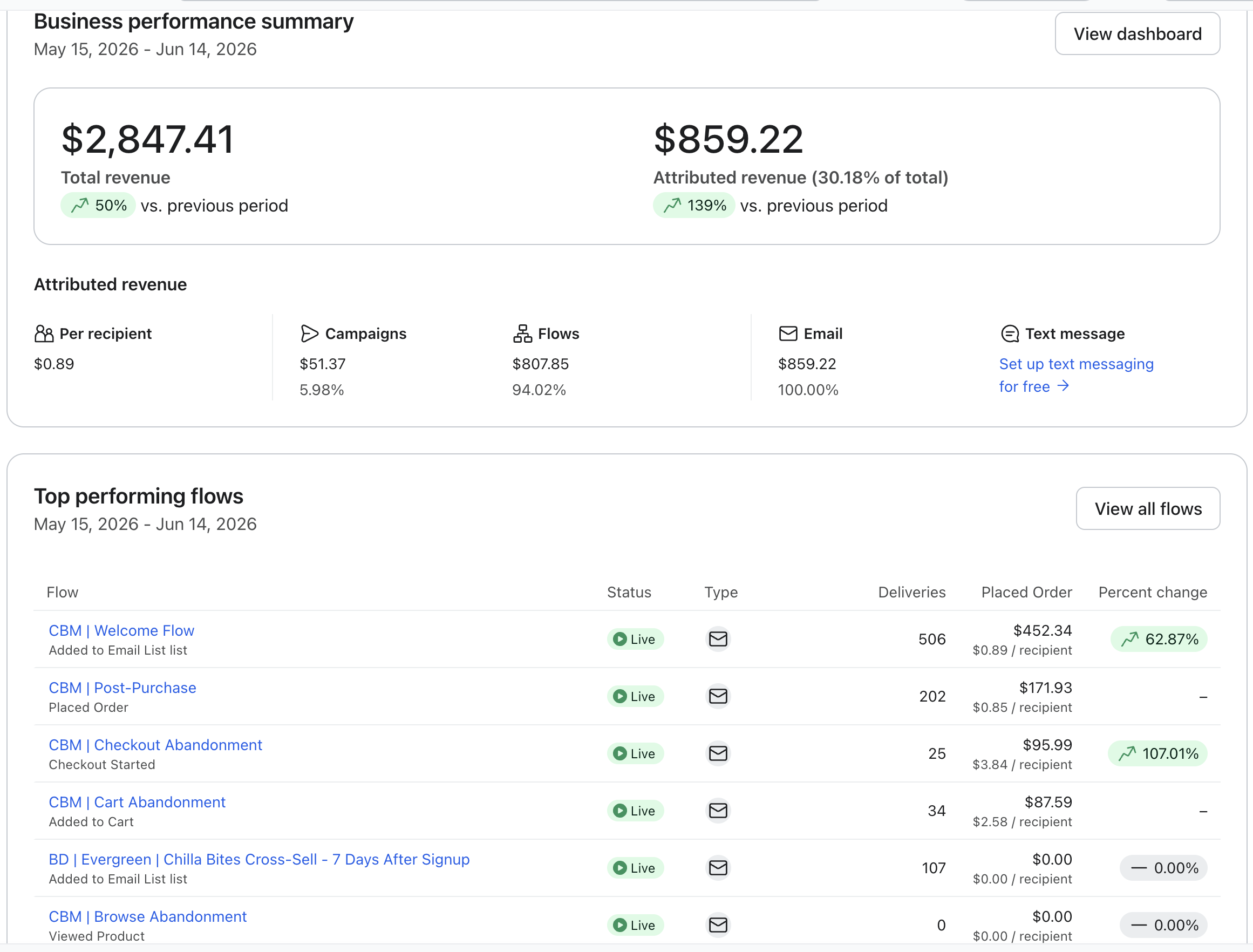
- Total revenue: $2,847.41
- Klaviyo attributed revenue: $859.22
- Email share: 30.18% of total revenue
- Campaign revenue: $51.37
- Flow revenue: $807.85
Top flow results:
- Welcome Flow: 506 deliveries, $452.34 placed order value
- Post-Purchase: 202 deliveries, $171.93 placed order value
- Checkout Abandonment: 25 deliveries, $95.99 placed order value
- Cart Abandonment: 34 deliveries, $87.59 placed order value
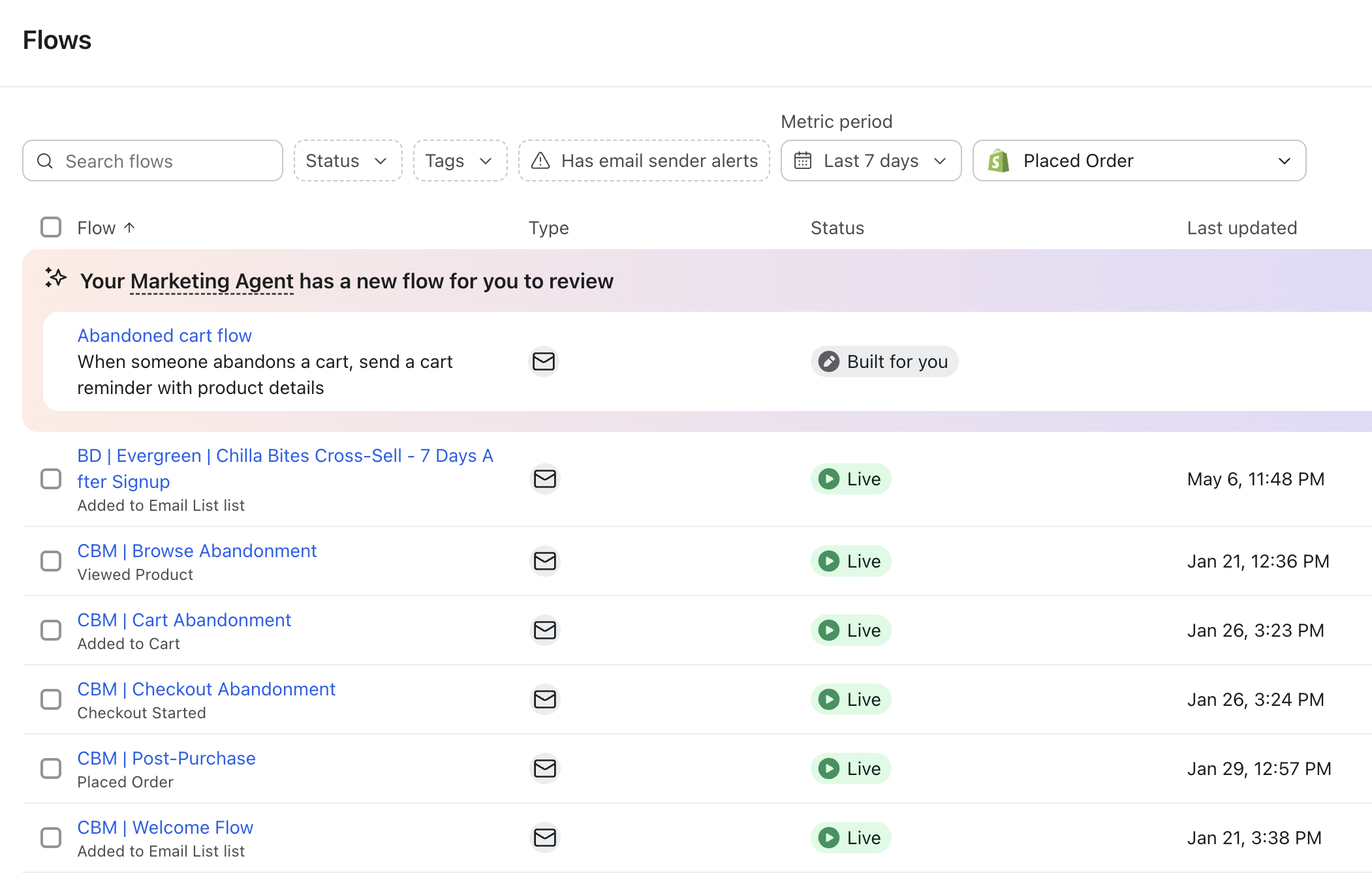
What we changed
1. Built better intent segments
Instead of treating the whole list the same, we split people by behavior:
- Engaged non-buyers
- Product viewers with no cart
- Added to cart but no purchase
- Checkout started but no purchase
- First-time customers
- Repeat buyers
- Inactive leads
- Recently emailed suppression
- Deliverability-risk suppression
- Subscription upsell candidates
The most useful segment was people who showed buying intent but did not complete. That is where the money usually hides.
2. Cleaned up abandonment flows
Cart and checkout emails were rewritten around objections instead of generic reminders.
For this niche, the objections were not just price. People needed education, trust, and a reason to understand the product before buying.
3. Built post-purchase for retention
The post-purchase flow was not just a thank-you email. It became education, review request, subscription angle, and replenishment timing.
That matters because the easiest second sale usually comes from someone who already trusted you once.
4. Kept campaigns controlled
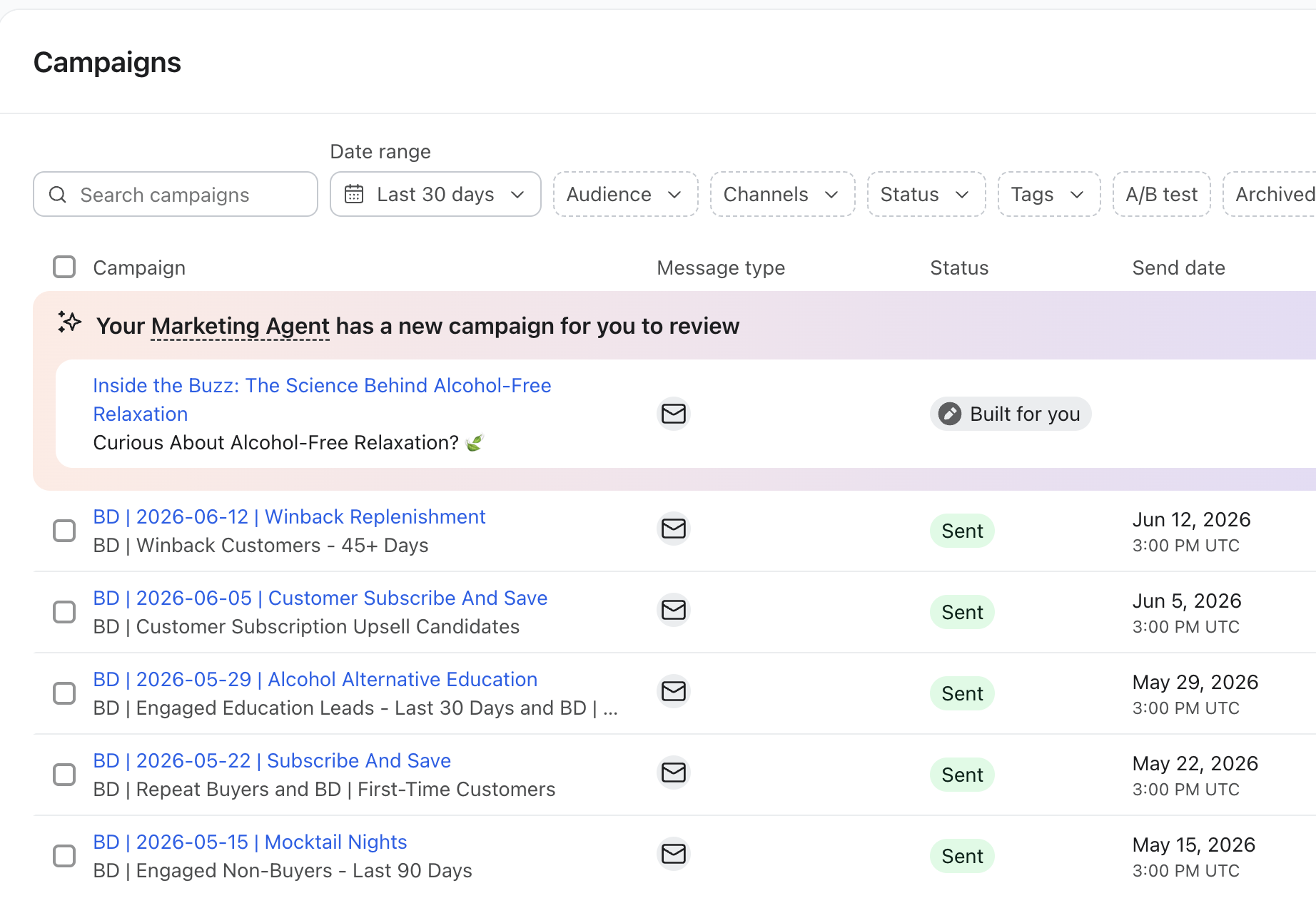
We did not blast the list every day. The campaign rhythm was closer to one useful email per week.
Examples:
- Mocktail night angle
- Alcohol alternative education
- Subscribe and save
- Winback replenishment
- Customer subscription upsell
Suppression segments were used so recently emailed people and weaker profiles were not hammered.
Result
First month after the Klaviyo work:
- $2,847.41 total revenue
- $859.22 attributed to email/Klaviyo
- 94.02% of attributed email revenue came from flows
- Welcome, post-purchase, cart, and checkout flows carried most of it
The main win was not one magic email. It was the system:
- better segments
- cleaner tracking
- stronger abandonment logic
- safer campaign sending
- post-purchase built for repeat buyers instead of just receipts
My takeaway: for small Shopify/Klaviyo accounts, I would rather make the account smarter before sending more emails.
Curious how others handle this. Do you usually optimize the winning welcome flow first, or build out abandonment/post-purchase before touching it?
This was not a huge list, paid ads trick, or daily blasting. The account was still small, so the goal was to make Klaviyo smarter before making it louder.
The biggest lesson: most small ecommerce stores do not need more emails first. They need better tracking, better segments, and cleaner flows.
Starting point
The welcome flow was already the strongest asset, so I did not want to break it. I treated it like the control and built around it.
Current 30-day snapshot:
- Total revenue: $2,847.41
- Klaviyo attributed revenue: $859.22
- Email share: 30.18% of total revenue
- Campaign revenue: $51.37
- Flow revenue: $807.85
Top flow results:
- Welcome Flow: 506 deliveries, $452.34 placed order value
- Post-Purchase: 202 deliveries, $171.93 placed order value
- Checkout Abandonment: 25 deliveries, $95.99 placed order value
- Cart Abandonment: 34 deliveries, $87.59 placed order value
What we changed
1. Built better intent segments
Instead of treating the whole list the same, we split people by behavior:
- Engaged non-buyers
- Product viewers with no cart
- Added to cart but no purchase
- Checkout started but no purchase
- First-time customers
- Repeat buyers
- Inactive leads
- Recently emailed suppression
- Deliverability-risk suppression
- Subscription upsell candidates
The most useful segment was people who showed buying intent but did not complete. That is where the money usually hides.
2. Cleaned up abandonment flows
Cart and checkout emails were rewritten around objections instead of generic reminders.
For this niche, the objections were not just price. People needed education, trust, and a reason to understand the product before buying.
3. Built post-purchase for retention
The post-purchase flow was not just a thank-you email. It became education, review request, subscription angle, and replenishment timing.
That matters because the easiest second sale usually comes from someone who already trusted you once.
4. Kept campaigns controlled
We did not blast the list every day. The campaign rhythm was closer to one useful email per week.
Examples:
- Mocktail night angle
- Alcohol alternative education
- Subscribe and save
- Winback replenishment
- Customer subscription upsell
Suppression segments were used so recently emailed people and weaker profiles were not hammered.
Result
First month after the Klaviyo work:
- $2,847.41 total revenue
- $859.22 attributed to email/Klaviyo
- 94.02% of attributed email revenue came from flows
- Welcome, post-purchase, cart, and checkout flows carried most of it
The main win was not one magic email. It was the system:
- better segments
- cleaner tracking
- stronger abandonment logic
- safer campaign sending
- post-purchase built for repeat buyers instead of just receipts
My takeaway: for small Shopify/Klaviyo accounts, I would rather make the account smarter before sending more emails.
Curious how others handle this. Do you usually optimize the winning welcome flow first, or build out abandonment/post-purchase before touching it?

