- Oct 9, 2013
- 3,471
- 14,452
I'm going to do one big complete in depth guide on this in a couple of weeks. I've got a deadline looming just now for a new business so I can't spend too much time now, but I wanted to write a little on this again.
EDIT(DURING WRITING) - This post has turned quite big and is covering quite a few topics, so I've changed the title
It was originally "Why you don't rank keywords with anchors"
and is now
[SEO GUIDE][2024] - Search Intent, Keywords, Anchors and More
Ie, that's now more relevant to the content within it!
It's not structured that well. It has pretty much no headings, but if you want the info, read it and be patient. At least I don't write big long paragraphs, so it's still an easy read.
I just write for fun because I have shit to share and I want to write. Take it or leave it!
My last 2 posts about this are
https://www.blackhatworld.com/seo/t...results-focused.922263/page-103#post-18090473
and
https://www.blackhatworld.com/seo/stop-trying-to-rank-pages-with-links-this-doesnt-work.1457757/
----
What I want to do in this 3rd one is try to simplify this for you to help you understand why we don't rank keywords with anchors, and from that, why we also don't rank pages with links in the broader sense.
A small note, that linking DIRECTLY to a page, does give it a bit more of a boost than than linking to other pages, but, you cannot over-do this otherwise the links are seen as unnatural. In general, it's best to just forget about trying to rank pages with links, and focus instead on "increasing site authority with links as naturally as possible".
Now, here's the PRECISE and EXACT reason why you don't rank KEYWORDS with anchor texts.
In my business I get so so many clients.. My god.. I think I've answered this 3 or 4 times TODAY alone. No joke. The last one was just 5 minutes ago, and I've not even hit send yet.
One Line Answer
Google no longer has a concept of "keywords". They got rid of this a few years ago.
Longer Answer
Yes, I hear a bunch of you in the back there saying "WHAT! Are you mad??"
But, it's true..
Why do you think "keyword density" is no longer a thing...
Why do you think Google stopped showing keywords people search for in the search console. (I don't know the exact mentality behind it. Probably multiple things, one of them being they don't want people to focus on keywords anymore, and think more about writing for the user, instead of writing to capture keywords)
This is why years ago, if you searched for "top toasters", you'd get pages with "Top Toasters" in the title, and lots of anchor texts with "top toasters" ranking.
And if you searched for "best toasters", you'd get "Best Toasters" pages.
And if you searched for "toaster reviews", you'd get pages targeting "Toaster Reviews" in the title, h1, h2, anchors etc.
See https://www.blackhatworld.com/seo/g...e-engineered-the-core-updates-part-1.1514379/ - "Hummingbird Update - 2013"
I won't go too heavy into details here, you can read a little more on my "Google updates history" guide..
But Hummingbird was the start. It was no longer just keywords match blindly to pages based on weighted rules like keywords in title, h1, h2, kw density and anchor texts.
It's changed year on year, and with various updates to where we are at today, which is now :-
There is no longer any concept of "keywords". People are not searching for "keywords" and being matched with pages in an old school search and match way.
We have "search queries".
Every search query has a "user intention" behind it.
Google then matches user intents with pages.
So.. Past
Keyword1 -> match(strength: 95/100) -> page_X
Keyword2 -> match(strength: 83/100) -> page_X
Keyword3 -> match(strength: 78/100) -> page_X
Keyword1 -> match(strength: 98/100) -> page_Y
Keyword2 -> match(strength: 89/100) -> page_Y
Keyword3 -> match(strength: 71/100) -> page_Y
Y beats X for keyword 1, assuming PageRank is equal.
That was really it. That was the old algo simplified.
If X had more PR than Y, then X would probably win, but if X's relevancy for Keyword1 was say, 70, then it wouldn't matter how strong it was, it would never beat Y. This is why, you could beat authority sites in the past by just creating pages targeting keywords where they had no relevance.
Ie, authority site A targets 'best toasters', but not "top toasters", you can then target "top toasters" and outrank them with no backlinks, or very few backlinks. This is why SEO was so easy, and it was keyword based.
Today
Keywords are now "search queries". We could call them "keywords" if you want, but, a keyword implies it's a simple "keyword search". "search query", implies there's something more complicated going on. A translation inbetween, and we aren't searching for the "search query" the way we search for a "keyword".
We'll call them SK's
We'll call "user intent" UI for short.
SK1 -> match(strength: 93/100) -> UI_X
SK2 -> match(strength 83/100) -> UI_X
SK3 -> match(strength 75/100) -> UI_X
SK1 -> match(strength: 93/100) -> UI_Y
SK2 -> match(strength 83/100) -> UI_Y
SK3 -> match(strength 75/100) -> UI_Y
Now, you see we have search queries matching to user intents?
And they match to MULTIPLE user intents.
It's so hard to just write small articles. There's just so much to teach in SEO.. :-/ So many sub-lessons that have to be taught in order to understand the upper level concept.
Many people talk about only 1 user intent for search queries, but it's more complex than this.
There are multiple people, each with multiple intents.
So one person can have more than one intent.
I like to think of each person having a primary intent, and a few secondary intents.
If you search for "buy backlinks"
The primary intent in this case of almost all of the people is to buy backlinks for their website in order to rank higher on Google. (Some might want backlinks to rank higher on bing lol)
But, their secondary intents might be things like
"What kind of backlinks can I buy"
"How much do backlinks cost"
"what are good providers of backlinks"
So these are all DIRECT things that can be included in pages that Google might rank for this user intent.
You could also go deeper here and have something called "tertiary intents".
These are intents I think of that you wouldn't include directly in the article, but you would LINK to and cover in other articles. This can help build a topical graph around your article.
For this one we might have
"Do backlinks work for ranking on Google"
"Where can I find free backlinks?"
"What kind of anchors should I use for my backlinks?"
"What types of backlinks can you get?"
Do you see?
The secondary intents are specifically related to the main intent. It's like sub-questions, or sub-thoughts that may or may not be conscious in the person's mind. They may not be thinking "What kind of backlinks can I buy", but, if you show this to them, if their primary intent is to "buy backlinks", then they are probably going to be interested in this. They're likewise going to be interested in learning about good providers where they can buy, or prices etc.
The tertiary, they won't necessarily be wanting to read NOW about "do backlinks work", or "where can I find free backlinks", or "what types can I get", but it's topics that some people looking to buy could be interested in reading later, or reading after they've read and satsified the main intent.. That's why they should be internal links to other articles.
Ok so back to this bit
We'll call them SK's
We'll call "user intent" UI for short.
SK1 -> match(strength: 93/100) -> UI_X
SK2 -> match(strength 83/100) -> UI_X
SK3 -> match(strength 75/100) -> UI_X
SK1 -> match(strength: 93/100) -> UI_Y
SK2 -> match(strength 83/100) -> UI_Y
SK3 -> match(strength 75/100) -> UI_Y
Now you understand what UI_X and UI_Y is.
They could also be 2 primary user intents, or they could be a primary and secondary. They'll have scores for tertiary too, although they won't "call" them primary/secondary/tertiary. This is just something for us, the SEO's/writers/creators to differentiate and structure. Ie, primary intent is the main focus(title/h1/initial paragraphs) and should be dealt with quickly and secondary are the things useful that you also cover after the primary in the article, then the tertiary are the related articles you internally link to.
So when you do "keyword research"(I still call it this), really what you're doing is search query to UI_XXX research. You want to group keywords/search queries and write user intents for them, then label and match those UI's to each search keyword and label it as a primary, secondary or teritary for that search query. Then from that you can craft article articles that match search queries/user intents properly.
You might even have a secondary intent like "How much do backlinks cost" which you label as UI_31
It can be a secondary UI for search keyword "buy backlinks", and a primary for keyword "backlinks cost".
As the secondary, you would have a paragraph or 2 about it, and if you do a separate article as a primary, you link to that, and have an entire in-depth article on it.
Likewise, here, we have a secondary intent "How do I do keyword research with this new idea of search queries and user intents".
The primary intent of this article is "Why don't you rank keywords with anchors?" - If you clicked this, you're probably asking that question, right? Or at least something similar.
I've touched a little on the new way to do a keyword plan/keyword research/content plans, whatever you want to call it, but I could also now <a href="/full-guide-to-creating-content-plan"> and send you off to my full guide on that, where it'll be the primary intent.
That also raises the important point I'll touch on again that a searcher with primary intent X doesn't necessarily KNOW they have multiple secondary intents. No one here would KNOW they would be interested in reading about how to do a keyword research plan the proper way, but once you start reading, you discover that's of direct interest.
If this was an article with SEO in mind I might try to be ranking for search queries like "anchor text seo". Obviously you need to target things people are searching for and help Google connect those searches to your pages otherwise you won't get traffic.
Or maybe a better one for this would be targeting "search intent", which comes with "what is search intent", "seo search intent" and lots of other search queries that would connect to this article.
So that way, if I start to talk about "search intent", then Google is more likely to see secondary and tertiary intents for this page about doing keyword plans. If I did the original title which was "Why you don't rank keywords with anchors", then Google wouldn't really see keyword research/content plans as being so related to that, so it would limit the depth/scope of an article like this for SEO.
This is why I changed the title of this guide to [SEO GUIDE][2024] - Search Intent, Keywords, Anchors and More
And here you can see with this page - backlinko.com/hub/seo/search-intent
He's page 1 for things like "what is search intent"
And for "intent mapping" he's position #14. And of course notice on the page, he doesnt' even mention "intent mapping". He doesn't even use the word MAPPING or MAP. Point in case about everything I'm saying.
But Google sees this as, I'd say, a secondary intent. What is the user intent of "intent mapping"..? Very likely people searching for that want to know "How do I do a keyword reserach plan, with this new idea of intents"
Let's Google it.

And nope. I am wrong.
It's not that. It's a broader search query, where people are just looking for information on mapping intents in general. The serps for it are varied which means this search query has multiple primary intents, ie, different groups of users each with a different primary intent.
This is why you always check.
With that in mind.. That tells us that "intent mapping" is a tertiary term for Google, for the user intent of "search intent"/"seo search intent".
One of the user intents for intent mapping, is intent mapping for SEO.
And here you go, look at this!!
Bottom of backlinko's page.
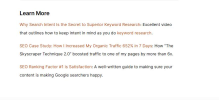
He has the VERY guide I am talking about here.
A guide to doing "keyword research"(he uses the old term as that's what people know), but with intent in mind.
You see how this all works in the real world?
If we look again at what search queries/keywords his page ranks for we have
"types of search intent" at #4.
I would call that a secondary user intent for this. The primary is "what is search intent", and a secondary is "What types of search intents are there?"
If we Google this, the top 3 are general "what is search intent" pages, but we have a couple of pages where their primary intent is "types of search intent"

I scrolled down here, these are like 4-9
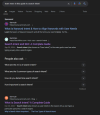
I can't tell you why it's like this.
For whatever reason, Google wants to put semrush's, yoast's and backlinko's general "what is search intent" guides in the top 3 for "types of search intent", above pages that are targeting this intent directly.
I personally don't think that's good. As a human, I wouldn't put those 3 there...
BUT, could it be that the the ones directly answering it are just shit?
https://searchengineland.com/search-intent-more-types-430814
We don't know, but what we DO have here is an opportunity.
It's something that's missing.
There doesn't seem to be a big in-depth guide about types of search intent. Only some surface level crap.
What if semrush were to create one. They'd probably be #1. Likewise backlinko too if he wrote an in-depth one on types, would probably take #1.
Finally, if we look at page 3+ for this article, we'll see search queries like :-
keyword intent tool
commercial intent meaning
what should i search
commercial seo
what is a know query
different types of searches
Google ranks these in the top 100, because they're still close'ish to the user intent.
"keyword intent tool" might be 55/100. It's closer than "how to cook salmon".
The actual way Google measures this btw, is with machine learning embeddings. They use vector distances. But let's not get into that today. "How Google Matches User Intents to Search Queries" might be an article title for that, and Google would definitely see it as *fairly* close, probably page 2-3 for search queries that match that intent for the main article, which would make it a great candidate for writing a guide and internally linking, thus building up your topical graph(topical authority, but topical graph is more accurate as based on what I'm teaching you here you can start to think about topical graphs, which have weights between their nodes, ie, the weights are the distances, the scores I'm giving the intents/search query pairs)
From this, you can also see how you can build topical authority.
We can say "You build topical authority by building a topical graph".
If you have an SEO focused blog, you could take apart his keyword/search query rankings from ahrefs and get a ton of ideas to build content around or find opportunities that are lacking in the serps right now.
Yet again, if I was SEOing and not on blackhatworld, I'd have another 2 or 3 guides from that..
"Find hidden opportunities doing search intent analysis on competitors"
"Use search intent analysis to build your site's topical graph"
"Expand existing articles with search intent analysis"
"A Full Guide to Search Intent Analysis for SEO" <-- This one would go into more detail on the analysis side for competitors, compared with the current one which is talking about what is search intent, and the idea above which is how to do a keyword research plan with intents. so far that's 5 guides that would expand your topical authority and bring in a ton of traffic all related to search intent for seo.
You can apply this same thinking to ANY article on your site or by looking at ANY articles on your competitors' sites.
Now, back to.. Let me paste this for a 3rd time. (After giving you even more context around the idea to understand it DEEPLY and not just at a surface level, so you're actually able to apply this to your own projects, guys. That's my goal here. Not to just give surface crap, but to help you understand this shit at a deep level)
We'll call them SK's
We'll call "user intent" UI for short.
SK1 -> match(strength: 93/100) -> UI_X
SK2 -> match(strength 83/100) -> UI_X
SK3 -> match(strength 75/100) -> UI_X
SK1 -> match(strength: 93/100) -> UI_Y
SK2 -> match(strength 83/100) -> UI_Y
SK3 -> match(strength 75/100) -> UI_Y
Now, you have a really deep understanding of these UI_XXX things.
You can see how Google is basically a big mapping of search queries to user intents, using machine learning embeddings and vector distances, and another mapping of user intents to pages, also using machine learning embeddings and vector distances.
So.. You can see exactly now why this idea of ranking keywords with anchors is beyond ridiculous in 2024.
There are no keywords lol. Hopefully after all that, no one is calling me crazy for that statement.
We could now go into anchors, how to create them, how they're used by Google and how you should really construct them.
Yet another topic that in SEO would build out our topical graph.
But to simplify it, and to try to end this long guide.
All you want to focus on with your anchors is just creating context between the article with the link, and your page.
so if we're getting a link to our new "search intent guide".
Yeah, we might have an exact like "search intent" in this case, because this particular type of article isn't really focused on just a small number of important search queries/keywords, like a "best toaster" one would be.
That's why in the case of the best toaster article, having lots of "best toaster" anchors is more dangerous. For broader, bigger articles that will rank for a lot of different search queries this is less of an issue, but you still follow these rules :-
1) Try not to use "keyword anchors".
1A) If you use them, aim not to repeat them, at least don't repeat them often.
2) Try to be as varied as you can with your anchors, and think about phrases that are contextually related to your page that would appear in an article.
Examples:-
"search intent is the most important concept"
"user intent matters more now"
"learn more in this guide to search intent"
"their guide to search intent"
"they explain search intent"
"search intent finally clicked"
"this helped me understand user intent"
"backlinko's guide to search intent"
You see?
It's contextually relevant. It has MEANING.
Let me show you something cool.
I will search for each of these contextually relevant anchors. Let's see what Google gives us.

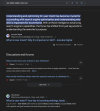
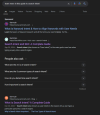
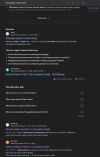
EVEN THIS ONE!
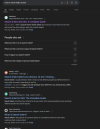
How INSANE is that?
You search for "search intent finally clicked" and Google gives us at #1 backlinko's guide.
Why on earth would anyone risk exact anchors in a world where Google's AI is so smart, it understands a random phrase like that is related to a search intent guide.
This is AI and it understands what you are saying. It even gives that interesting one on reddit "search intent seems too obvious. Or am I missing.."
So it's understanding that it's about making sense of search intent, ie, a guide, a tutorial. It "finally clicking in your brain".
If Google gives you results for this, then naturally, they understand anchors, right?
That's why having irrelevant anchors isn't good for SEO.
They can understand the context AROUND the anchors and the general article.
No, you don't need relevant links. This is another SEO myth and a whole other article. A quick answer to that is, relevant links matter only for footer/sidebar and links with no context.
For articles, the context comes from the article, NOT from the site.
You might have an article on a health site talking about a doctor who closed his practice and decided to become an SEO consultant, and now he takes his writing skills that he used to use in medicine, and writes about SEO topics and link "writes about SEO topics" to the homepage of his new blog.
This will work. It's a MEANINGFUL, CONTEXTUAL relationship.
Anyway, let's wrap this up. I think I've covered enough for today.
I'll answer questions, but just not until November, as I'm super busy with my upcoming deadline I mentioned at the start of the article But I will answer stuff over the next few months. EvenI don't reply straight away, I'll get through everyone. Not forever, obviously. If you're reading this mid 2025, I'm probably not going to answer, as everything as already been answered, so please read through all the Q&As!
EDIT(DURING WRITING) - This post has turned quite big and is covering quite a few topics, so I've changed the title
It was originally "Why you don't rank keywords with anchors"
and is now
[SEO GUIDE][2024] - Search Intent, Keywords, Anchors and More
Ie, that's now more relevant to the content within it!
It's not structured that well. It has pretty much no headings, but if you want the info, read it and be patient.
At least I don't write big long paragraphs, so it's still an easy read.I just write for fun because I have shit to share and I want to write. Take it or leave it!
My last 2 posts about this are
https://www.blackhatworld.com/seo/t...results-focused.922263/page-103#post-18090473
and
https://www.blackhatworld.com/seo/stop-trying-to-rank-pages-with-links-this-doesnt-work.1457757/
----
What I want to do in this 3rd one is try to simplify this for you to help you understand why we don't rank keywords with anchors, and from that, why we also don't rank pages with links in the broader sense.
A small note, that linking DIRECTLY to a page, does give it a bit more of a boost than than linking to other pages, but, you cannot over-do this otherwise the links are seen as unnatural. In general, it's best to just forget about trying to rank pages with links, and focus instead on "increasing site authority with links as naturally as possible".
Now, here's the PRECISE and EXACT reason why you don't rank KEYWORDS with anchor texts.
In my business I get so so many clients.. My god.. I think I've answered this 3 or 4 times TODAY alone. No joke. The last one was just 5 minutes ago, and I've not even hit send yet.
One Line Answer
Google no longer has a concept of "keywords". They got rid of this a few years ago.
Longer Answer
Yes, I hear a bunch of you in the back there saying "WHAT! Are you mad??"
But, it's true..
Why do you think "keyword density" is no longer a thing...
Why do you think Google stopped showing keywords people search for in the search console. (I don't know the exact mentality behind it. Probably multiple things, one of them being they don't want people to focus on keywords anymore, and think more about writing for the user, instead of writing to capture keywords)
This is why years ago, if you searched for "top toasters", you'd get pages with "Top Toasters" in the title, and lots of anchor texts with "top toasters" ranking.
And if you searched for "best toasters", you'd get "Best Toasters" pages.
And if you searched for "toaster reviews", you'd get pages targeting "Toaster Reviews" in the title, h1, h2, anchors etc.
See https://www.blackhatworld.com/seo/g...e-engineered-the-core-updates-part-1.1514379/ - "Hummingbird Update - 2013"
I won't go too heavy into details here, you can read a little more on my "Google updates history" guide..
But Hummingbird was the start. It was no longer just keywords match blindly to pages based on weighted rules like keywords in title, h1, h2, kw density and anchor texts.
It's changed year on year, and with various updates to where we are at today, which is now :-
There is no longer any concept of "keywords". People are not searching for "keywords" and being matched with pages in an old school search and match way.
We have "search queries".
Every search query has a "user intention" behind it.
Google then matches user intents with pages.
So.. Past
Keyword1 -> match(strength: 95/100) -> page_X
Keyword2 -> match(strength: 83/100) -> page_X
Keyword3 -> match(strength: 78/100) -> page_X
Keyword1 -> match(strength: 98/100) -> page_Y
Keyword2 -> match(strength: 89/100) -> page_Y
Keyword3 -> match(strength: 71/100) -> page_Y
Y beats X for keyword 1, assuming PageRank is equal.
That was really it. That was the old algo simplified.
If X had more PR than Y, then X would probably win, but if X's relevancy for Keyword1 was say, 70, then it wouldn't matter how strong it was, it would never beat Y. This is why, you could beat authority sites in the past by just creating pages targeting keywords where they had no relevance.
Ie, authority site A targets 'best toasters', but not "top toasters", you can then target "top toasters" and outrank them with no backlinks, or very few backlinks. This is why SEO was so easy, and it was keyword based.
Today
Keywords are now "search queries". We could call them "keywords" if you want, but, a keyword implies it's a simple "keyword search". "search query", implies there's something more complicated going on. A translation inbetween, and we aren't searching for the "search query" the way we search for a "keyword".
We'll call them SK's
We'll call "user intent" UI for short.
SK1 -> match(strength: 93/100) -> UI_X
SK2 -> match(strength 83/100) -> UI_X
SK3 -> match(strength 75/100) -> UI_X
SK1 -> match(strength: 93/100) -> UI_Y
SK2 -> match(strength 83/100) -> UI_Y
SK3 -> match(strength 75/100) -> UI_Y
Now, you see we have search queries matching to user intents?
And they match to MULTIPLE user intents.
It's so hard to just write small articles. There's just so much to teach in SEO.. :-/ So many sub-lessons that have to be taught in order to understand the upper level concept.
Many people talk about only 1 user intent for search queries, but it's more complex than this.
There are multiple people, each with multiple intents.
So one person can have more than one intent.
I like to think of each person having a primary intent, and a few secondary intents.
If you search for "buy backlinks"
The primary intent in this case of almost all of the people is to buy backlinks for their website in order to rank higher on Google. (Some might want backlinks to rank higher on bing lol)
But, their secondary intents might be things like
"What kind of backlinks can I buy"
"How much do backlinks cost"
"what are good providers of backlinks"
So these are all DIRECT things that can be included in pages that Google might rank for this user intent.
You could also go deeper here and have something called "tertiary intents".
These are intents I think of that you wouldn't include directly in the article, but you would LINK to and cover in other articles. This can help build a topical graph around your article.
For this one we might have
"Do backlinks work for ranking on Google"
"Where can I find free backlinks?"
"What kind of anchors should I use for my backlinks?"
"What types of backlinks can you get?"
Do you see?
The secondary intents are specifically related to the main intent. It's like sub-questions, or sub-thoughts that may or may not be conscious in the person's mind. They may not be thinking "What kind of backlinks can I buy", but, if you show this to them, if their primary intent is to "buy backlinks", then they are probably going to be interested in this. They're likewise going to be interested in learning about good providers where they can buy, or prices etc.
The tertiary, they won't necessarily be wanting to read NOW about "do backlinks work", or "where can I find free backlinks", or "what types can I get", but it's topics that some people looking to buy could be interested in reading later, or reading after they've read and satsified the main intent.. That's why they should be internal links to other articles.
Ok so back to this bit
We'll call them SK's
We'll call "user intent" UI for short.
SK1 -> match(strength: 93/100) -> UI_X
SK2 -> match(strength 83/100) -> UI_X
SK3 -> match(strength 75/100) -> UI_X
SK1 -> match(strength: 93/100) -> UI_Y
SK2 -> match(strength 83/100) -> UI_Y
SK3 -> match(strength 75/100) -> UI_Y
Now you understand what UI_X and UI_Y is.
They could also be 2 primary user intents, or they could be a primary and secondary. They'll have scores for tertiary too, although they won't "call" them primary/secondary/tertiary. This is just something for us, the SEO's/writers/creators to differentiate and structure. Ie, primary intent is the main focus(title/h1/initial paragraphs) and should be dealt with quickly and secondary are the things useful that you also cover after the primary in the article, then the tertiary are the related articles you internally link to.
So when you do "keyword research"(I still call it this), really what you're doing is search query to UI_XXX research. You want to group keywords/search queries and write user intents for them, then label and match those UI's to each search keyword and label it as a primary, secondary or teritary for that search query. Then from that you can craft article articles that match search queries/user intents properly.
You might even have a secondary intent like "How much do backlinks cost" which you label as UI_31
It can be a secondary UI for search keyword "buy backlinks", and a primary for keyword "backlinks cost".
As the secondary, you would have a paragraph or 2 about it, and if you do a separate article as a primary, you link to that, and have an entire in-depth article on it.
Likewise, here, we have a secondary intent "How do I do keyword research with this new idea of search queries and user intents".
The primary intent of this article is "Why don't you rank keywords with anchors?" - If you clicked this, you're probably asking that question, right? Or at least something similar.
I've touched a little on the new way to do a keyword plan/keyword research/content plans, whatever you want to call it, but I could also now <a href="/full-guide-to-creating-content-plan"> and send you off to my full guide on that, where it'll be the primary intent.
That also raises the important point I'll touch on again that a searcher with primary intent X doesn't necessarily KNOW they have multiple secondary intents. No one here would KNOW they would be interested in reading about how to do a keyword research plan the proper way, but once you start reading, you discover that's of direct interest.
If this was an article with SEO in mind I might try to be ranking for search queries like "anchor text seo". Obviously you need to target things people are searching for and help Google connect those searches to your pages otherwise you won't get traffic.
Or maybe a better one for this would be targeting "search intent", which comes with "what is search intent", "seo search intent" and lots of other search queries that would connect to this article.
So that way, if I start to talk about "search intent", then Google is more likely to see secondary and tertiary intents for this page about doing keyword plans. If I did the original title which was "Why you don't rank keywords with anchors", then Google wouldn't really see keyword research/content plans as being so related to that, so it would limit the depth/scope of an article like this for SEO.
This is why I changed the title of this guide to [SEO GUIDE][2024] - Search Intent, Keywords, Anchors and More
And here you can see with this page - backlinko.com/hub/seo/search-intent
He's page 1 for things like "what is search intent"
And for "intent mapping" he's position #14. And of course notice on the page, he doesnt' even mention "intent mapping". He doesn't even use the word MAPPING or MAP. Point in case about everything I'm saying.
But Google sees this as, I'd say, a secondary intent. What is the user intent of "intent mapping"..? Very likely people searching for that want to know "How do I do a keyword reserach plan, with this new idea of intents"
Let's Google it.
And nope. I am wrong.
It's not that. It's a broader search query, where people are just looking for information on mapping intents in general. The serps for it are varied which means this search query has multiple primary intents, ie, different groups of users each with a different primary intent.
This is why you always check.
With that in mind.. That tells us that "intent mapping" is a tertiary term for Google, for the user intent of "search intent"/"seo search intent".
One of the user intents for intent mapping, is intent mapping for SEO.
And here you go, look at this!!
Bottom of backlinko's page.
He has the VERY guide I am talking about here.
A guide to doing "keyword research"(he uses the old term as that's what people know), but with intent in mind.
You see how this all works in the real world?
If we look again at what search queries/keywords his page ranks for we have
"types of search intent" at #4.
I would call that a secondary user intent for this. The primary is "what is search intent", and a secondary is "What types of search intents are there?"
If we Google this, the top 3 are general "what is search intent" pages, but we have a couple of pages where their primary intent is "types of search intent"
I scrolled down here, these are like 4-9
I can't tell you why it's like this.
For whatever reason, Google wants to put semrush's, yoast's and backlinko's general "what is search intent" guides in the top 3 for "types of search intent", above pages that are targeting this intent directly.
I personally don't think that's good. As a human, I wouldn't put those 3 there...
BUT, could it be that the the ones directly answering it are just shit?
https://searchengineland.com/search-intent-more-types-430814
We don't know, but what we DO have here is an opportunity.
It's something that's missing.
There doesn't seem to be a big in-depth guide about types of search intent. Only some surface level crap.
What if semrush were to create one. They'd probably be #1. Likewise backlinko too if he wrote an in-depth one on types, would probably take #1.
Finally, if we look at page 3+ for this article, we'll see search queries like :-
keyword intent tool
commercial intent meaning
what should i search
commercial seo
what is a know query
different types of searches
Google ranks these in the top 100, because they're still close'ish to the user intent.
"keyword intent tool" might be 55/100. It's closer than "how to cook salmon".
The actual way Google measures this btw, is with machine learning embeddings. They use vector distances. But let's not get into that today. "How Google Matches User Intents to Search Queries" might be an article title for that, and Google would definitely see it as *fairly* close, probably page 2-3 for search queries that match that intent for the main article, which would make it a great candidate for writing a guide and internally linking, thus building up your topical graph(topical authority, but topical graph is more accurate as based on what I'm teaching you here you can start to think about topical graphs, which have weights between their nodes, ie, the weights are the distances, the scores I'm giving the intents/search query pairs)
From this, you can also see how you can build topical authority.
We can say "You build topical authority by building a topical graph".
If you have an SEO focused blog, you could take apart his keyword/search query rankings from ahrefs and get a ton of ideas to build content around or find opportunities that are lacking in the serps right now.
Yet again, if I was SEOing and not on blackhatworld, I'd have another 2 or 3 guides from that..
"Find hidden opportunities doing search intent analysis on competitors"
"Use search intent analysis to build your site's topical graph"
"Expand existing articles with search intent analysis"
"A Full Guide to Search Intent Analysis for SEO" <-- This one would go into more detail on the analysis side for competitors, compared with the current one which is talking about what is search intent, and the idea above which is how to do a keyword research plan with intents. so far that's 5 guides that would expand your topical authority and bring in a ton of traffic all related to search intent for seo.
You can apply this same thinking to ANY article on your site or by looking at ANY articles on your competitors' sites.
Now, back to.. Let me paste this for a 3rd time. (After giving you even more context around the idea to understand it DEEPLY and not just at a surface level, so you're actually able to apply this to your own projects, guys. That's my goal here. Not to just give surface crap, but to help you understand this shit at a deep level)
We'll call them SK's
We'll call "user intent" UI for short.
SK1 -> match(strength: 93/100) -> UI_X
SK2 -> match(strength 83/100) -> UI_X
SK3 -> match(strength 75/100) -> UI_X
SK1 -> match(strength: 93/100) -> UI_Y
SK2 -> match(strength 83/100) -> UI_Y
SK3 -> match(strength 75/100) -> UI_Y
Now, you have a really deep understanding of these UI_XXX things.
You can see how Google is basically a big mapping of search queries to user intents, using machine learning embeddings and vector distances, and another mapping of user intents to pages, also using machine learning embeddings and vector distances.
So.. You can see exactly now why this idea of ranking keywords with anchors is beyond ridiculous in 2024.
There are no keywords lol. Hopefully after all that, no one is calling me crazy for that statement.
We could now go into anchors, how to create them, how they're used by Google and how you should really construct them.
Yet another topic that in SEO would build out our topical graph.
But to simplify it, and to try to end this long guide.
All you want to focus on with your anchors is just creating context between the article with the link, and your page.
so if we're getting a link to our new "search intent guide".
Yeah, we might have an exact like "search intent" in this case, because this particular type of article isn't really focused on just a small number of important search queries/keywords, like a "best toaster" one would be.
That's why in the case of the best toaster article, having lots of "best toaster" anchors is more dangerous. For broader, bigger articles that will rank for a lot of different search queries this is less of an issue, but you still follow these rules :-
1) Try not to use "keyword anchors".
1A) If you use them, aim not to repeat them, at least don't repeat them often.
2) Try to be as varied as you can with your anchors, and think about phrases that are contextually related to your page that would appear in an article.
Examples:-
"search intent is the most important concept"
"user intent matters more now"
"learn more in this guide to search intent"
"their guide to search intent"
"they explain search intent"
"search intent finally clicked"
"this helped me understand user intent"
"backlinko's guide to search intent"
You see?
It's contextually relevant. It has MEANING.
Let me show you something cool.
I will search for each of these contextually relevant anchors. Let's see what Google gives us.
EVEN THIS ONE!
How INSANE is that?
You search for "search intent finally clicked" and Google gives us at #1 backlinko's guide.
Why on earth would anyone risk exact anchors in a world where Google's AI is so smart, it understands a random phrase like that is related to a search intent guide.
This is AI and it understands what you are saying. It even gives that interesting one on reddit "search intent seems too obvious. Or am I missing.."
So it's understanding that it's about making sense of search intent, ie, a guide, a tutorial. It "finally clicking in your brain".
If Google gives you results for this, then naturally, they understand anchors, right?
That's why having irrelevant anchors isn't good for SEO.
They can understand the context AROUND the anchors and the general article.
No, you don't need relevant links. This is another SEO myth and a whole other article. A quick answer to that is, relevant links matter only for footer/sidebar and links with no context.
For articles, the context comes from the article, NOT from the site.
You might have an article on a health site talking about a doctor who closed his practice and decided to become an SEO consultant, and now he takes his writing skills that he used to use in medicine, and writes about SEO topics and link "writes about SEO topics" to the homepage of his new blog.
This will work. It's a MEANINGFUL, CONTEXTUAL relationship.
Anyway, let's wrap this up. I think I've covered enough for today.
I'll answer questions, but just not until November, as I'm super busy with my upcoming deadline I mentioned at the start of the article
But I will answer stuff over the next few months. EvenI don't reply straight away, I'll get through everyone. Not forever, obviously. If you're reading this mid 2025, I'm probably not going to answer, as everything as already been answered, so please read through all the Q&As!